

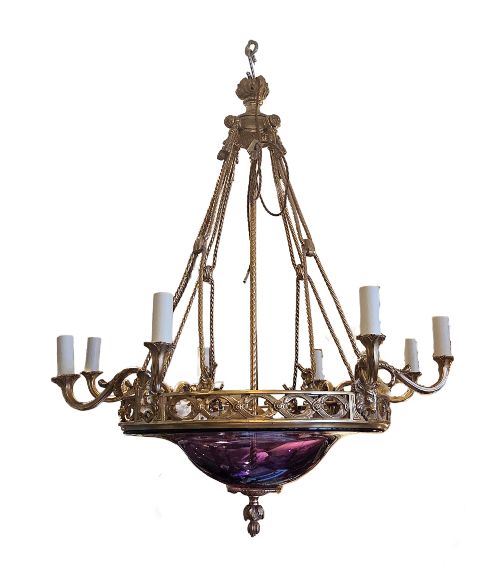
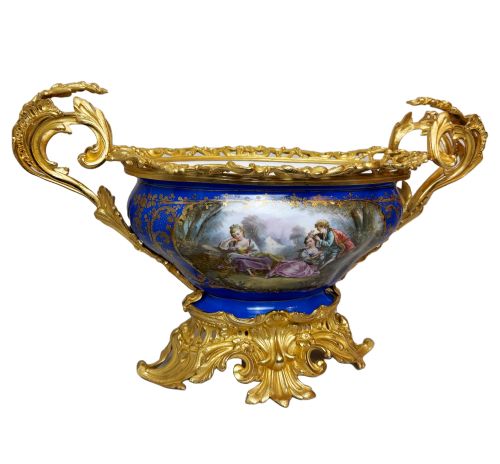
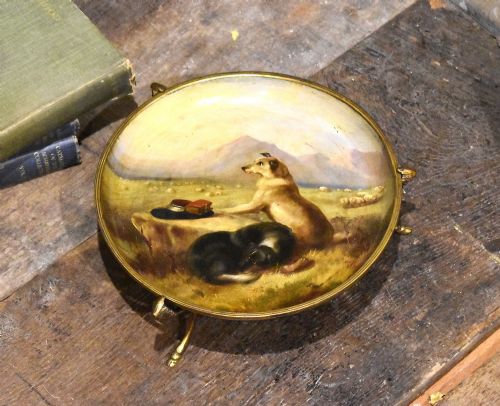
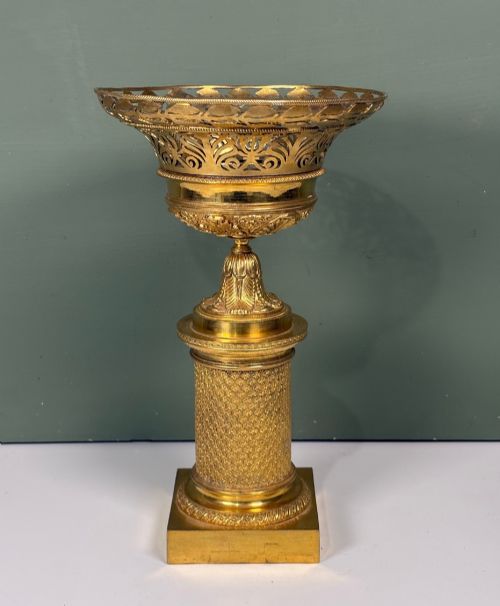
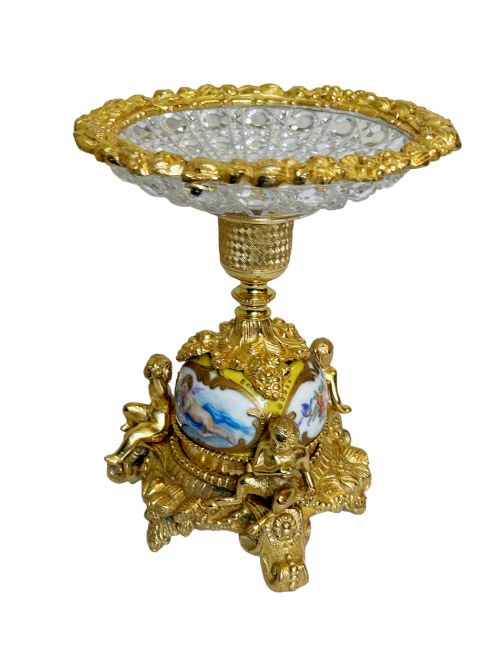
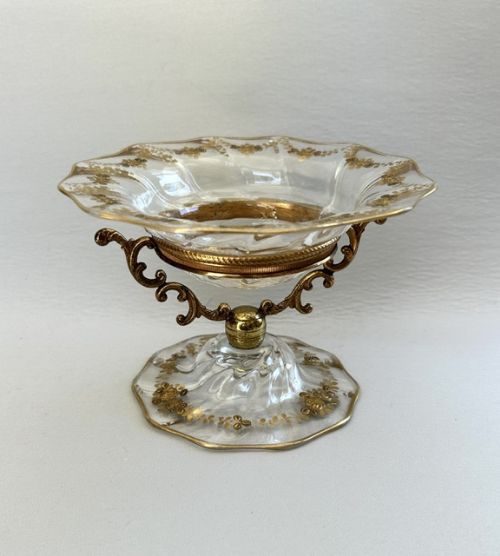
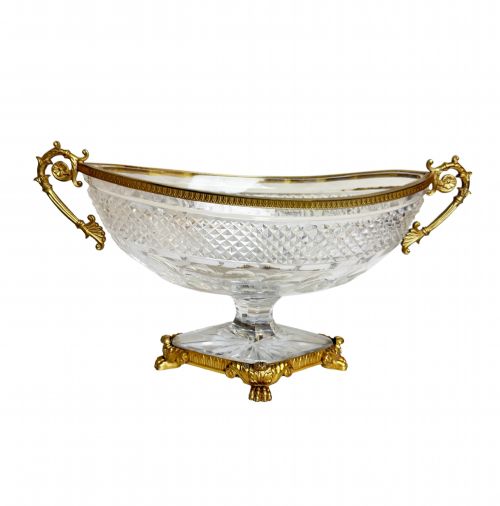
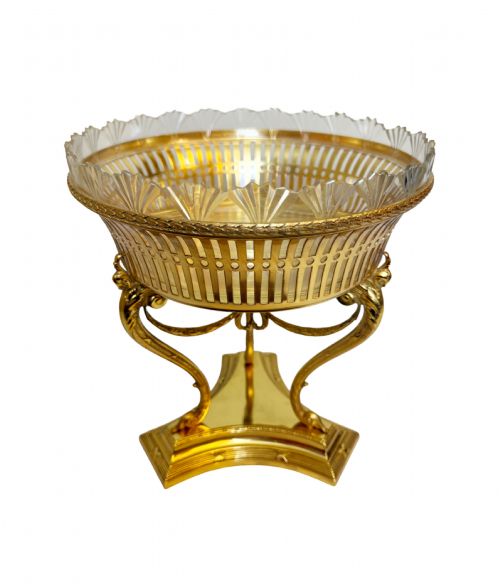


Gilt Bronze Ormolu Bowl
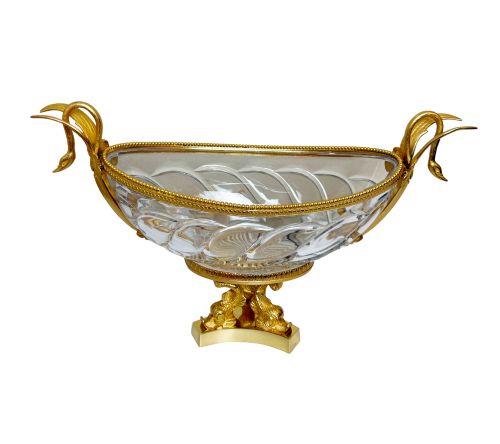
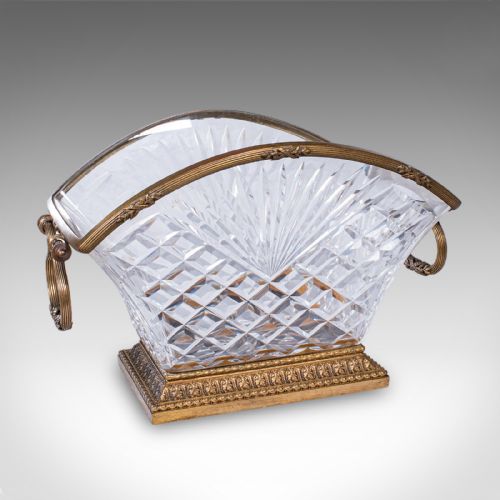
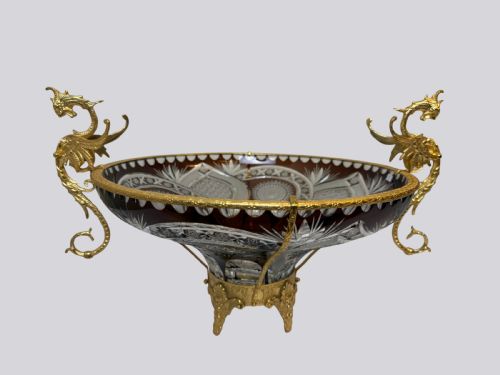
A gilt bronze ormolu bowl brings heavy French metalwork and cut glass together to anchor a dining table.
Gilt Bronze Ormolu Bowl
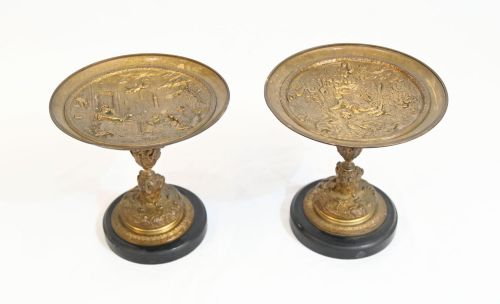
When you search for a gilt bronze ormolu bowl, you encounter nineteenth-century decorative vessels designed primarily as centrepieces and comports. These items served formal dining rooms and drawing rooms during the Victorian and Edwardian eras, often holding fruit or simply standing as ornaments.
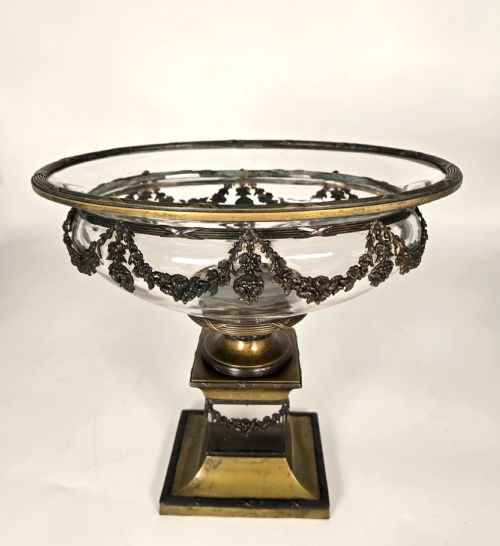
You are most likely to meet French Empire and Rococo Revival forms on this page. These pieces combine cast metal mounts with inserts of cut crystal, cut glass, Sevres style porcelain, or marble bases.
The inventory ranges from early nineteenth-century Grand Tour items to later nineteenth-century garnitures and tazzas. Makers and designers utilised diverse cultural influences, producing Chinoiserie, Japonesque, and classical styles alongside traditional European motifs.
Materials and construction
Craftsmen cast bronze components before applying a gold amalgamation layer known as ormolu, or utilised direct gilding on bronze to achieve a durable metallic lustre. These metal mounts were then screwed or pinned to structural elements like marble bases.
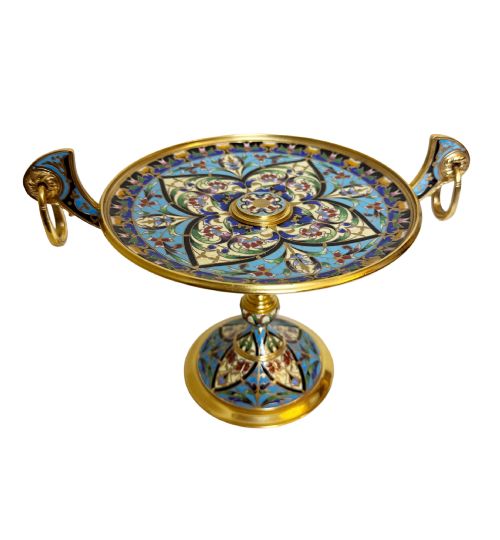
Vessels incorporated fragile components including cut crystal, cut glass, and Paris or Sevres style porcelain inserts. Secondary decorative techniques such as champleve enamel, cloisonne enamel, and Limoges plaques appear frequently within the metal frames.
Gilt Bronze Ormolu Bowl Retail Price Guide 2026
Typical asking prices for gilt bronze ormolu bowl among the pieces listed under this phrase on Sellingantiques today, from the lower quarter to the upper quarter. They describe what is for sale here now, not the wider market.
Object forms span centrepieces, decorative bowls, comports, tazzas, urns, garnitures, and jardiniere vessels from the Victorian era.
Assessing quality and execution
The sharpness of the cast chryselephantine or bronze ornamentation dictates the upper tier of these objects. Superior examples display crisp chasing work on the foliage, cherubs, and classical figures, whereas lesser pieces show soft, rounded casting details.
The integration between the metal mount and the central bowl material separates standard production from finer studio output. A high-quality gilt bronze ormolu bowl fits its glass or porcelain insert snugly without excess pinning or visible structural gaps.
Christofle Paris·Louis Pierre Malpass
The Gilt Bronze Ormolu Bowl Glossary
- Ormolu
- A gilded bronze technique involving mercury and gold applied to a base metal, creating a bright yellow metallic finish. This surface treatment protected the underlying bronze from tarnishing.
- Tazza
- A shallow bowl or cup mounted upon a stem and foot, used historically for serving fruit or sweets. These decorative vessels sit prominently on dining tables or sideboards.
- Comport
- A footed dish or stand designed for displaying fruit or confectionery during formal nineteenth-century meals. They frequently match larger garniture sets.
- Champleve
- An enamelling technique where troughs are dug into a metal surface and filled with vitreous paste before firing. This method creates colourful geometric or pictorial patterns within the bronze framework.
- Garniture
- A set of three or more ornamental vases or vessels designed to be displayed together on a mantelpiece or sideboard. They typically share matching decorative schemes.
Gilt Bronze Ormolu Bowl: Frequently Asked Questions
What is an ormolu bowl used for?
These vessels functioned as centrepieces for formal dining tables and decorative comports for displaying fruit. Victorian households placed them on sideboards or tables to catch the light and show wealth.
Today, they serve primarily as standalone decorative objects in traditional or eclectic interiors. They require careful placement away from heavy traffic areas due to their fragile glass and porcelain components.
Are these bowls French?
Many items originate from nineteenth-century French workshops, reflecting Empire, Rococo Revival, and classical tastes. Paris and Sevres style porcelain inserts point directly to French manufacturing traditions.
Some pieces incorporate British retail contexts or Grand Tour provenance, but the stylistic vocabulary remains overwhelmingly continental. Makers such as Christofle produced similar high-end items in Paris during the nineteenth century.
How do I date a centrepiece?
Examine the style of the cast mounts, the type of glass or porcelain, and assembly methods like screws and pins. Nineteenth-century examples often feature machine-cut crystal, champleve enamel, or specific Sevres style painted decoration.
Early nineteenth-century pieces lean towards strict Empire styling, while items from the 1880s and 1890s frequently embrace eclectic revivals or Japanese aesthetic influences. Hallmarks or maker stamps on the bronze can narrow the date further.