

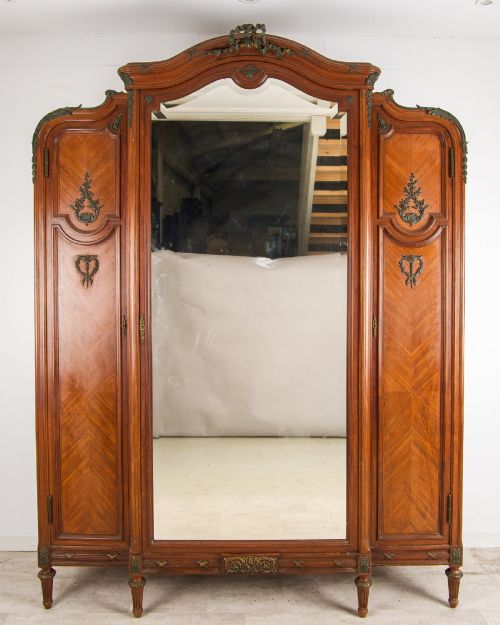


Gilt Bronze Mounts Mirror
These gilt bronze mounts mirror pieces bring together polished timber and cast metalwork, offering the decorative presence collectors seek for period interiors.
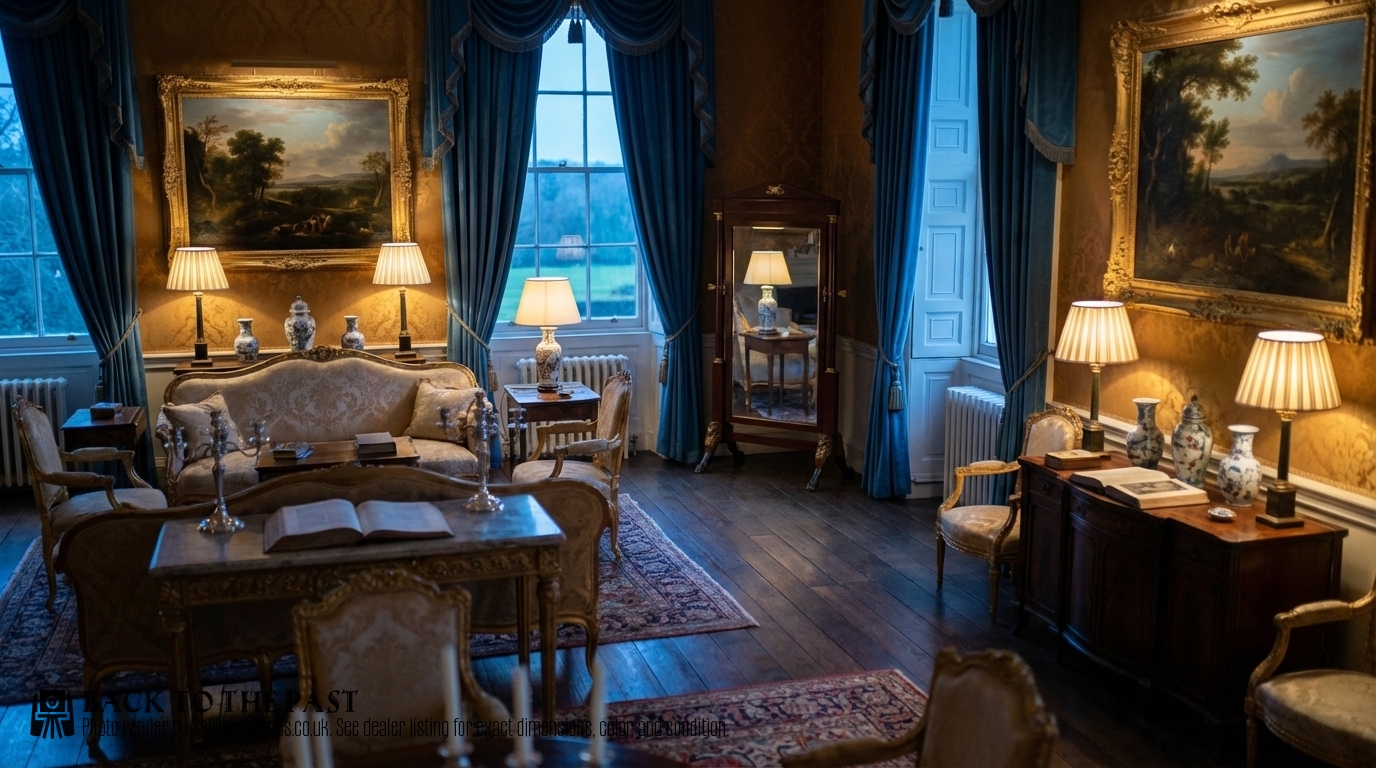
Gilt Bronze Mounts Mirror
When you search for gilt bronze mounts mirror, you find nineteenth-century furniture incorporating cast metal enrichment alongside glass plates. The selection spans credenzas, display cabinets, dressing tables, and wardrobes across various continental and English styles.
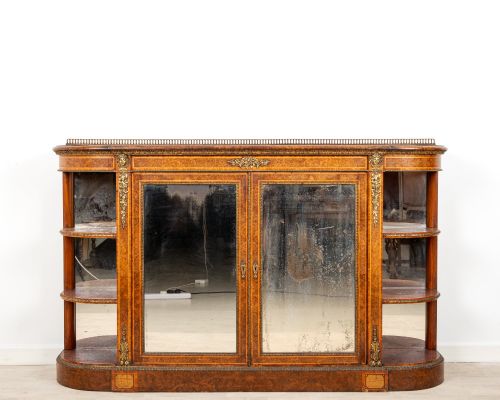
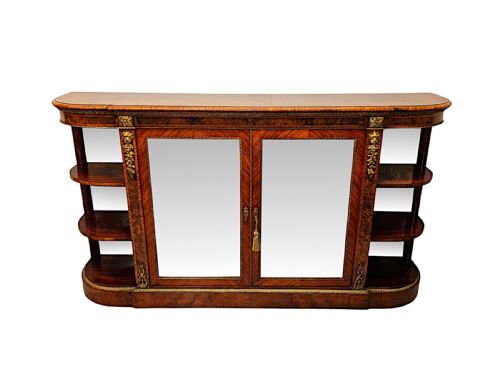
The version most commonly met on this page is the nineteenth-century credenza or display cabinet in burr walnut, mahogany, or kingwood, embellished with ormolu mounts and mirrored glass. These forms reflect nineteenth-century revival tastes including French Empire, Louis XV, and Louis XVI styles.
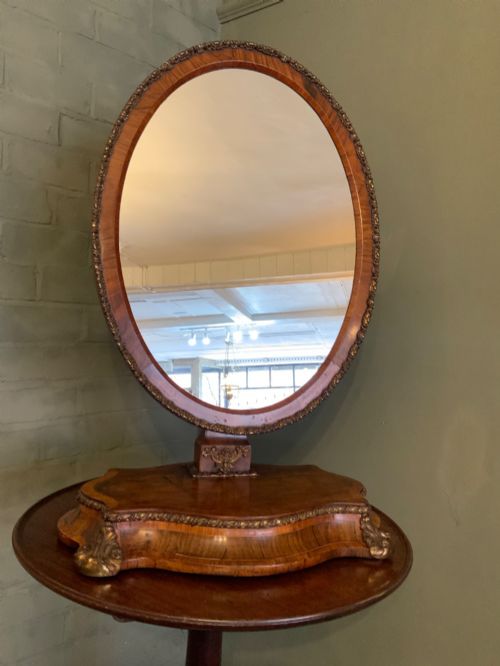
Objects range from large freestanding armoires and console tables to toilet mirrors and pedestal stands. Each piece integrates decorative bronze or ormolu mounts directly into the timber structure to frame doors, drawers, or glass panels.
How they were made
Craftsmen built these pieces using dense hardwoods such as mahogany, burr walnut, and kingwood, frequently applying intricate veneers and marquetry inlay. Marble tops appear on several console tables, pedestal stands, and cabinet surfaces.
The metallic ornamentation relies on cast bronze or ormolu, which is gilded and secured to the wooden frames around mirrored glass and porcelain plaques. Cabinetmakers combined traditional joinery with cast metal mounts to achieve the decorative vocabulary of French and Victorian design.
A tiny porcelain plaque peeks out from beneath the mirror frame, reminding us that someone once spent an evening polishing it.
What varies in quality
The refinement of the cast bronze or ormolu mounts distinguishes finer examples, where crisp chasing and careful finishing define the metalwork. Lesser pieces rely on softer casting detail and simpler application.
Timber selection and veneer matching also separate the range, alongside the quality of the glass plates and the precision of the marquetry inlay. Maker attribution, such as stamps by Gillows or work associated with G. Durand and Town and Emanuel, marks distinction.
Gillows·G. Durand·Town and Emanuel
The Gilt Bronze Mounts Mirror Glossary
- Ormolu
- Gilt bronze, typically produced by applying a gold amalgam to cast bronze. This technique creates a rich metallic lustre on mounts and decorative hardware.
- Credenza
- A low cabinet, frequently fitted with doors, shelves, and mirrored panels. Nineteenth-century examples often feature extensive marquetry and ormolu mounts.
- Kingwood
- A dense, heavily figured timber valued for its rich colouring and decorative grain patterns. It was widely utilised in fine nineteenth-century cabinetmaking.
- Vitrine
- A glass-fronted display cabinet designed to showcase porcelain and objects of vertu. These cabinets often incorporate gilt bronze mounts and mirrored backs.
- Vernis Martin
- A type of decorative lacquer finish developed in eighteenth-century France and emulated in later revival pieces. It provides a glossy, translucent surface layer.
Gilt Bronze Mounts Mirror: Frequently Asked Questions
What periods do these pieces come from?
The listings consist entirely of nineteenth-century pieces, spanning the Victorian era and the Second Empire.
Styles represented include French Empire, Louis XV and Louis XVI revivals, and high Victorian cabinetmaking.
How were these mirrors and cabinets used?
Furniture with gilt bronze mounts fulfilled both functional and decorative roles in nineteenth-century interiors, serving for storage, display, and personal grooming.
Credenzas and vitrines held porcelain and precious objects in reception rooms, while dressing tables and cheval mirrors furnished private chambers.
What timbers are used in these items?
Makers utilised dense cabinet timbers including mahogany, burr walnut, and kingwood to provide a stable foundation for veneers and marquetry.
Marble tops also appear on specific console tables, pedestal stands, and cabinet forms.
How can I identify French Empire pieces?
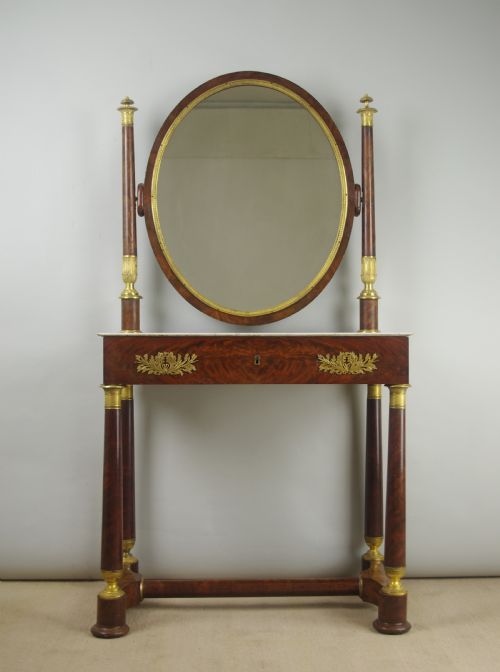
French Empire pieces typically employ dark mahogany timbers paired with sharply cast ormolu mounts and classical architectural proportions.
They reflect the influence of early nineteenth-century design tastes across wardrobes, dressing tables, and cheval mirrors.