

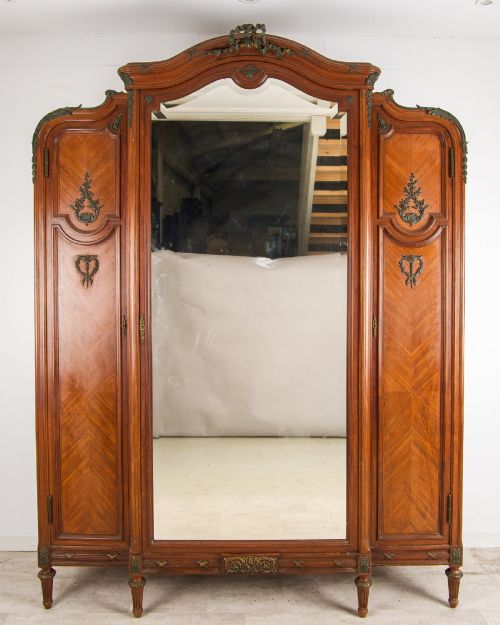


Gilt Bronze Mounted Mirror
These gilt bronze mounted mirror pieces bring together cast metalwork and reflective glass from the nineteenth century, offering both decorative presence and functional depth.
Gilt Bronze Mounted Mirror
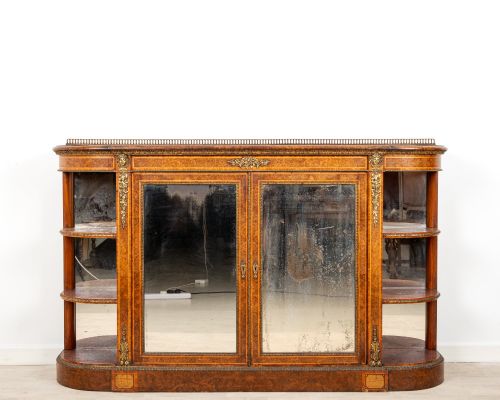
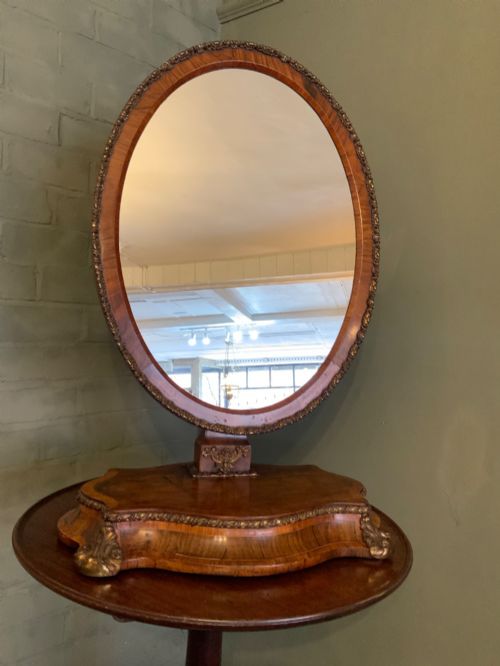
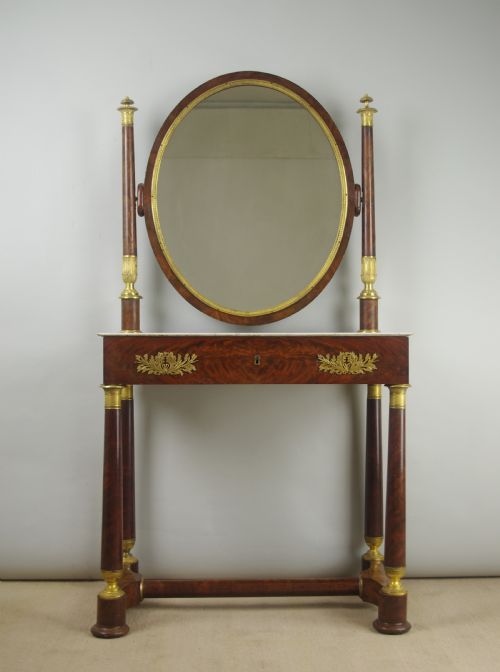
When you search for a gilt bronze mounted mirror, you encounter nineteenth-century furnishings that integrate bronze mounts or ormolu into wood and glass objects. These pieces range from large cheval mirrors and toilet mirrors to wall-hung examples.
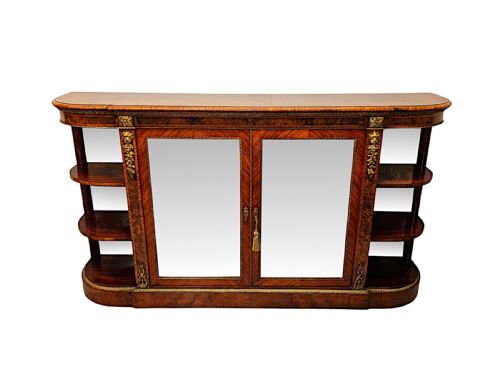
The versions most common in these listings combine French styles such as Empire and Louis XVI with woods like mahogany, walnut, and kingwood. They often form part of larger groups including credenzas, armoires, and dressing tables that share identical metal mounts.
Makers and cabinet-makers of the period utilised these mounts to highlight the architectural lines of the furniture or mirror frame. The integration of gilt bronze transforms a utilitarian looking-glass into a decorative focal point.
How they were made
Makers constructed the primary carcasses of these objects using dense hardwoods like mahogany, burr walnut, and kingwood, frequently applying veneers over a stable secondary timber. Ormolu or gilt bronze mounts were then cast and fire-gilded before being fixed to the exterior surfaces with small brass screws.
Mirror plates were typically hand-silvered or mercury-silvered glass, held securely within rebated wooden frames behind the metal embellishments. Inlays of lighter woods and porcelain plaques from factories like Sèvres were sometimes incorporated into the surrounding woodwork to complement the bronze work.
What varies in quality
The refinement of the cast bronze mounts distinguishes superior examples from standard production, as sharper chiselling and deeper hand-chasing produce crisper detail in the foliage and scrollwork. Heavier gauge metalwork sits more harmoniously against the wood without warping or leaving gaps at the edges.
The quality of the timber preparation and the depth of the cabinet-making also dictate the overall standard. Pieces that retain their original mercury glass plates and fire-gilded surfaces demonstrate a higher grade of original manufacture than those with later replacements.
Gillows·G. Durand·Town and Emanuel
The Gilt Bronze Mounted Mirror Glossary
- Ormolu
- Gilt bronze created by applying a mixture of gold and mercury to a cast bronze object and heating it until the mercury vaporised, leaving a golden surface. This technique produces a durable finish characteristic of fine nineteenth-century French and English decorative arts.
- Cheval mirror
- A freestanding full-length looking-glass suspended on a vertical frame with pivots that allow the glass to tilt. These large dressing mirrors are frequently supported on sturdy pedestal feet or four-legged stands.
- Vitrine
- A glass-fronted display cabinet designed to showcase porcelain, silver, and small objects. They often feature gilt bronze mounts framing the glass panels and door edges.
- Kingwood
- A dense, heavy Brazilian timber with distinctive dark violet-brown graining and pale golden stripes. Cabinet-makers used it extensively as a veneer on high-status nineteenth-century French furniture.
- Credenza
- A low cabinet or sideboard, sometimes fitted with mirrored doors and marble tops. Nineteenth-century versions frequently incorporate porcelain plaques and ormolu mounts to match salon furnishings.
Gilt Bronze Mounted Mirror: Frequently Asked Questions
How do I date a gilt bronze mounted mirror?
Dating relies on examining the construction methods of the wooden frame, the composition of the glass plate, and the style of the cast mounts. Nineteenth-century examples often display hand-beveled edges on the glass and specific revival motifs corresponding to periods like Louis XVI or Second Empire.
Secondary woods and screw types also provide clues to the decade of manufacture. Comparing the patination of the bronze mounts to the wear on the wooden carcass helps confirm whether the components are original to one another.
Where were these mirrors placed historically?
Cheval mirrors and toilet mirrors stood in dressing rooms and bedrooms to assist with attire and grooming. Wall-mounted and cheval variants also hung in formal drawing rooms to reflect candlelight and amplify the perceived space of the interior.
Larger standing mirrors often coordinated with console tables or credenzas placed against drawing room walls. Their placement was calculated to bounce light from windows and chandeliers across the room.
How should I clean the bronze mounts?
Cleaning requires only a soft, dry cloth to remove dust from the recessed areas of the cast metal. Avoid chemical metal polishes, as these can strip the original fire-gilding or ormolu surface and damage adjacent wood veneers.
If the mounts require deeper cleaning, a gentle wipe with a damp microfiber cloth is sufficient. Professional conservation is recommended if the gilding is unstable or flaking.
Are the mirror plates original?
Original nineteenth-century mirror plates frequently exhibit minor foxing, dark spots, and slight distortion due to the silvering process used at the time. These subtle imperfections distinguish period glass from modern replacements.
Completely clear, unblemished glass in an antique frame often indicates a later replacement. Inspecting the edges of the glass where it meets the rebate can reveal the age of the installation.
What styles are common in these pieces?
French revival styles dominate this category, particularly Louis XV, Louis XVI, and French Empire designs. These aesthetics draw heavily on classical symmetry, rococo scrolls, and formal architectural proportions.
Victorian interpretations also appear, blending English cabinet-making traditions with French-inspired ormolu mounts. The choice of style dictates the character of the bronze work, ranging from restrained foliate swags to bold military trophies.