
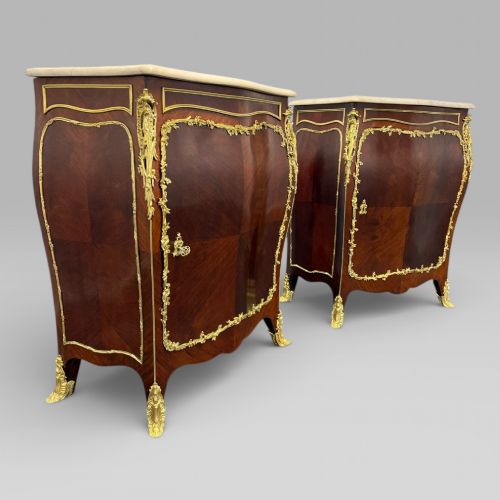
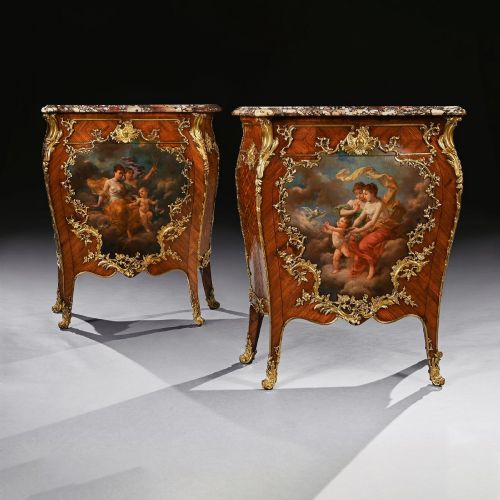
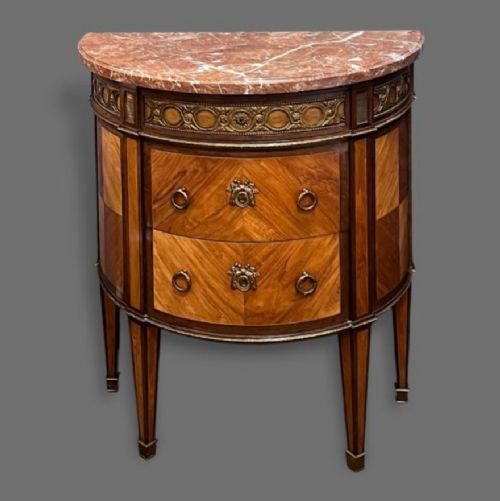
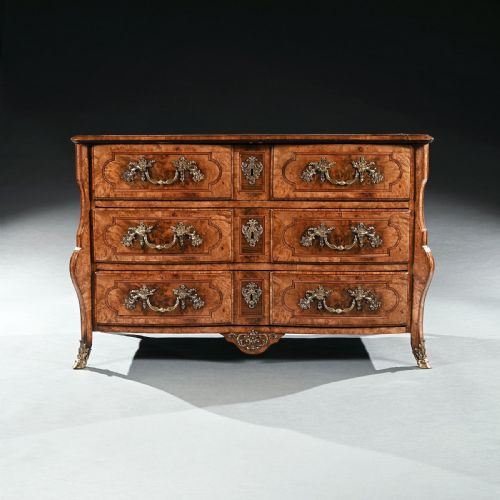
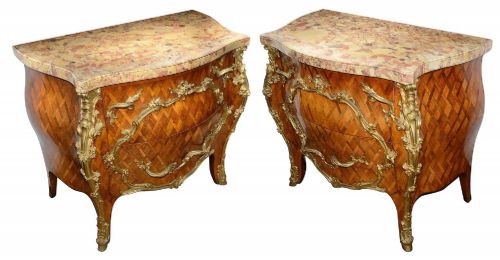
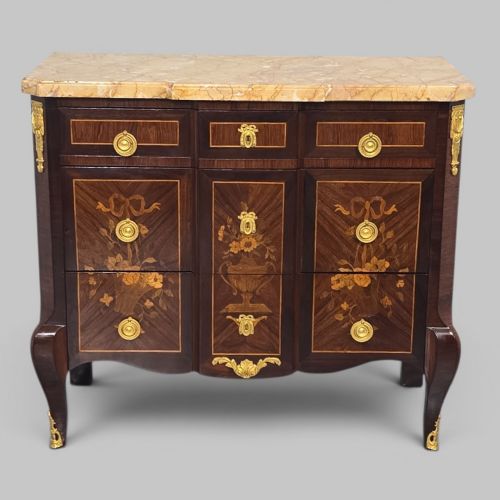
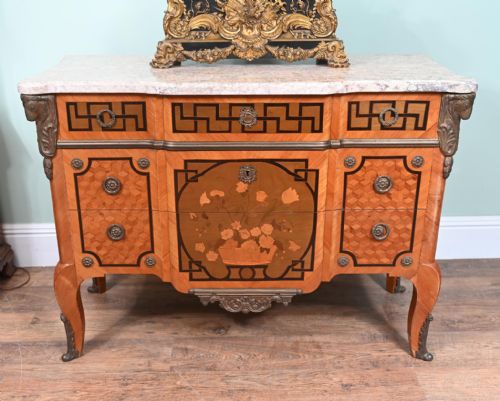
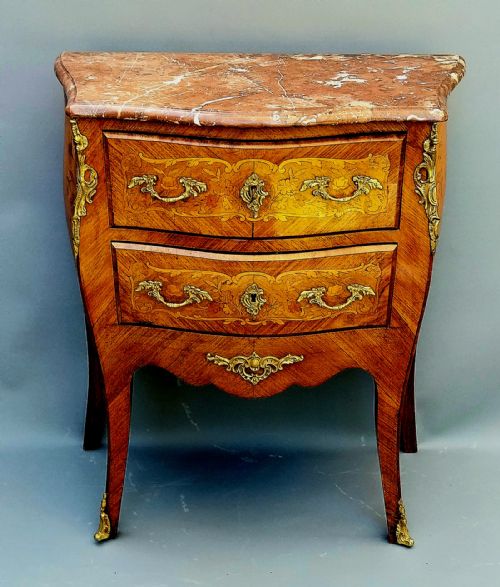


Gilt Bronze Mounted Commode
A gilt bronze mounted commode brings French rococo grandeur and marble-topped presence into a room.
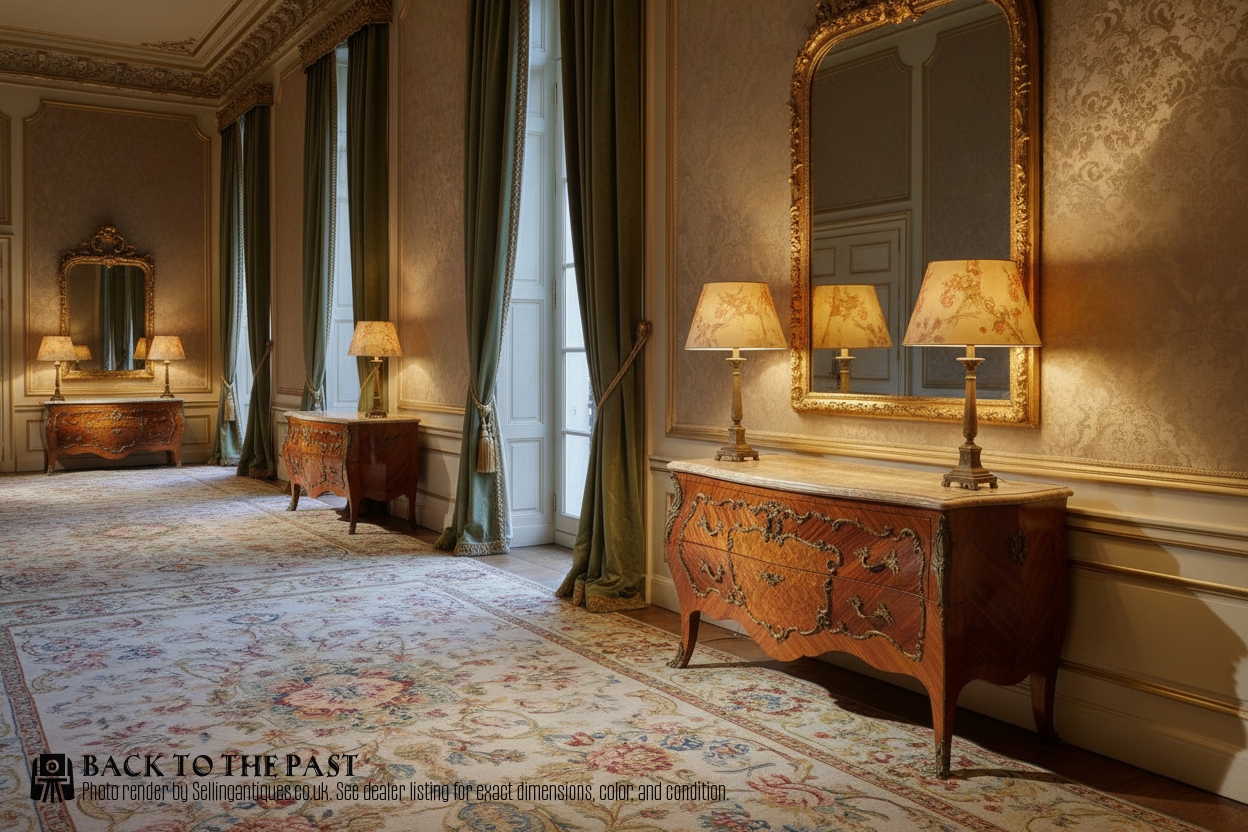
Gilt Bronze Mounted Commode
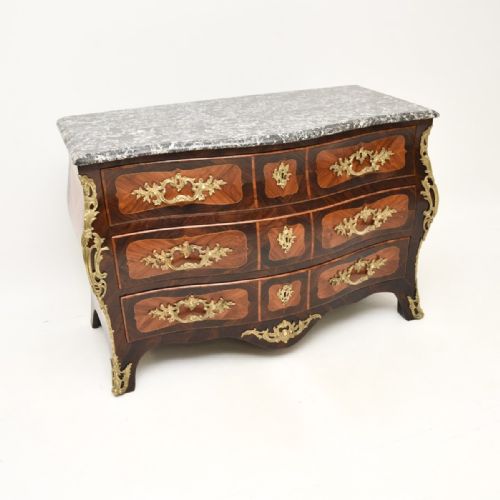
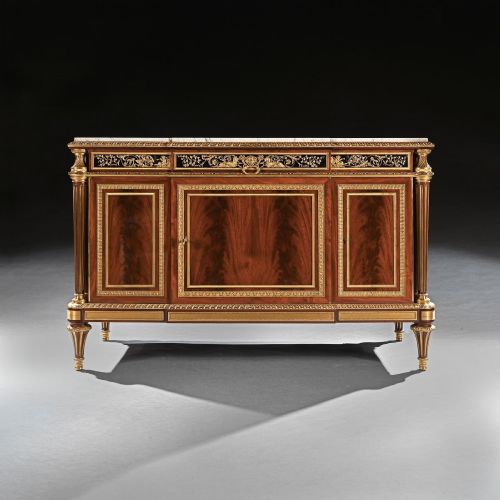
A gilt bronze mounted commode is a low chest of drawers or cabinet designed for formal reception rooms, combining substantial timber carcases with decorative metal mounts. You will most frequently encounter nineteenth-century revival examples following Louis XV and Louis XVI models alongside eighteenth-century originals.
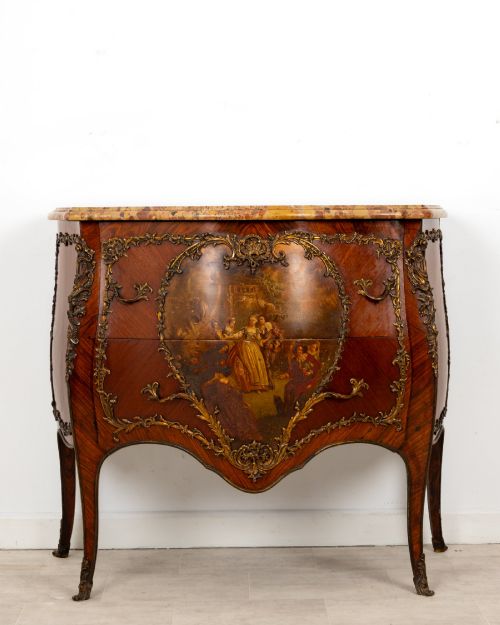
The form spans serpentine chests, bombé shapes, and demi-lune cabinets topped with fitted marble slabs. Makers working in Paris and regional workshops utilised walnut, kingwood, mahogany, and tulipwood to build these statement storage pieces.
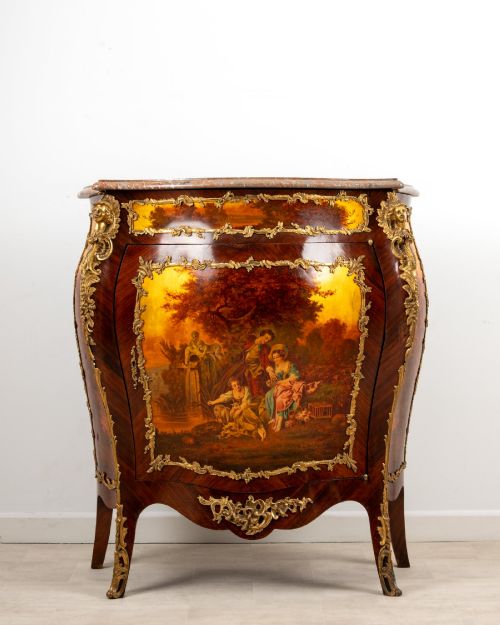
Surviving examples reflect shifting tastes across the eighteenth and nineteenth centuries, incorporating marquetry inlay, painted panels, and Vernis Martin finishes. These variations give each piece a distinct regional or period character suited to formal interiors.
Materials and Construction
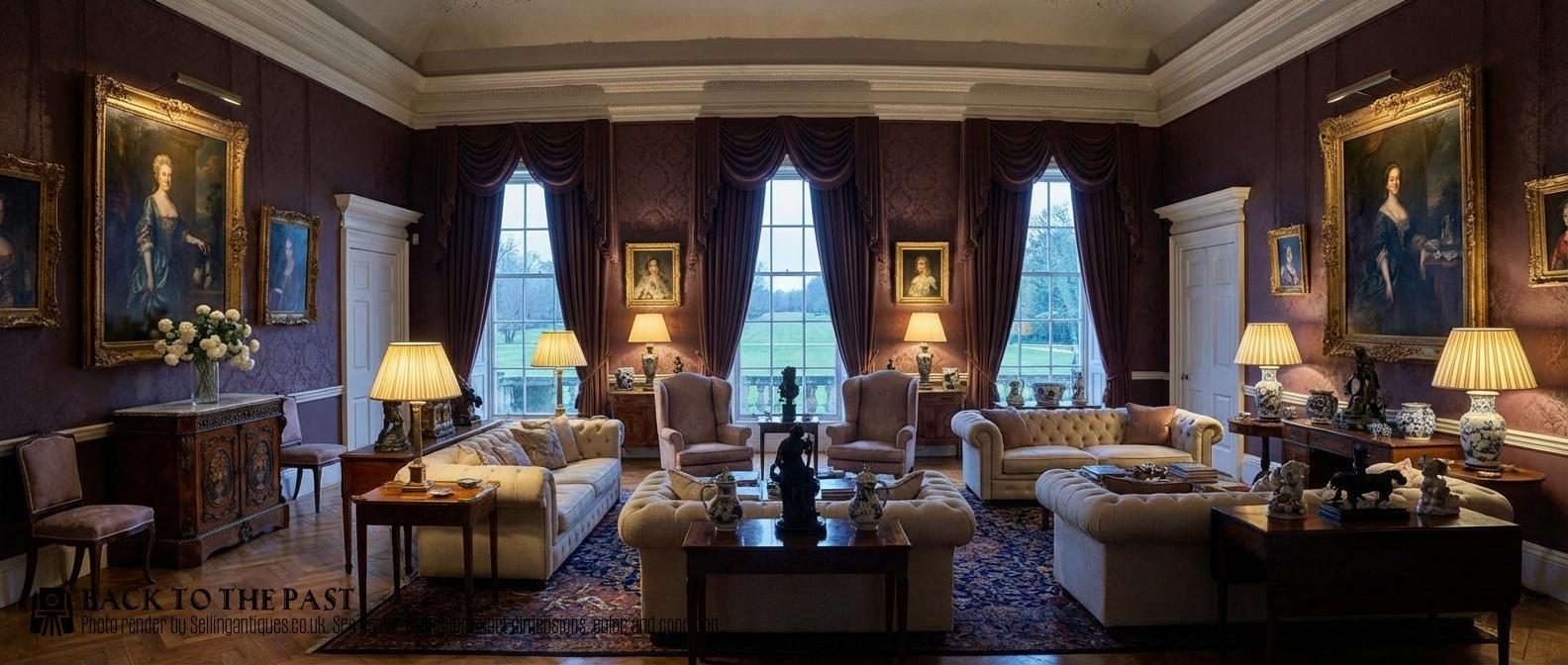
Cabinetmakers built sturdy carcases from timbers such as oak or pine, then veneered the exterior surfaces in figured woods including kingwood, tulipwood, walnut, and mahogany. Marquetry panels incorporated intricate floral or geometric patterns cut from contrasting veneers.
Gilt bronze and ormolu mounts were cast, chased, and fire-gilded before being secured to corners, handles, and aprons to protect vulnerable edges and define the decorative style. Heavy marble slabs were individually shaped and polished to fit precisely onto the top surface of each commode.
Gilt Bronze Mounted Commode Retail Price Guide 2026
Typical asking prices for gilt bronze mounted commode among the pieces listed under this phrase on Sellingantiques today, from the lower quarter to the upper quarter. They describe what is for sale here now, not the wider market.
Materials recorded across the inventory include marble, ormolu, gilt bronze, kingwood, walnut, mahogany, rosewood, and brass.
Assessing Quality
The refinement of the cast bronze and ormolu mounts separates superior commodes from simpler productions, with crisp chasing and deep gilding indicating skilled workshop output. The precision of the marquetry cutting and the choice of expensive figured veneers also distinguish high-grade pieces.
Structural integrity depends on the quality of the timber carcase and the smooth operation of the drawers within it. Finer pieces demonstrate careful hand-joinery and heavy, well-fitted marble tops that align perfectly with the cabinet base.
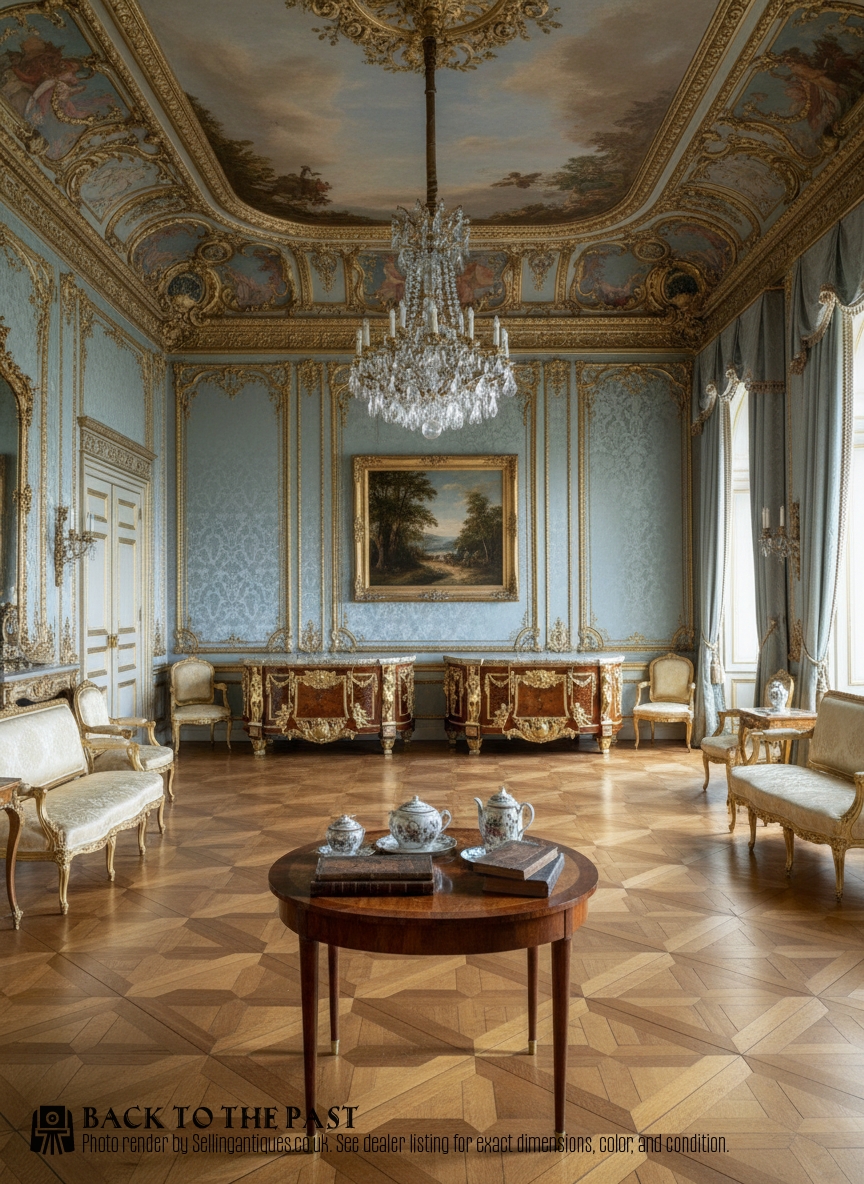
Jacques Bircklé·Henry Dasson·E. Kahn·Thomas Hache·Jean-Henri Riesener·Paul Sormani·Charles Cressant
The Gilt Bronze Mounted Commode Glossary
- Ormolu
- Gilded bronze used for decorative mounts and hardware. The process involves applying an amalgam of gold and mercury to copper or bronze before heating.
- Vernis Martin
- A type of simulated Japanese lacquer developed in France during the eighteenth century. It uses multiple layers of varnish to create translucent painted finishes.
- Bombé
- A swelling, bulging furniture contour characteristic of rococo case pieces. This curved profile requires skilled shaping of both the wood carcase and its veneer.
- Marquetry
- The art of applying small pieces of veneer to a structure to form decorative patterns. Craftsmen use contrasting timbers to create pictorial or geometric designs.
- Demi-lune
- Half-moon or semicircular shape in furniture design. Commodes in this format sit flush against walls while offering a curved front profile.
Gilt Bronze Mounted Commode: Frequently Asked Questions
How do I clean the marble top?
Wipe the marble surface regularly with a soft cloth dampened in warm water and mild soap.
Avoid abrasive cleaners or acidic substances like vinegar or lemon juice, which can etch and dull the polished stone.
Are these commodes suitable for everyday storage?
These antique chests offer functional drawer space suitable for linen, tableware, or general household items.
Care should be taken not to overload the drawers of antique mechanisms to preserve the original internal runners and side timbers.
How do I tell Louis XV from Louis XVI style?
Louis XV style pieces feature flowing asymmetrical curves, bombé profiles, and elaborate rococo ormolu mounts.
Louis XVI style furniture introduces straight tapered legs, geometric symmetry, and neoclassical motifs influenced by archaeological discoveries.
Can I place objects directly on the wood surface?
It is best to use felt pads or coasters beneath heavy decorative objects to prevent scratching the veneered top.
Protecting the polished wood from moisture and direct sunlight preserves the original finish and prevents veneer lifting.