




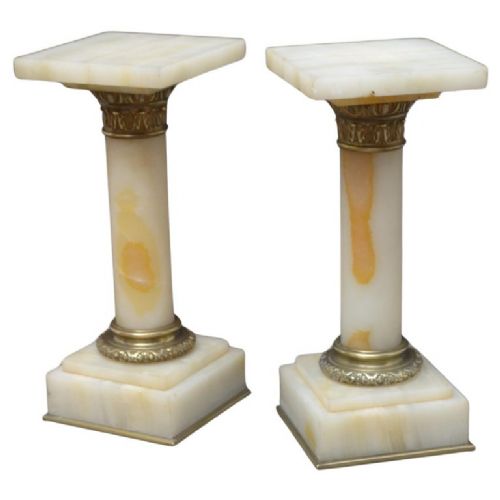


Gilt Bronze Marble Pedestal
A gilt bronze marble pedestal brings classical gravitas to an interior, fusing cold stone with warm cast metal mounts.
Gilt Bronze Marble Pedestal
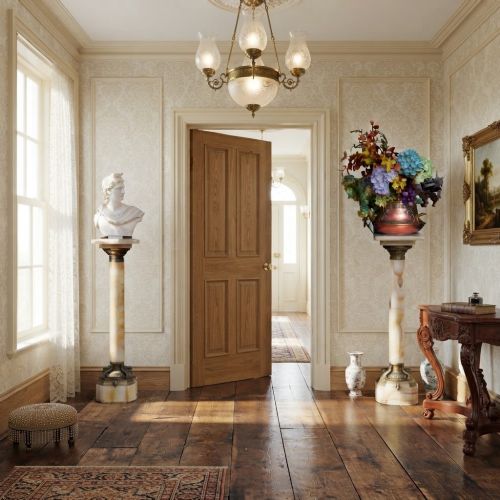
A gilt bronze marble pedestal functions as a display column, plant stand or support for sculpture, drawing chiefly upon nineteenth-century French designs. The core structures pair columns or square shafts of white, black or green marble and onyx with cast gilt bronze and ormolu collars, capitals and bases.
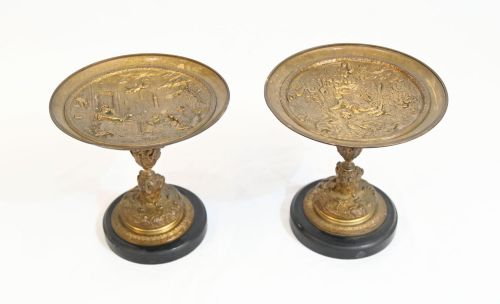
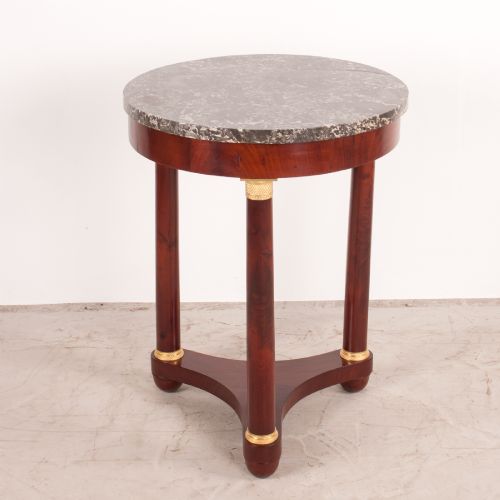
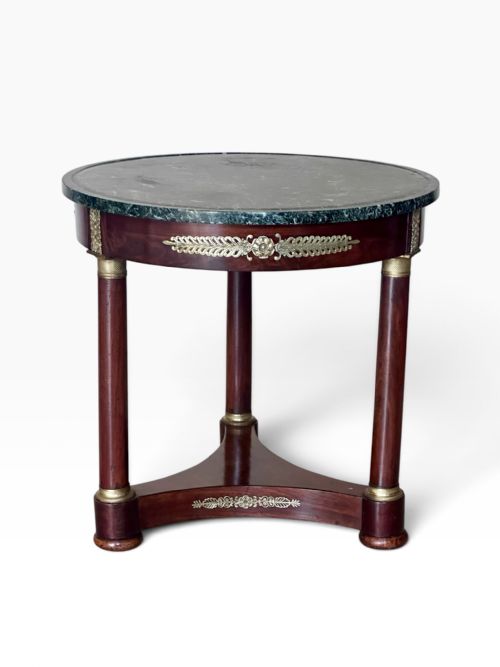
Beyond standard tall columns, the selection includes related forms such as marble-topped gueridons, occasional tables, decorative urns on plinths and tazzas. These pieces reflect Neoclassical, French Empire, Rococo and Louis XVI styles originating from nineteenth-century workshops.
Buyers seeking a gilt bronze marble pedestal encounter matching pairs designed for symmetry alongside single monumental columns and rotating display stands. Materials shift between solid marbles, onyx, mahogany, kingwood and burr elm augmented by bronze mounts.
How they were made
Makers turned and polished dense stones like marble and onyx to form cylindrical shafts and heavy bases, often utilising sections for fluted columns or plain pedestals. Timber carvers built supporting tables and stands in mahogany, walnut, kingwood and burr elm.
Foundries cast bronze elements using traditional techniques before applying mercury gilding or modern electroplating to create the bright ormolu and gilt bronze surface finishes. Artisans then chased the metal mounts by hand to sharpen details on acanthus leaves, collars and figures before fixing them to the stone and timber bodies.
Gilt Bronze Marble Pedestal Retail Price Guide 2026
Typical asking prices for gilt bronze marble pedestal among the pieces listed under this phrase on Sellingantiques today, from the lower quarter to the upper quarter. They describe what is for sale here now, not the wider market.
Listings feature nineteenth-century pieces spanning the Regency, Napoléon III and Edwardian eras in marble, onyx, bronze and mahogany.
What varies in quality
Quality rests in the crispness of the bronze chasing and the selection of the stone. Superior examples display deeply sculpted acanthus foliage and finely articulated mounts that fit flush against polished marble or onyx shafts.
Construction methods dictate longevity, separating heavy stone columns with robust internal metal rods from lighter timber frameworks. The choice of materials - such as vert de Maurin marble or rich kingwood veneers paired with heavy fire-gilded bronze - indicates the original workshop's standing.
Zwiener Jansen Sucesseur·Ferdinand Preiss
The Gilt Bronze Marble Pedestal Glossary
- Ormolu
- A golden-coloured alloy of copper, zinc and sometimes tin cast into decorative mounts and fire-gilded. It frequently trims the capitals and bases of columns.
- Guéridon
- A small round French table supported by a central pillar or figures. These often feature marble tops and gilt bronze mounts.
- Tazza
- A shallow saucer-shaped vessel raised on a stem and foot, commonly executed in bronze and marble for display on pedestals.
- Grand Tour
- Cultural travel undertaken by wealthy Europeans during the eighteenth and nineteenth centuries, inspiring souvenir bronzes and miniature architectural marbles.
- Athenienne
- A tripod stand supporting a basin or urn, styled after ancient Greek and Roman furniture found in archaeological excavations.
Gilt Bronze Marble Pedestal: Frequently Asked Questions
What held up a gilt bronze marble pedestal?
These supports carried heavy bronze sculptures, porcelain urns, decorative clocks or large lamps within nineteenth-century drawing rooms and halls.
Their sturdy stone shafts and weighted metal bases provided the necessary stability for expensive decorative objects.
How do I spot French Empire style?
French Empire pieces rely on strict symmetry, classical military motifs, and rich mounts of gilt bronze against dark marble or mahogany.
They draw heavily on ancient Roman, Greek and Egyptian design vocabulary popular during the early nineteenth century.
What is the difference between onyx and marble?
Onyx is a translucent banded stone that allows light to penetrate the surface slightly, offering warm amber and green tones.
Marble presents an opaque crystalline structure with distinct veining in white, black, green or sienna hues.