


Gilt Bronze Mantel Candlesticks
Gilt bronze mantel candlesticks bring sculptural warmth and classical presence to a fireplace, pairing cast metalwork with marble, glass, and patinated bronze.
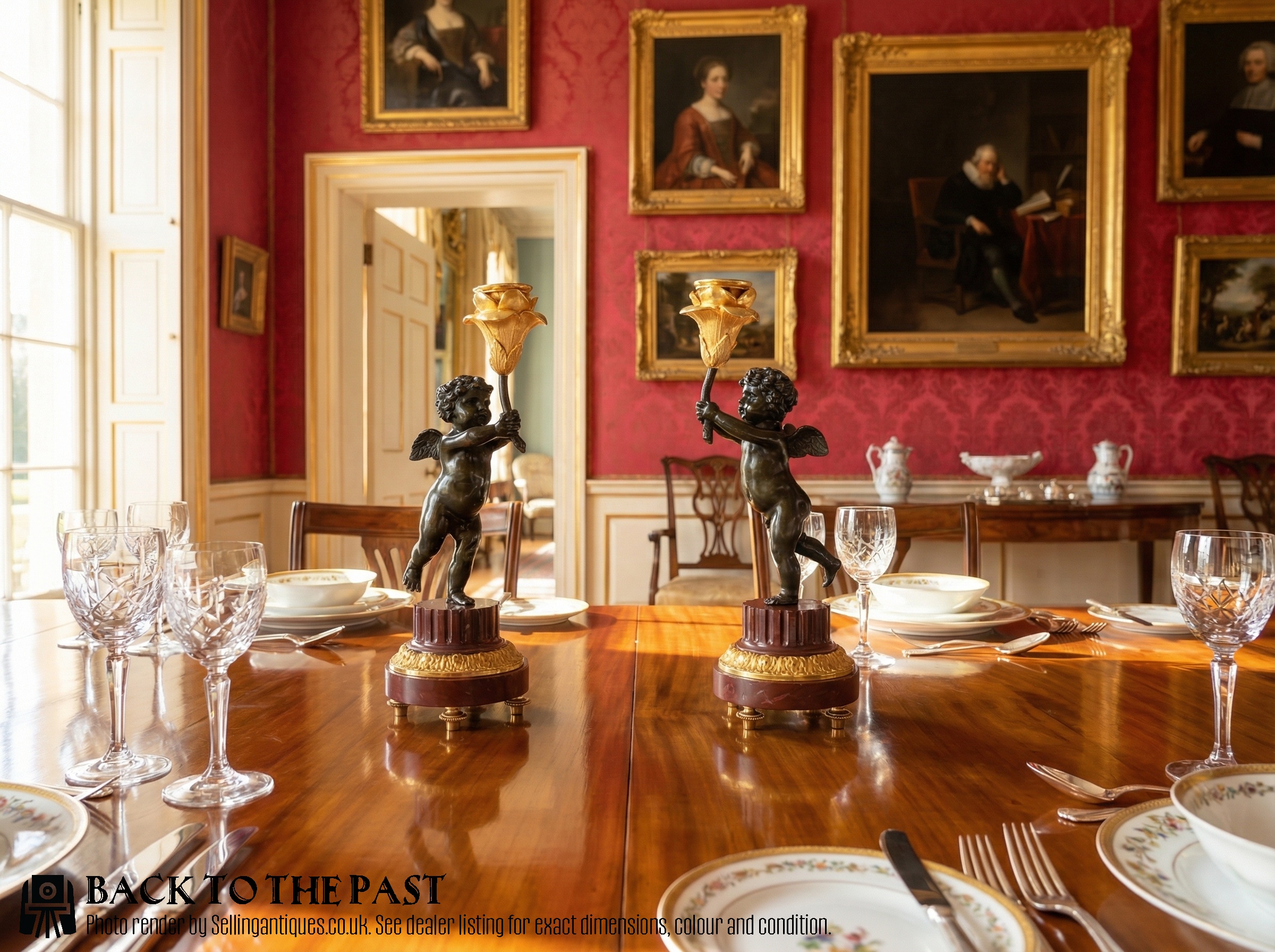
Gilt Bronze Mantel Candlesticks
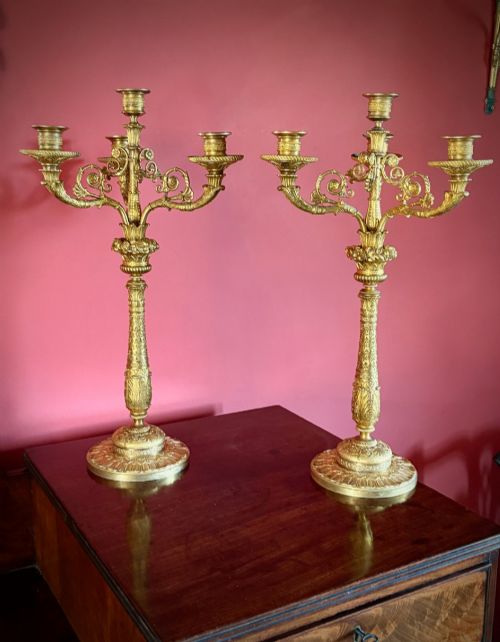
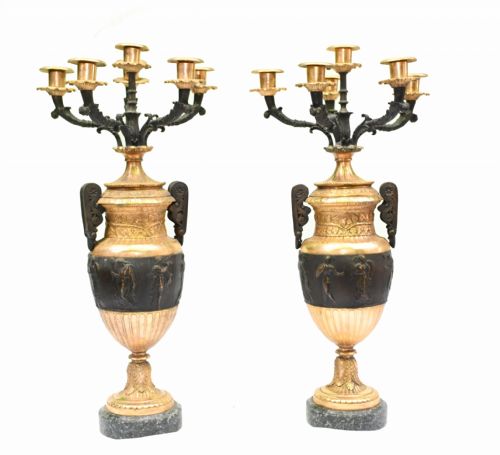
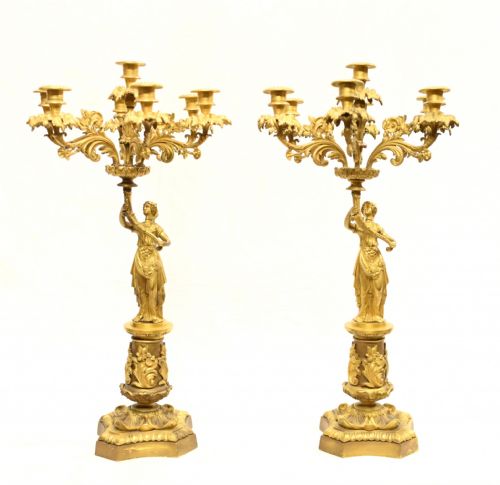
Gilt bronze mantel candlesticks encompass pairs and sets designed to stand upon a chimney piece, taking the form of single candlesticks, multi-armed candelabra, and lustres. The selection is dominated by nineteenth-century French examples, alongside Regency pieces from English and continental workshops.
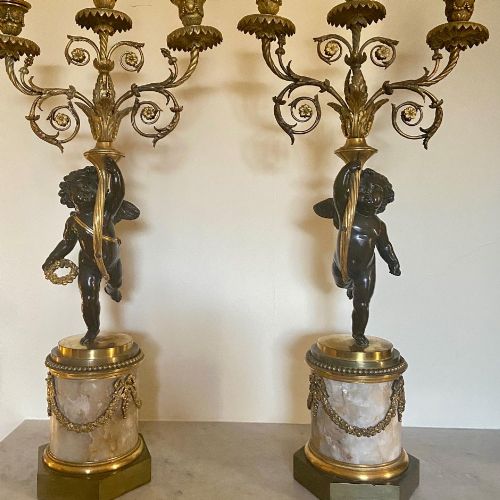
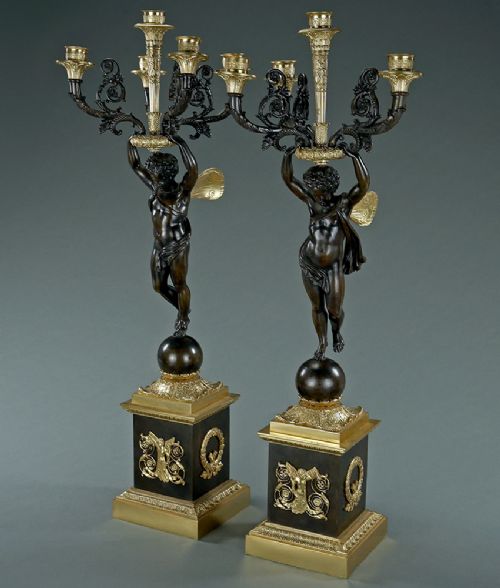
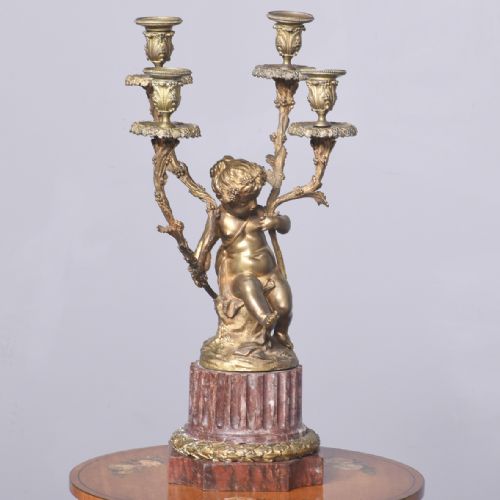
Makers and designers drew upon established vocabularies, producing pieces styled in the manner of the French Empire, Louis XVI, and French Rococo Revival periods. Forms range from architectural columns and campana sconces to figurative compositions featuring putti, cherubs, and animals amongst branches.
How they were made
Foundries utilised a combination of cast bronze and ormolu, applying a fine gold amalgamation to the metal surface through fire gilding or electroplating. This was frequently contrasted with dark patinated bronze, slate, or white marble bases to heighten the visual impact of the metalwork.
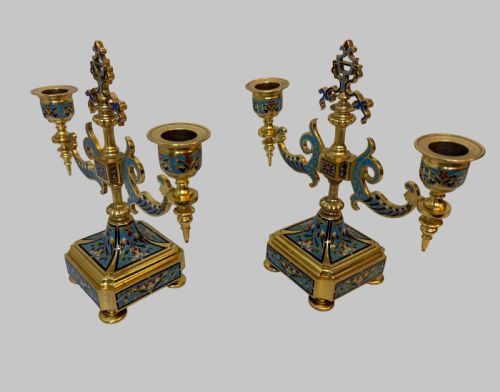
Many designs incorporated supplementary materials such as cut glass lustres, champlevé enamel, cloisonné, and fluorspar to catch the flickering light of candles in a dimly lit room.
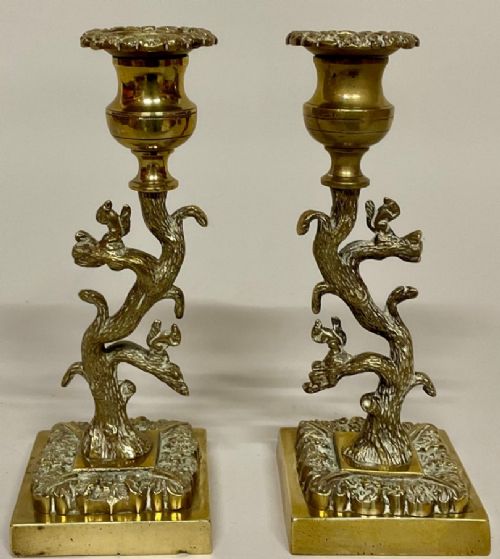
Squirrels peer out from cast bronze tree branches on Regency candlesticks.
What varies in quality
The integration of secondary materials plays a significant role, as finely fitted marble bases, unchipped cut glass drops, and precise enamel work elevate an object above standard production.
The Gilt Bronze Mantel Candlesticks Glossary
- Ormolu
- Gilt bronze produced by applying a mercury and gold paste to cast bronze before heating. The technique created a durable, rich golden surface favoured by nineteenth-century French makers.
- Patinated bronze
- Bronze treated with chemical solutions to alter its surface colour, usually to a dark brown or greenish tone. It provides a stark contrast against bright ormolu mountings.
- Campana
- A bell-shaped vessel form commonly used for the socket or sconce of a candlestick. This classical silhouette derives from ancient Roman garden urns.
- Lustre
- A candlestick or candelabrum hung with cut glass prisms or pendants. These pendants refracted candle flame across the room.
- Champlevé
- An enamelling technique where troughs are dug into the bronze surface and filled with coloured glass paste before firing. The resulting patterns sit flush with the surrounding metal.
Gilt Bronze Mantel Candlesticks: Frequently Asked Questions
Where were these mantel candlesticks placed?
They stood centrally upon chimney pieces in formal reception rooms and parlours, often flanked by mirrors or clocks to amplify the reflected light. Their scale was chosen to balance the proportions of the fireplace surround.
In daily use, they provided ambient illumination during evening hours before the advent of gas lighting and electric lamps.
How do I care for gilt bronze?
Gilt bronze requires gentle dusting with a soft, dry brush to prevent the accumulation of dirt within recessed chased details. Moisture and harsh cleaning agents must be avoided to protect the delicate gold surface.
Proper handling ensures the original patination and mercury gilding remain intact over decades of domestic display.
How do I identify Regency period pieces?
Regency pieces often display distinct English or continental interpretations of classical motifs, incorporating bronze and ormolu alongside specific naturalistic subjects like trees and animals. They date from the early nineteenth century during the British Regency era.
Proportions tend to be architecturally restrained, reflecting the neoclassical taste prevailing in London workshops at the time.