
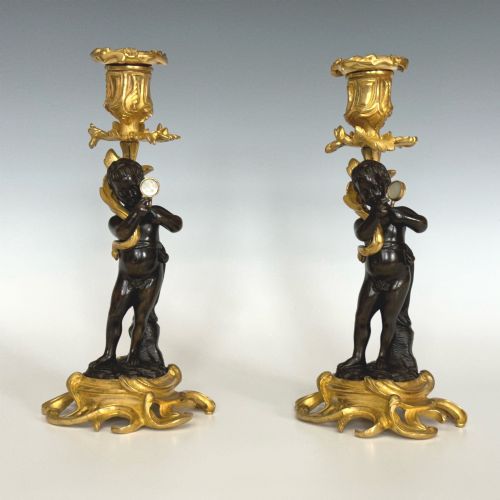


Gold Ormolu Candlestick Pair
A gold ormolu candlestick pair brings disciplined French styling and golden warmth to a surface.
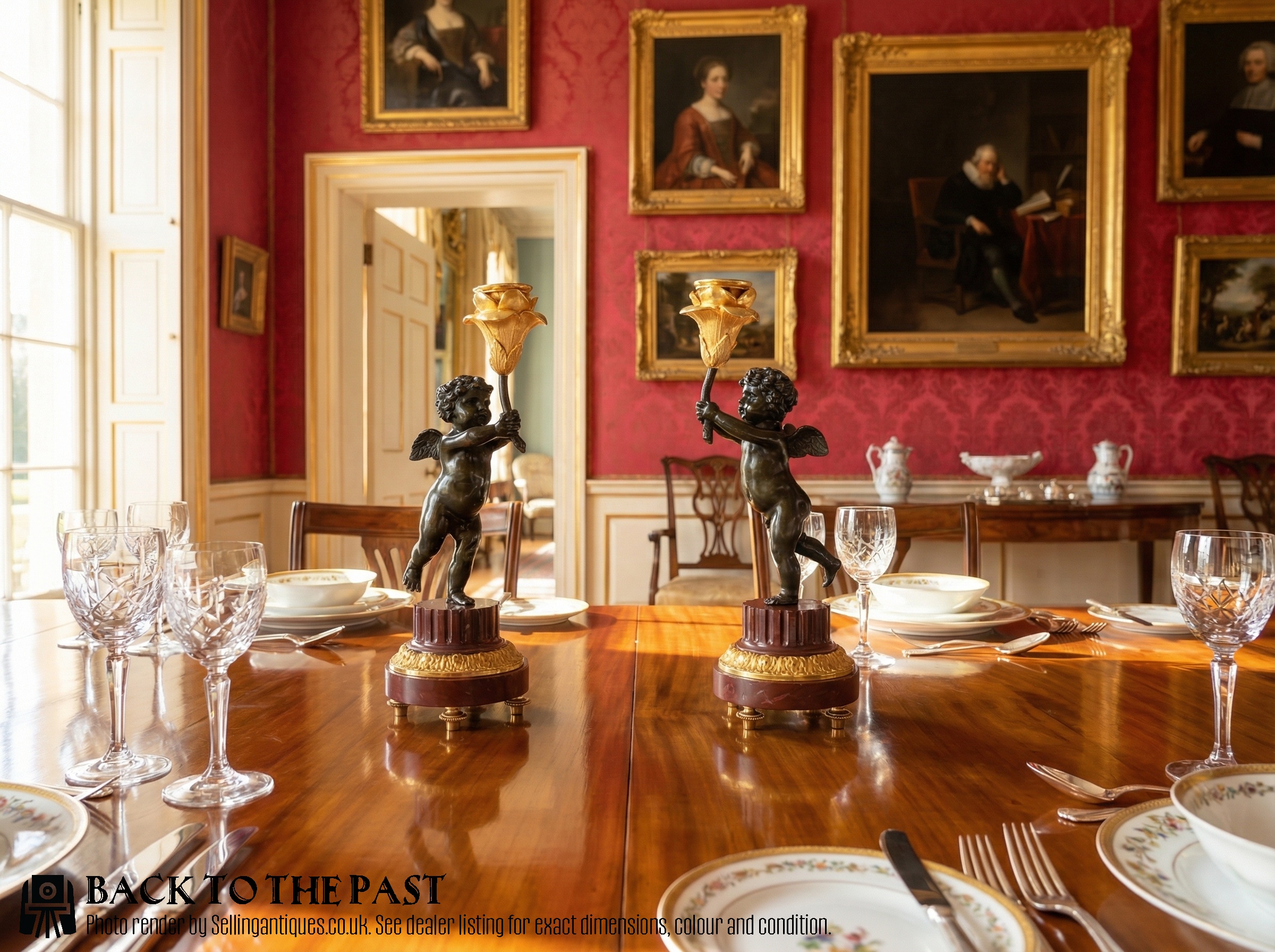
Gold Ormolu Candlestick Pair
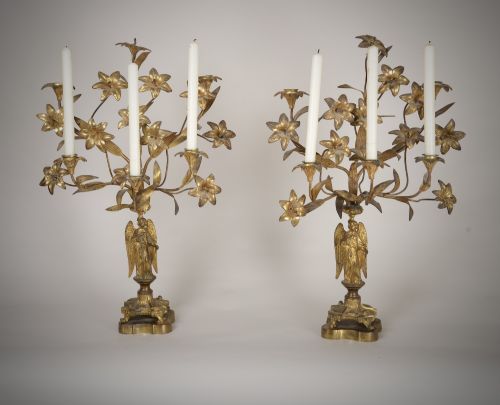
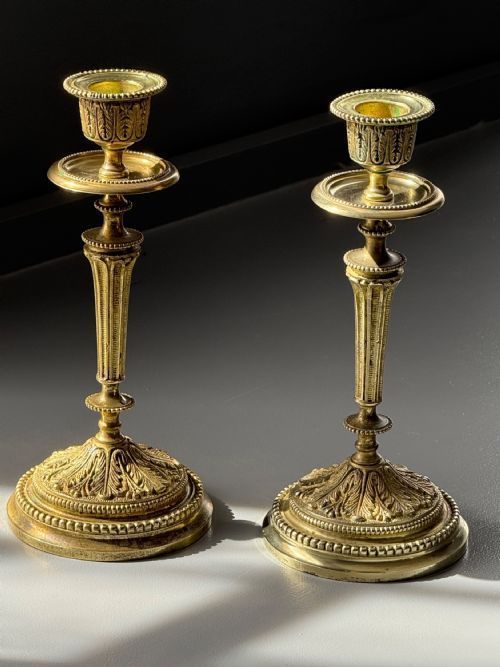
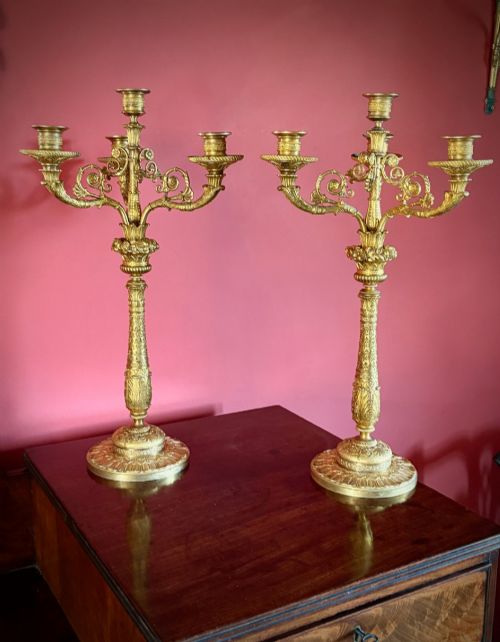
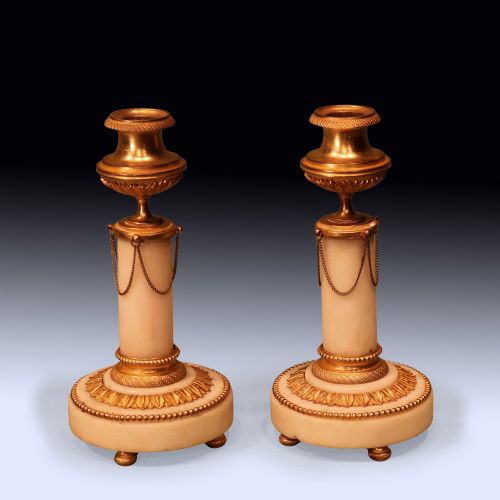
A gold ormolu candlestick pair consists of twin light holders cast in metal and treated with a high-grade gold amalgam finish, representing periods from the eighteenth century to the twentieth century. These items appear in domestic settings as mantel garnitures, table lights, or converted lamp bases, carrying aesthetic influences from French Empire, Louis XVI, and Rococo Revival styles.
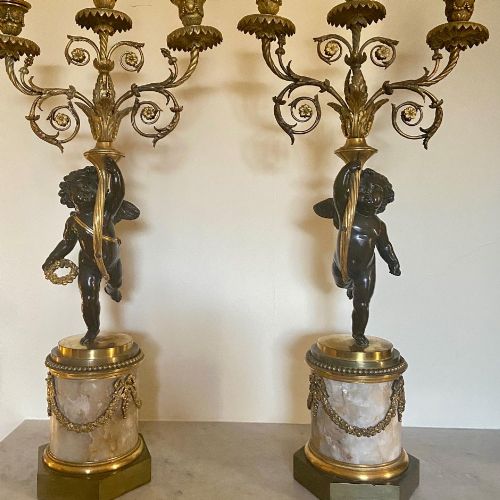
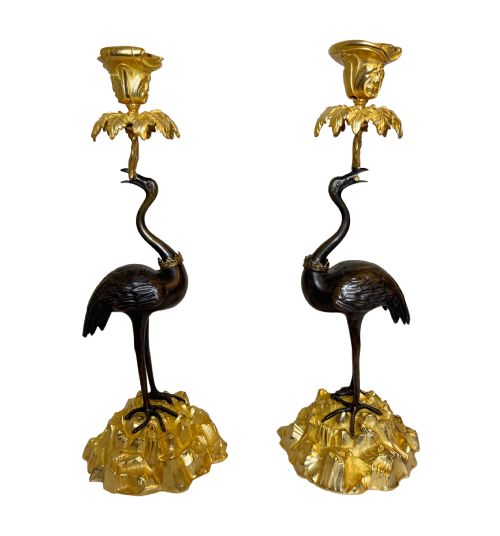
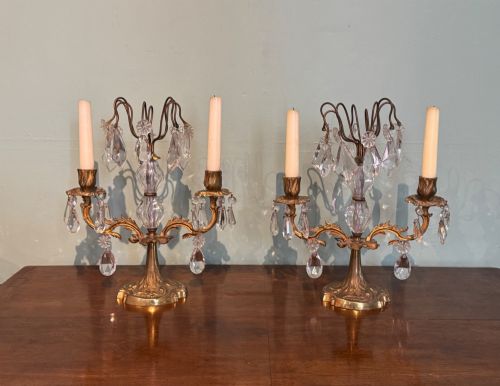
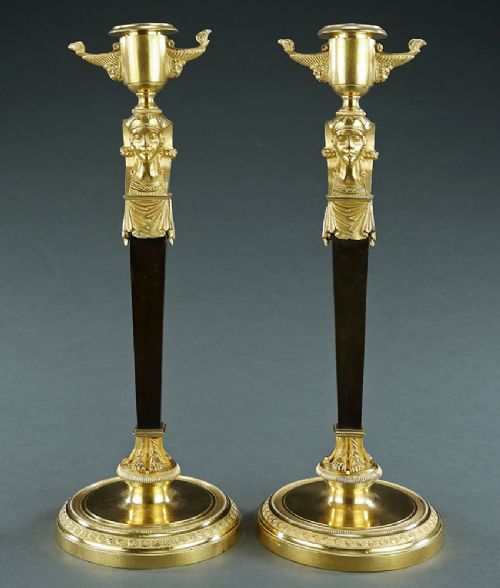
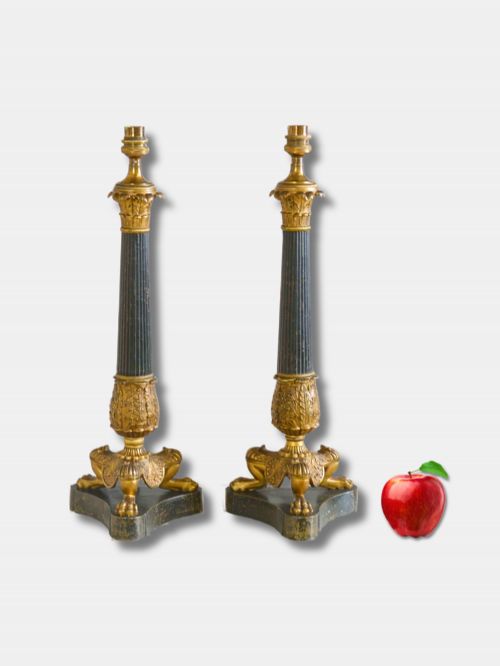
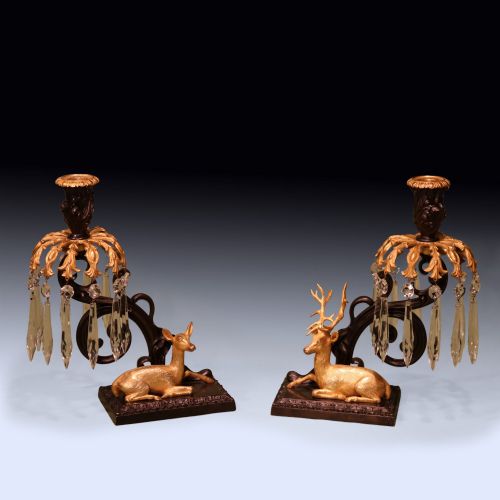
The version most commonly met on this page is the nineteenth-century French gilt bronze or ormolu model, often paired with patinated bronze figures, marble plinths, or cut glass lustres. Such examples frequently incorporate classical motifs, cherubs, or animal forms, reflecting European interior decoration trends of the period.
How they were made
The manufacture of these objects relies on bronze or brass casting, followed by the meticulous application of mercury gilding or modern electroplating to create the signature ormolu surface. Artisans then chased the cooled metal by hand using punches and matting tools to achieve contrasting polished and matte golden textures.
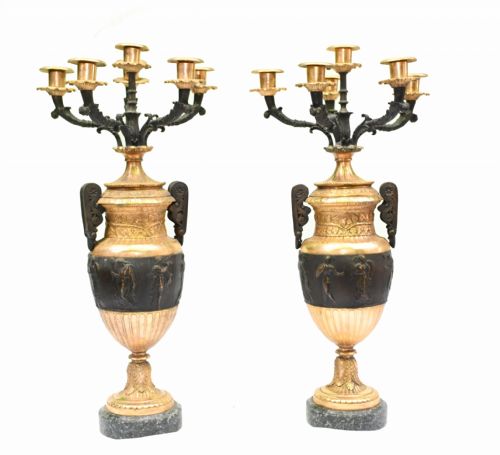
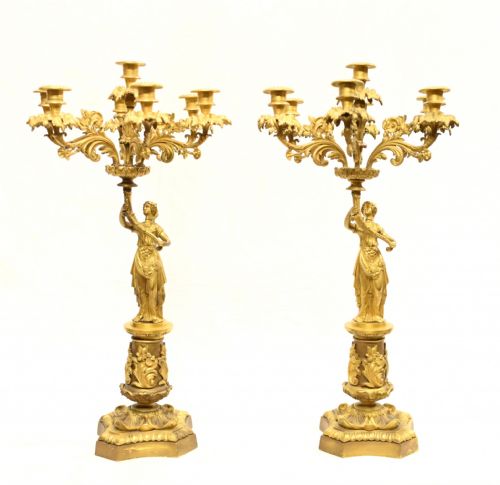
Many designs combine the gilded metal with carved white marble, slate, or fluorspar bases, while others integrate patinated dark bronze elements to create a sharp tonal contrast. Component parts are typically secured via threaded internal rods, allowing the multi-branch candelabra or simpler candlestick forms to be disassembled for cleaning.
Design influences span French Empire, Neoclassical, and Gothic revival movements.
What varies in quality
Quality rests principally on the crispness of the metal chasing and the depth of the original gilding, where superior examples retain sharp leaf and facial details without softening from over-cleaning. The weight and thickness of the cast bronze components also dictate stability and durability.
Secondary materials influence the standard of the piece, with dense marbles, flawless cut glass lustres, and richly patinated secondary bronze figures distinguishing high-tier workshop output from simpler domestic brass alternatives.
Francois Redmond·Thomas Hope·Galle
The Gold Ormolu Candlestick Pair Glossary
- Ormolu
- A gilded bronze surface finish created by applying a mixture of mercury and gold to a base metal, then heating to vaporise the mercury. This technique produces a durable golden lustre typical of fine decorative hardware.
- Candelabra
- A branched lighting fixture designed to hold multiple candles simultaneously. These pieces often feature removable central finials or arms.
- Patinated bronze
- A dark chemical or natural surface treatment applied to bronze to create brown, green, or near-black tones. It provides a visual contrast against bright gold ormolu mounts.
- Lustre
- A glass pendant or drop hung from the drip pan of a candlestick to reflect candlelight. They are frequently cut in spear or prism shapes.
- Garniture
- A set of decorative objects, typically comprising a central clock and flanking candlesticks or candelabra, displayed together on a mantelpiece.
Gold Ormolu Candlestick Pair: Frequently Asked Questions
What is a gold ormolu candlestick pair?
A gold ormolu candlestick pair comprises two matching candle holders made from gilt bronze or brass, designed for ornamental lighting.
These pieces originate primarily from European decorative traditions spanning the eighteenth to the twentieth centuries.
How were they used historically?
Historically, these items illuminated dining tables, sideboards, and mantelpieces in affluent homes.
They served both as functional light sources and as status symbols that reflected candlelight through polished metal surfaces.
Can I use modern candles in them?
Most antique sockets accommodate standard taper candles, though minor variations in nineteenth-century sizing occur.
Care should be taken to protect the metal and marble surfaces from dripping wax during use.
How do I clean ormolu safely?
Cleaning requires only a soft, dry cloth to remove dust without disturbing the delicate gold surface.
Harsh metal polishes and abrasive cleaners will strip the thin gilt layer and permanently damage the finish.