


Patinated Bronze Table Candlesticks
Patinated bronze table candlesticks bring weight and dark metallic contrast to a room, forged in classical forms through the nineteenth century.
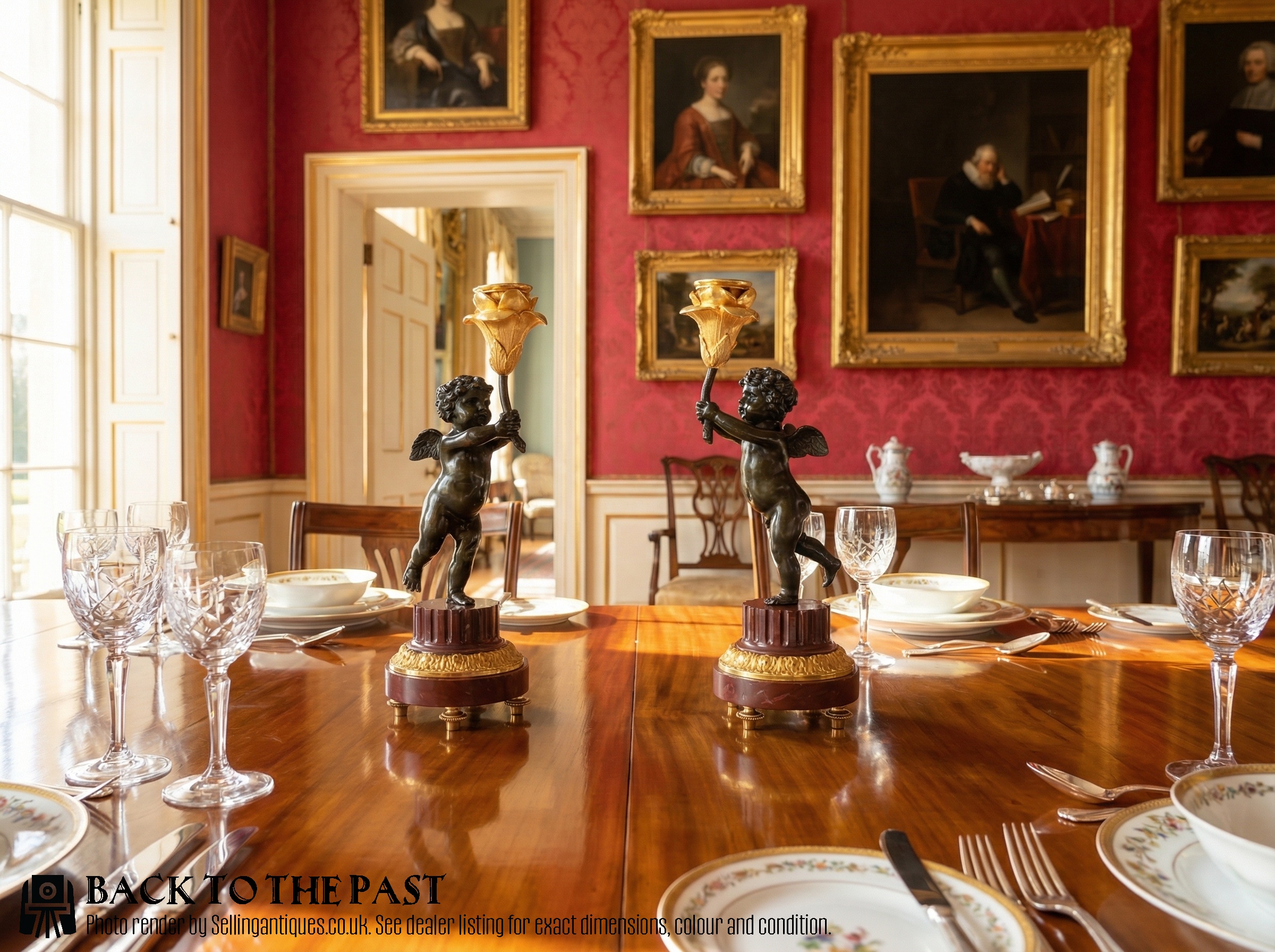
Patinated Bronze Table Candlesticks
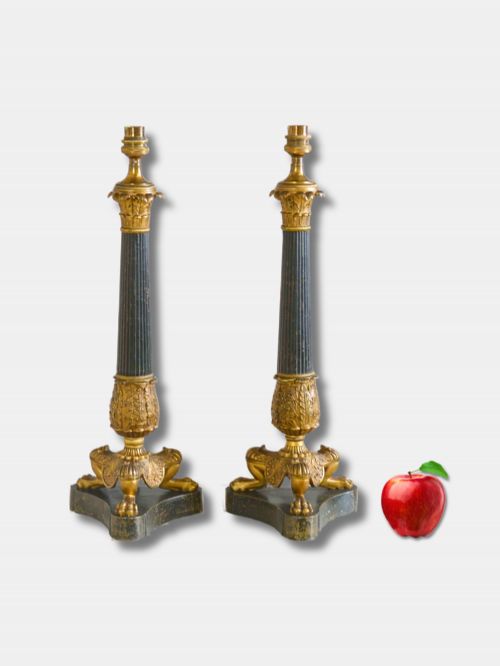
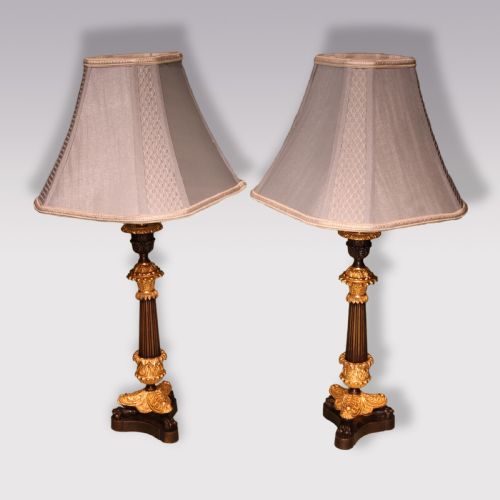
When you search for patinated bronze table candlesticks, you are looking at nineteenth-century lighting equipment cast primarily in France, alongside English Regency examples and pieces created during the Grand Tour. The pieces most likely to meet you on this page are pairs of table lights combining dark cast metal with contrasting ormolu mounts, column forms, or figurative supports.
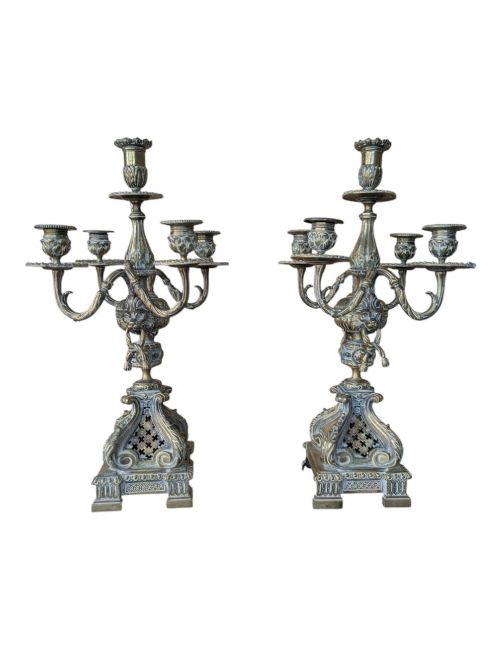
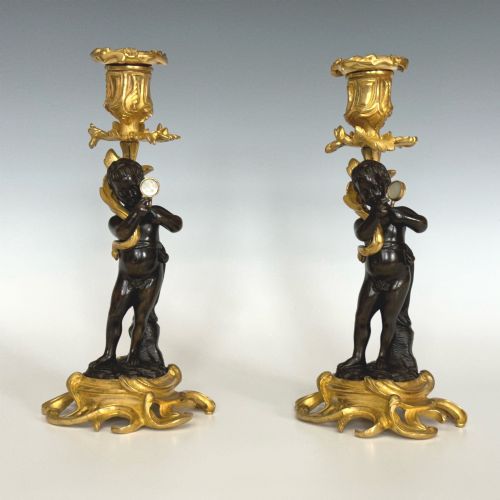
The inventory spans straightforward single candle holders up to multi-branch candelabra and garniture sets incorporating marble bases, silk elements, and detailed figures ranging from putti to dolphins. Styles lean heavily toward French Empire, Regency, Louis XVI, and Napoleon III designs, reflecting neoclassical tastes across the decades from eighteen hundred to eighteen ninety.
Object types stretch from standard candlesticks to converted lamps, table lights, and candelabras carrying up to five branches. They function equally well as decorative mantel ornaments or practical sources of warm illumination when fitted with candles or appropriate shades.
What varies in quality
The choice of secondary materials also elevates a piece, with heavy Sienna marble bases and fire-gilded ormolu standing apart from simpler brass components and painted finishes. Proportion, balance, and the structural integrity of multi-branch candelabra arms dictate how successfully a pair holds visual authority in an interior.
Several nineteenth-century pairs feature sculpted dolphins and zodiac symbols serving as unexpected supports for flickering candle flames.
The Patinated Bronze Table Candlesticks Glossary
- Patinated bronze
- Bronze treated with chemical solutions to produce a dark brown, black, or greenish surface coloration. This finish protects the metal and provides visual depth.
- Ormolu
- Gilding technique involving the application of a finely ground mercury and gold amalgam to bronze. The piece is then heated to drive off the mercury, leaving a rich gold coating.
- French Empire
- A neoclassical design style spanning the early nineteenth century characterised by Roman, Greek, and Egyptian military motifs. It favors heavy symmetry and strict classical geometry.
- Candelabra
- A branched candlestick designed to hold multiple candles simultaneously. These pieces often feature removable branches to function as standard single candlesticks.
- Grand Tour
- The nineteenth-century practice where affluent travellers collected antiquities and classical souvenirs across Europe. It heavily influenced the production of bronze sculpture and lighting.
Patinated Bronze Table Candlesticks: Frequently Asked Questions
How do I clean patinated bronze safely?
Dust the surface regularly with a soft, dry cloth to prevent the accumulation of grit that can scratch the dark finish. Avoid using metal polishes, harsh detergents, or water on patinated areas, as these treatments strip the chemical finish.
For gilded ormolu sections, gentle dusting with a soft brush is sufficient. Any aggressive cleaning will remove the historic surface layer and reduce the visual integrity of the piece.
Were these candlesticks originally wired for electricity?
Nineteenth-century lighting was exclusively designed for wax candles or oil before being adapted for electricity in later decades. Many surviving examples have been converted into table lamps while retaining their original patinated bronze columns.
Conversions can often be reversed if the internal wiring path preserves the original candle nozzle structure. Check each listing to see whether the piece remains configured for wax or houses modern electrical fittings.
How do I date a nineteenth-century bronze?
Dating relies on stylistic clues, casting techniques, and the combination of materials like ormolu and marble. Pieces from eighteen hundred tend to display strict Regency or French Empire restraint, while later items from eighteen eighty embrace more elaborate Rococo revival styles.
Examining the underside reveals construction methods, such as hand-cut screws or peg assembly, which help place the object within the broader nineteenth-century timeline.