


Gilt Bronze Hearth Dogs
These gilt bronze hearth dogs bring French Rococo revival elegance to a fireplace, combining practical log support with ornamental metalwork.
Gilt Bronze Hearth Dogs
When buyers search for gilt bronze hearth dogs, they examine heavy metal fire furniture designed to support firewood within a domestic grate. The pieces on this page appear almost entirely as matched pairs of chenets and andirons, originating predominantly from nineteenth-century French workshops.
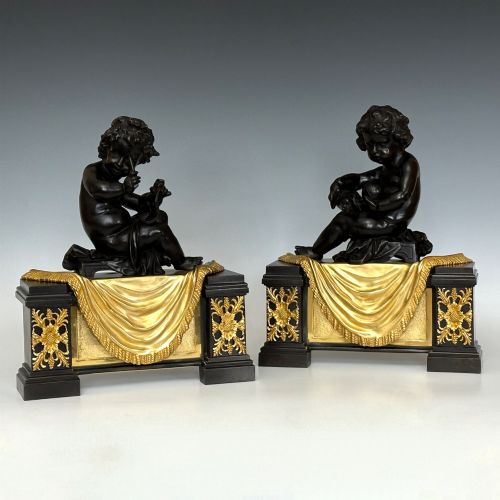
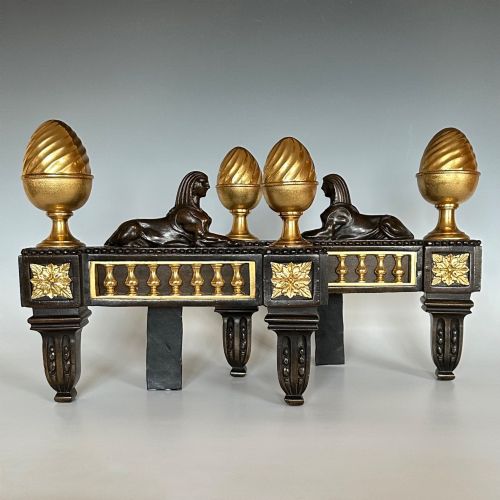
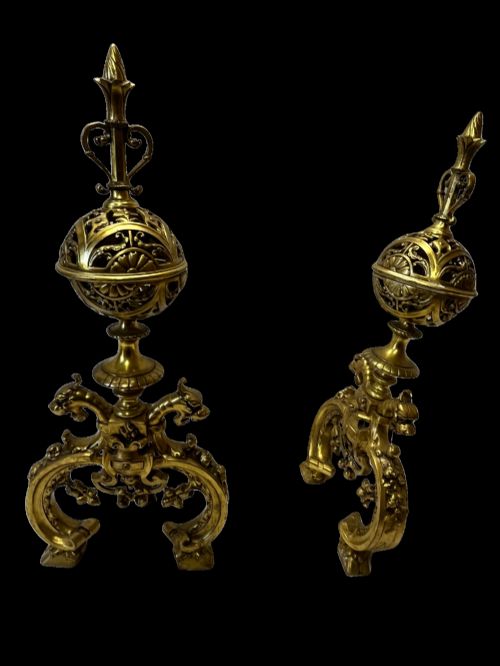
The inventory spans several distinct revival aesthetics, including Louis XIV and Louis XV styles alongside French Empire designs. Buyers encounter forms ranging from simple parcel-gilt and cast iron supports to elaborate figural chenets adorned with cherubs and scrollwork.
Most examples date across the nineteenth century, with specific pieces recorded from the Regency period through to the eighteen-nineties. These accessories frequently incorporate adjustable widths and accompanying fire tool rests to suit varied hearth dimensions.
What varies in quality
The primary distinction in quality lies within the crispness and depth of the metal casting and subsequent chasing. Finer examples display sharp, well-defined figural details and sophisticated scrollwork, whereas simpler items show softer edges and flatter relief.
Material selection also dictates the hierarchy of these objects, with heavy ormolu and patinated bronze commanding greater presence than standard cast brass or iron. The retention of original gilding and the structural integrity of adjustable components further separate standard utility pieces from high decorative items.
Several pairs include cheeky cherubs keeping watch over the hearth fire.
The Gilt Bronze Hearth Dogs Glossary
- Chenet
- An alternative French term for a fire dog or andiron used to support logs in an open hearth. These decorative metal uprights sit at the front of the fireplace.
- Ormolu
- Finely ground high-carat gold mercury-gilded onto a bronze base. This technique creates a rich, lasting metallic lustre characteristic of luxury nineteenth-century French metalwork.
- Patinated Bronze
- Bronze treated with chemical solutions to produce a darkened surface coloration. It provides a striking visual contrast against bright ormolu mountings.
- Rococo Revival
- A nineteenth-century design movement resurrecting eighteenth-century asymmetrical curves, scrollwork, and naturalistic motifs. This style dominates the ornamentation found on these hearth pieces.
- Parcel Gilt
- A decorative method where only specific raised details or figures on an object receive a gold finish. The remaining areas display the natural dark metal underneath.
Gilt Bronze Hearth Dogs: Frequently Asked Questions
What are gilt bronze hearth dogs?
These pieces are decorative metal fire dogs and chenets designed to hold logs inside an open fireplace. They combine sturdy iron or bronze frames with ornate gilt decoration.
Most examples date from the nineteenth century and reflect French interior design styles like Rococo revival and Louis Quinze.
How do you use them?
Hearth dogs sit inside the fireplace hearth to elevate firewood, allowing air to circulate underneath for a better burn. The decorative fronts remain visible outside the grate.
Some pairs include adjustable widths or integrated rests to hold companion fire tools.
Are they all French?
The vast majority of these pieces follow French stylistic traditions and originate from nineteenth-century continental workshops. They frequently incorporate design elements from Louis XIV and Regency periods.
English hearths also adopted these continental fashions, particularly during the height of the Rococo revival.
How do I clean gilt bronze?
Gilt bronze and ormolu require gentle dusting with a soft brush to protect the delicate gold layer. Avoid harsh chemical cleaners or abrasive metal polishes which strip the gilding.
Accumulated soot or fireplace ash should be removed using a dry cloth without rubbing aggressively.
What is the difference between andirons and chenets?
The terms are largely interchangeable, though chenet is the traditional French word for the decorative firedogs seen on this page. Both serve the primary function of supporting logs within the hearth.
In practice, pieces described as chenets often feature more elaborate sculptural fronts suited for formal drawing rooms.