
Gilt Bronze French Chest
When you search for a gilt bronze french chest, you step into centuries of continental craft built on marble, kingwood, and sculptural mounts.
Gilt Bronze French Chest
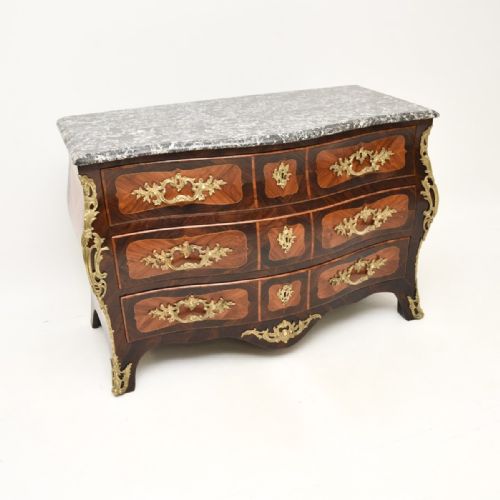
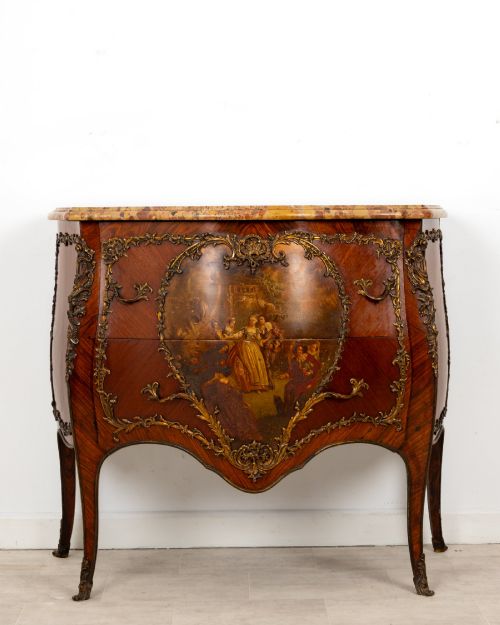
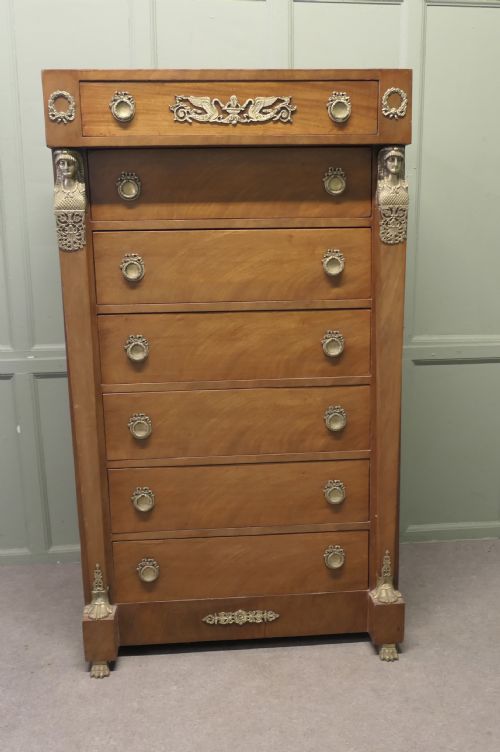
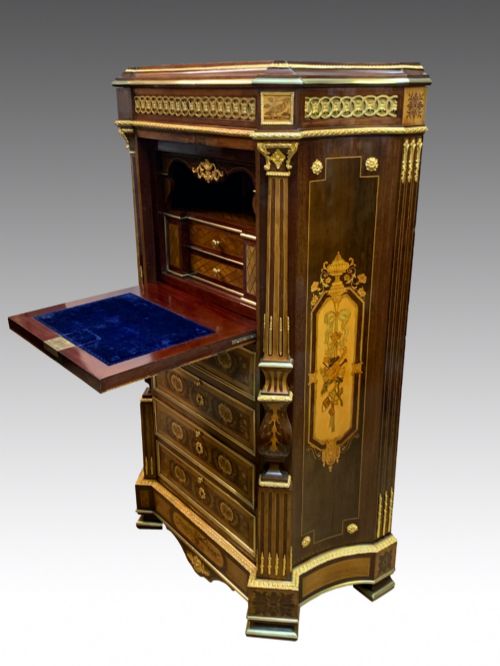
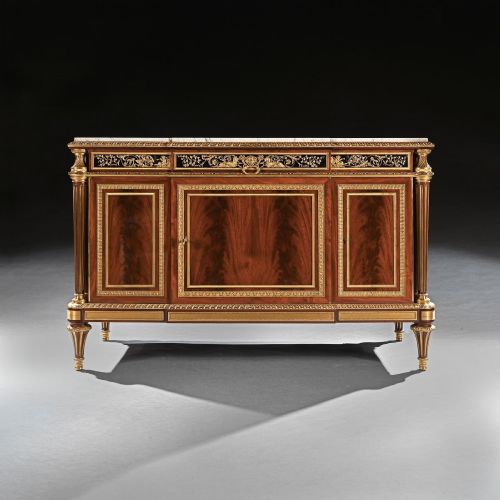
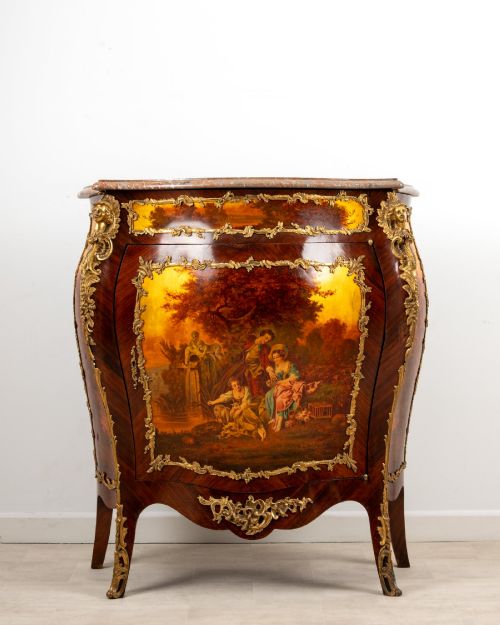
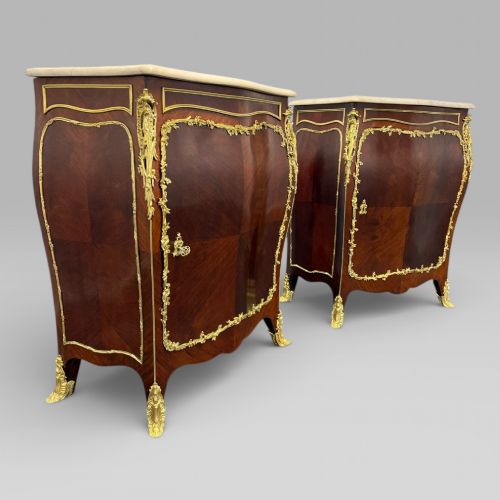
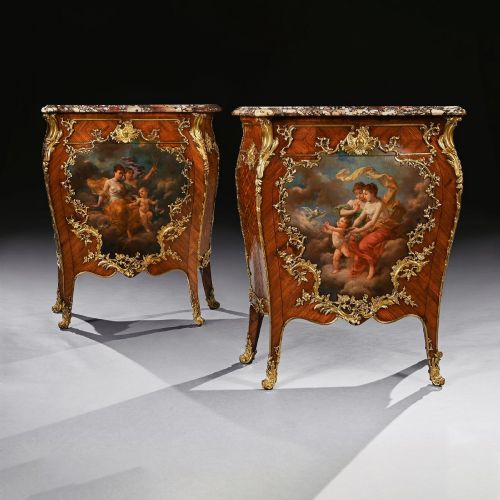
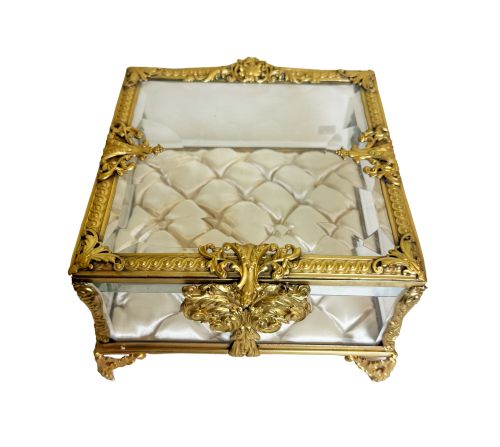
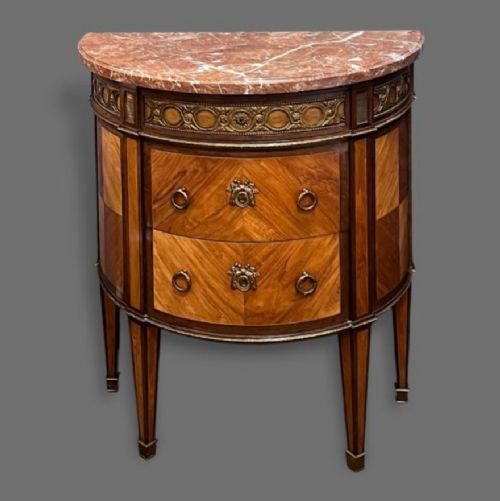
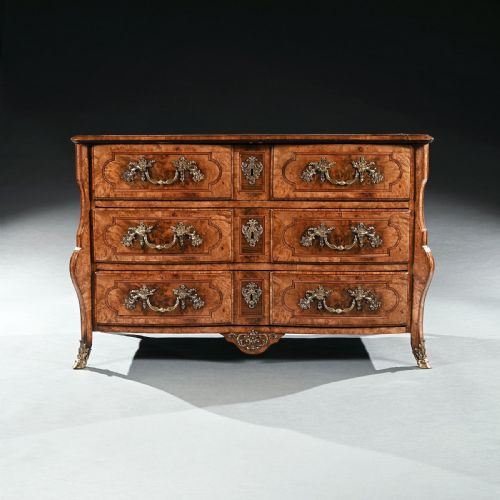
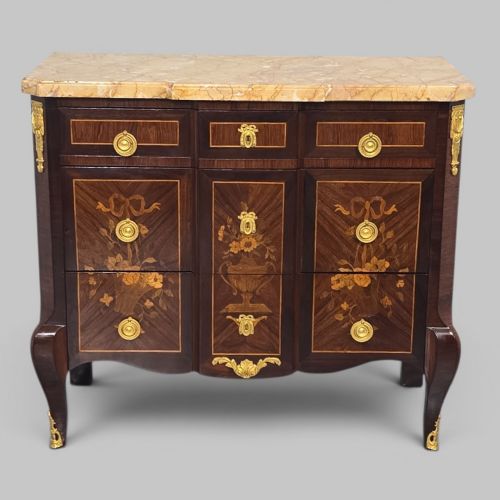
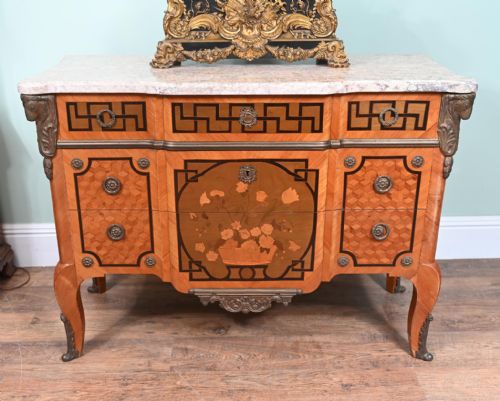
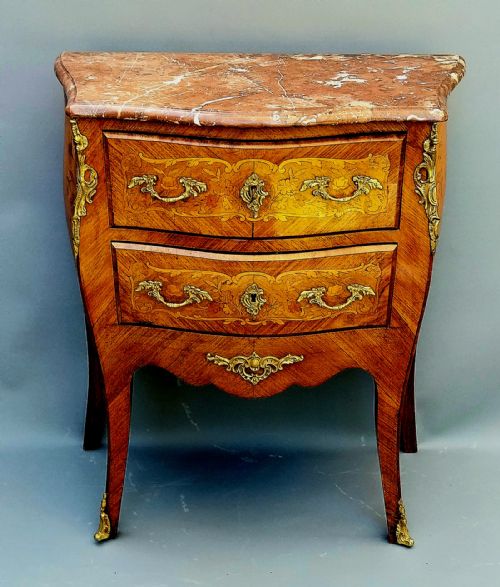
A gilt bronze french chest combines structural storage with decorative metalwork, encompassing commodes, tall chests of drawers, and smaller bedside cabinets.
Most examples found on this page date from the nineteenth century, drawing heavily on earlier periods like the reigns of Louis XV and Louis XVI.
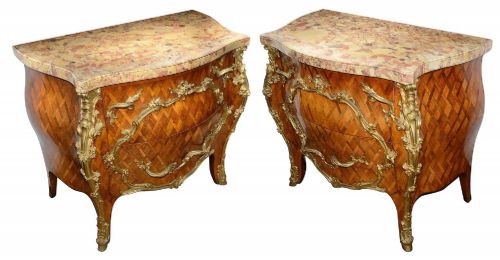
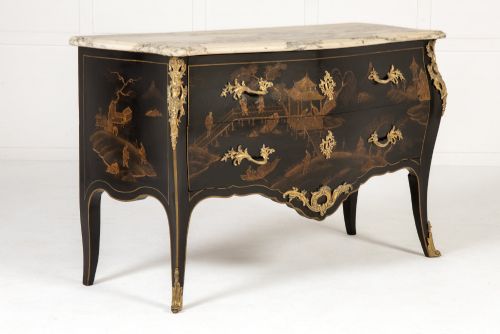
The primary forms range from serpentine bombé commodes to rectilinear neoclassical chests, almost invariably finished with a shaped marble top.
Materials and construction
Cabinetmakers utilised dense hardwoods including kingwood, walnut, and mahogany, often laid as delicate marquetry or parquetry veneers over oak carcasses.
The characteristic metallic enrichment involves cast bronze that has been gilded or finished as ormolu, pinned to corners, drawer fronts, and aprons.
Heavier stone elements, principally marble and occasionally onyx, were cut and polished to provide fitted tops for commodes and smaller caskets alike.
Listings incorporate woods such as kingwood, walnut, rosewood, and mahogany, paired with marble and gilt bronze.
Judging execution and finish
Quality reveals itself in the crispness of the gilt bronze mounts, where hand-chasing brings depth and definition to foliage and scrollwork rather than a flat cast.
Veneer selection and the precision of the marquetry patterns determine the visual harmony of the piece, separating standard workshop output from master cabinetmaker attribution.
The structural integrity of the carcase, smooth drawer movement, and the original fit of the marble top indicate the baseline competence of the maker.
Jacques Bircklé·Maison Krieger·Henry Dasson·E. Kahn·Thomas Hache·Jean-Henri Riesener·Charles Cressant
The Gilt Bronze French Chest Glossary
- Ormolu
- Gilded bronze applied as a decorative mount to furniture and decorative objects. The technique involves coating metal with a mercury and gold amalgam before heating.
- Bombé
- A swelling, outward-curving contour found on the front and sides of eighteenth-century and revival commodes. This shape requires advanced veneer-matching skills.
- Marquetry
- The art of applying pieces of veneer to a structure to form decorative patterns and pictorial designs. Cabinetmakers used various exotic woods to achieve naturalistic shading.
- Vernis Martin
- A type of simulated Japanese lacquer developed in France during the eighteenth century. It employs multiple layers of varnish to create translucent coloured finishes.
- Semanier
- A tall chest of seven drawers traditionally used to store one week of clothing. These slender pieces often feature elaborate parquetry and bronze mounts.
Gilt Bronze French Chest: Frequently Asked Questions
How do I spot a reproduction piece?
Examine the construction methods inside the drawers and at the back of the carcase, looking for machine-cut timber or modern screws rather than hand-cut dovetails. Modern casts in the metalwork often lack the sharp hand-chased details seen on period examples.
Check the uniformity of the veneers and the patination of the wood, as genuine nineteenth-century or earlier pieces display natural wear and shrinkage patterns that are difficult to replicate.
Are these chests suitable for daily use?
Most commodes and chests offer deep drawer storage that functions well in modern bedrooms or living spaces, provided you handle the antique mechanisms with care. Marble tops provide a durable surface for lamps and decorative objects.
Avoid placing these items in areas with direct sunlight or fluctuating humidity to protect the delicate wood veneers and prevent the timber from warping.
What is the difference between Louis XV and Louis XVI styles?
Louis XV pieces are defined by asymmetrical curves, serpentine fronts, and flamboyant rococo scrollwork in the gilt bronze mounts. The overall aesthetic feels organic and flowing.
Louis XVI furniture shifts towards strict symmetry, straight fluted legs, and neoclassical geometric motifs influenced by archaeological discoveries of the period.