


Gilt Bronze Dressing Table
A gilt bronze dressing table brings nineteenth-century French elegance to a room through heavy metal mounts and mirrored glass.
Gilt Bronze Dressing Table
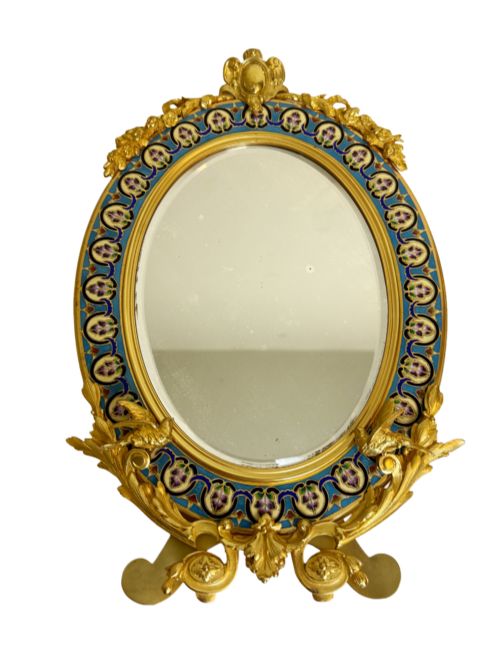
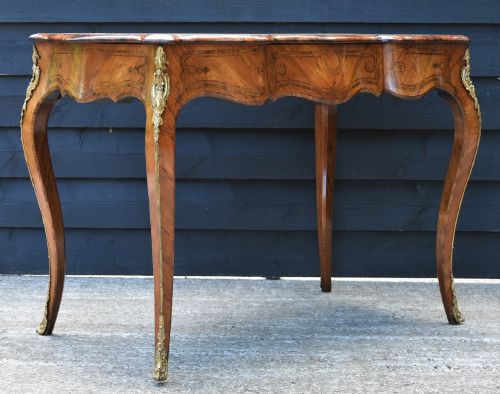
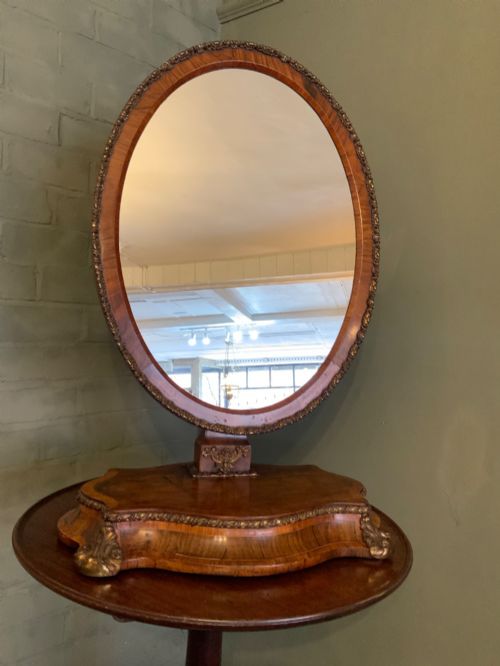
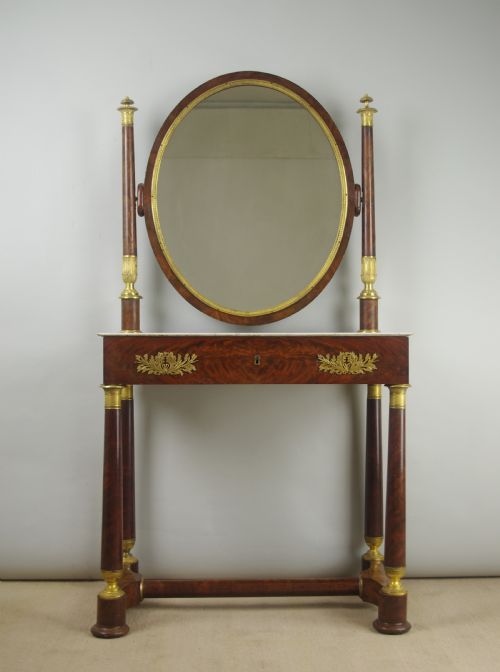
A buyer examining a gilt bronze dressing table encounters items shaped by nineteenth-century French taste, spanning full dressing tables, poudreuses, and related tabletop mirrors. The pieces on this page lean heavily toward compact vanity mirrors, side tables, and small desks dressed in ornate metalwork.
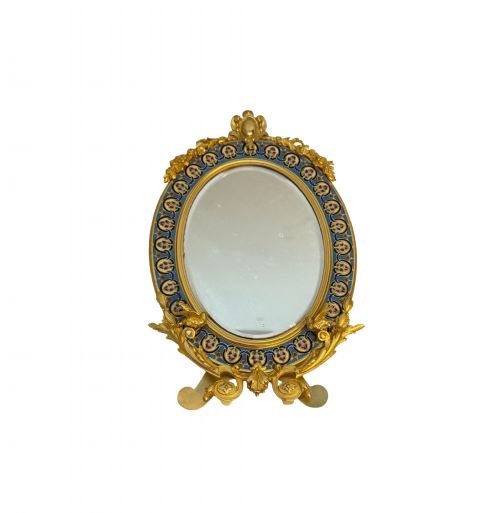
Most examples originate from the Victorian era and the decades surrounding eighteen-eighty, reflecting revivalist movements like French Rococo, Empire, and Napoleon III. Ormolu mounts and champleve enamel frequently define the vocabulary of these dressing tables and mirrors.
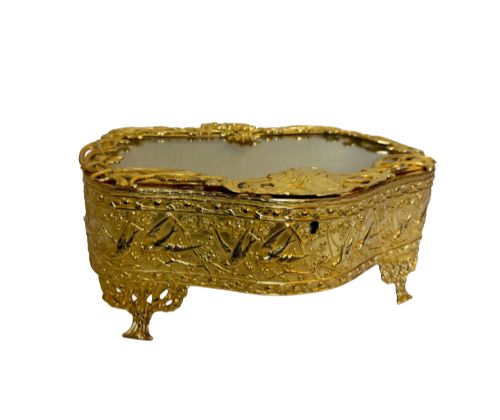
Alongside complete tables, the selection includes smaller accessories such as jewellery boxes, hand mirrors, and perfume caskets that share the same material DNA. These smaller forms allow collectors to introduce the aesthetic onto existing surfaces without committing floor space to a full dressing table.
Materials and construction methods
Foundational structures rely on hardwoods like mahogany, kingwood, tulipwood, and walnut, providing a stable chassis for elaborate surface decoration. Veneers and marquetry inlay are applied to these timbers to create geometric or floral patterns.
Metalwork is central, utilising gilt bronze, ormolu, and brass for cast mounts, frames, and handles. These metal elements are frequently combined with champleve enamel, Limoges porcelain plaques, Sevres porcelain, and bevelled glass to enrich the overall composition.
Listings feature nineteenth-century French styles including Rococo Revival, Empire, and Napoleon III, constructed from mahogany, kingwood, ormolu, and champleve enamel.
Separating the ordinary from the exceptional
Quality rests in the crispness of the bronze casting and the depth of the mercury gilding or modern equivalent finish. Finer pieces display sharply chased detail in the foliage and scrollwork rather than soft, blurred edges from worn moulds.
The integration of secondary materials dictates upper-tier status, particularly where hand-painted Limoges enamel panels, pristine champleve cells, or matched porcelain inserts are present. The tightness of the cabinetwork joints and the weight of the timber carcass further separate standard production items from workshop pieces bearing maker attributions.
Thiebaut Freres·Maison Pretot Paris·Joseph Meissonnier·F Bienvue
The Gilt Bronze Dressing Table Glossary
- Ormolu
- Gilt bronze ornamentation applied to furniture and decorative objects. The technique involves a mercury-gilding process common in nineteenth-century French workshops.
- Champleve
- An enamelling technique where troughs are dug into the surface of the bronze and filled with enamel powder before firing. This creates colourful decorative patterns across mirror frames and trays.
- Poudreuse
- A traditional French dressing table fitted with folding lids and an internal mirror. It was designed for powdering wigs and applying cosmetics in the eighteenth and nineteenth centuries.
- Marquetry
- The art of applying thin slices of wood in various tones to a structural background to form pictorial or geometric designs. It is frequently seen on the tabletops of nineteenth-century writing desks and work tables.
- Napoleon III style
- A heavily eclectic French design aesthetic spanning the mid-to-late nineteenth century. It combines elements of Rococo, Renaissance, and Louis XVI revivals with lavish ornamentation.
Gilt Bronze Dressing Table: Frequently Asked Questions
What is a gilt bronze dressing table?
A gilt bronze dressing table is a nineteenth-century French vanity piece adorned with cast metal mounts, often incorporating a tilting mirror or marquetry veneers.
These items range from large, freestanding bedroom furniture to smaller tabletop mirrors designed for boudoir use.
How do I identify a Napoleon III piece?
Napoleon III items typically display eclectic revival styles, heavy ormolu mounts, and exotic wood veneers. They date from the mid-to-late nineteenth century during the Second French Empire.
Makers of this era frequently combined champleve enamel or porcelain plaques with rich mahogany and kingwood frames.
Were these tables used daily?
Original nineteenth-century dressing tables and poudreuses served practical roles for personal grooming, writing, and storing cosmetics. Internal compartments were designed to hold brushes, perfumes, and jewellery.
Today, many owners continue to use them as functional bedroom or hallway furniture while appreciating their decorative craftsmanship.
How do I care for ormolu mounts?
Ormolu mounts require gentle dusting with a dry microfibre cloth to prevent the accumulation of dirt in recessed areas. Moisture and chemical polishes should be avoided to protect the gilt finish.
Maintaining a stable room temperature helps preserve both the bronze metalwork and the underlying wood veneers.
What is the difference between ormolu and gilt bronze?
Ormolu specifically refers to a gold-coloured alloy of copper and zinc treated with mercury gilding, though the term is often used interchangeably with gilt bronze. Both materials share the same bright golden appearance on nineteenth-century French furniture.
Catalogues and antique dealers generally use the descriptions to denote decorative cast metal mounts on mahogany and kingwood carcasses.