
Gilt Bronze Candlestick Pair
These gilt bronze candlestick pair selections unite sculptural metalwork with classical forms, offering interior schemes a substantial presence shaped by nineteenth-century foundry traditions.
Gilt Bronze Candlestick Pair
A gilt bronze candlestick pair comprises matched metal lighting supports cast in bronze and treated with gold leaf or mercury gilding, predominantly originating from French and English workshops during the eighteenth and nineteenth centuries.
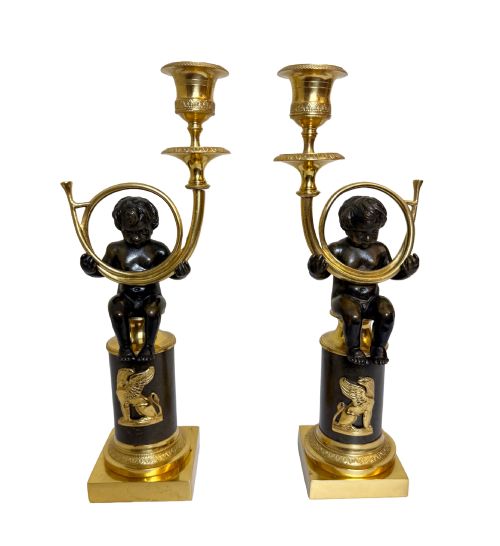
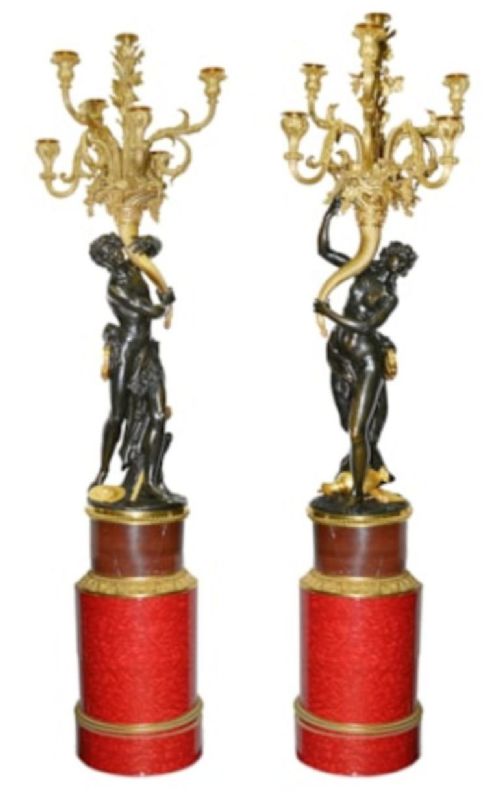
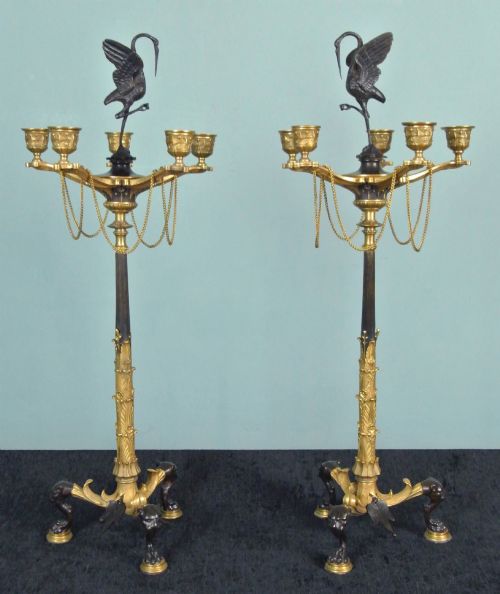
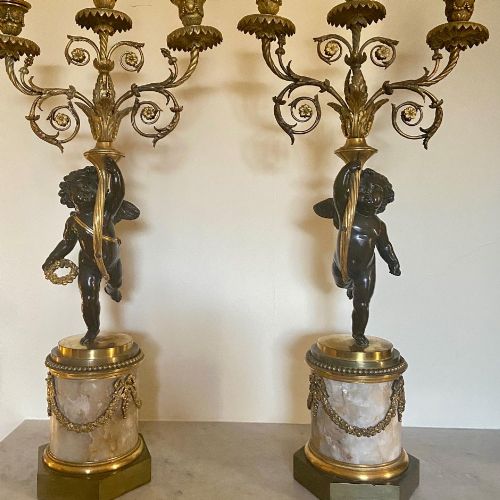
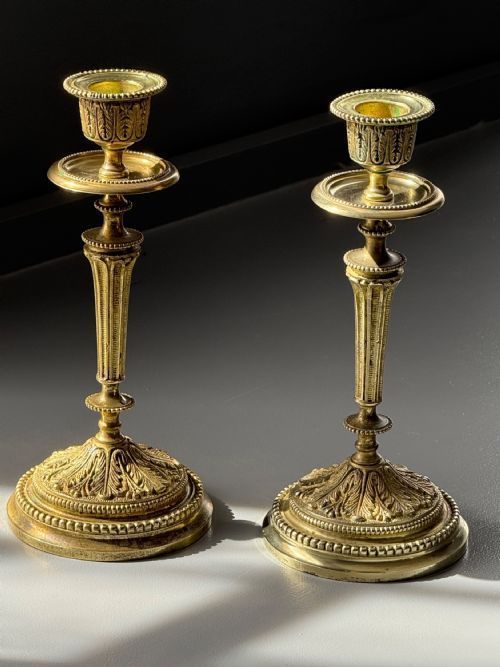
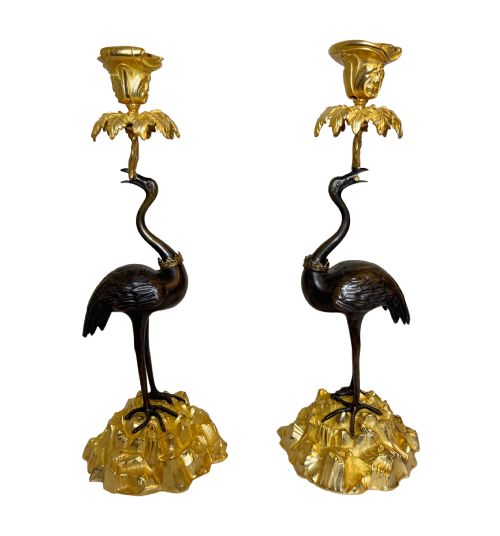
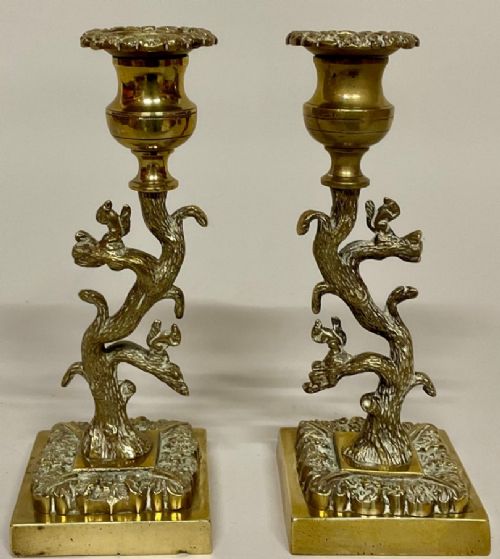
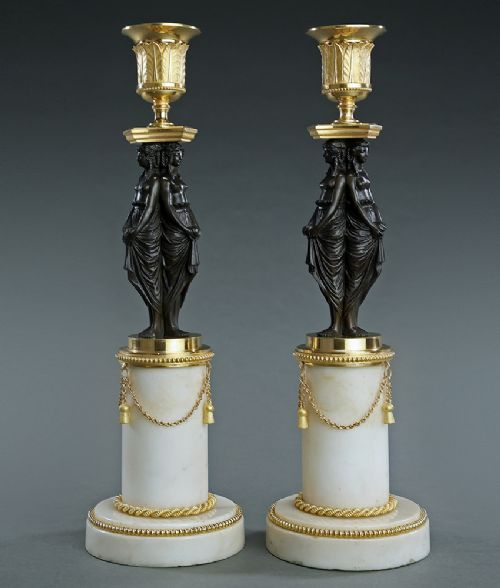
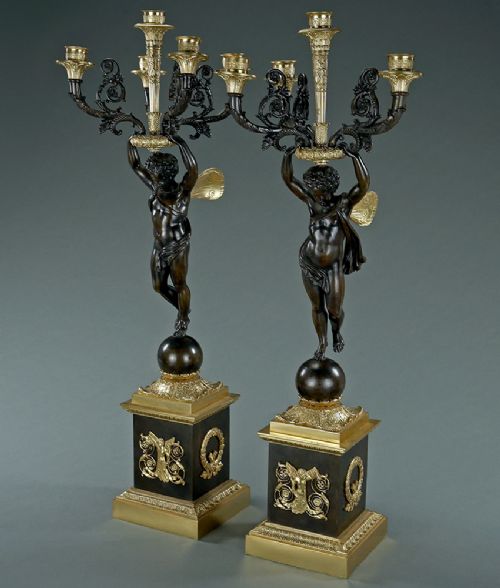
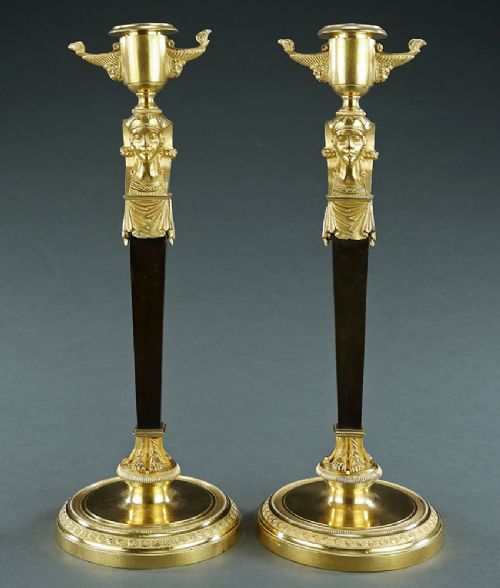
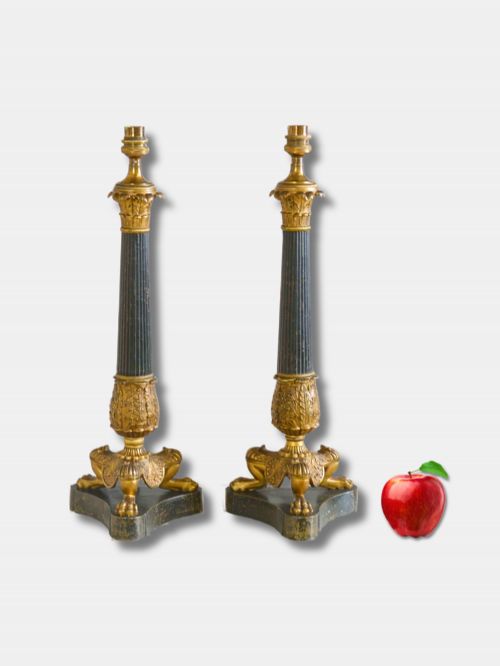
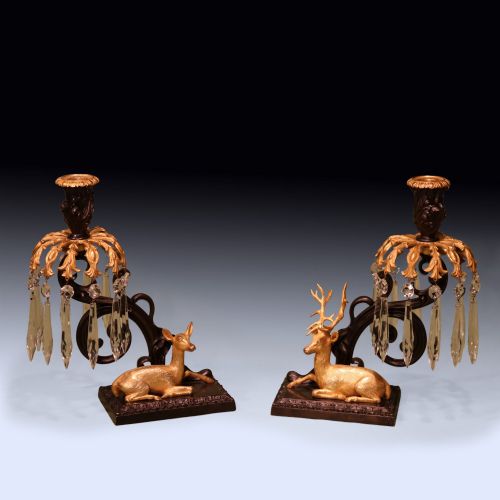
Buyers encounter forms ranging from simple neoclassical reeded columns to elaborate figural compositions incorporating cherubs, caryatids, and animal motifs such as storks, squirrels, and dolphins.
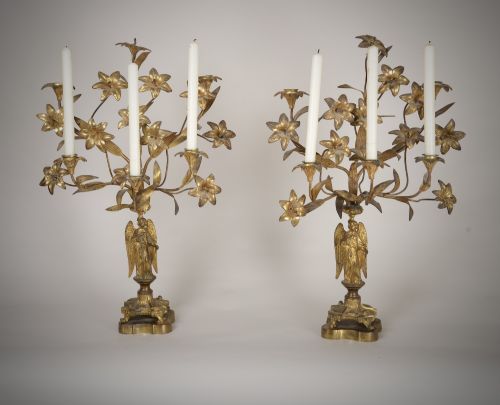
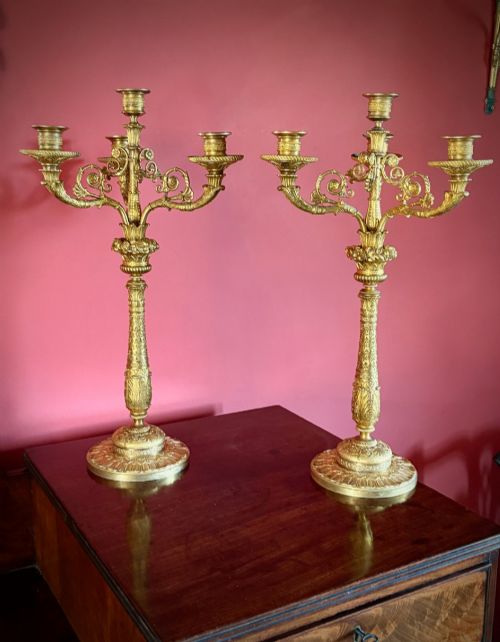
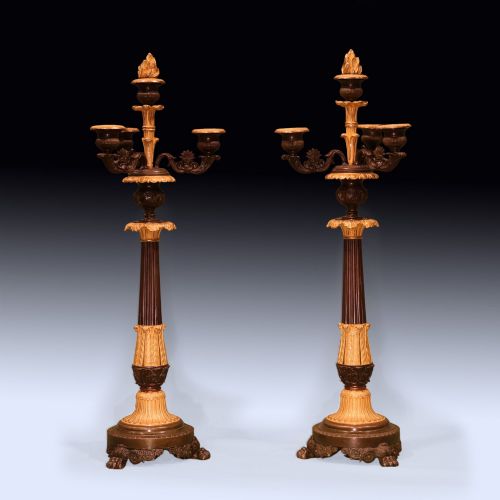
Many examples incorporate multi-branch configurations known as candelabra, alongside variants mounted on white marble, onyx, or fluorspar bases, reflecting periods from the Regency and Louis XVI eras through to the late Victorian epoch.
Materials and Casting Techniques
Foundries utilised lost-wax casting and sand-casting methods to produce intricate components in bronze and brass, which were subsequently chased by hand using small chisels and punches to sharpen surface details.
Gilding was frequently achieved through mercury or fire gilding, a process applying a gold and mercury amalgam heated until the mercury evaporated, leaving a durable metallic bond, while later pieces utilised electrogilding.
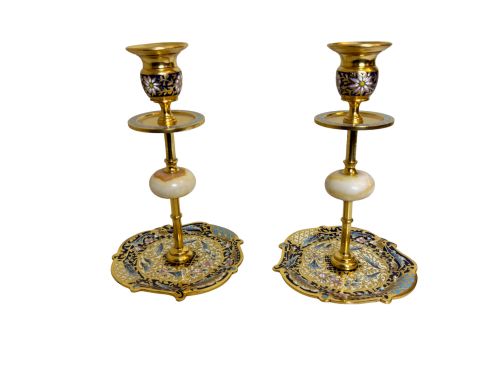
Secondary materials such as patinated bronze provided tonal contrast against bright ormolu highlights, while turned marble bases and champlevé enamel sections introduced colour and weight to the finished compositions.
Squirrels nibble bronze acorns and birds survey mantelshelves from branches cast over two centuries ago.
Evaluating Execution and Finish
The depth and uniformity of the gilding indicate the standard of production, with fire-gilded surfaces showing a rich, warm lustre that ages differently from thin electroplated layers.
The structural integrity of the joints, the weight of the cast bronze components, and the integration of secondary elements like marble plinths or enamel panels separate standard decorative output from masterworks.
Barbedienne·Thomas Abbott·Abel Landry·Francois Redmond·Thomas Hope
The Gilt Bronze Candlestick Pair Glossary
- Ormolu
- A term denoting finely cast and gilt bronze ornament, derived from the French for ground gold. It provides a bright golden finish characteristic of decorative metalwork from the eighteenth and nineteenth centuries.
- Champlevé
- An enamelling technique where troughs or cells are hollowed out of the metal surface and filled with vitreous paste before firing. This method produces colourful geometric or floral patterns across the bronze body.
- Campana
- A bell-shaped socket or sconce found at the top of candlesticks, modelled after classical garden vases. It holds the candle steady within a flared receptacle.
- Caryatid
- A sculpted female figure serving as an architectural support or column stem. These figures appear frequently on neoclassical and Empire period lighting pieces.
- Pricket
- A sharp metal spike set in the centre of a drip pan to secure a large candle, common on ecclesiastical and early European forms.
Gilt Bronze Candlestick Pair: Frequently Asked Questions
What is the difference between a candlestick and a candelabra?
Candlesticks are single-light supports designed to hold one candle at a time in a single nozzle and sconce.
Candelabra feature branching arms extending from a central stem to hold multiple candles simultaneously, creating a grander illumination.
Were these pieces converted to electricity?
Many nineteenth-century examples underwent conversion to electric table lamps during the twentieth century, often utilising the existing central channel for wiring.
Unconverted pairs retain their original hollow stems and remain configured strictly for wax candles.
How do you date a gilt bronze pair?
Dating relies on stylistic markers such as neoclassical motifs, Regency animal figures, or Rococo asymmetry, combined with casting methods and material combinations like white marble or onyx bases.
Factory marks, signatures, or historical attribution to makers like Barbedienne provide more precise chronological anchors.
How should gilt bronze be cleaned?
Maintenance requires only gentle dusting with a soft, dry cloth to prevent the accumulation of grit within recessed chasing work.
Harsh chemical polishes, abrasives, and liquid cleaners must be avoided entirely because they strip away the historic mercury or gold layer.