

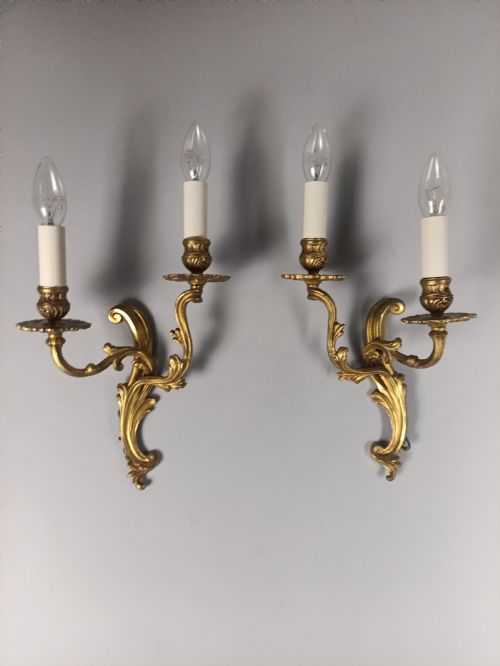
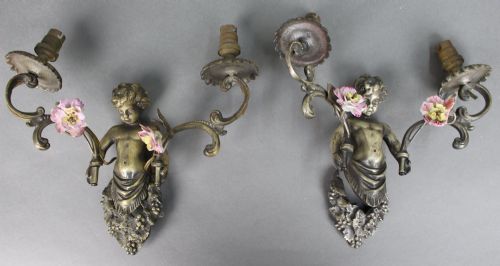
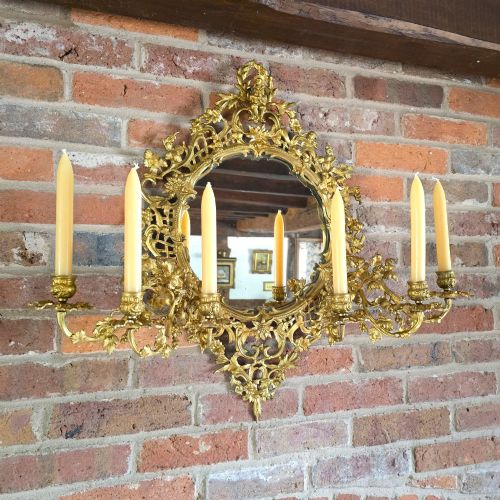
Gilt Bronze Candle Sconces
Gilt bronze candle sconces illuminate rooms with the warm reflection of gilded metal, offering period elegance for wall mounting.
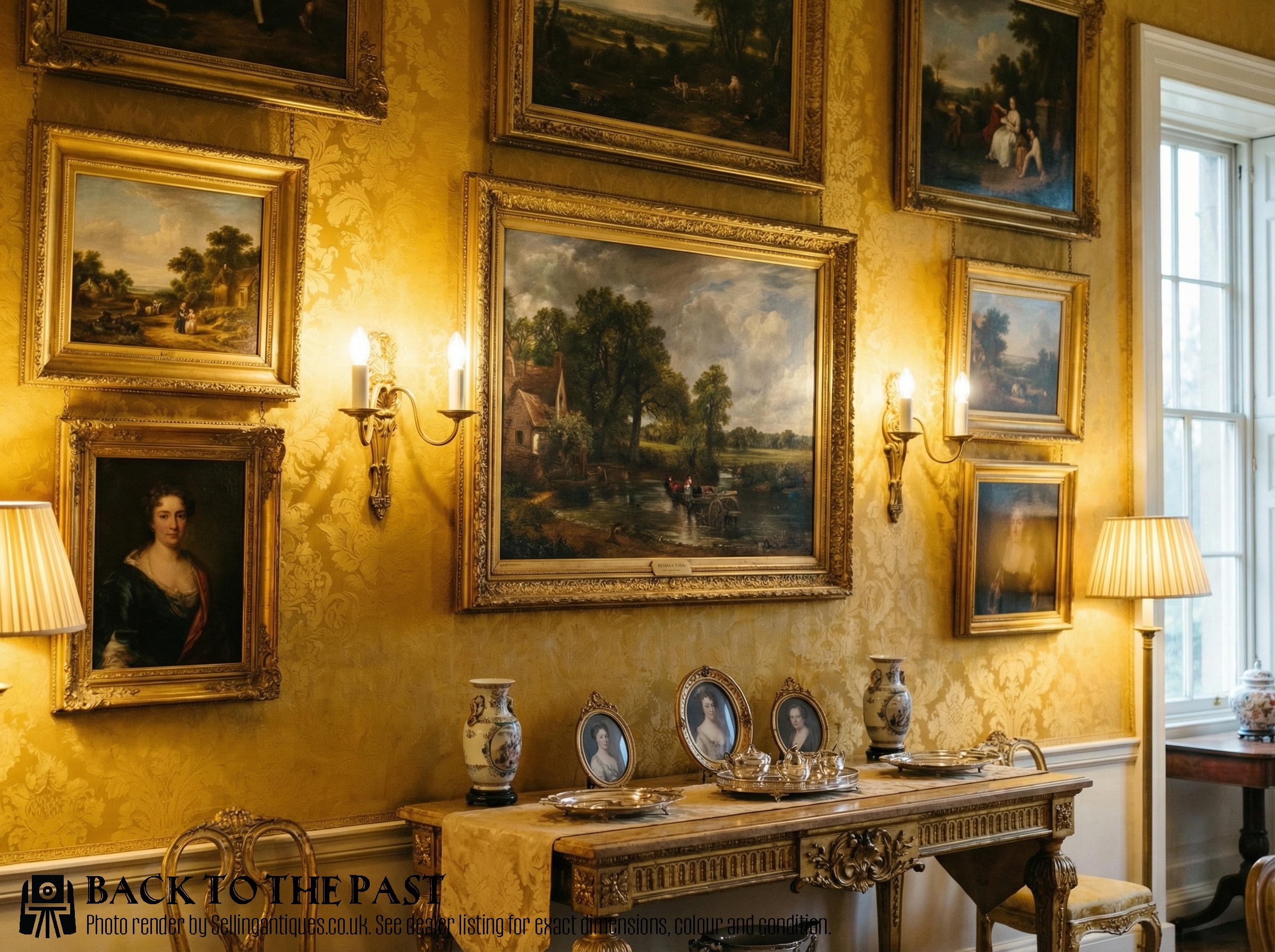
Gilt Bronze Candle Sconces
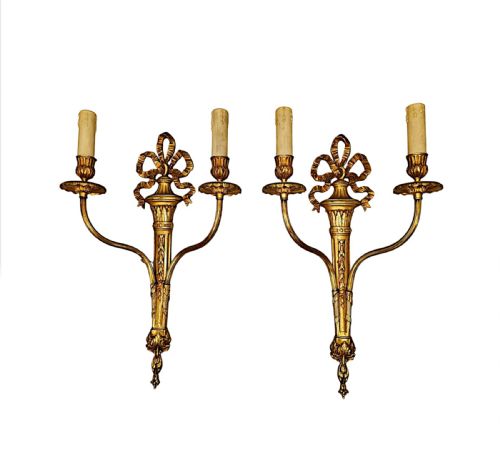
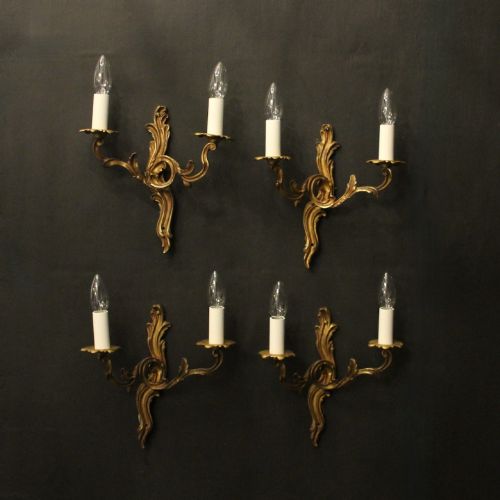
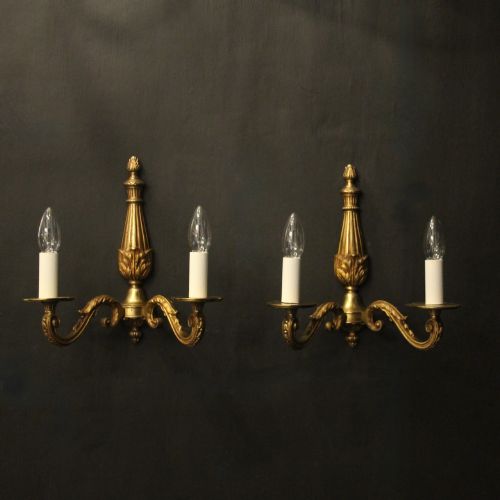
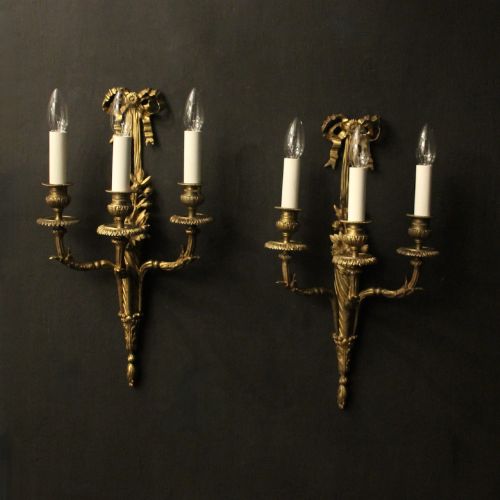
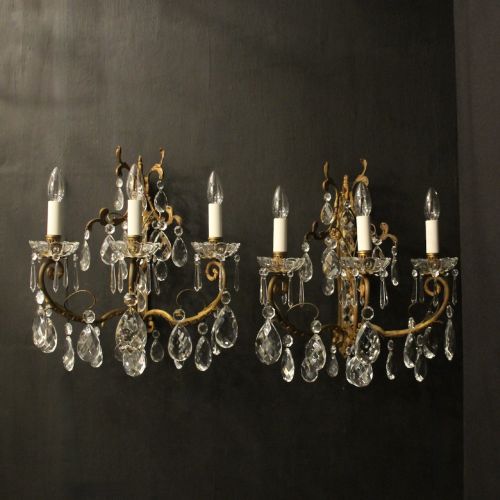
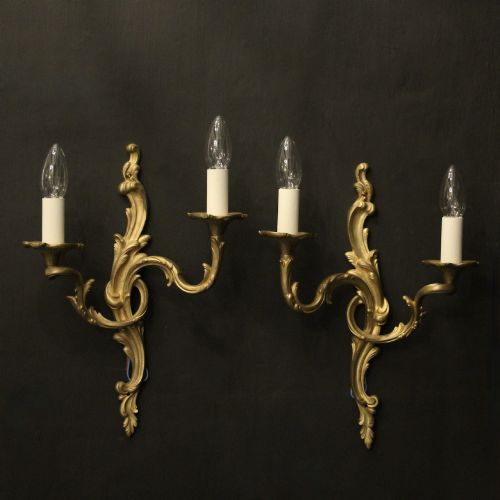
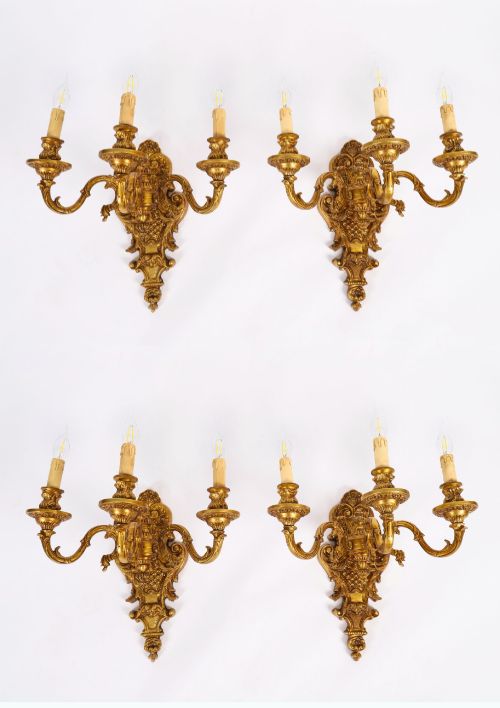
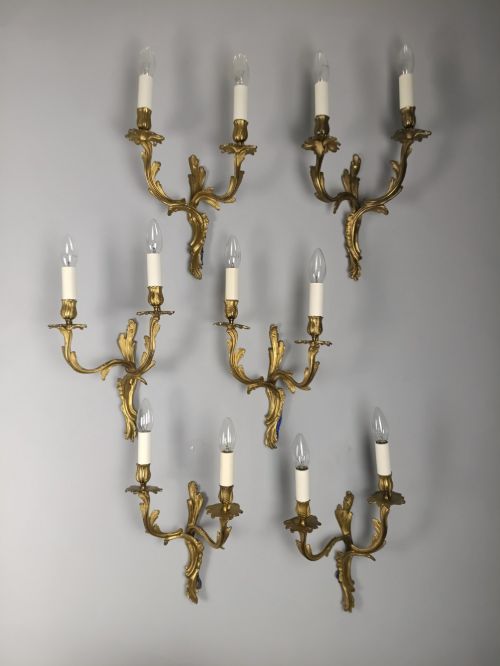
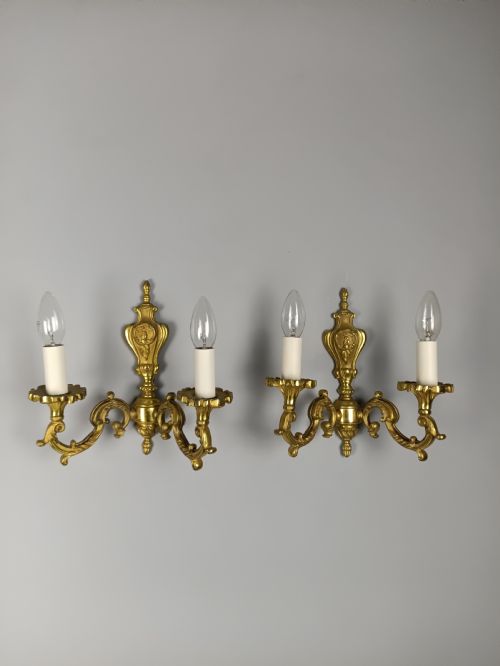
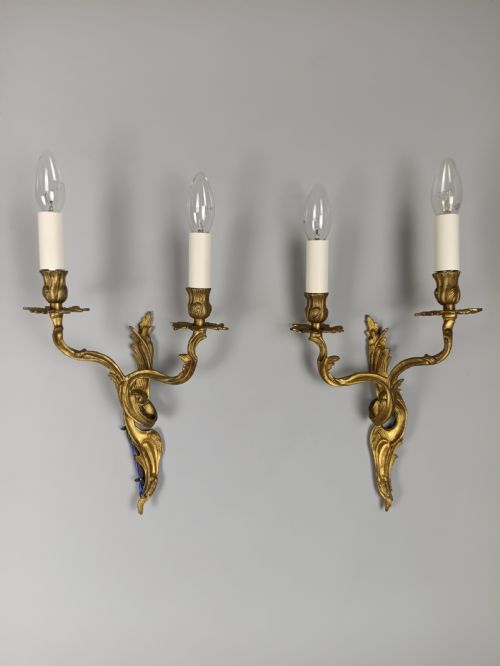
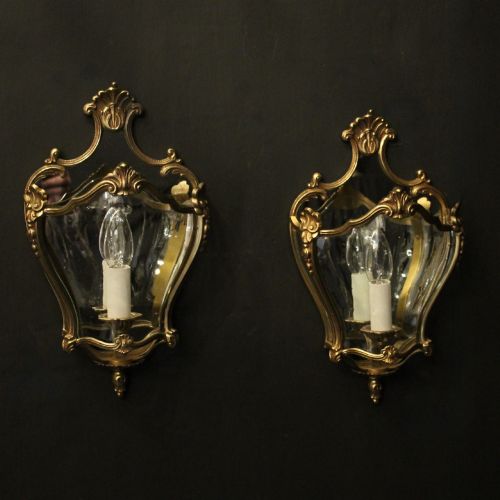
When you search for gilt bronze candle sconces, you encounter wall-mounted lighting fixtures designed to hold candles, originating primarily from the nineteenth and early twentieth centuries. These pieces manifest most frequently as pairs or larger matching sets featuring twin or triple arms styled in French Rococo, Louis XVI, and Neoclassical traditions.
The selection encompasses wall lights, appliques, and girandoles alongside related forms such as candelabra and candlesticks cast in bronze, brass, and ormolu. French workshops produced the majority of these designs, incorporating decorative elements like ribbons, cherubs, crystal drops, and porcelain flowers onto the metal frames.
Makers drew upon historical revivals, creating architectural wall brackets with caryatids, ornate scrolling foliage, and symmetrical proportions suited for formal reception rooms. The survival of matched sets of four or six indicates their original placement in substantial interiors.
Materials and construction methods
Foundry workers cast the bodies of these wall fixtures in bronze or brass, employing sand-casting techniques to shape intricate scrolls, figures, and armatures. Artisans then applied mercury gilding or modern electroplating to impart the golden surface finish known as ormolu.
Many examples incorporate secondary materials such as white marble bases, onyx columns, champleve enamel panels, and cut glass crystal pendants that catch the candlelight. Structural components fastened together with threaded pins and bolts allow the candle arms and drip pans to detach for cleaning.
Gilt Bronze Candle Sconces Retail Price Guide 2026
Typical asking prices for gilt bronze candle sconces among the pieces listed under this phrase on Sellingantiques today, from the lower quarter to the upper quarter. They describe what is for sale here now, not the wider market.
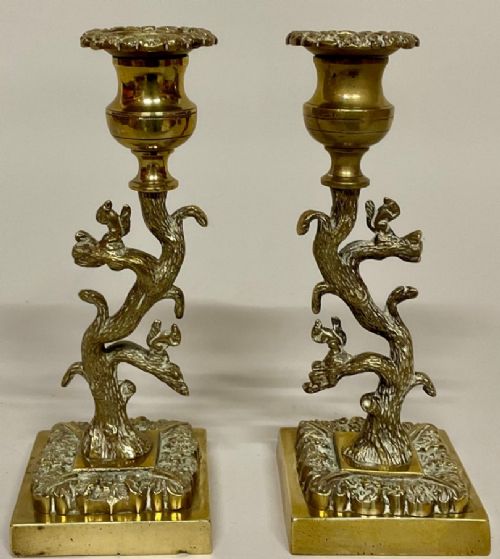
Squirrels forage among the bronze tree branches on a Regency pair of candlesticks, pausing forever beside their campana sconces.
Assessing quality and execution
The weight of the bronze and the structural integration of the cast arms indicate the original cost of manufacture. Heavier castings with secure mechanical joints and well-proportioned backplates sit higher in the range than thin, lightweight pressings or poorly aligned multi-arm assemblies.
The Gilt Bronze Candle Sconces Glossary
- Ormolu
- Gilded bronze, produced by applying a finely ground gold-mercury amalgam to a bronze base and heating it to vaporise the mercury. The resulting finish provides a durable, matte golden lustre.
- Applique
- A wall-mounted lighting fixture attached directly to a vertical surface rather than standing on a table or floor. These fixtures direct light outwards into the room.
- Girandole
- A branched wall sconce or candlestick featuring reflective elements such as mirrors or crystal drops to multiply the illumination. The mirrored backplates enhance the candlelight.
- Caryatid
- A sculpted female figure serving as an architectural support column in place of a traditional pillar. These figures appear frequently on Neoclassical candlesticks and sconces.
- Champleve
- An enamelling technique where troughs or cells are hollowed out of the metal surface and filled with vitreous enamel before firing. The metal partitions remain visible between the coloured enamel areas.
Gilt Bronze Candle Sconces: Frequently Asked Questions
What is the difference between ormolu and gilt bronze?
Ormolu specifically describes objects treated with mercury gilding during the eighteenth and nineteenth centuries, yielding a deep and durable golden finish. Gilt bronze serves as a broader descriptive term for any bronze object coated in gold leaf or modern electroplated gilt.
Both materials share a bronze core, but the historical application method distinguishes traditional ormolu from later gilded metal wares.
Were these wall lights originally electrified?
These fixtures were originally designed exclusively for wax or tallow candles, long before domestic electricity existed. Candle cups, drip pans, and narrow sockets reflect this early functional purpose.
Twentieth-century examples occasionally date from the transition era when both gas and electricity influenced lighting design. Most surviving pieces have undergone later rewiring to accommodate modern lamp holders.
How do I distinguish Louis XVI style from Rococo?
Louis XVI style relies on strict symmetry, straight architectural lines, fluted columns, and neoclassical motifs like ribbons and urns. Rococo designs abandon straight lines in favour of asymmetrical C-scrolls, flowing foliage, and naturalistic shell forms.
Examining the backplate and arm contours immediately clarifies whether the piece adheres to orderly classical restraint or dynamic rococo movement.