


Gilt Bronze Candelabra Pair
These gilt bronze candelabra pair selections bring heavy nineteenth-century French and English decorative illumination into modern rooms.
Gilt Bronze Candelabra Pair
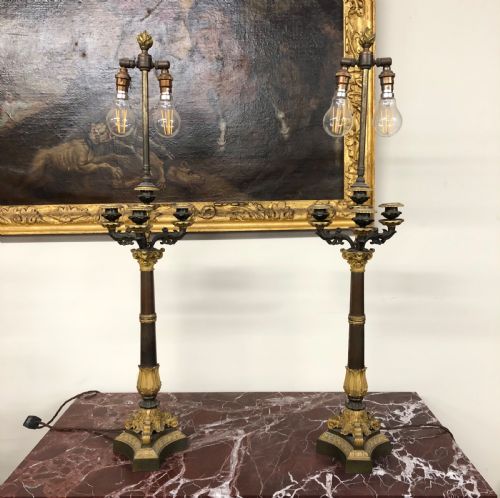
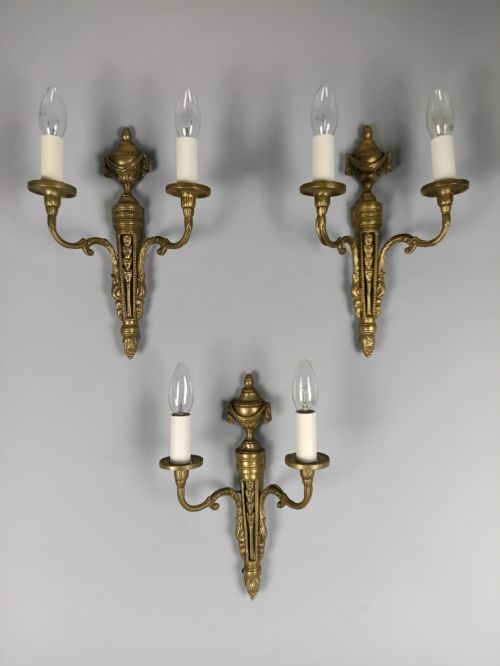
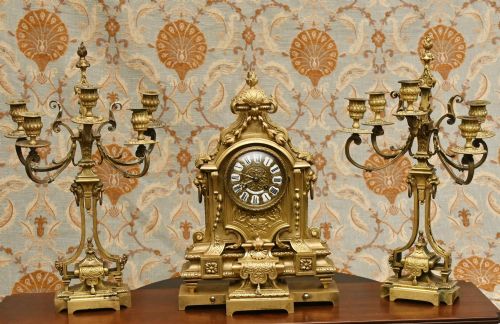
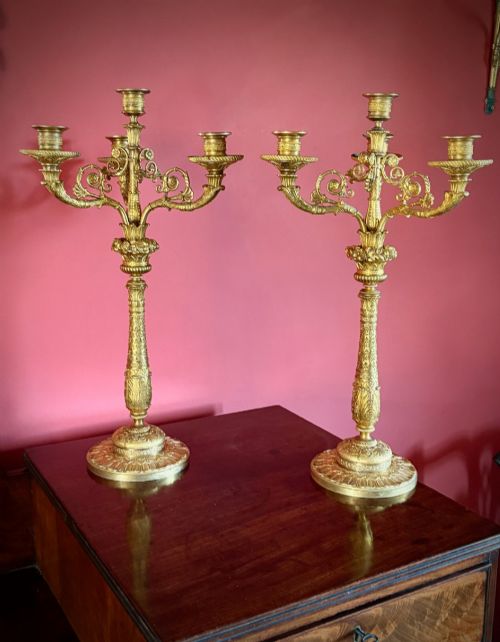
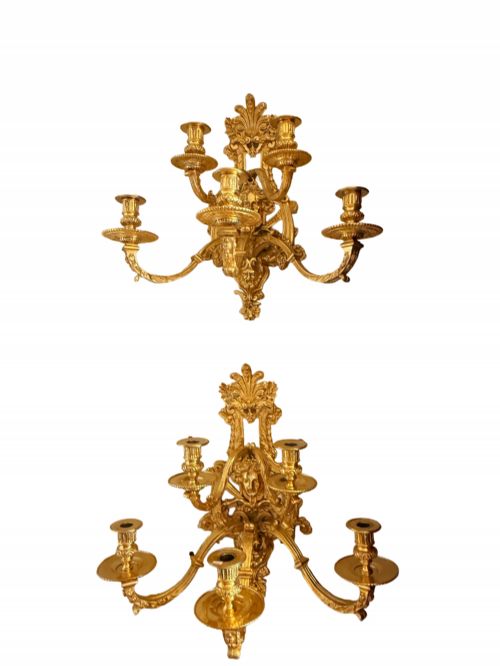
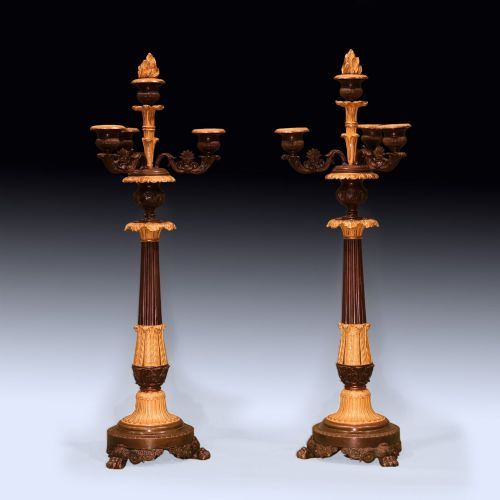
A gilt bronze candelabra pair consists of matched multi-branch lighting fixtures designed for tables, mantels, or walls. They originate mostly from the nineteenth century, spanning periods from the Regency era through the late Victorian years.
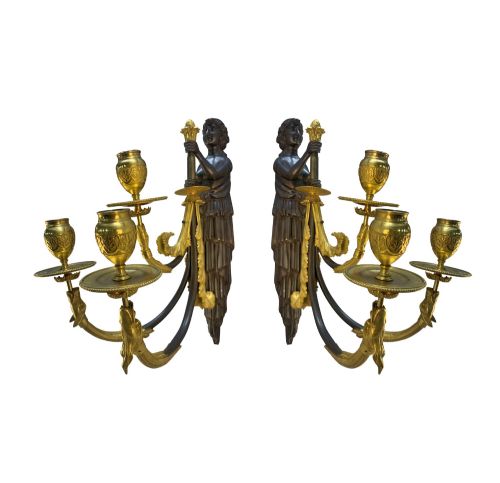
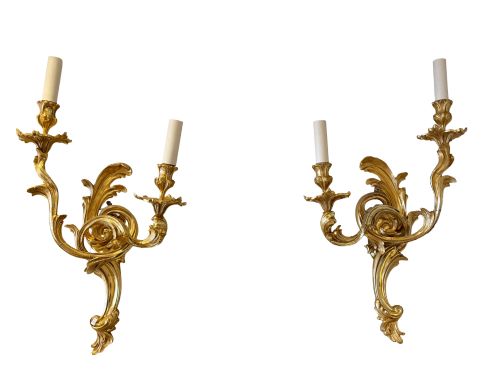
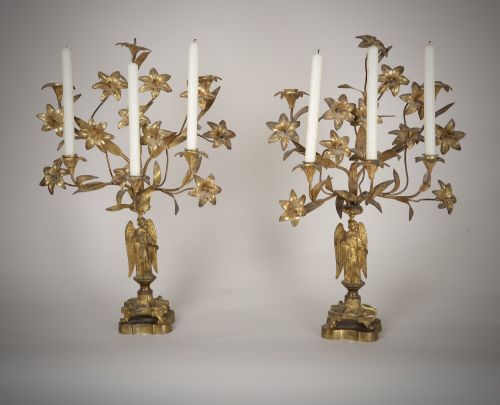
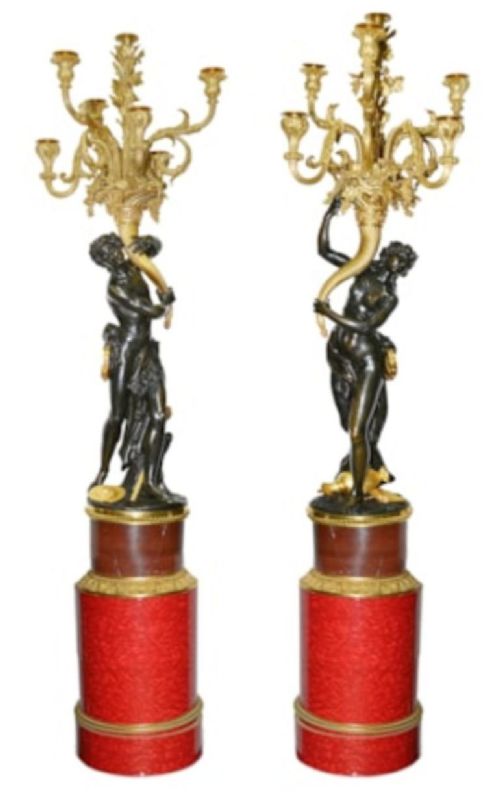
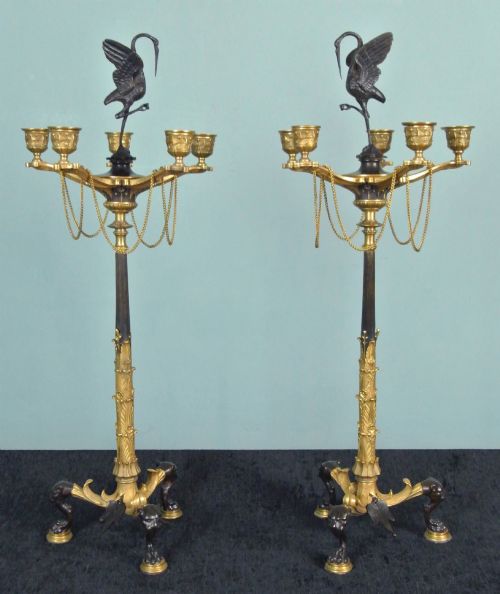
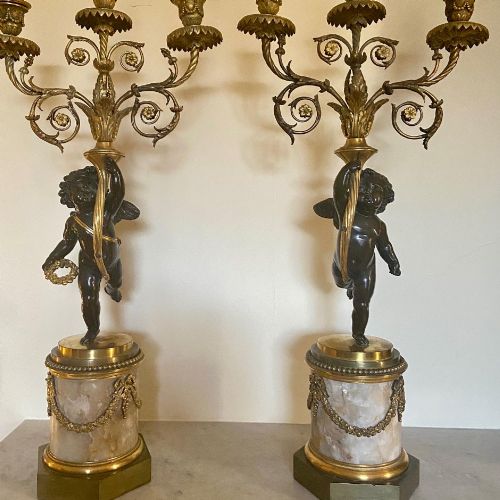
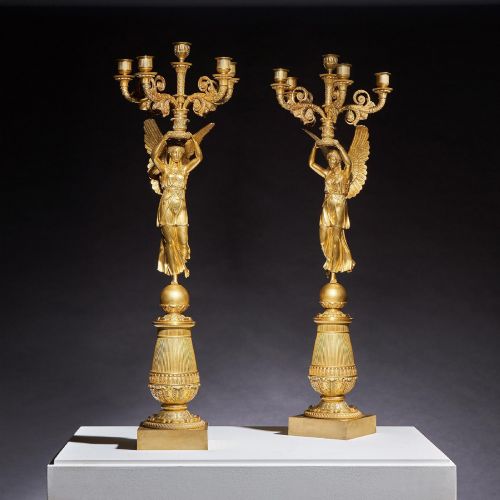
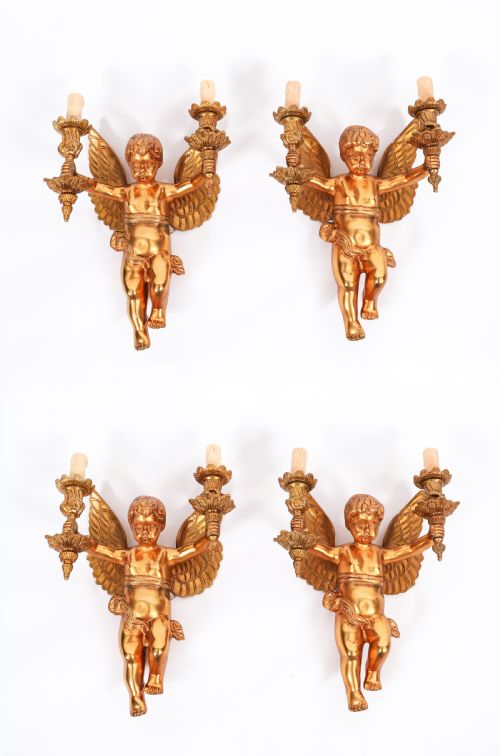
The surviving examples display various forms, including figural designs with putti or classical figures, architectural wall sconces, and tall floor-standing lighting. French Empire and Louis XVI revival styles dominate the available selections.
Makers often combined cast bronze with contrasting patinated elements, porcelain, and stone bases to create decorative lighting for grand domestic interiors.
Materials and construction
Foundry workers cast bronze and brass components before applying mercury gilding or modern ormolu finishes to create the characteristic golden surface sheen. Patinated bronze sections provide dark tonal contrast against the bright gilded areas.
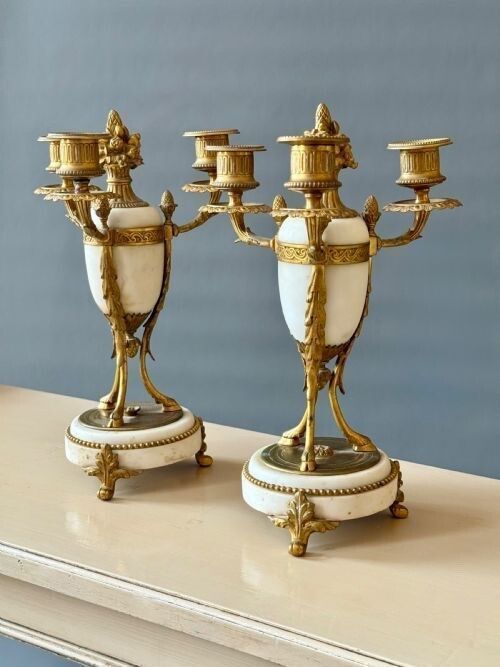
Makers integrated natural materials such as white marble, onyx, malachite, and fluorspar into the bases and columns to add weight and colour variety. Crystal drops and porcelain elements occasionally accent the arms and drip pans.
Gilt Bronze Candelabra Pair Retail Price Guide 2026
Typical asking prices for gilt bronze candelabra pair among the pieces listed under this phrase on Sellingantiques today, from the lower quarter to the upper quarter. They describe what is for sale here now, not the wider market.
Nineteenth-century metalworkers occasionally cast mischievous putti holding candle sockets just out of reach.
Assessing quality
The definition and depth of the chased surface detail distinguish superior metalwork from flat or mass-produced castings. Master workshops employed skilled chisellers to sharpen acanthus leaves, figures, and architectural motifs after casting.
The integrity of the construction relies on solid joints between branches and heavy bases made of marble or stone. Matched pairs with intact original gilding and uniform patination hold greater decorative presence than mismatched or re-plated survivors.
Pierre Philippe Thomire·Claude Galle·Francois Redmond·Rabiat
The Gilt Bronze Candelabra Pair Glossary
- Ormolu
- Gilded bronze produced through mercury amalgamation or modern electroplating methods. This finish yields a warm golden glow characteristic of French decorative objects.
- Patinated bronze
- Bronze treated with chemical acids to darken the surface to a deep brown or green tone. This technique highlights brighter gilded elements placed nearby.
- Candelabra
- A branched lighting fixture holding multiple candles or wired for electricity. These objects evolved from simple candle holders into monumental decorative centrepieces.
- Champlevé
- An enamelling technique where troughs are dug into a metal surface and filled with vitreous paste before firing. This colourful decoration appears on nineteenth-century bases and stems.
- Fluorspar
- A colourful mineral carved into decorative urns or candle bodies. Its natural banding adds unique patterns to nineteenth-century luxury items.
Gilt Bronze Candelabra Pair: Frequently Asked Questions
How do I clean gilt bronze?
Dust these metal surfaces gently with a soft dry brush to remove particles without scratching the thin gilded layer. Avoid using chemical metal polishes, which strip away the historic mercury or ormolu surface.
Moisture can damage underlying base materials like marble or wood, so keep liquid cleaners away from composite pieces. Professional conservation is necessary if heavy tarnish requires intervention.
Were these wired for electricity?
Most nineteenth-century lighting was originally built for wax candles or oil before later owners added internal wiring. Conversions often use hidden channels to preserve the exterior appearance of the bronze branches.
Some collectors choose to reverse electrification or use modern candle-style bulbs that fit existing sockets. Checking the internal cord condition ensures safe operation in domestic settings.
How do I spot a matched pair?
Examine the casting numbers, chisel marks, and exact dimensions to confirm both objects share the same workshop origin. Hand-finished bronze pieces often display subtle individual differences that prove their handmade nature.
Matching marble bases and uniform wear patterns across both items indicate they have remained together since creation. Assembled pairs may show slight variations in height or gilding tone upon close inspection.
What styles are most common?
French Empire and Louis XVI revival designs represent the majority of surviving nineteenth-century examples. These styles feature classical motifs, symmetrical scrolling arms, and formal figural ornaments.
Gothic revival and Rococo pieces also appear frequently, offering asymmetrical curves or medieval architectural details. Regional variations include English Regency and Swedish Empire interpretations.