



Gilt Brass Horology
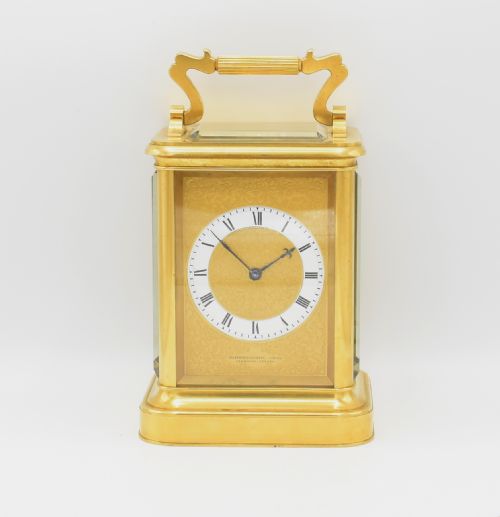
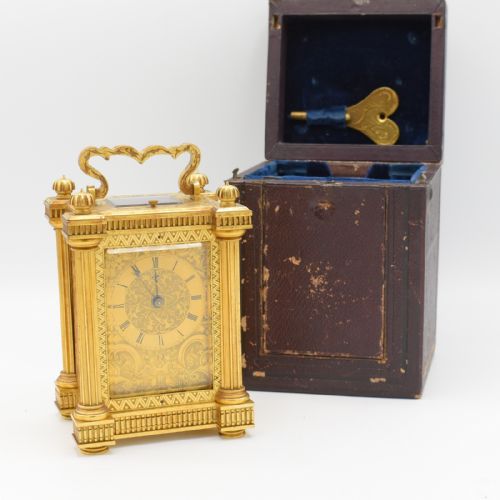
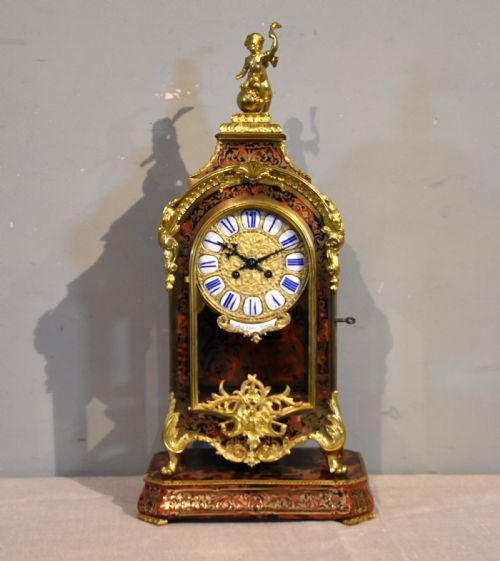
Gilt brass horology brings together precision timekeeping and opulent metalwork, offering intricate mantel and carriage clocks designed to anchor a room.
Gilt Brass Horology
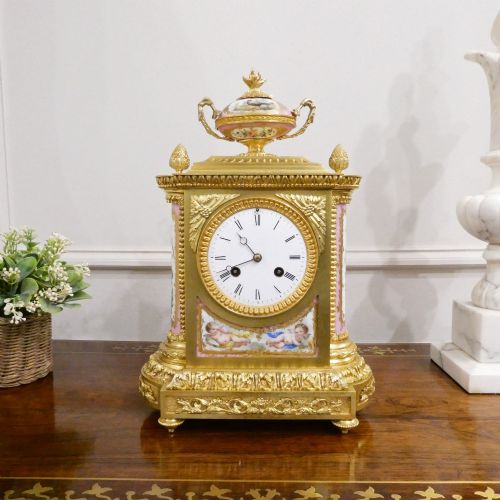
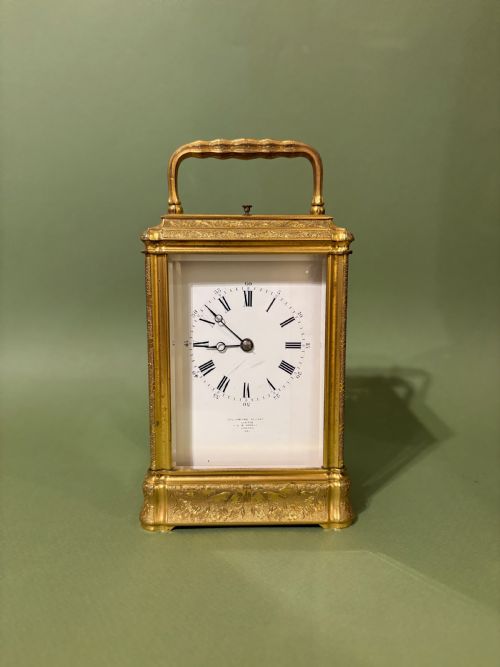
When browsing gilt brass horology, collectors encounter a diverse selection of timepieces spanning the nineteenth century, including Victorian, Edwardian, and Regency periods. The forms range widely from robust mantel clocks and bracket clocks to portable carriage clocks housed in glass panels.
French workshops dominate the selection, often presenting ornate mantel clocks alongside precision carriage clocks featuring repeating mechanisms and striking complications. British examples also appear, represented by fusee movements and London makers.
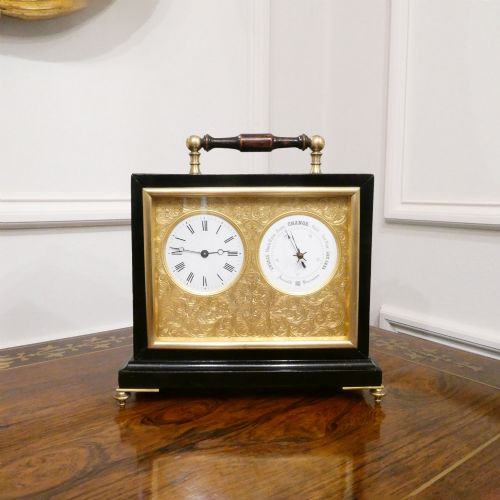
The objects combine functional clockwork with decorative housing, frequently pairing gilt bronze, ormolu, and brass with enamel dials, porcelain panels, and ebonised wood.
Materials and Construction
The construction relies heavily on cast brass, gilt bronze, and ormolu to create the gleaming cases that house intricate mechanical movements. Craftsmen combined these metallic elements with delicate glass panels, white enamel dials, and occasionally contrasting materials like red marble or ebonised wood.
Clockmakers utilised advanced gear trains, escapements such as the platform escapement, and specialised complication modules for striking, chiming, and alarm functions. Cases were cast, chased, and gilded, then fitted with bevelled glass to display the internal mechanics.
Listings feature numerous nineteenth-century French carriage clocks alongside British fusee mantel clocks and robust Victorian ormolu cases.
Distinctions in Quality
Quality in these timepieces rests upon the precision of the mechanical movement and the crispness of the case casting. Finer pieces feature complex complications like grand sonnerie, repeating mechanisms, and moon-phase indicators alongside signed movements from renowned makers.
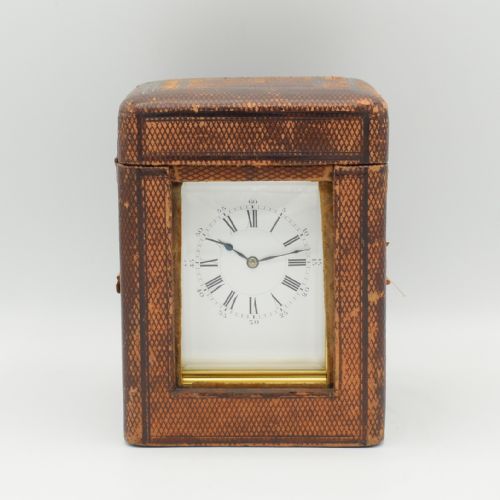
The artistry of the exterior also sets examples apart, distinguished by deeply chased ormolu mounts, hand-painted porcelain plaques, and original leather travel cases. Simpler timepieces offer standard timekeeping in cast gilt cases without additional striking trains.
Jean-Baptiste Delettrez·Henri Jacot·Goldsmiths Alliance Ltd·Howell and James·Le Roy·Mappin and Webb·John Barwise·Arnold and Frodsham·Drocourt·Holingue Frères·J. F. Bautte Et Cie
The Gilt Brass Horology Glossary
- Carriage clock
- A portable spring-driven timepiece designed for travelling, typically featuring a brass frame with glass sides and a handle on top.
- Fusee
- A conical pulley used in older clock movements to maintain an even pull as the mainspring unwinds.
- Ormolu
- Gilt bronze created by applying a finely ground high-carat gold-mercury amalgam to a bronze object, common in French horology.
- Escapement
- The mechanical linkage that controls the release of power from the gear train to maintain the motion of the pendulum or balance wheel.
- Repeater
- A mechanism that sounds the hours and quarters upon demand when a lever or button is pressed.
- Grand sonnerie
- A complex striking train that automatically chimes the hours and quarters on each passing hour and quarter-hour.
Gilt Brass Horology: Frequently Asked Questions
What is a carriage clock?
A carriage clock is a small, portable spring-driven timepiece developed for travel in the nineteenth century. These clocks are typically housed in brass cases with bevelled glass panels that reveal the internal movement.
Most examples feature a hinged handle on top and sit on small feet, allowing owners to transport them safely. They range from simple timepieces to complex instruments with alarm and repeating functions.
How do you wind a mechanical clock?
Mechanical clocks require a specific winding key inserted into the dial or back plate to tension the mainspring. Care must be taken not to overwind the mechanism, stopping as soon as resistance is felt.
Different movements require different winding intervals, ranging from daily eight-day clocks to longer durations. Regular winding ensures the gear train maintains steady tension for accurate timekeeping.
What is a fusee movement?
A fusee movement incorporates a conical pulley connected to the mainspring by a fine chain or cord. This ingenious device equalises the diminishing power of the spring as it unwinds.
Originating in earlier centuries, fusee movements are a hallmark of superior British horological construction. They provide consistent force to the escapement throughout the running cycle.
How should I care for an antique clock?
Antique clocks require stable environmental conditions away from direct sunlight, heating vents, and damp areas. Placing the clock on a level surface ensures the pendulum or balance wheel beats evenly.
Professional servicing every few years is recommended to clean old oils and prevent wear on the brass pivots and gears. Avoid attempting internal repairs without specialist knowledge.