



Gilt Brass Casket Box
A gilt brass casket box is a small, decorative receptacle for valuables, uniting sturdy metalwork with fine ornamentation for any room.
Gilt Brass Casket Box
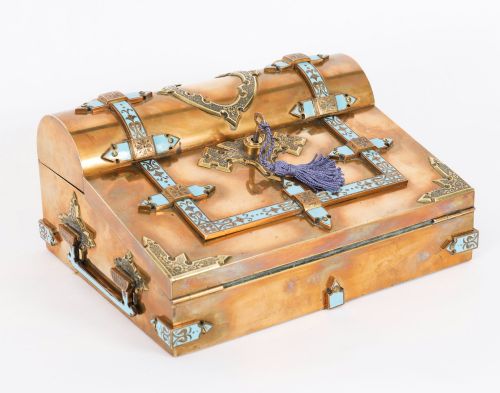
A gilt brass casket box is a small storage piece designed for jewellery, trinkets, and personal treasures. When you search for this phrase, you encounter objects built to sit on dressing tables, desks, and sideboards as both decorative ornaments and practical containers.
The versions you meet most often on this page date from the nineteenth century, including the Victorian era, Regency period, and Napoleon III style. These pieces frequently originate from France and Italy, bringing continental craftsmanship into British interiors.
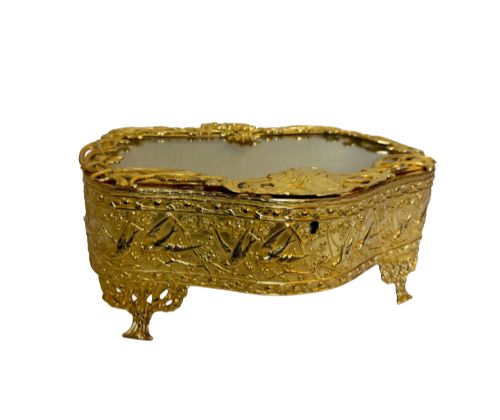
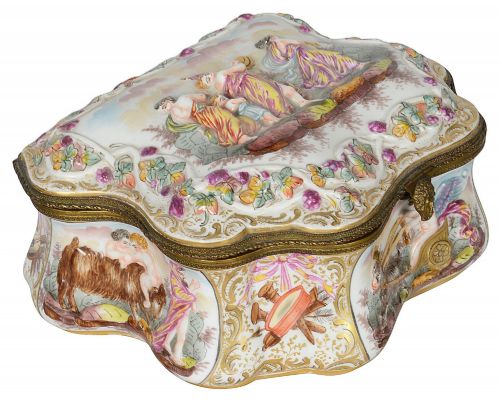
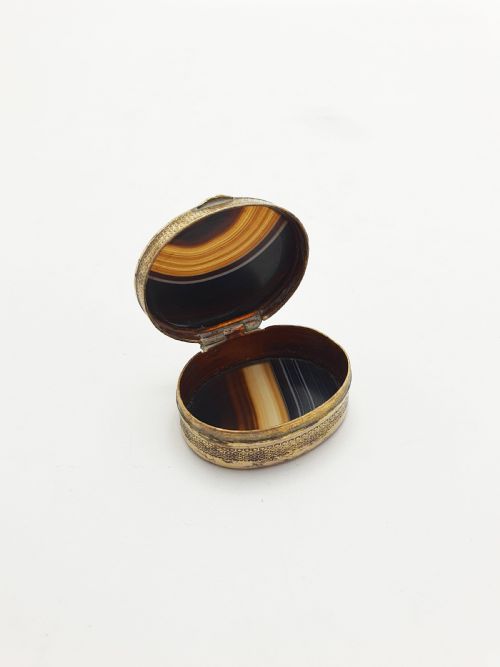
Many examples combine metal framing with contrasting panels of glass, porcelain, marble, or leather, resulting in items that function equally well as vanity boxes, work-boxes, and table caskets.
Materials and construction
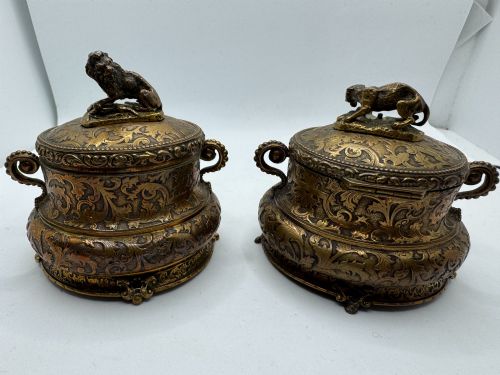
Makers constructed these boxes using a metal framework of gilt brass, ormolu, or gilt bronze to form the structural body and decorative mounts. This metalwork was often cast, chased, and gilded to produce a bright surface finish.
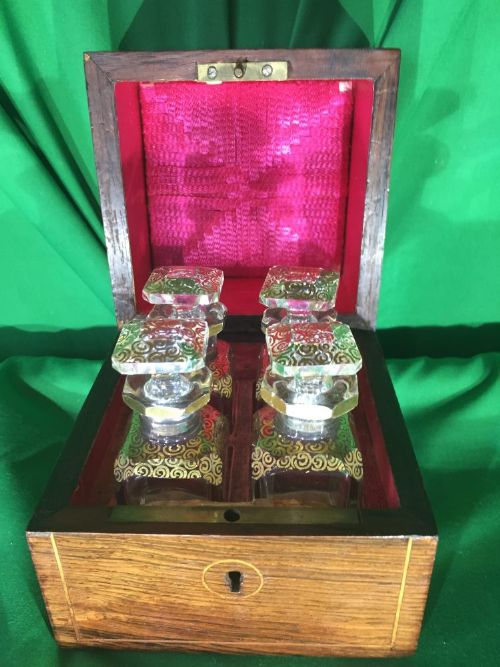
Panels of glass, porcelain, marble, and leather were integrated into the metal frames to build the walls and lids of the caskets. Interior linings of silk or similar fabrics provided a soft bed for stored jewellery and trinkets.
Gilt Brass Casket Box Retail Price Guide 2026
Typical asking prices for gilt brass casket box among the pieces listed under this phrase on Sellingantiques today, from the lower quarter to the upper quarter. They describe what is for sale here now, not the wider market.
Listings feature nineteenth-century items in Victorian, Regency, and Art Nouveau styles, using brass, ormolu, glass, porcelain, and leather.
Distinctions in quality
The quality of a gilt brass casket box lies in the crispness of the metal casting and the precision of the assembly. Finer pieces show deep, clean chasing on the mounts and a secure fit between the metal frame and the inset glass, porcelain, or stone panels.
Attention to interior detail also separates standard examples from superior ones. Boxes finished with fitted silk linings, working locks with original keys, and hand-painted porcelain or miniature panels reflect a higher standard of manufacture.
The Gilt Brass Casket Box Glossary
- Ormolu
- Gilt bronze or brass applied to decorative hardware and furniture mounts. The technique creates a rich gold-coloured surface finish on nineteenth-century pieces.
- Capodimonte
- An Italian type of porcelain known for moulded relief figures and decorative details. These porcelain plaques frequently form the panels of nineteenth-century caskets.
- Palais Royal
- A style associated with luxury novelty items sold in Paris arcades. These pieces include miniature carriages and novelty boxes from the nineteenth century.
- Napoleon III
- A French design style spanning the mid-to-late nineteenth century. It draws on past periods, combining ornate ormolu mounts with glass and lacquered surfaces.
- Regency
- A British design period defined by classical restraint and elegance. Work-boxes and table-cabinets from this era utilise fine leathers and disciplined brass mounts.
Gilt Brass Casket Box: Frequently Asked Questions
What were gilt brass casket boxes used for?
These boxes served as secure, decorative containers for storing jewellery, trinkets, and small personal valuables. Owners placed them on dressing tables and desks for everyday access.
They also functioned as decorative display pieces in reception rooms, showcasing the owner's taste through continental metalwork and inset porcelain panels.
How do I date a nineteenth-century box?
Dating relies on identifying the prevailing style, such as Regency simplicity, Victorian embellishment, or Art Nouveau naturalism. Examining the materials, such as early porcelain plaques or later glass panels, provides further clues.
Construction methods also help determine age, as hand-assembled metal frames and early casting techniques differ from mass-produced twentieth-century manufacturing.
Where were these decorative boxes made?
Many examples originate from France, particularly Paris, which produced a high volume of ormolu and glass caskets during the nineteenth century. Others come from Italian workshops, notably featuring Capodimonte porcelain.
British makers also produced work-boxes and table-cabinets, often incorporating local woods, leather, and gilt-brass mounts.
How do I care for gilt metal and glass?
Clean gilt brass and ormolu gently with a dry, soft cloth to remove dust without damaging the gold-coloured surface layer. Avoid using harsh chemical polishes that can strip the gilding.
For glass and porcelain panels, use a slightly dampened microfibre cloth, taking care not to wet any fabric linings or exposed paper elements inside the box.