
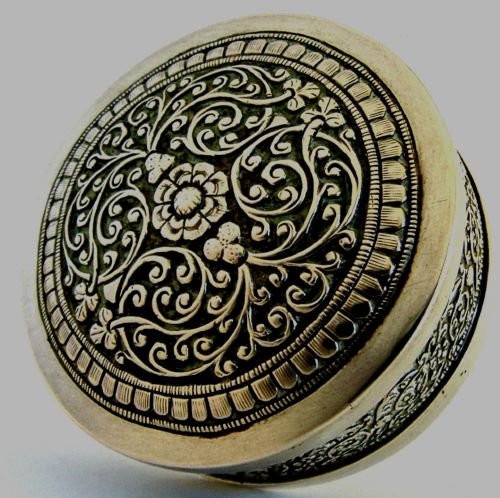
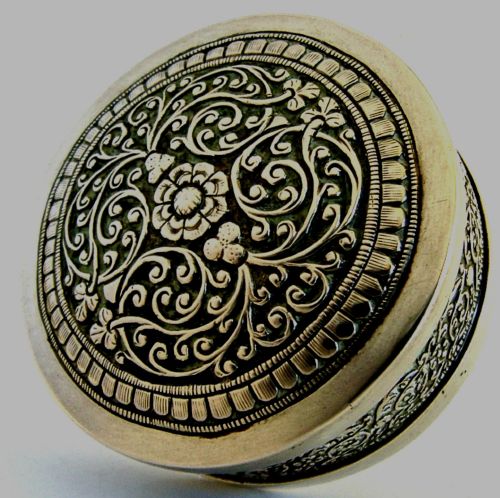
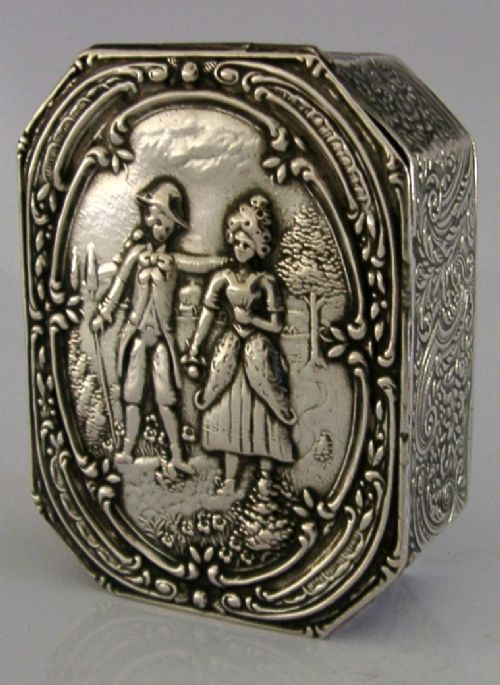
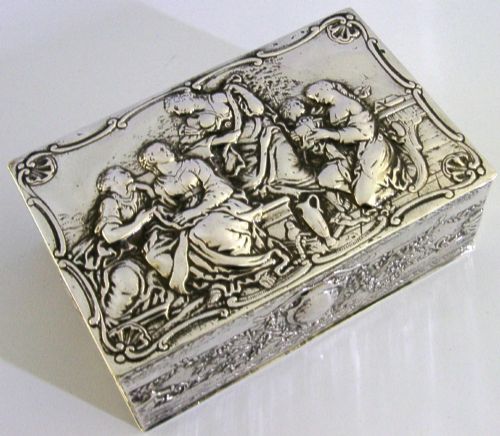
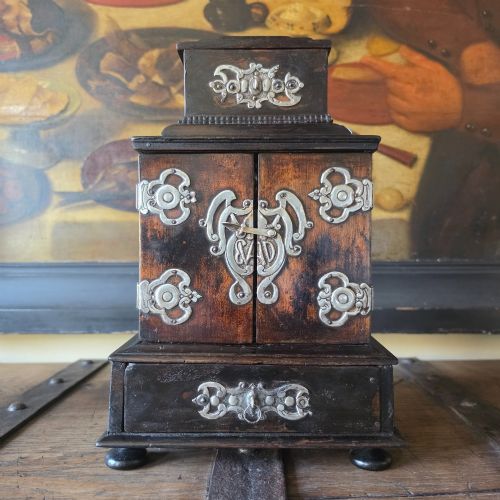
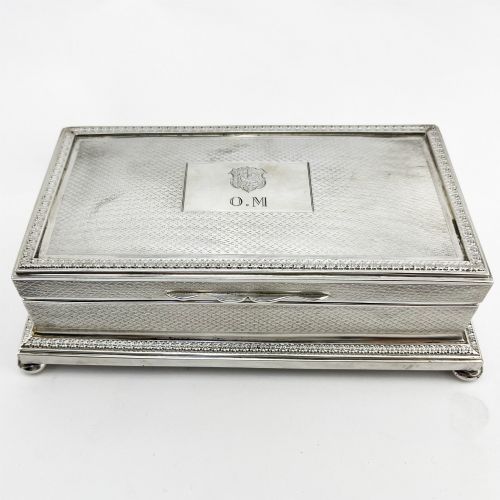
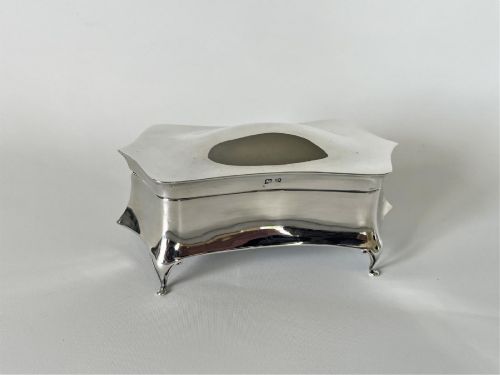
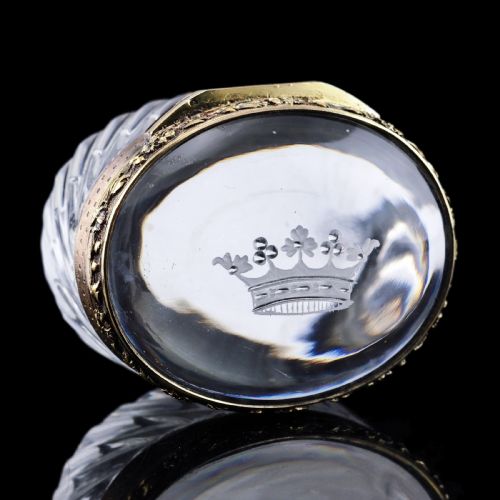
Antique Silvered Trinket Casket
An antique silvered trinket casket safeguards small valuables with period craftsmanship, offering a decorative metal container designed to sit elegantly on a dressing table.
Antique Silvered Trinket Casket
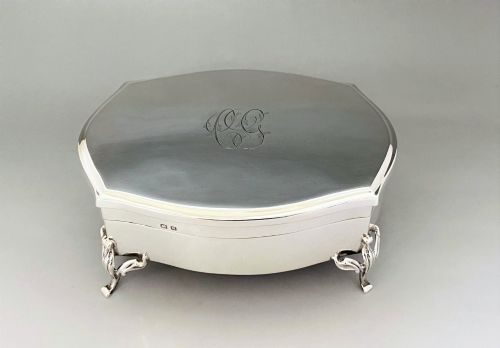
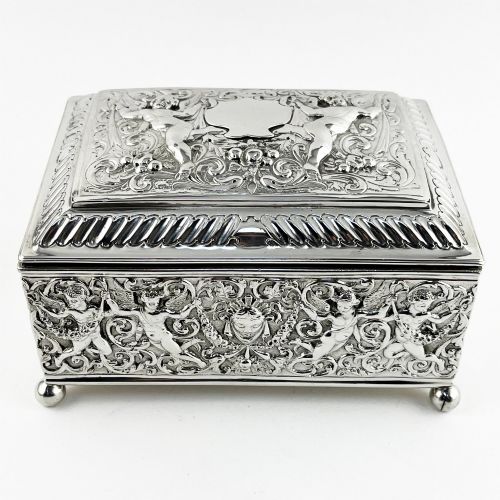
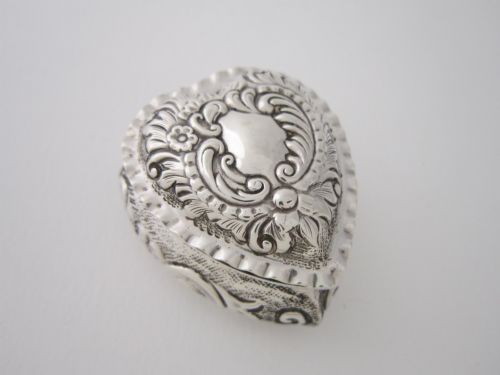
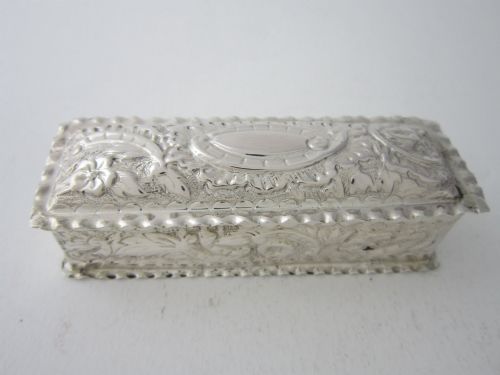
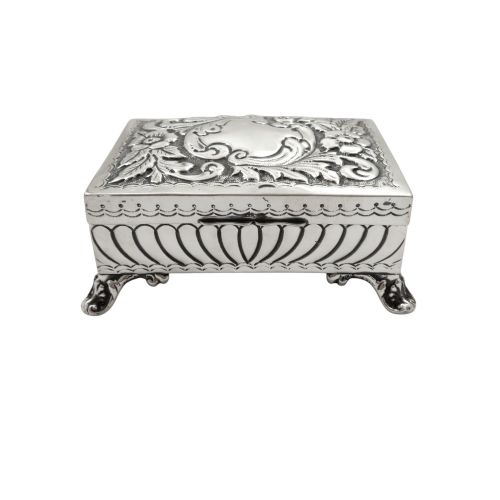
An antique silvered trinket casket encompasses small lidded containers intended for rings, jewellery, and dressing table accessories, appearing across the Victorian, Edwardian, and mid-twentieth-century eras.
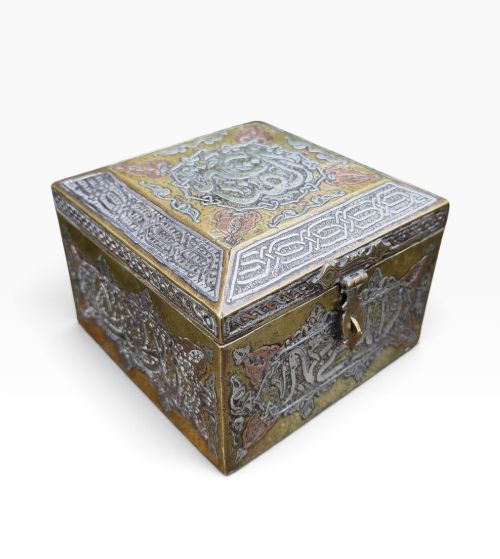
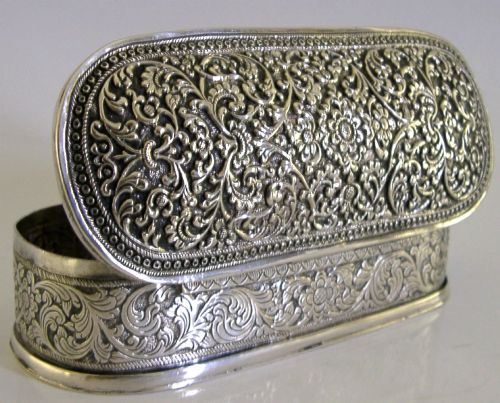
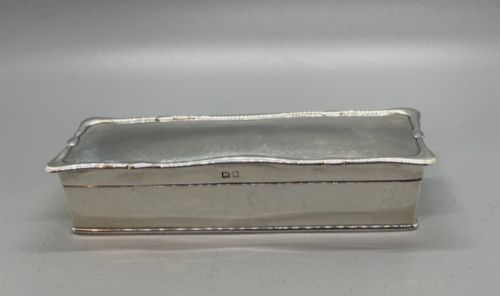
The pieces on this page span British sterling silver productions alongside continental European, Asian, and Middle Eastern workshops, taking the form of rectangular boxes, heart-shaped vessels, and table caskets.
Makers utilised various base metals and precious overlays, incorporating decorative panels of enamel, tortoiseshell, or crystal alongside hinged lids and fitted interiors.
Standards of Craftsmanship
Quality rests in the weight and thickness of the metal, the precision of the hinge mechanism, and the tightness of the lid closure.
Superior examples display crisp chasing, well-fitted internal linings of silk or velvet, and undamaged supplementary materials like tortoiseshell panels or vitreous enamel.
Listings feature items from the Victorian, Edwardian, and Art Deco periods, incorporating sterling silver, tortoiseshell, and enamel.
William Comyns·A & J Zimmerman Ltd·William Hutton·Mappin & Webb·Wang Hing & Co
The Antique Silvered Trinket Casket Glossary
- Sterling silver
- An alloy containing 92.5 percent pure silver by weight, widely utilised for British and continental table boxes. It provides the durable foundation for chased decoration.
- Silver gilt
- Silver that has been coated with a thin layer of gold on its interior or exterior surfaces. This technique protects the underlying metal from tarnishing and offers a rich internal contrast.
- Tortoiseshell
- The mottled brown and amber shell of the hawksbill turtle, applied as decorative veneer to wooden or silver box lids. It creates a smooth, glossy surface texture.
- Chasing
- A metalsmithing technique where designs are hammered into the front surface of the metal without removing material. It produces raised ornamentation and relief patterns on casket lids.
- Hallmark
- A series of official stamps applied to precious metals indicating the assay office, standard of purity, and year of manufacture. It allows collectors to date individual pieces accurately.
Antique Silvered Trinket Casket: Frequently Asked Questions
What are antique silver trinket caskets made of?
These boxes are constructed primarily from solid silver or sterling silver, frequently accompanied by internal gilt linings or wooden carcasses. Many examples incorporate contrasting panels of tortoiseshell, enamel, brass, copper, or crystal.
Craftsmen often combined these materials with textile linings inside the box to protect delicate rings, brooches, and personal ornaments.
How can I date my trinket box?
Dating relies heavily on identifying official hallmarks stamped into the metal, which reveal the assay office and the specific year of production. Stylistic clues such as Victorian chasing, Edwardian symmetry, or Art Deco geometric lines also indicate the era of manufacture.
The presence of specific maker marks helps narrow down the active working years of the workshop that produced the piece.
Were these caskets used only for jewellery?
While frequently called jewellery boxes, these containers served multiple purposes on nineteenth and twentieth-century dressing tables and desks. They held small personal items including calling cards, trinkets, cufflinks, and hairpins.
Larger table versions functioned as cigar boxes, cigarette containers, or potpourri holders in polite domestic spaces.
How should I clean a silvered trinket box?
Maintenance requires gentle dusting with a soft cloth to prevent the accumulation of dirt within chased patterns and decorative crevices. Aggressive chemical dips should be avoided, particularly on boxes featuring tortoiseshell, enamel, or fabric linings.
Polishing should be done sparingly with a specialist silver cloth to preserve the underlying metal and any original gilding.