

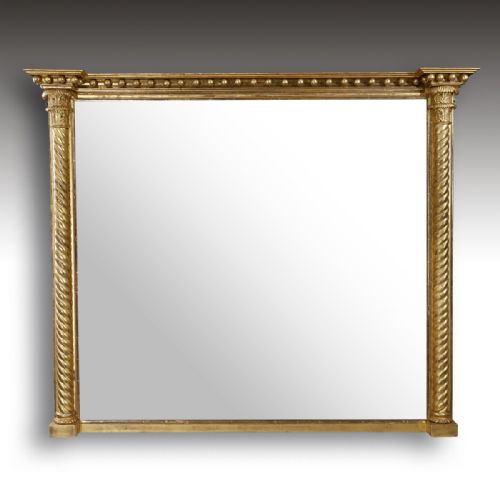

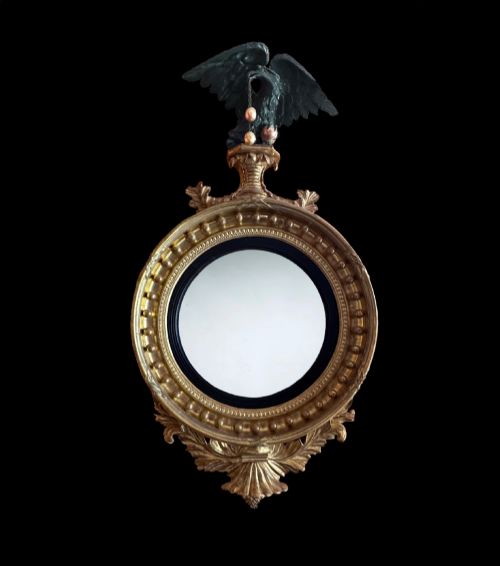
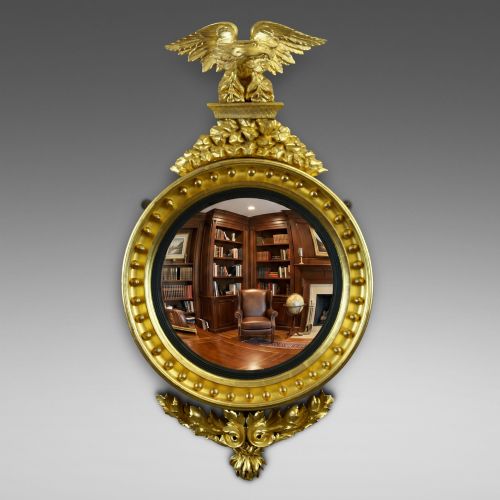
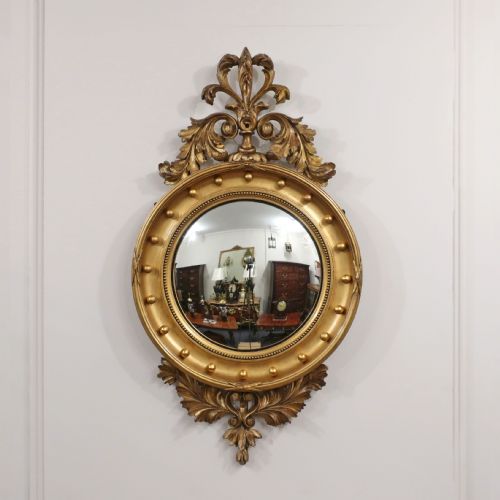




Gilt Ball Frame Mirror
A gilt ball frame mirror brings depth and curved light to a room through its circular convex glass.
Gilt Ball Frame Mirror
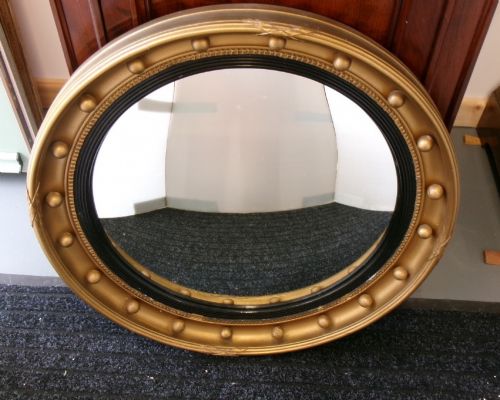
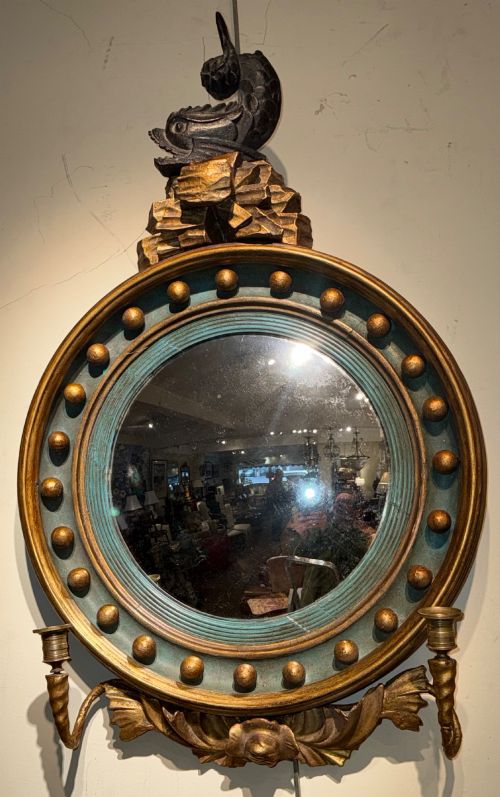
When you search for a gilt ball frame mirror, you are looking at circular convex wall mirrors whose frames feature decorative spheres, often referred to as porthole mirrors. The version you are most likely to meet on this page dates from the nineteenth century, including Regency and Victorian periods, alongside later revivals.
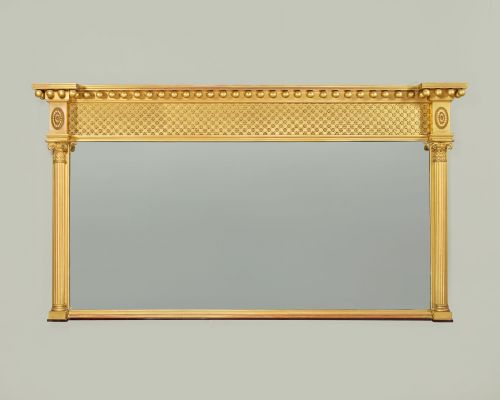
These pieces function primarily as wall mirrors and overmantel mirrors, designed to reflect a wide angle of a room. The circular form and distinctive frame details create a strong focal point in both traditional and contemporary interiors.
How they were made
Makers constructed these frames from wood, gesso, and composition applied over a wooden base, then gilt the surface to achieve a bright metallic finish. Some examples incorporate ebonised wood details alongside the gilding to create contrast around the circular frame.
The convex mirrored glass was set deep within the frame, frequently accompanied by an inner reeded ebonised slip and interspersed with decorative spheres or balls. Materials like glass, giltwood, and painted wood appear consistently across the periods recorded.
Gilt Ball Frame Mirror Retail Price Guide 2026
Typical asking prices for gilt ball frame mirror among the pieces listed under this phrase on Sellingantiques today, from the lower quarter to the upper quarter. They describe what is for sale here now, not the wider market.
Listings span the nineteenth century into the twentieth century, incorporating Regency, Victorian, and Edwardian periods alongside twentieth-century revivals.
What varies in quality
The crispness of the gesso moulding and the depth of the carved or applied ball decoration distinguish finer examples from simpler production. Superior pieces retain their original mercury or early silvered convex glass, which exhibits a characteristic warmth and distortion.
The quality of the gilding and the integrity of the wooden or composition structure dictate the longevity and visual impact of the piece. Proportion between the frame width, the ball ornamentation, and the convex glass plate remains a key indicator of balance.
The Gilt Ball Frame Mirror Glossary
- Convex glass
- Curved glass that projects outward to produce a wide-angle, warped reflection of the interior space. This form was popular during the Regency period for security and decorative effect.
- Giltwood
- Wood that has been coated with a thin layer of gold leaf or gilt powder over a prepared gesso ground. It provides a bright and durable finish.
- Gesso
- A plaster-like mixture applied to wood frames to create a smooth surface for gilding or moulding into decorative shapes. It allows for intricate relief details.
- Ebonised wood
- Timber treated with a dark stain or finish to imitate ebony. It is often used for the inner slip ring on these frames.
- Verre eglomise
- A technique where design and gilding are applied to the reverse of glass. It appears in select Regency mirrors.
Gilt Ball Frame Mirror: Frequently Asked Questions
Where should I hang a convex mirror?
These mirrors work best on a principal wall in a hallway, dining room, or living space where their wide-angle reflection can capture the entire room.
Because they project the light and span of a space back into the interior, positioning them opposite a window or light source maximises their visual impact.
How do I date a gilt ball mirror?
Dating relies on examining the construction materials, the backing boards, and the composition of the frame and glass. Regency and early nineteenth-century examples often feature distinct timber construction and heavier gesso work compared to later Victorian or twentieth-century revivals.
Looking closely at the gilding technique and the silvering on the convex glass helps determine whether a piece is from the original period or a later style.
What is the difference between Regency and Victorian versions?
Regency frames tend to feature sharp, crisp gesso ornament, ebonised inner slips, and sometimes specialised glass details like verre eglomise panels. Victorian and later nineteenth-century interpretations often adopt heavier proportions or slightly softer moulded ball details.
Both share the core circular convex format, but the subtlety of the surface preparation usually separates the earlier craftsmanship from later production.
How do I clean the glass safely?
Cleaning requires a soft, dry cloth applied gently to the convex surface to avoid disturbing the historic silvering or the surrounding frame. Spray liquids should be avoided to prevent moisture seeping behind the glass or damaging the giltwood and gesso.
Regular dusting with a feather duster preserves the finish without wearing down the delicate gilt surface.