


Gillows Style Library Table
A gillows style library table brings substantial timber and disciplined cabinet-making into a room, offering a generous writing surface designed to stand free in a space.
Gillows Style Library Table
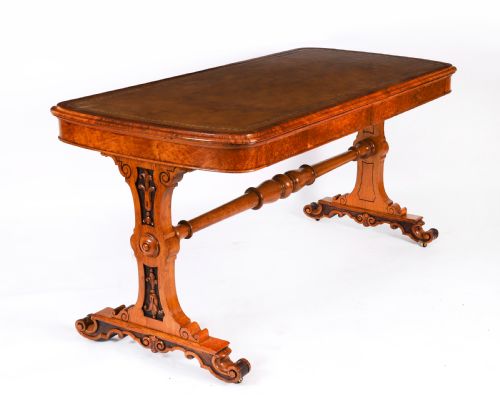
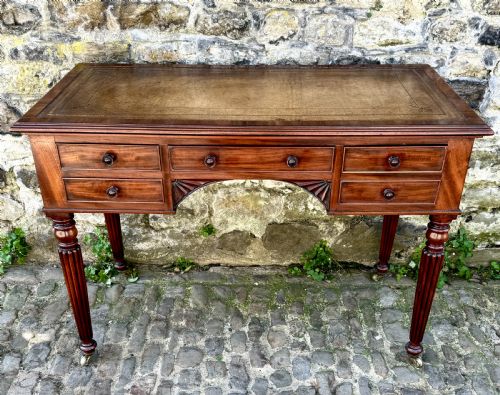
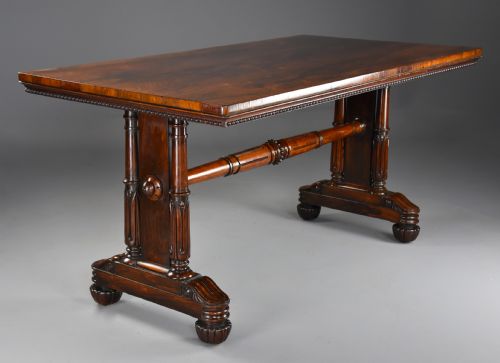
A gillows style library table is a heavy, freestanding desk or writing surface intended for central placement in a room, appearing frequently across Regency, Georgian, and Victorian periods. These pieces serve as functional desks with finished backs and sides, allowing them to sit away from walls.
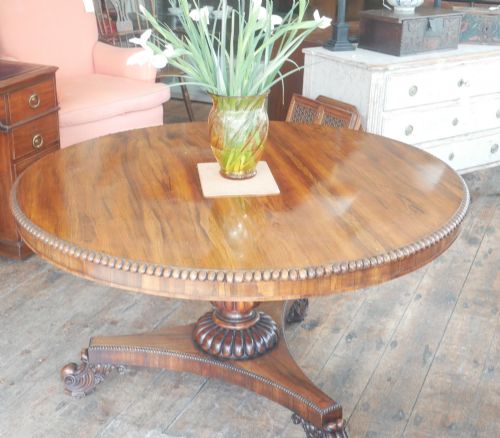
The version most commonly met on this page is constructed from mahogany or rosewood, often featuring inset leather writing surfaces and turned or reeded legs. They span forms from simple chamber writing tables to large breakfront library desks and partner's desks.
Originating from the traditions of the renowned Lancaster firm or produced in the manner of their workshop, these tables reflect utilitarian strength combined with restrained decorative restraint. Buyers seek them for their architectural proportions and practical surface areas.
How They Were Made
Cabinet-makers constructed these tables using dense hardwoods like Cuban mahogany, rosewood, and walnut, often applying veneers of pollard oak, birdseye maple, or burr amboyna to primary surfaces. These timbers provided structural stability and decorative grain patterns suited to prominent domestic spaces.
Secondary construction details include brass hardware, such as galleries and castors, alongside specialised locking mechanisms like Bramah locks fitted into drawers. Joinery relied on traditional methods to support heavy writing slabs and freestanding frames.
One exceptional Victorian desk incorporates a brass gallery and burr amboyna wood, manufactured during the early eighteen-fifties.
What Varies in Quality
The distinction between standard workshop output and exceptional craftsmanship rests on timber selection and the precision of secondary details. Superior examples exhibit finely figured mahogany or exotic veneers paired with crisp hand-carving on legs and mouldings.
Hardware execution and interior drawer construction also separate grades of these tables, where solid mahogany drawer linings and branded or stamped maker signatures indicate higher workshop status.
Gillows of Lancaster·Gillow
The Gillows Style Library Table Glossary
- Library Table
- A large, freestanding table designed for a library or study, finished on all sides to allow placement in the centre of a room.
- Partners Desk
- A large double-sided desk built with drawers and cupboards on both opposing long sides, allowing two people to work opposite one another.
- Bramah Lock
- A high-security cylindrical lock patented in the late eighteenth century, frequently found on better-quality desks and writing tables.
- Centre Table
- A freestanding table designed to be viewed from all angles, often used in hallways, drawing rooms, or as a library centrepiece.
- Pollard Oak
- Timber taken from the trunk of an oak tree that has been pollarded, producing a mottled, cluster-grained wood favoured for decorative veneers.
Gillows Style Library Table: Frequently Asked Questions
What is a gillows style library table?
A gillows style library table is a sturdy, freestanding wooden desk or writing table designed to sit in the middle of a room rather than against a wall. These pieces typically feature finished backs, multiple drawers, and turned or reeded legs.
They draw inspiration from the furniture produced by the historic Gillows firm of Lancaster and London, known for robust construction and understated classical proportions.
How were these tables used?
These tables served primarily as writing desks, study surfaces, and central room furniture for reading and correspondence. Their freestanding design allowed people to sit away from walls, utilising natural light from windows.
Larger versions accommodated books and papers across wide leather-lined tops, while partner's variants allowed two individuals to work face-to-face.
How do I tell Regency from Victorian examples?
Regency examples generally display cleaner classical lines, rosewood or Cuban mahogany timbers, and brass inlay or reeded legs influenced by ancient Greek and Roman designs. Victorian pieces often incorporate heavier proportions, walnut or exotic burr veneers, and revival styles like Chippendale or Gothic.
Examining the turning on the legs and the grain of the secondary woods helps distinguish the lighter Regency aesthetic from later nineteenth-century interpretations.
Where should I place one?
Because these tables are finished on all four sides, they are best positioned away from walls in the centre of a study, library, or large living space. This placement highlights the finished back and allows easy access to drawers from multiple angles.
Ensure the room has adequate floor space around the table to accommodate chairs and allow comfortable movement.