




Gilded Wooden Buddha
These gilded wooden buddha sculptures offer ornate Southeast Asian and Chinese artistry from the eighteenth, nineteenth, and early twentieth centuries.
Gilded Wooden Buddha
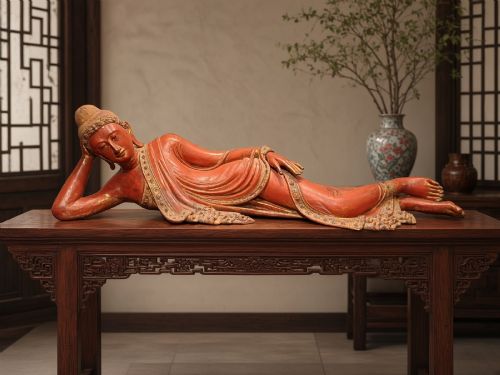
A gilded wooden buddha brings traditional temple craftsmanship into a room, presenting sacred figures carved from timber and finished with metallic leaf or paint. These works span the Qing dynasty, Tibetan regions, and Southeast Asian traditions including Burmese Mandalay styles.
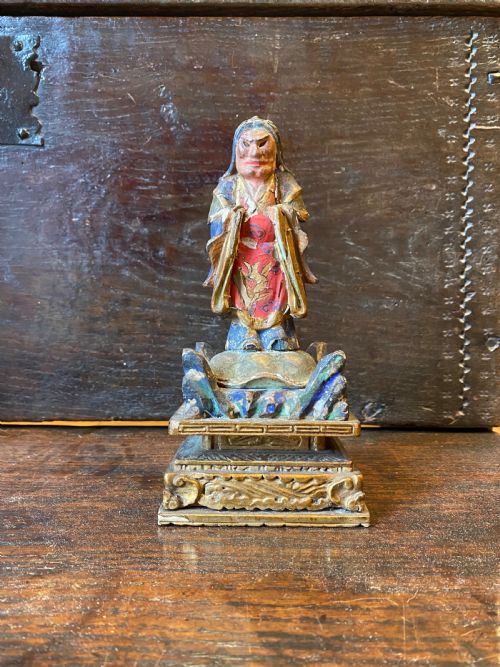
The pieces on this page appear in various forms, from reclining figures and temple guardians to medicine figure statues and large carved heads. Dating ranges across the eighteenth, nineteenth, and early twentieth centuries, capturing historical religious sculpture.
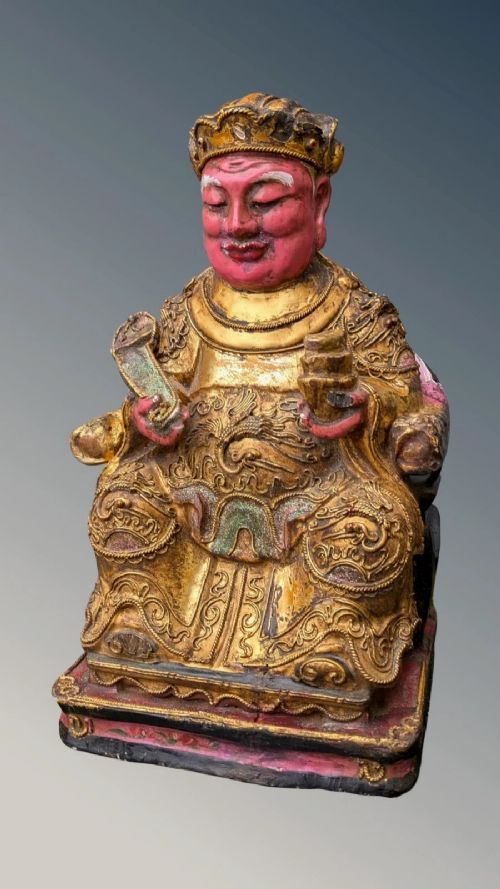
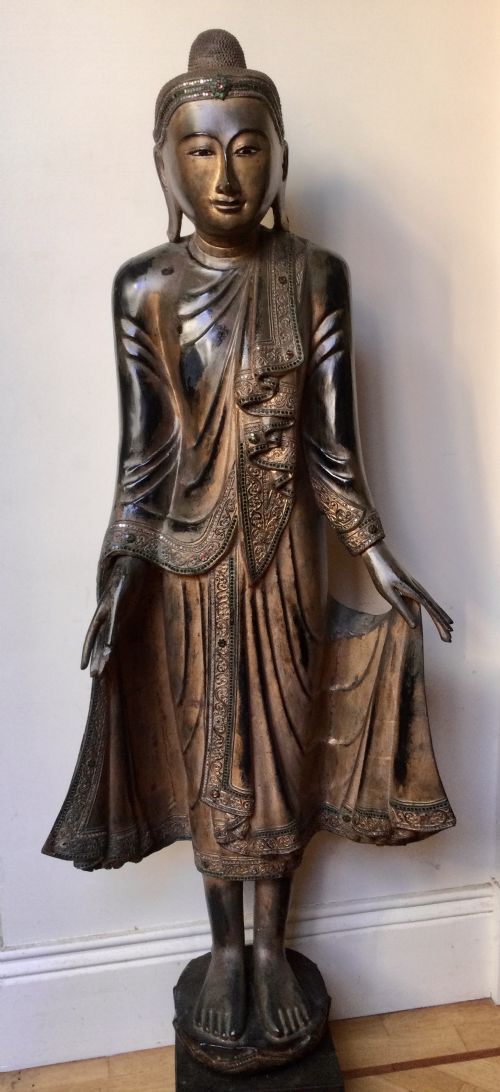
Buyers encounter both seated or standing deities and monumental temple guardian figures. The selection includes Chinese polychrome carved figures of deities alongside Burmese gilt wood works.
How they were made
Artisans carved these figures primarily from solid wood, shaping intricate drapery, facial expressions, and ornamentation directly into the timber. Many pieces incorporate gesso layers beneath the surface decoration to smooth the wood before gilding.
Makers applied gold leaf and gilt finishes to highlight the divine status of the figures, often combining this with polychrome paintwork. Some examples also feature glass inlay to add reflective detail to the eyes or garments.
Some temple guardians wear expressions so fierce they could frighten away a lingering draft.
What varies in quality
The refinement of the carving dictates the distinction between standard provincial items and superior temple commissions. Finer statues demonstrate deep undercutting in the wooden folds and meticulous facial detailing.
The preservation of the original gold leaf and polychrome pigments significantly influences the visual presence of the sculpture. Pieces retain varying degrees of their historic surface decoration depending on their original temple environment.
The Gilded Wooden Buddha Glossary
- Gesso
- A plaster-like mixture applied to wood surfaces to prepare them for gilding or painting. It provides a smooth base for gold leaf adherence.
- Polychrome
- Painted in several colours. This surface treatment appears alongside gilt finishes on Chinese deities and temple guardians.
- Gilt Wood
- Wood that has been decorated with gold leaf or gold paint. This technique gives religious figures their luminous metallic appearance.
- Qing Dynasty
- The final imperial dynasty of China, lasting from the seventeenth to the early twentieth century. Pieces from this era reflect distinct imperial aesthetic traditions.
- Glass Inlay
- Small pieces of glass set into the surface of a sculpture to catch the light. This technique enhances the decorative richness of Southeast Asian works.
Gilded Wooden Buddha: Frequently Asked Questions
Where were these figures originally placed?
These wooden statues were created for temples, domestic shrines, and imperial spaces across China, Tibet, and Burma.
They served as focal points for worship, meditation, and protection within religious architecture before entering the decorative market.
How do I care for a gilded wooden sculpture?
Keep the sculpture away from direct sunlight, heating vents, and drastic humidity fluctuations to protect the delicate wood and gold leaf.
Dust the surface gently with a soft, dry brush without using liquid cleaners or polishes that could damage the historic finish.
How can I tell the regional origin apart?
Burmese Mandalay pieces often display distinct crown designs, robes, and posture characteristics typical of Southeast Asian Buddhist art.
Chinese Qing period figures and temple guardians show specific imperial costume details, facial structures, and polychrome paint palettes.
What is a temple guardian?
Temple guardians are powerful protective deities placed at entrances to ward off malevolent spirits and secure sacred spaces.
These figures are typically larger and more dynamic in posture than standard devotional buddha statues.