
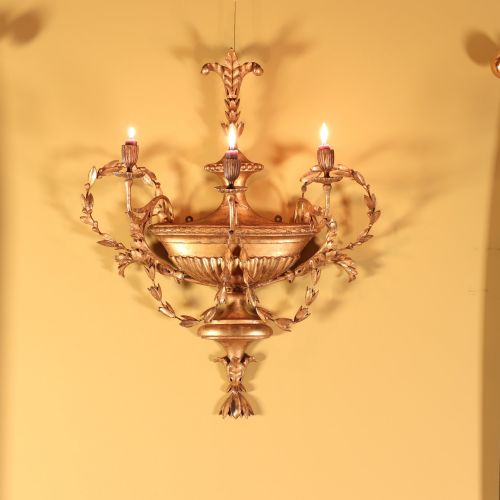
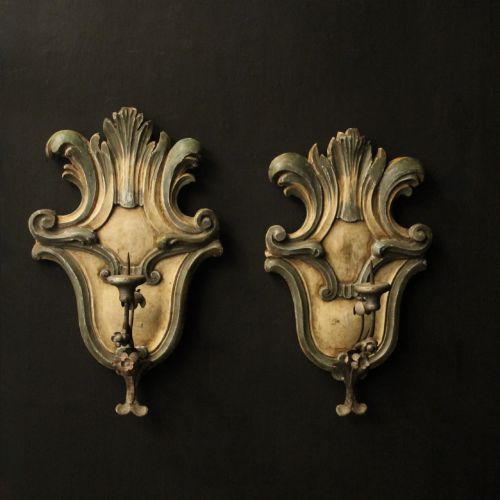
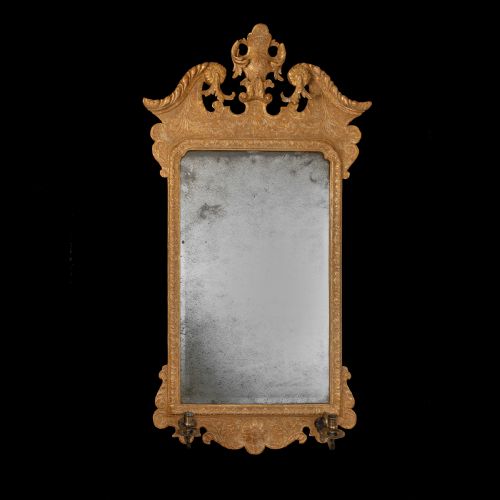
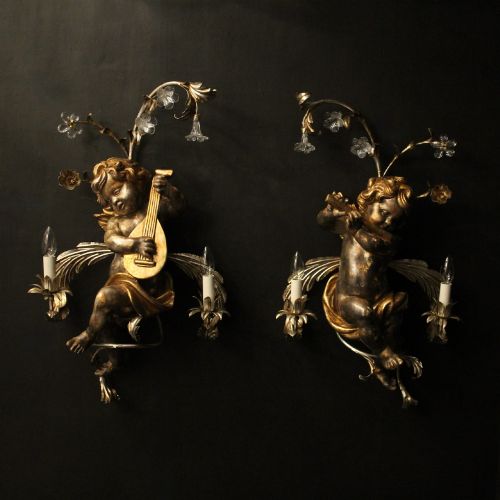
Gilded Wood Wall Sconces
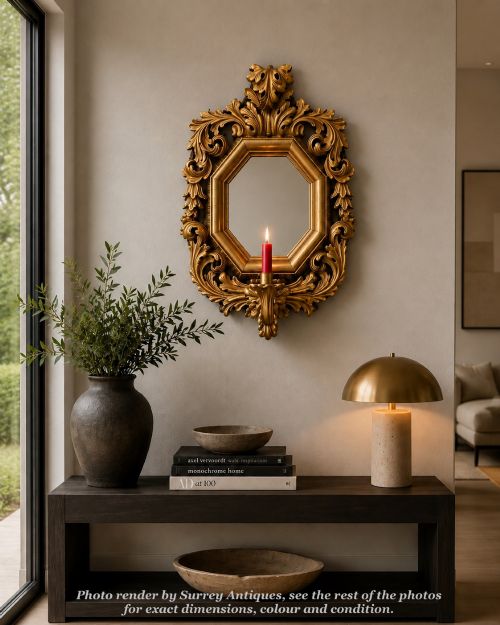
Gilded wood wall sconces bring warmth and formal illumination to a room, catching candle or electric light against carved surfaces.
Gilded Wood Wall Sconces
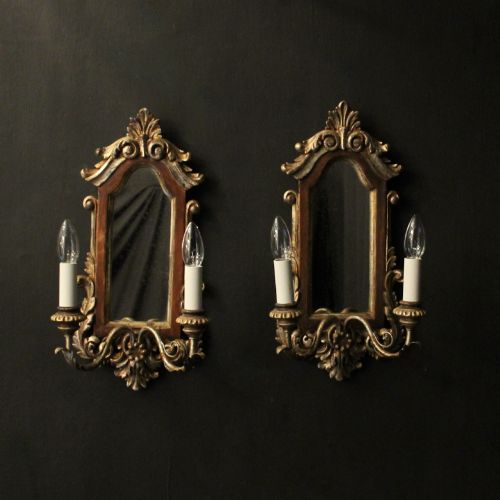
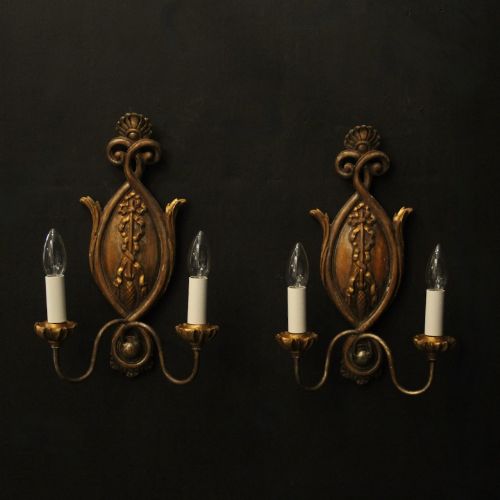
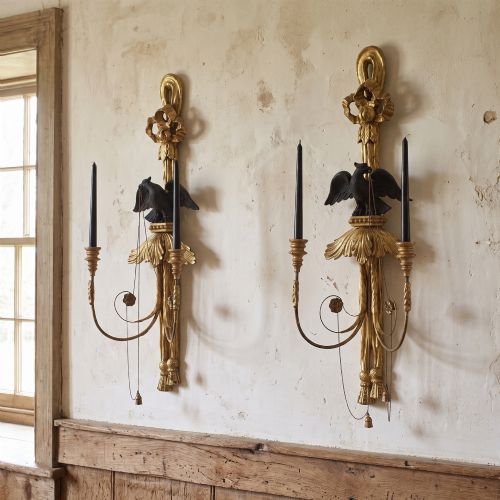
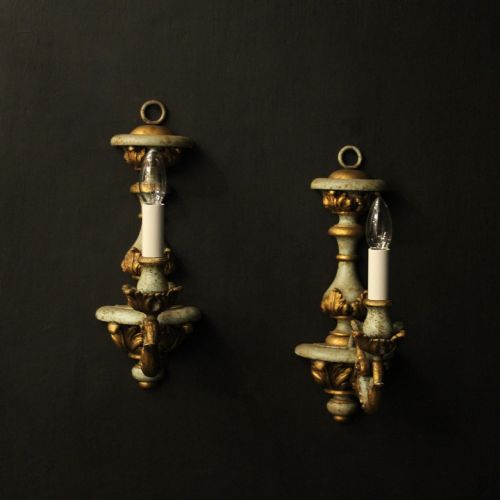
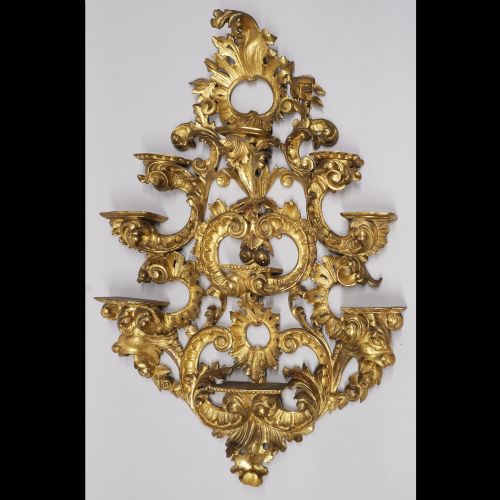
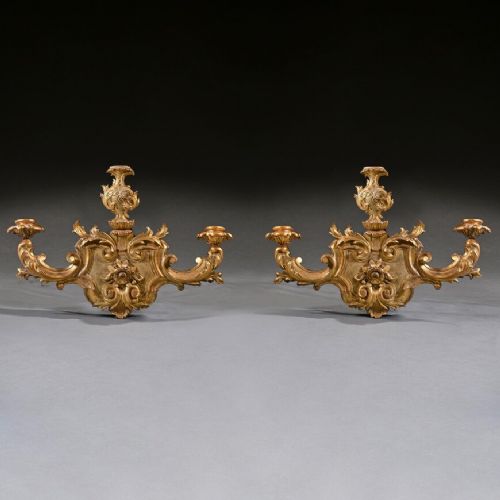
When you search for gilded wood wall sconces, you encounter branched light fittings and wall brackets designed to mount directly onto panels or plaster. The selection spans centuries of design, with Italian Florentine pieces from the early twentieth century appearing frequently alongside nineteenth-century examples and eighteenth-century Venetian work.
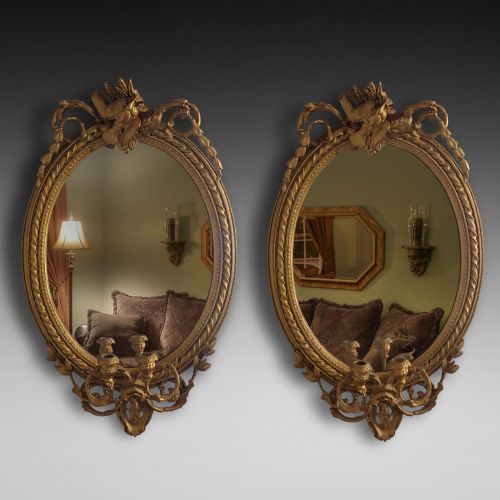
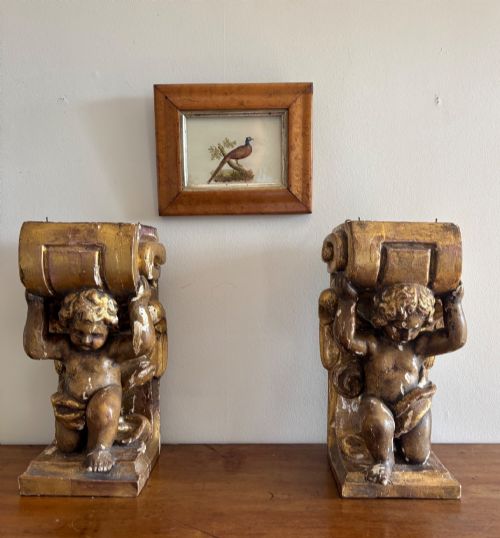
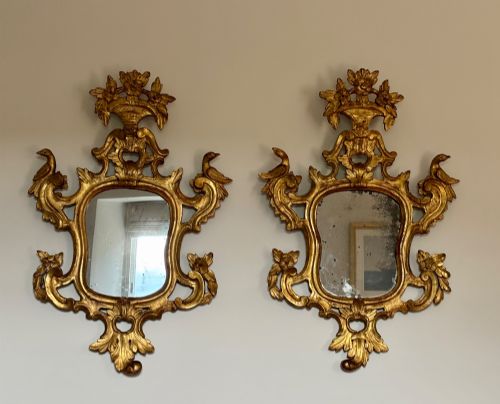
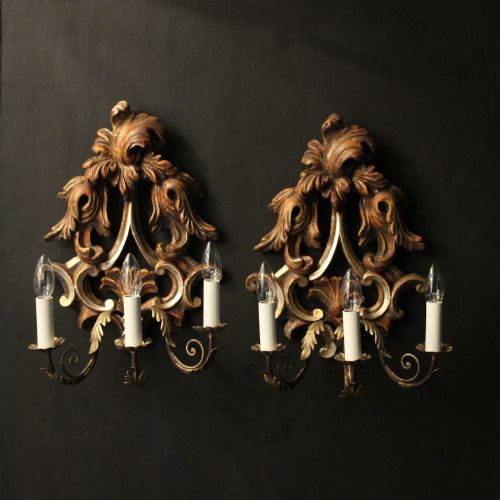
Forms range from single arm lights to triple and quadruple arm twin girandoles, often paired with carved wooden wall brackets or mirrors. Italian and French workshops dominate the record, utilising styles that move between Rococo, Baroque, and Neoclassical vocabularies.
Buyers find everything from small pricket candle sconces to large carved wall lights incorporating Murano glass or polychrome details. These items serve both as practical illumination and as decorative accents that project candlepower across a room.
Materials and Technique
Craftsmen shaped these pieces from carved wood and gesso, applying layers of gold leaf or silver leaf over the prepared wooden base. This traditional method created a luminous surface capable of reflecting candlelight effectively from a wall mounting.
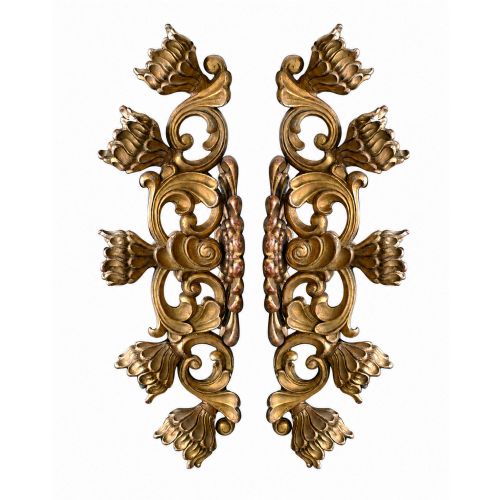
Many items incorporate hand-carved wooden elements combined with gesso mouldings to achieve intricate Rococo scrolls, acanthus leaves, and architectural brackets. Certain examples integrate auxiliary materials such as Murano glass plates, metal arms, and foxed mirror glass.
Surface finishes vary from bright gold leaf to polychrome paint and silver gilding, showing the hand of the artisan in the depth of the carving and the application of the leaf.
The site listings feature items spanning the eighteenth, nineteenth, and twentieth centuries, including Regency and Victorian periods alongside Florentine and Italian Baroque styles.
Quality and Craftsmanship
The distinction between standard production and superior work lies in the depth and sharpness of the hand-carving within the wooden structure. Finer pieces display crisp botanical motifs, balanced proportions, and substantial wood bodies rather than light plaster compositions.
The application of the gold leaf or gesso reveals the standard of the workshop, with better examples retaining coherent gilding layers that age gracefully over the centuries. Original antique surfaces and untouched backplates elevate the standing of a piece compared to later repainted or heavily restored items.
Benjamin Goodison
The Gilded Wood Wall Sconces Glossary
- Giltwood
- Wood that has been coated with gold leaf or gold paint. This technique provides the characteristic metallic sheen seen on traditional antique frames and sconces.
- Gesso
- A plaster mixture applied to wood surfaces as a base for gilding. It allows craftsmen to carve fine details before applying gold leaf.
- Girandole
- A branched wall light or sconce, frequently incorporating a mirror plate. The reflective glass multiplies the illumination cast by the candles.
- Pricket
- A sharp spike on a candleholder designed to secure the base of a candle. This form appears on older ecclesiastical and domestic wall lights.
- Cartouche
- An ornamental frame resembling a scroll or rolled-up piece of paper. It often forms the central decorative shield on Rococo mirrors and sconces.
Gilded Wood Wall Sconces: Frequently Asked Questions
How do I hang a heavy sconce safely?
Heavy carved wooden sconces require secure wall anchors fixed directly into masonry or wooden studs. The weight of the timber and gesso demands robust brackets to support the projection from the wall.
Consult a professional installer if the backplate lacks designated fixing points. Ensuring the mount takes the full weight protects the antique structure from strain.
Were these sconces made for candles or electricity?
Earlier examples from the eighteenth and nineteenth centuries were designed exclusively for wax candles. Many twentieth-century Florentine pieces were constructed or later adapted to house electrical wiring.
Check the nozzle and arm interiors for modern fittings if you intend to use electric bulbs. Preserved wax pans often indicate original candle use.
How do I clean gilded wood surfaces?
Dust gilded surfaces gently with a soft, dry brush to avoid disturbing fragile gold leaf. Moisture and modern chemical cleaners can strip the historical gesso and leaf layers.
Professional restoration is recommended for significant dirt accumulation or damaged gilding. Gentle maintenance preserves the aged patina.
How do I distinguish eighteenth-century pieces from later revivals?
Eighteenth-century items display hand-cut timber construction, period joinery, and natural wear to the gesso beneath the gold leaf. Revival pieces from the Victorian era or the twentieth century often use machine-cut elements or standardised plaster composition.
Examine the backplates and nail types for clues to the period of manufacture. Foxed mirror plates and old pine backing boards provide further chronological indicators.