




Gilded Wood Hall Table
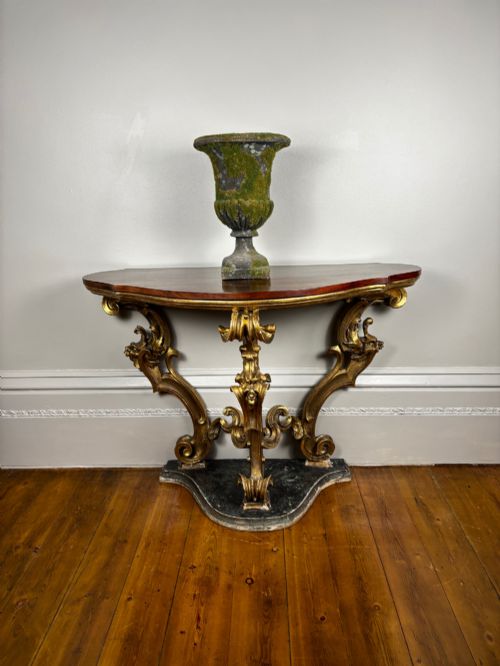
These gilded wood hall tables combine carved timber with gold leaf and marble surfaces, offering an impressive focal point for an entrance.
Gilded Wood Hall Table
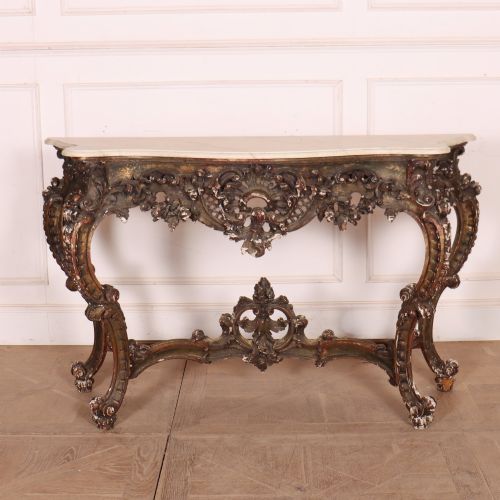
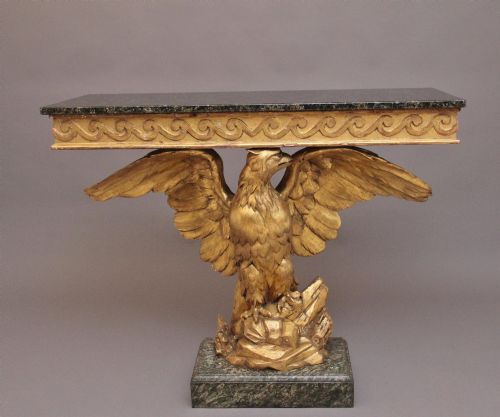
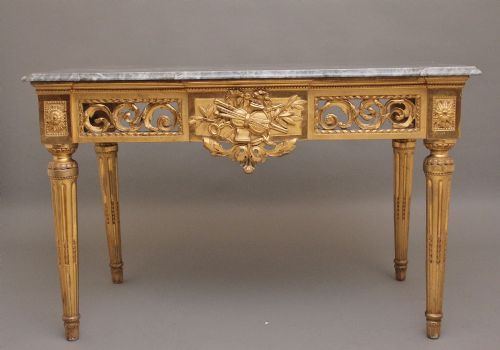
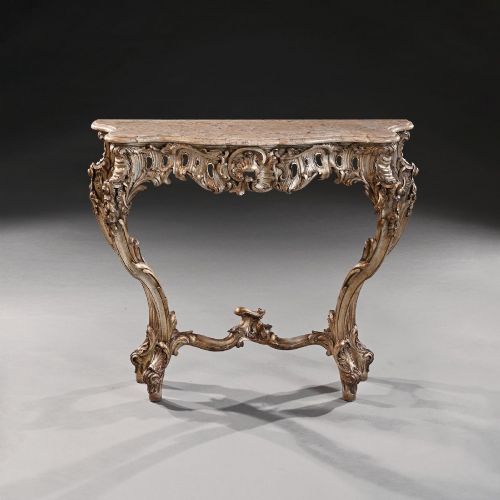
A gilded wood hall table typically takes the form of a console table designed to stand against a wall in an entrance hall or reception space. These pieces frequently feature shaped marble tops resting on ornate frames carved from timber.
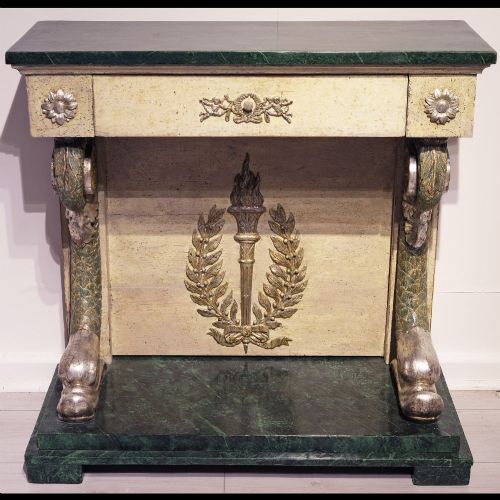
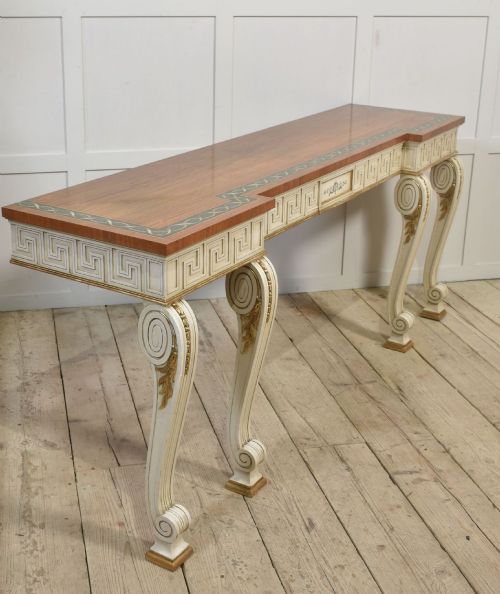
The selection includes examples spanning the eighteenth and nineteenth centuries, alongside early twentieth-century interpretations. French Rococo, Italian Rococo Revival, and Neoclassical styles dominate the forms available.
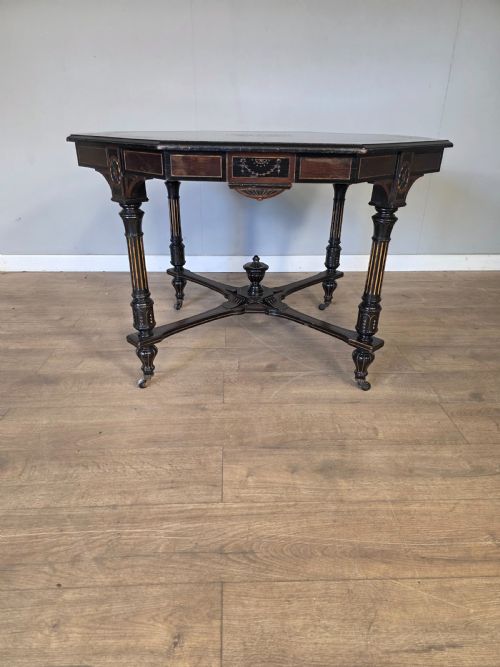
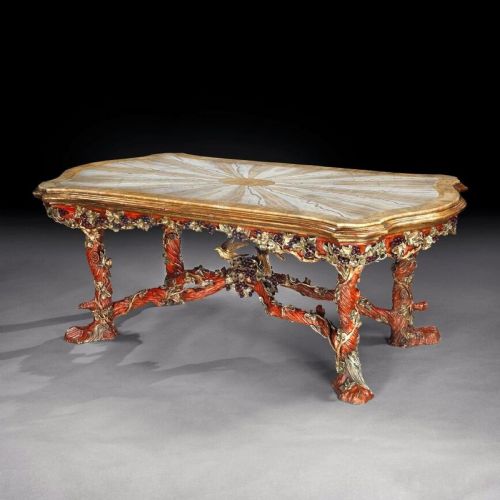
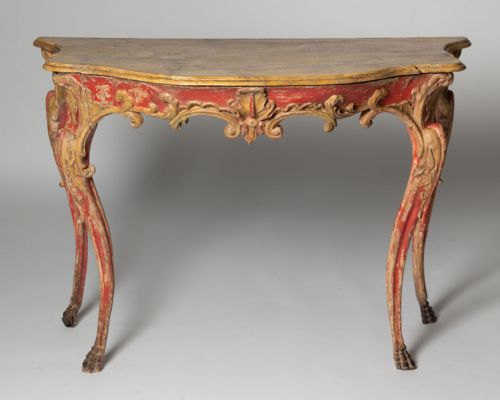
Makers produced these console tables, side tables, and centre tables to complement matching pier mirrors. The designs range from compact small tables to monumental pairs with lion's paw supports.
How they were made
Craftsmen built the structural frames using carved wood, applying gesso to smooth the surface before laying down gold leaf or silver gilt. Paint and polychrome finishes also appear alongside exposed timbers such as mahogany, rosewood, amboyna, and satinwood.
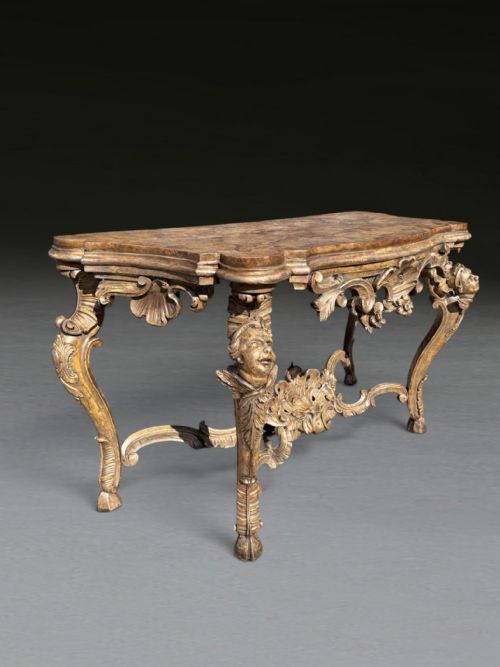
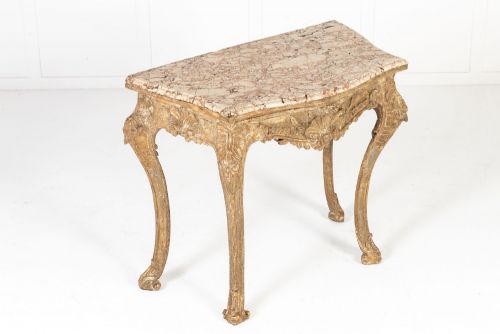
Cabinet makers and gilders combined these wooden frames with heavy stone surfaces, mounting shaped marble, onyx, and breccia marble slabs directly onto the console bases.
Lion's paw supports occasionally anchor heavy marble slabs, ensuring beasts hold up your mail.
What varies in quality
The depth and crispness of the wood carving distinguish different tiers of quality among these tables. Finely sculpted acanthus leaves, lion's paw supports, and serpentine outlines indicate a higher level of artisan skill.
The choice of surface materials further separates standard production from finer examples. Heavy, intricately veined marble or onyx tops paired with genuine gold leaf application elevate the presence of a piece compared to painted wood or simpler finishes.
Amleto Bertoni
The Gilded Wood Hall Table Glossary
- Console table
- A table designed to stand flat against a wall, frequently fixed with brackets or supported by front legs. These items often feature shaped marble tops and decorative aprons.
- Giltwood
- Timber that has been coated with gold leaf or silver gilt over a prepared gesso layer. This technique creates a bright metallic surface finish.
- Gesso
- A plaster-like mixture applied to wood surfaces to create a smooth base for gilding or painting. Artisans carve fine details directly into this hardened layer.
- Breccia marble
- A type of variegated stone composed of angular rock fragments embedded in a fine-grained matrix. It appears frequently on nineteenth-century table tops.
- Serpentine outline
- A curved edge characterised by a central convex section flanked by concave curves. This contour appears on table fronts and marble slabs.
Gilded Wood Hall Table: Frequently Asked Questions
Where do you place a gilded wood hall table?
These tables sit flat against an entrance wall, often positioned beneath a matching pier mirror to create a unified display in a hallway.
Because they utilise console designs, they occupy minimal floor space while providing a surface for decorative objects.
What top materials are found on these tables?
The surfaces consist primarily of marble, onyx, or breccia marble cut to follow the serpentine or demi-lune outline of the wooden frame below.
Some examples feature solid wood tops or painted timber surfaces instead of stone.
How do you identify a Rococo Revival table?
Rococo Revival pieces display asymmetrical scrollwork, C-scrolls, and naturalistic carved foliage typical of eighteenth-century French and Italian revivals.
These characteristics appear on nineteenth-century frames paired with gilded wood finishes.
What is the difference between a console and centre table?
A console table stands flat against a wall and often relies on wall brackets for stability alongside its front legs. Centre tables are finished on all sides to stand freely in the middle of a room.
Both forms appear frequently in gilded wood.