



Gilded Urn Garniture
These gilded urn garniture sets bring grand nineteenth-century presence to a mantelpiece, pairing matched vases with decorative clocks or side pieces.
Gilded Urn Garniture
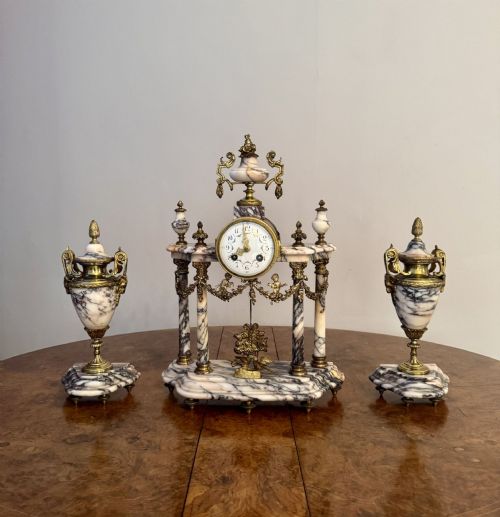
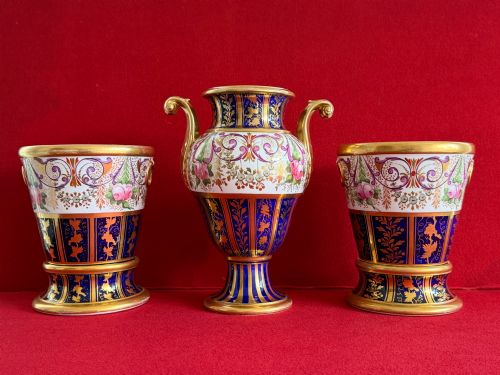
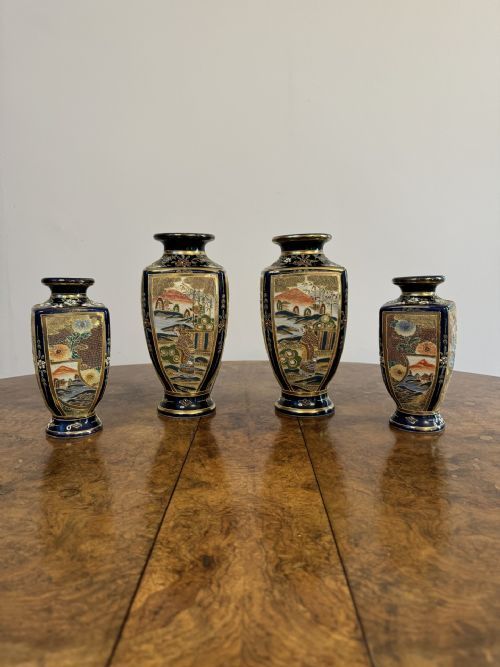
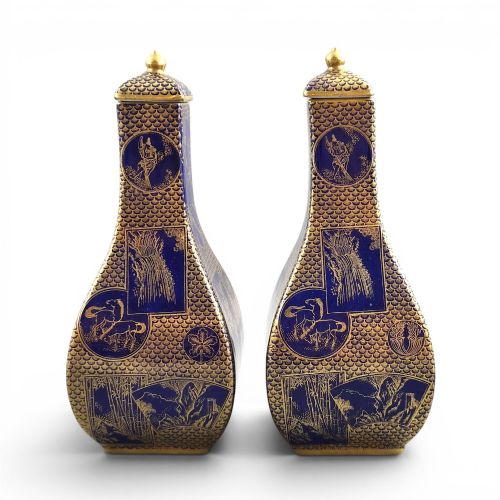
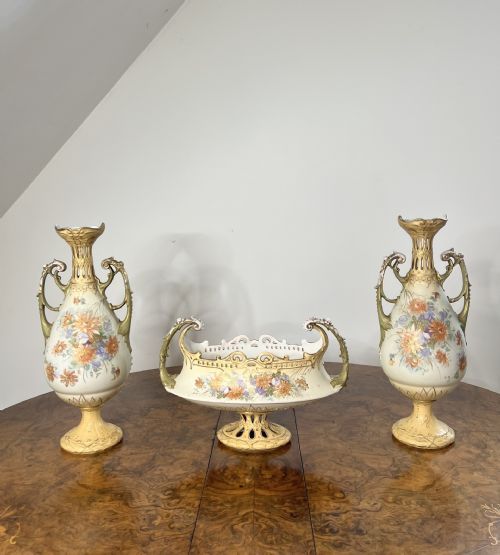
A gilded urn garniture brings together matched sets of ornamental vases, urns, and occasionally central clocks designed to display as a unified decorative scheme on a mantelpiece or sideboard. When searching for a gilded urn garniture, buyers encounter multi-piece matched arrangements intended to create symmetry and formal elegance in domestic interiors.
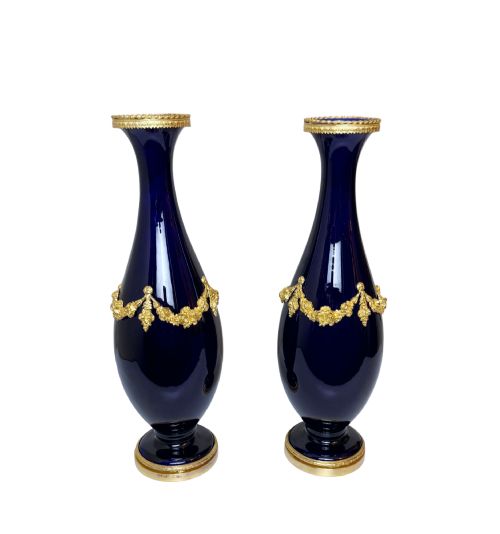
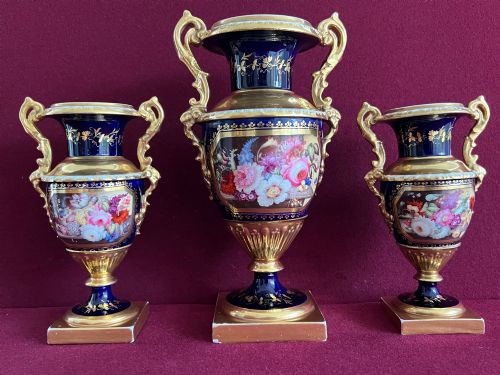
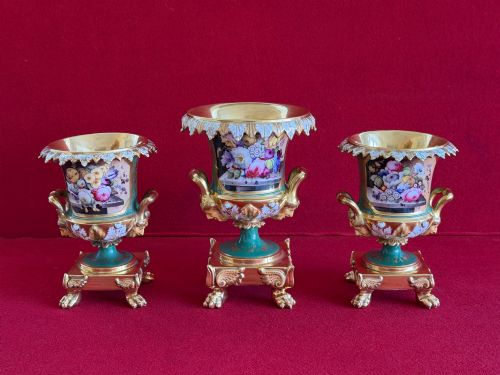
The selections span nineteenth-century European factories and Japanese workshops, with French porcelain and ormolu mounts appearing alongside English ironstone, German porcelain, and Bohemian glass. Many sets comprise three pieces, featuring a larger central vessel flanked by two matching side urns or vases, though four-piece Japanese Satsuma groupings also feature.
Stylistically, these pieces draw heavily on Neoclassical, French Rococo Revival, Empire, and Louis XVI designs. The heavy representation of nineteenth-century French porcelain and clock sets reflects the period's taste for elaborate, gilded decorative arts.
Judging Quality and Execution
Quality rests heavily on the crispness of the metal chasing and the depth of the gilding across the ormolu and bronze mounts. Superior sets display sharp detailing in cast foliage and scrollwork, whereas lesser examples show softer, flatter casting marks from hurried production.
The standard of hand-painting on the porcelain panels distinguishes master factory output from commercial decorative wares. Fine brushwork in botanical or figurative subjects by named artists elevates a garniture, while standard factory-applied transfer prints or simpler geometric gilding mark more utilitarian production.
Gilded Urn Garniture Retail Price Guide 2026
Typical asking prices for gilded urn garniture among the pieces listed under this phrase on Sellingantiques today, from the lower quarter to the upper quarter. They describe what is for sale here now, not the wider market.
Some nineteenth-century cassolette lids feature hidden dual personalities, flipping over instantly to transform an imposing decorative urn into a practical candle holder.
Spode·Minton·Mason's·KPM Berlin·Vincenti of Paris
The Gilded Urn Garniture Glossary
- Garniture
- A matched set of ornamental vases, urns, or figures designed to be displayed together on a mantelpiece or sideboard. They typically consist of three or five pieces sharing a decorative scheme.
- Ormolu
- Finely chopped high-karat gold applied to a bronze base using a mercury amalgamation technique. This process creates a durable, warm metallic lustre characteristic of fine French decorative metalwork.
- Cassolette
- A dual-purpose decorative vessel featuring a reversible lid that transforms the piece from an urn into a candleholder or perfume burner. They frequently form part of nineteenth-century French garniture sets.
- Ironstone
- A heavy, durable type of ceramic developed in the nineteenth century as a robust alternative to porcelain. It takes enamel colours and gilding readily while offering greater resistance to chipping.
- Imari
- A Japanese export porcelain style characterised by underglaze blue and iron red highlights enriched with gold. European factories frequently copied these distinctive palettes during the eighteenth and nineteenth centuries.
Gilded Urn Garniture: Frequently Asked Questions
What is a garniture set?
A garniture set is a coordinated group of three or more decorative vessels or clock sets created to sit together on a mantelpiece. These arrangements provide visual balance and symmetry to formal nineteenth-century rooms.
Most traditional configurations include a taller central urn accompanied by two matching smaller vases or cassolettes. They were valued as status symbols that showcased fine craftsmanship and material wealth.
How were garnitures used?
Garniture sets served primarily as decorative centerpieces atop fireplaces, consoles, and large sideboards in period homes. They filled prominent architectural spaces with colour, gilding, and sculptural form.
While some vessels like cassolettes had functional reversible lids for burning perfumes, most garniture pieces remained purely ornamental displays of wealth and artistic taste.
How do I care for gilded bronze?
Gilded bronze and ormolu mounts require gentle dusting with a soft, dry brush to prevent abrasive particles from scratching the delicate gold surface. Avoid chemical cleaners or metal polishes, which strip away the historic fire-gilding.
Keeping pieces away from direct sunlight and damp environments helps preserve both the metallic finishes and the painted porcelain surfaces over time.
How do I identify French style?
French nineteenth-century garnitures often feature elaborate ormolu mounts, scrolling foliage, and classical Neoclassical or Louis XVI motifs. Look for cast bronze details framing hand-painted porcelain panels depicting romantic or pastoral scenes.
Maker signatures on clock movements or factory marks on the underside of the porcelain bases frequently confirm the French origin and production period.