

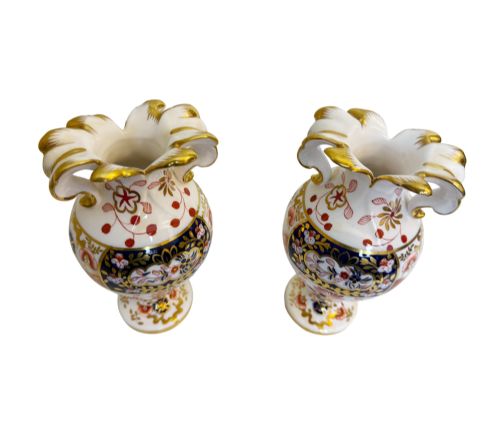


Regency Mantelpiece Vases
Regency mantelpiece vases are decorative ceramic and metal vessels designed to adorn drawing room hearths, offering classic Neoclassical elegance.
Regency Mantelpiece Vases
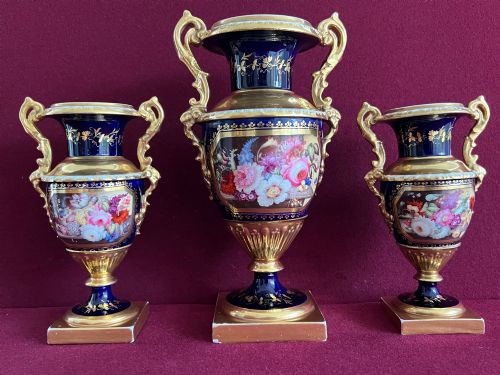
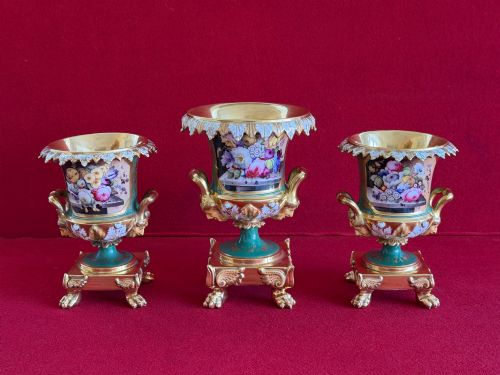
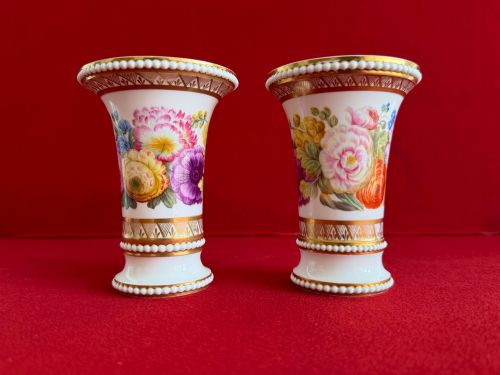
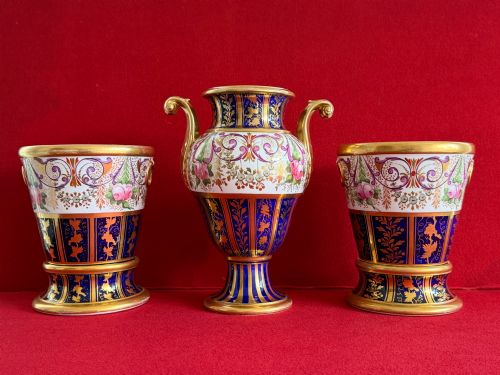
When you search for regency mantelpiece vases, you encounter garnitures and pairs of decorative vessels created during the early nineteenth century. These objects include spill vases, twin handled vases, and decorative urns designed specifically to sit upon a mantelpiece.
The pieces on this page span the Georgian, Regency, and later nineteenth-century periods, capturing the shift from classical restraint to richer Victorian tastes. Ceramic forms dominate, supplemented by bronze, ironstone, and toleware variations.
Makers such as Spode, Minton, and Flight, Barr and Barr Worcester produced some of the finest examples recorded here. Many survive as pairs or complete garnitures, preserving the symmetrical arrangement favoured in period interiors.
How they were made
Potters utilised fine porcelain, ironstone, and ceramic bodies, shaping them into classical urn and vase silhouettes. Hand-painted enamel, gilding with gold leaf, and intricate Chinoiserie or floral patterns were then applied by specialist decorators.
Metal vessels combine bronze mounted on marble plinths with painted toleware surfaces. These diverse manufacturing methods reflect both high ceramic artistry and durable metalworking techniques of the era.
Regency Mantelpiece Vases Retail Price Guide 2026
Typical asking prices for regency mantelpiece vases among the pieces listed under this phrase on Sellingantiques today, from the lower quarter to the upper quarter. They describe what is for sale here now, not the wider market.
Listings feature porcelain, ironstone, bronze, and toleware, spanning the Georgian, Regency, and 1880 periods.
What varies in quality
The standard of painting sets the finest pieces apart, particularly work associated with named hands like Thomas Steel or Thomas Lowe. Precision in gilding and the crispness of porcelain moulding also indicate superior craftsmanship.
Completeness dictates value, as matched garnitures of three pieces command greater attention than isolated single vases. The choice of base material, from translucent porcelain to heavy bronze and marble, alters the presence of the object.
Spode·Minton·Flight, Barr and Barr Worcester·Miles Mason·Thomas Steel·Thomas Lowe
The Regency Mantelpiece Vases Glossary
- Garniture
- A set of three or more matching vases or decorative objects designed to be displayed together on a mantelpiece or sideboard. They typically feature a central larger vessel flanked by two smaller matching pieces.
- Spill Vase
- A narrow vessel designed to hold slender wooden spills used for lighting candles or fires. These practical ceramic items were a staple of nineteenth-century hearths.
- Ironstone
- A heavy, durable type of earthenware patented in the early nineteenth century. It offered a robust alternative to true porcelain while accepting vibrant enamelled decoration.
- Toleware
- Lacquered or enamelled metalware, usually tin or iron, painted with decorative scenes or motifs. It provided an affordable yet stylish option for domestic ornamentation during the Regency period.
- Imari
- A decorative style inspired by Japanese export ceramics, featuring a palette of underglaze blue, iron red, and gilt. British factories frequently adopted this aesthetic for porcelain vases.
Regency Mantelpiece Vases: Frequently Asked Questions
What is a garniture of vases?
A garniture is a matched set of three or more vessels created to sit together symmetrically on a fireplace mantel. The central piece is usually taller, flanked by two matching smaller vases.
This arrangement was a hallmark of formal interior decoration during the Regency period, designed to balance the visual weight of the hearth.
How were spill vases used?
Spill vases held thin wooden spills or rolled paper tapers used to transfer flames from the hearth fire to candles and lamps. They sat within easy reach on the mantelpiece.
Because they saw daily domestic use, surviving examples in fine porcelain offer a glimpse into practical nineteenth-century life.
What is the difference between porcelain and ironstone?
Porcelain is a fine, translucent ceramic fired at high temperatures, favoured for delicate shapes and refined painted decoration. Ironstone is a dense, opaque earthenware developed for greater durability.
Both materials were utilised for mantelpiece vases, though ironstone pieces often display bolder, heavier forms and rich Chinoiserie patterns.
How do I identify a Regency period vase?
Regency pieces often display Neoclassical influences, drawing inspiration from ancient Greek and Roman forms such as campana urns and classical amphorae. Look for characteristic motifs like gilt borders, painted floral panels, and classical handles.
Manufacturing traits, such as unglazed foot rims on early porcelain and specific factory patterns, help confirm the date.