

Gilded Trumeau Wall Mirror
A gilded trumeau wall mirror combines reflective glass and decorative panels, offering historic French elegance and architectural presence to a room.
Gilded Trumeau Wall Mirror
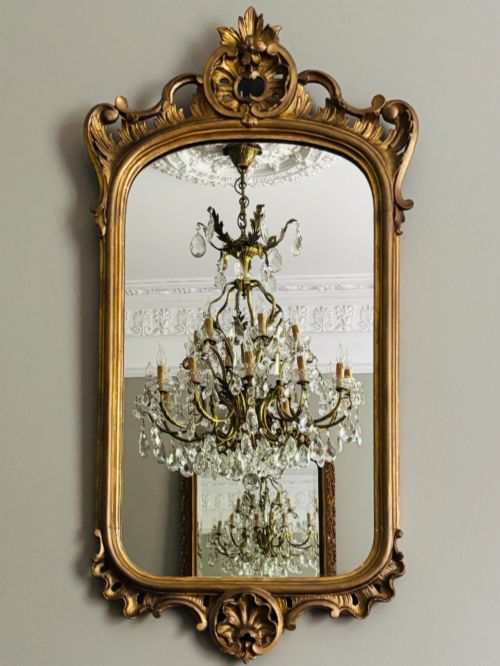
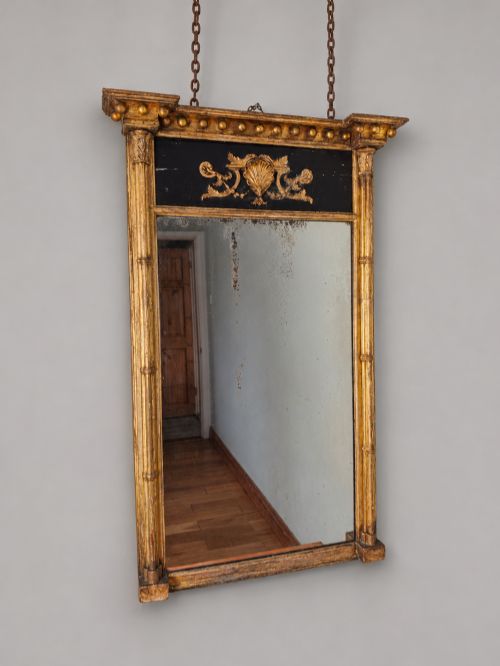
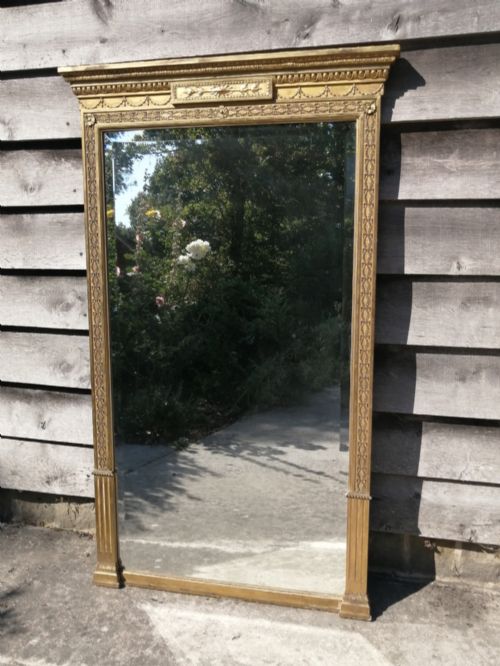
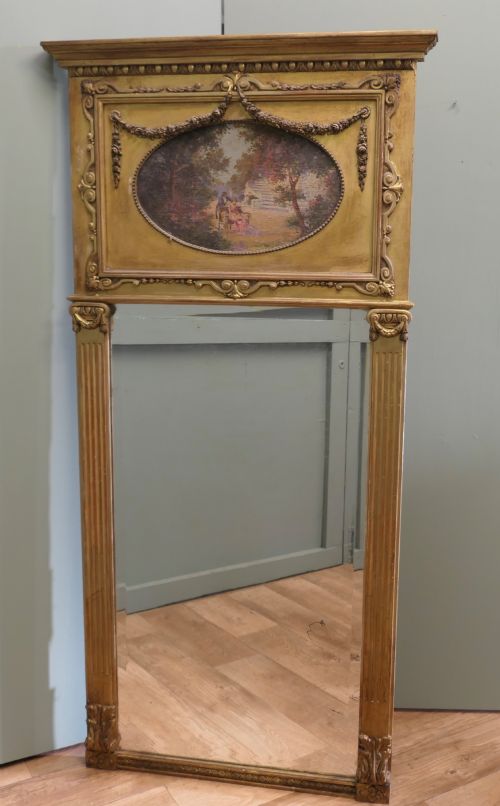
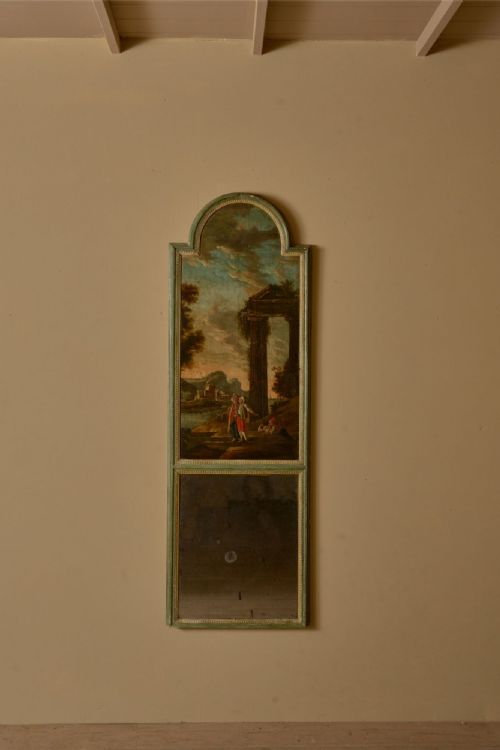
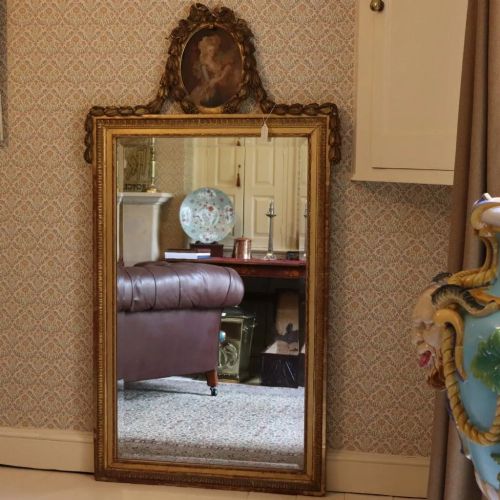
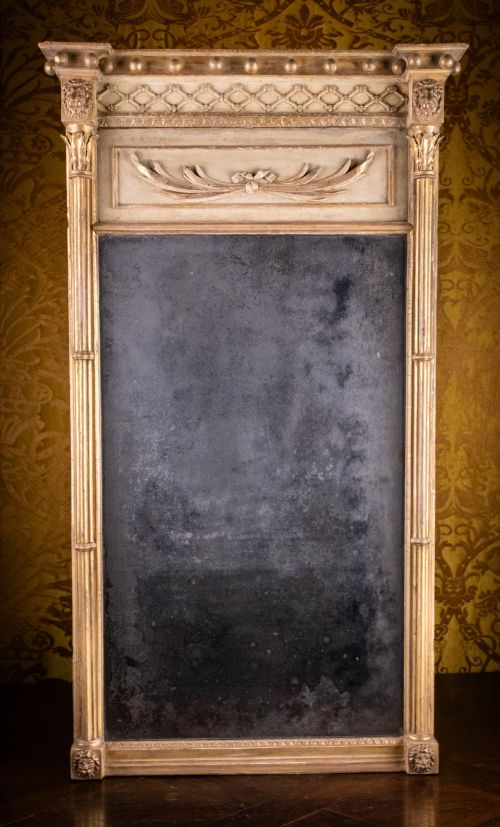
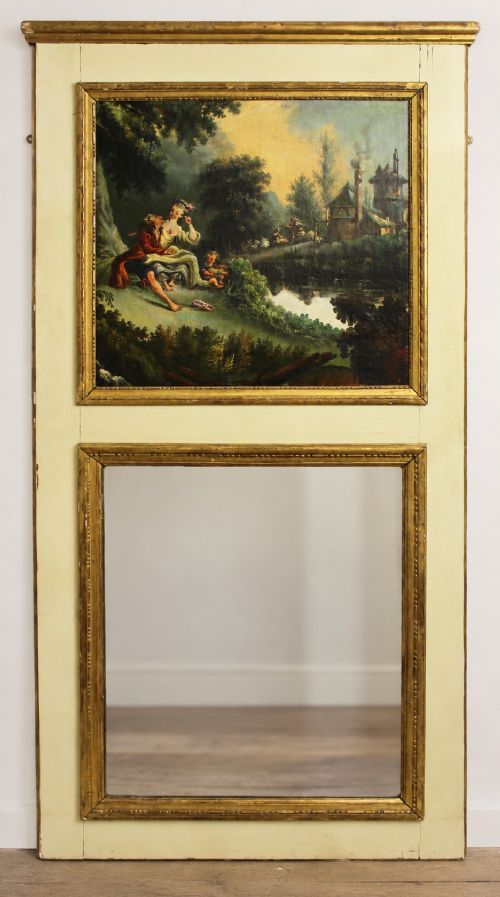
A gilded trumeau wall mirror is an architectural fixture combining a looking glass with an upper painted panel, oil painting, or verre églomisé insert. These pieces originate largely from eighteenth and nineteenth century France, England, and Denmark, capturing Neoclassical, Regency, and Louis XVI styles.
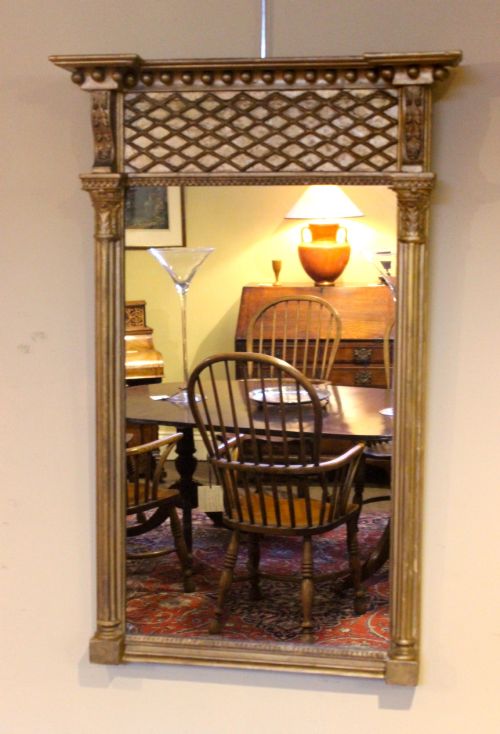
The version most commonly met on this page is the nineteenth century French or Regency example, frequently finished in gold leaf or painted wood. These mirrors function as overmantel or pier fixtures, integrating pastoral scenes, seascapes, or portraits within carved wooden frames.
How They Were Made
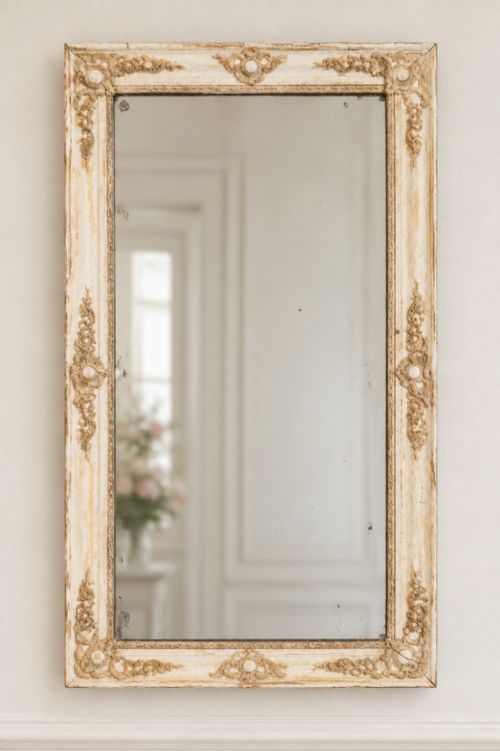
Gilded trumeau wall mirrors rely on carved wood and composition applied over a timber base, coated in gesso before the application of gold leaf. Many pieces incorporate mercury glass plates or early original mirror glass with foxing, secured behind timber rabbets.
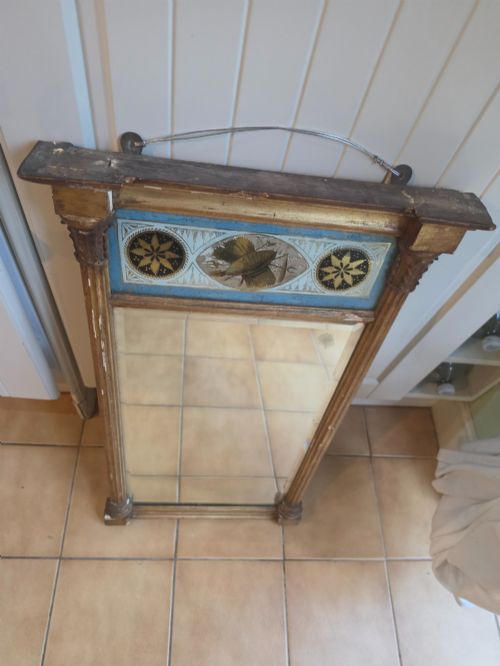
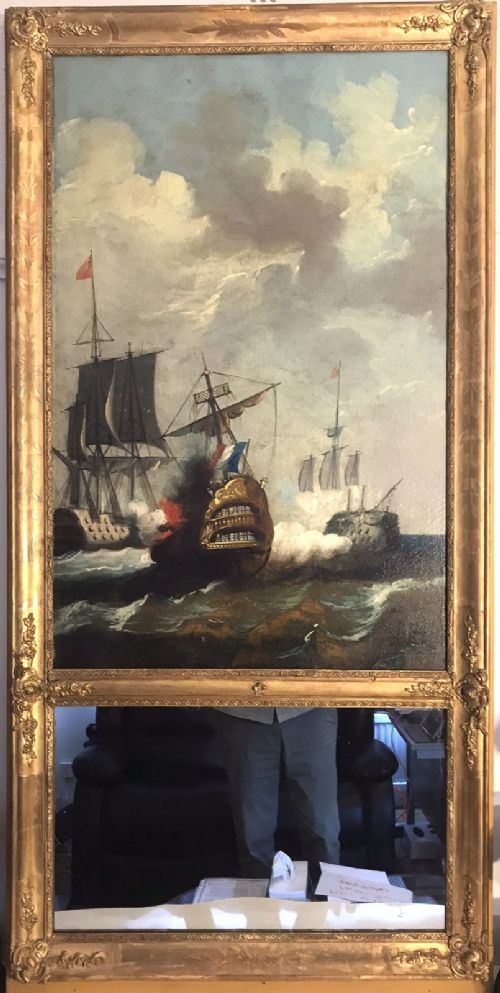
Upper panels utilise oil paint on canvas or wood, depicting subjects such as galleons or Marie Antoinette, alongside reverse painted glass techniques known as verre églomisé.
Gilded Trumeau Wall Mirror Retail Price Guide 2026
Typical asking prices for gilded trumeau wall mirror among the pieces listed under this phrase on Sellingantiques today, from the lower quarter to the upper quarter. They describe what is for sale here now, not the wider market.
Several panels feature miniature sea battles, ensuring your living room shares wall space with miniature eighteenth-century naval warfare.
What Varies in Quality
The integrity of the original mercury glass plate or early silvering distinguishes superior examples from later replacements. Original foxing and oxidation indicate age, while clear, unblemished modern glass suggests later re-silvering.
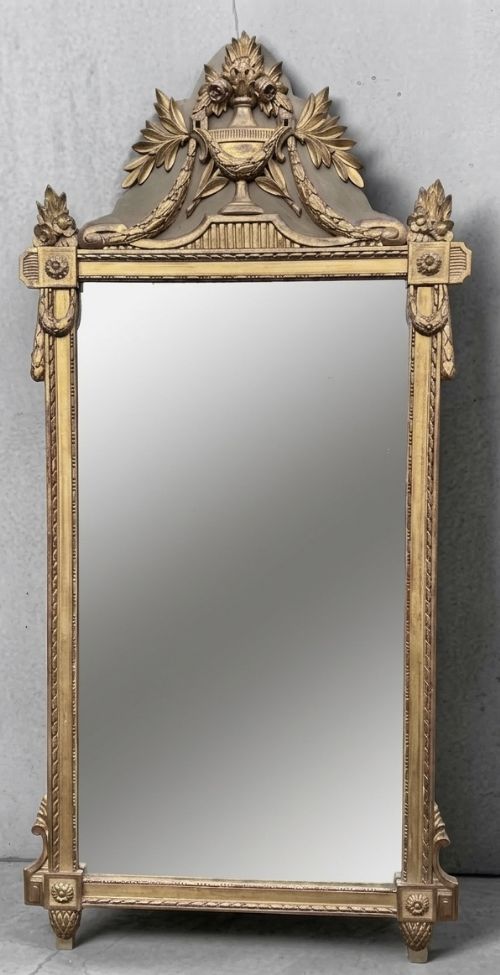
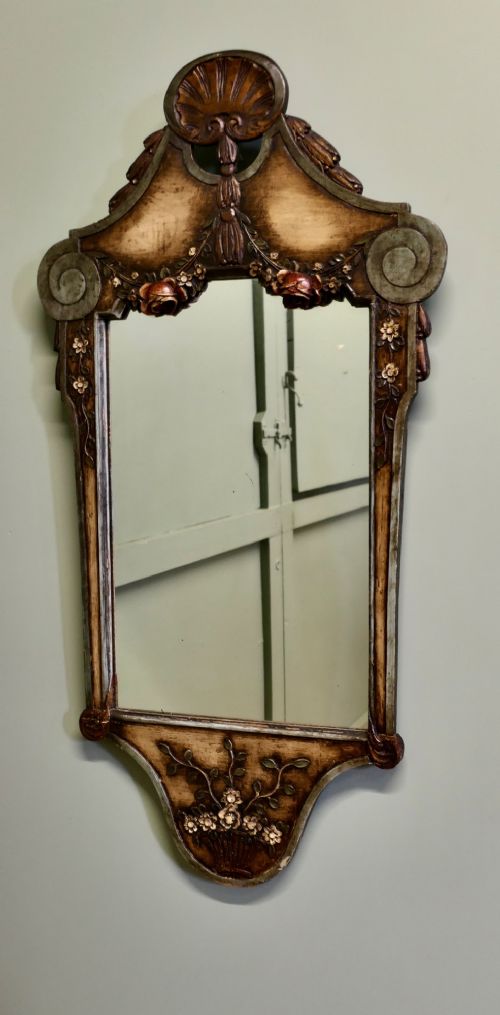
Carving depth and the crispness of gesso moulding separate standard decorative frames from masterwork pieces. Hand-carved giltwood frames with detailed lion masks, rope carving, or crisp ribbon crests demonstrate higher workshop competency than moulded composition alone.
The Gilded Trumeau Wall Mirror Glossary
- Trumeau
- A decorative architectural wall mirror featuring an integrated upper panel containing a painting or carved motif. These pieces were designed to fit the space between windows.
- Verre églomisé
- A cold decoration technique involving gilt designs and painting on the reverse side of glass panels. This process creates a reflective, metallic background frequently seen in Regency pier glasses.
- Gesso
- A plaster mixture applied to wood frames as a preparation for gilding. It allows craftsmen to carve intricate relief details before laying gold leaf.
- Mercury glass
- Mirror plates produced by applying a tin and mercury amalgam behind glass sheets. This historic method yields a mottled, atmospheric reflection.
- Pier glass
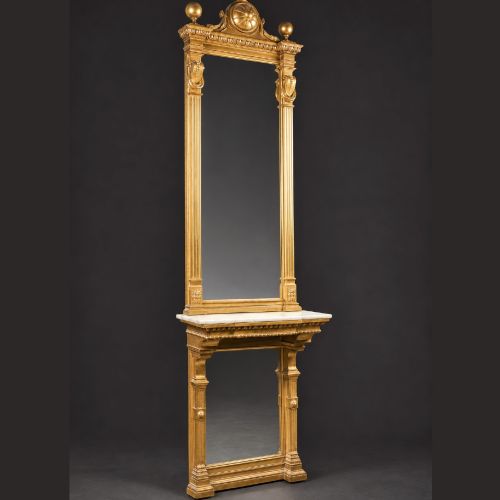
- A tall mirror designed to hang on the wall space between two windows. They often sit above a matching console table.
Gilded Trumeau Wall Mirror: Frequently Asked Questions
Where should I hang a trumeau mirror?
These mirrors function effectively above a fireplace mantel or positioned on a drawing room wall between windows.
Their vertical proportions and integrated artwork allow them to anchor a room as a focal point without requiring additional art.
What is verre églomisé?
Verre églomisé is a historic technique where artists paint and gild on the reverse side of a glass panel.
This method protects the delicate metallic leaf behind the glass, producing a deep, lustrous finish found in upper trumeau panels.
How do I identify original mercury glass?
Original mercury glass displays characteristic dark spots, clouding, and uneven foxing across the reflective surface.
These natural signs of ageing distinguish eighteenth and nineteenth century plates from twentieth century float glass.
What styles are common in these mirrors?
The listings feature Regency, Neoclassical, Louis XVI, and French Chateau styles from the eighteenth and nineteenth centuries.
Common decorative motifs include carved lion masks, ribbon crests, and Egyptian Revival columns.