


Gilded Table Clock
A gilded table clock brings the warmth of antique ormolu, gilt bronze and polished brass onto a mantel or desk.
Gilded Table Clock
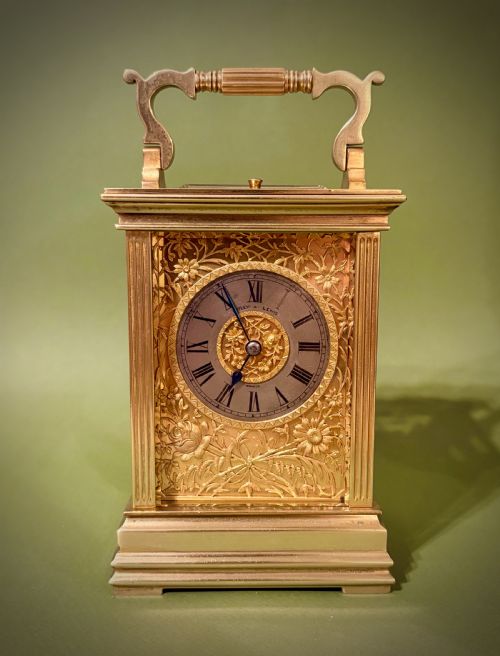
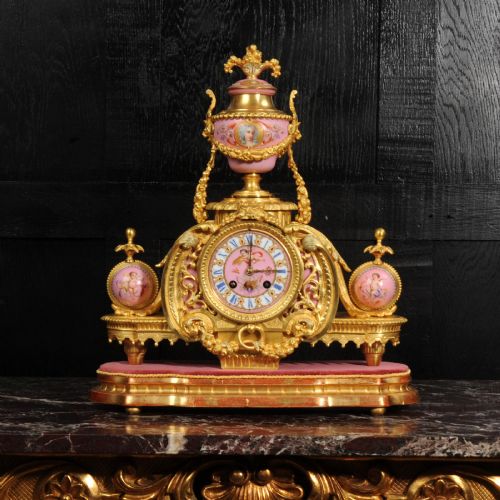
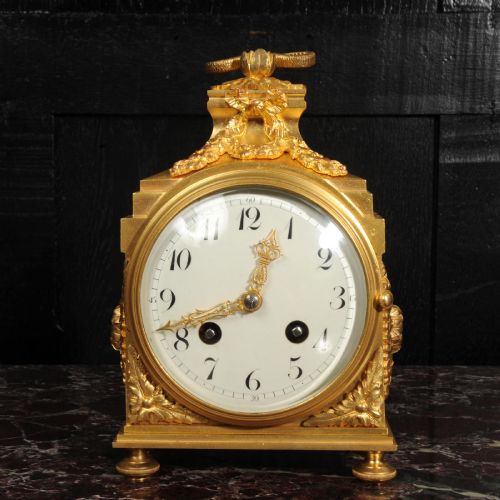
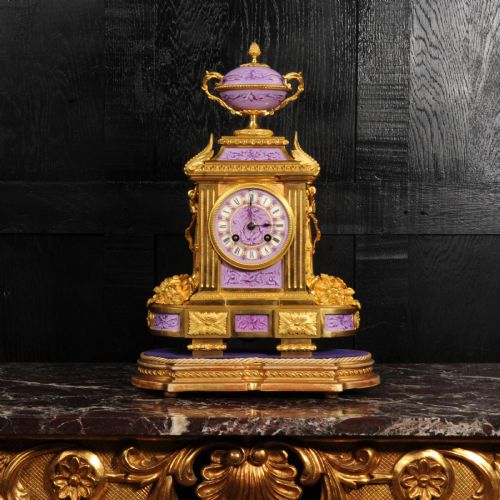
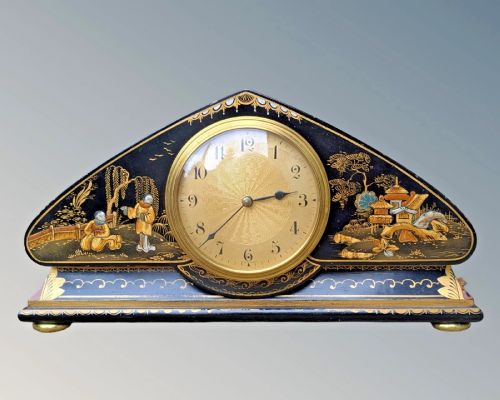
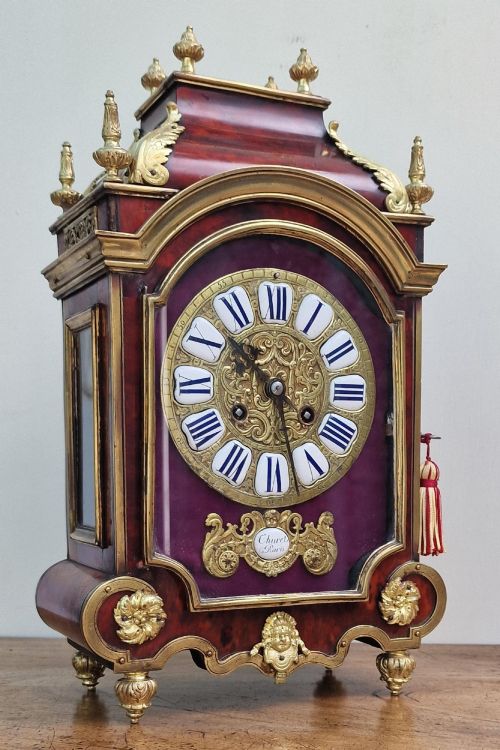
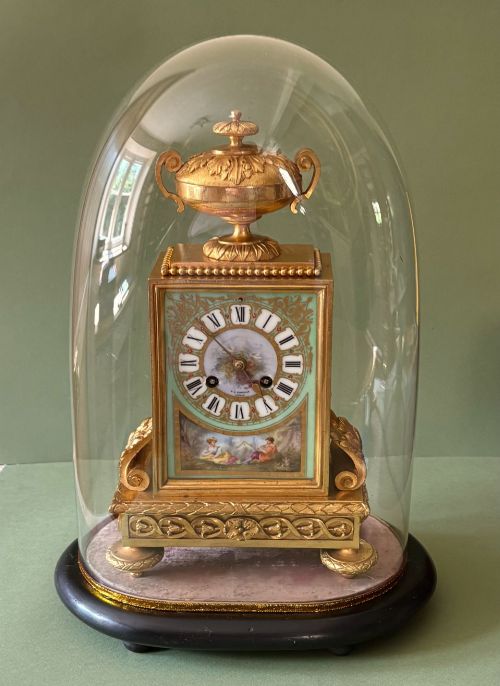
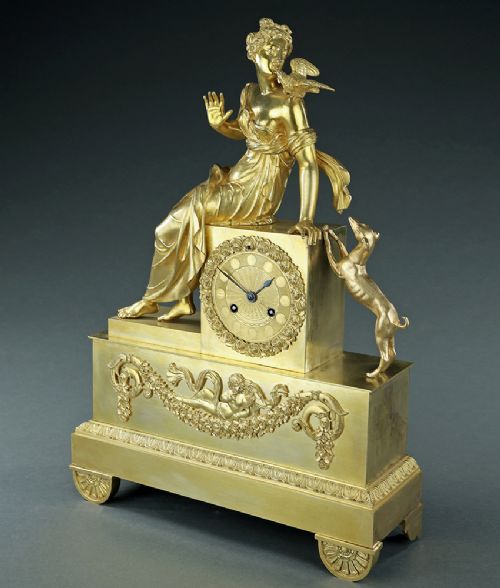
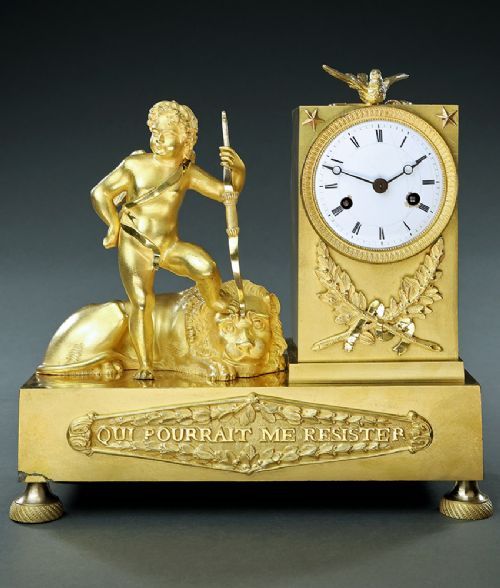
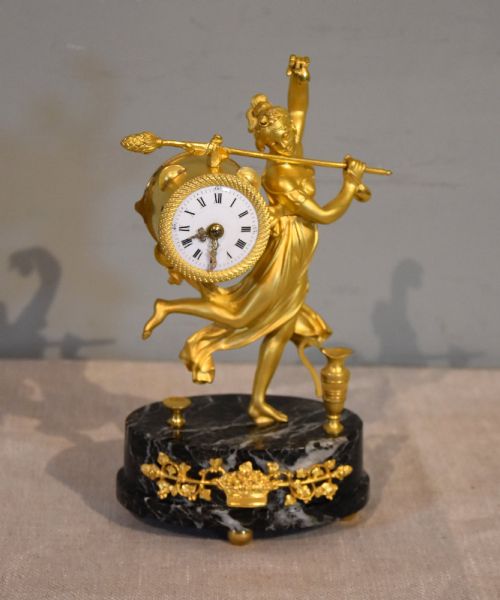
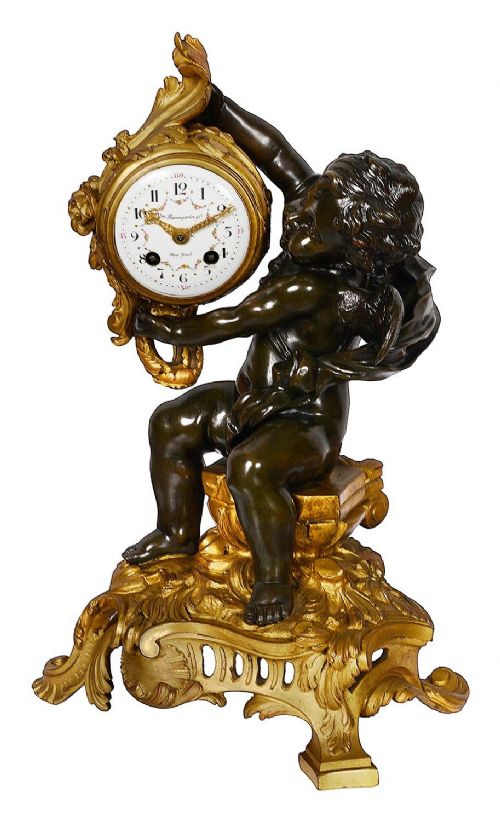
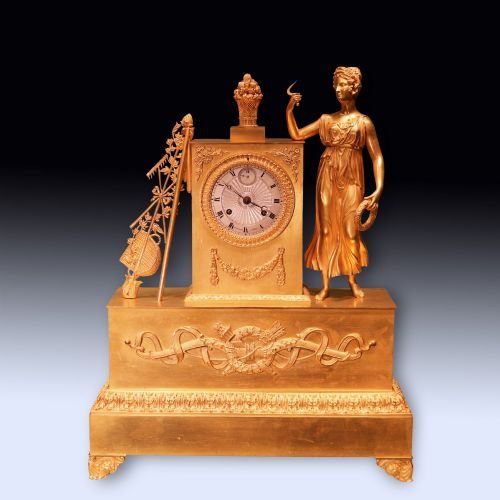
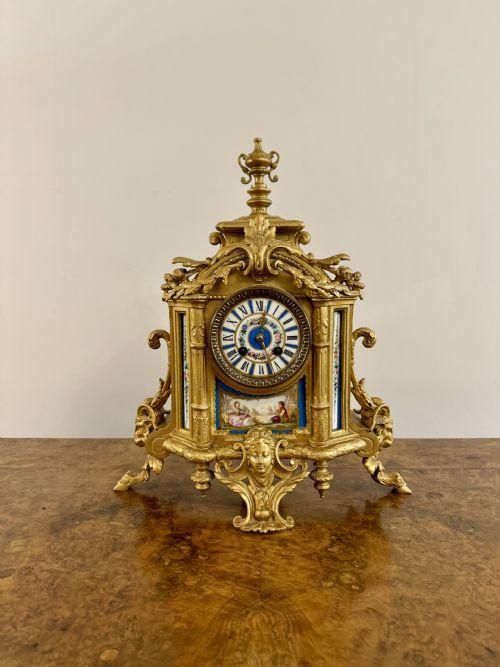
A gilded table clock is a timepiece finished in metallic gold or gilt surfaces, designed to sit prominently on a surface rather than hang upon a wall. When searching for a gilded table clock, buyers encounter predominantly nineteenth-century French designs alongside carriage clocks, portico clocks and porcelain-mounted mantel pieces. These objects combine timekeeping with decorative sculpture, often featuring classical allegories, mythological figures or architectural forms.
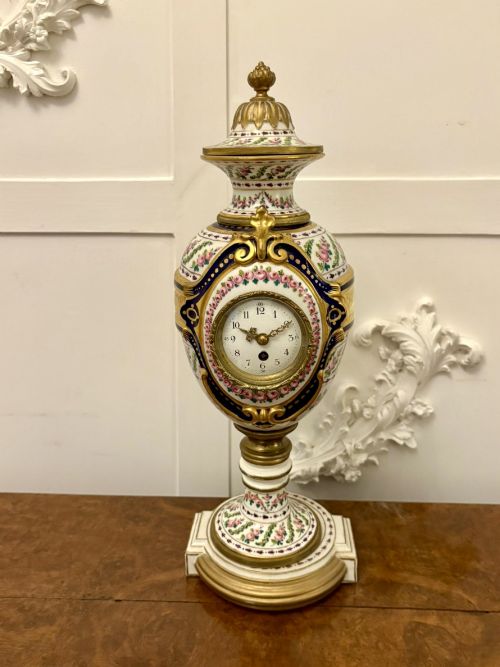
The pieces on this page span several decades of the nineteenth century, with Victorian examples and French regional styles appearing frequently. Forms range from compact carriage clocks housed in brass cases to large urn-shaped mantel clocks and delicate four-glass designs. Their origins lie chiefly in continental workshops and London makers who utilised gilt bronze, ormolu and marble to create striking centrepieces.
What Varies in Quality
The refinement of the casting and chasing separates standard production from exceptional work. Finer pieces display crisp, deep relief in the ormolu foliage and figures, whereas simpler items show softer, shallower surface detail.
The integration of materials also defines the tier of the piece. Superior examples unite hand-painted porcelain panels, fine marble bases and signed movements by known makers into a cohesive composition, while lesser examples rely on standard brass stampings and plain enamel dials.
Gilded Table Clock Retail Price Guide 2026
Typical asking prices for gilded table clock among the pieces listed under this phrase on Sellingantiques today, from the lower quarter to the upper quarter. They describe what is for sale here now, not the wider market.
Listings feature materials including Sèvres porcelain, tortoiseshell, green marble, and cut crystal alongside traditional gilt bronze and ormolu.
Achille Brocot·Thuret Paris·Canaillor of Paris·Le Roy Paris·Berger Paris·Tiffany·Henry Jones·John Barwise of London·PH Mourey
The Gilded Table Clock Glossary
- Ormolu
- Gilded bronze, where a finely ground gold-mercury amalgam is applied to a bronze base and heated to drive off the mercury. This technique produces a durable, rich golden finish characteristic of nineteenth-century French pieces.
- Carriage clock
- A small, portable spring-driven timepiece designed for travel, typically fitted with a carrying handle and glass panels. They often include alarm or repeating mechanisms.
- Portico clock
- A mantel clock styled after classical architecture, featuring a dial suspended within a frame supported by four or more columns. They frequently incorporate cut crystal and ormolu.
- Champlevé
- An enamelling technique where troughs or cells are hollowed out of a metal surface and filled with vitreous enamel before firing. It creates vibrant coloured patterns across the metal body.
- Fusee
- A conical pulley used in mechanical clocks to maintain an even tension on the chain or cord as the mainspring unwinds. It ensures more accurate timekeeping throughout the power reserve.
Gilded Table Clock: Frequently Asked Questions
What is a gilded table clock?
A gilded table clock is a decorative timepiece finished in gold leaf, ormolu, or gilt brass that stands independently on a mantel, desk, or table. These objects combine mechanical timekeeping with sculptural metalwork.
They emerged in various forms across the nineteenth century, ranging from compact travel timepieces to large architectural mantel clocks decorated with porcelain and marble.
How do I wind a mechanical clock?
Mechanical clocks require a key or winding lever inserted into the dial to tension the internal springs or weights. Care must be taken not to over-wind the mechanism.
Most nineteenth-century examples utilise eight-day movements that need attention once a week to maintain accurate timekeeping and striking functions.
Where were these clocks made?
The majority of these pieces originate from French workshops in Paris, where skilled bronzeurs and clockmakers collaborated on elaborate ormolu and porcelain cases. English makers also produced notable fusee and bracket designs.
French pieces often reflect prevailing artistic movements such as the Rococo Revival, Empire style, and Second Empire aesthetics.
How do I tell periods apart?
Periods are identified through a combination of case design, decorative motifs, and mechanical signatures. Earlier nineteenth-century pieces often lean towards classical Empire forms, while later Victorian and Third Republic pieces show heavier ornamentation and champlevé enamel.
Maker signatures etched on the backplates or dials also help anchor a piece to a specific decade of production.