
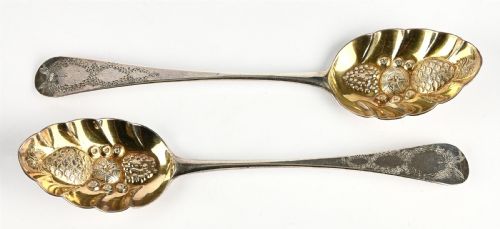


Gilded Sterling Silver Spoons
These gilded sterling silver spoons bring bright gold-on-silver colour and fine period handwork to the table.
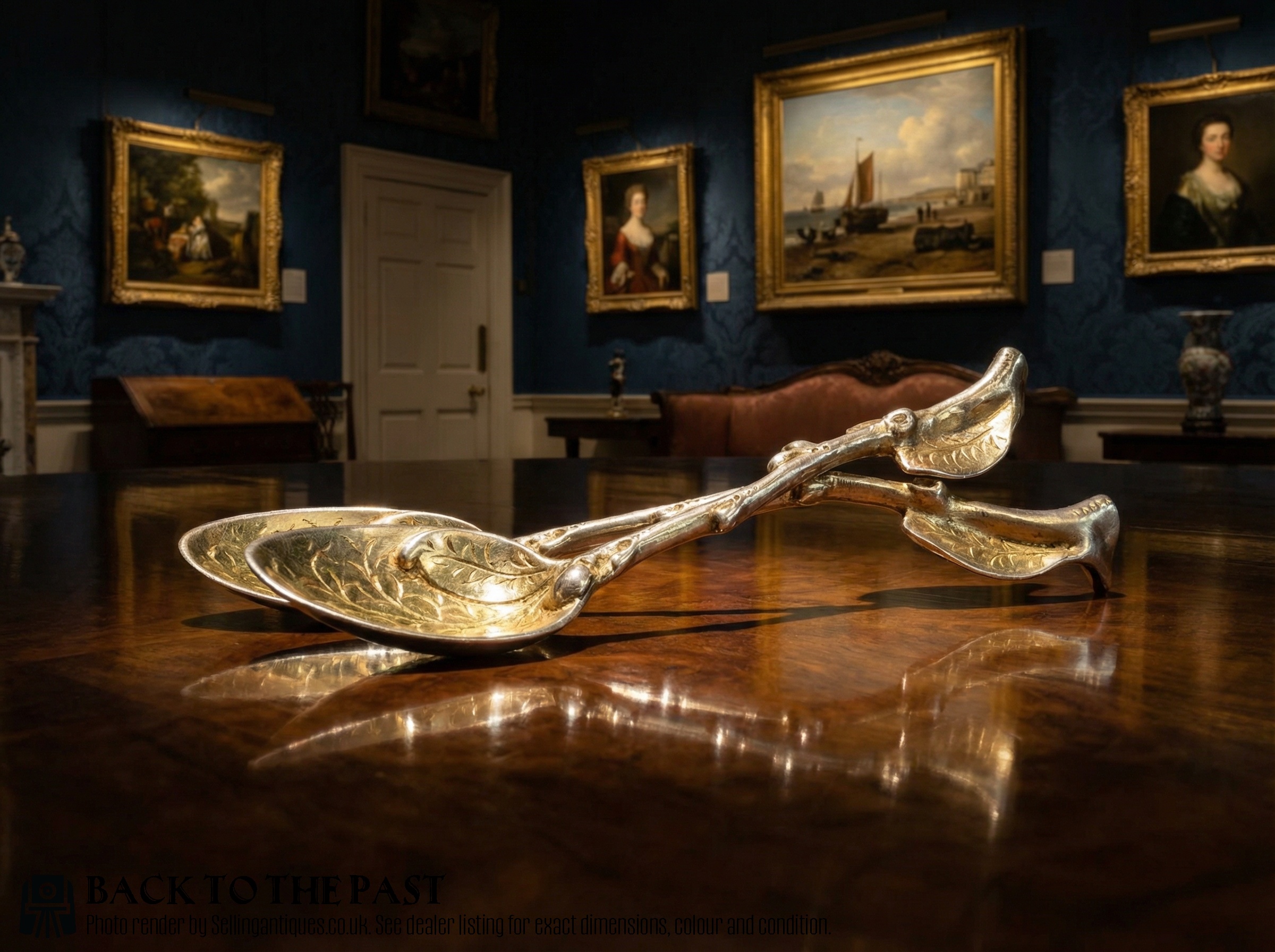
Gilded Sterling Silver Spoons
When you search for gilded sterling silver spoons, you are looking at items shaped from solid silver and given a layer of gold wash or heavy gilding. The selection spans the 18th century, the Georgian era, and the Victorian period, running through to the 20th century.
The forms you are most likely to meet on this page include serving spoons, caddy spoons, sifter spoons, and smaller coffee spoons. Many examples arrive in fitted boxes lined with silk and velvet, often paired with sugar bowls or tongs.
Design styles range from plain Georgian lines to ornate Victorian naturalistic leaf patterns, Art Nouveau curves, and Arts & Crafts hand-finished surfaces. Berry spoons with chased fruit decoration also appear frequently across the 18th and 19th century listings.
How they were made
Makers shaped sterling silver using traditional methods of hammering, casting, and piercing before applying a gold wash or silver-gilt surface by hand. The underlying metal provides the sturdy weight, while the surface gilding imparts a rich yellow gold tone.
Decoration techniques include chasing, embossing, and piercing, particularly seen on berry spoons where fruit motifs are worked directly into the bowl. Naturalistic leaf spoons utilise detailed botanical casting to mimic organic forms closely.
What varies in quality
The distinction between standard examples and finer pieces lies in the crispness of the chased decoration and the preservation of the original gold wash. Heavy gauge sterling silver provides a more substantial feel in the hand compared to lighter stamped alternatives.
The presence of matching fitted cases lined in silk or velvet elevates the standing of a set, as does clear hallmarks confirming the maker and year of manufacture.
Peter & Anne Bateman·Sebastian Crespell
The Gilded Sterling Silver Spoons Glossary
- Silver-gilt
- Sterling silver that has been coated with a thin layer of gold, sometimes referred to as gilt silver or gold wash. This technique protects the silver beneath and creates a bright golden finish.
- Berry spoon
- A large serving spoon, often dating from the Georgian or Victorian eras, featuring fruit chased or embossed into the bowl. These pieces were frequently adapted from earlier spoons in later decades.
- Sifter spoon
- A spoon with a pierced or perforated bowl designed for dusting sugar over food. They appear often in sets alongside matching sugar bowls.
- Caddy spoon
- A short spoon specifically sized for measuring tea leaves from a caddy. They display a wide variety of decorative bowl shapes and short handles.
- Hallmark
- Official stamps struck into precious metals to indicate the standard of silver, the assay office, and the year of manufacture. They provide the primary method for dating British pieces.
Gilded Sterling Silver Spoons: Frequently Asked Questions
What are gilded sterling silver spoons?
These are solid silver eating and serving implements that have received a surface application of gold, known as silver-gilt or gold wash. They combine the durability of sterling silver with the rich appearance of gold.
The listings on this page include various forms such as berry spoons, sifter spoons, caddy spoons, and coffee spoons spanning multiple historical periods.
How were berry spoons used?
Berry spoons were utilised at the dining table for serving soft fruits, berries, and desserts during the 18th and 19th centuries. Their wide bowls often feature deeply chased fruit and leaf designs.
Many examples found today were originally plain silver spoons decorated with fruit motifs decades after their initial manufacture.
How do I date these spoons?
Dating relies primarily on the official hallmarks stamped into the silver, which identify the assay office and year letter. Stylistic markers such as Art Nouveau curves or Georgian proportions also help determine the period.
Matching fitted cases lined with silk or velvet often correspond to the Victorian or Edwardian eras when presentation sets gained popularity.
Can I use antique silver gilt spoons daily?
These items can be used for special occasions, provided they receive careful hand washing with mild soap and soft cloths. Dishwashers and harsh abrasives will damage the delicate gold wash over time.
Many collectors prefer to store boxed sets in their original silk and velvet lined cases to preserve the gilding and surface condition.