




Antique Silver Gilt Flatware
Antique silver gilt flatware brings bright warmth to the table, combining heavy sterling bases with a rich layer of gold.
Antique Silver Gilt Flatware
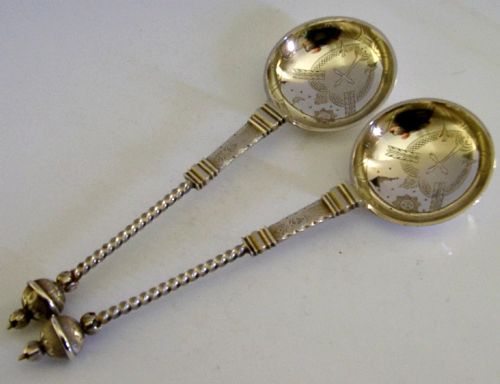
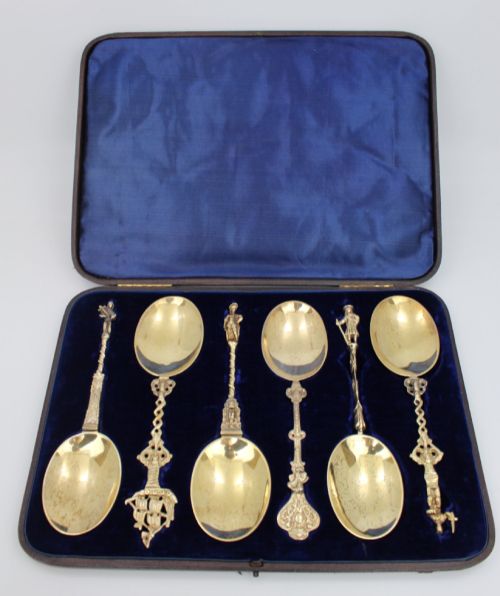
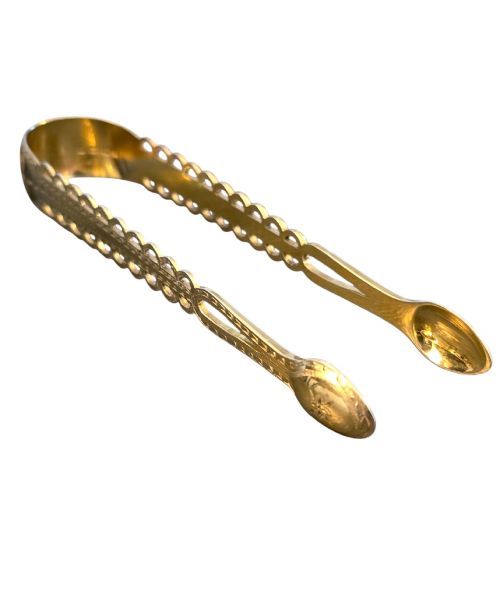
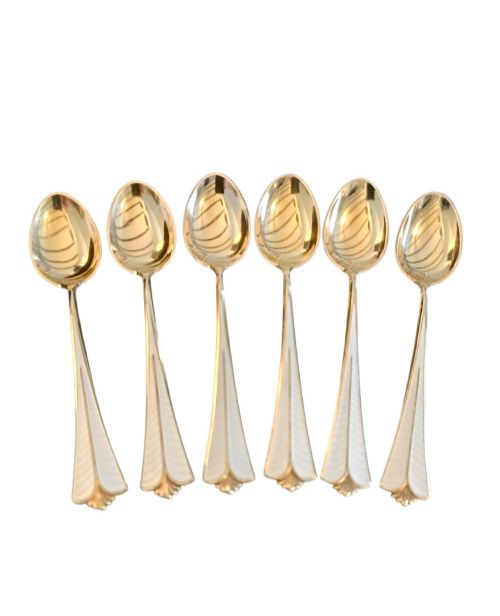
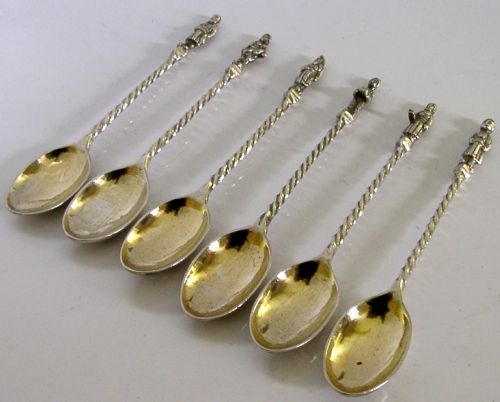
When you search for antique silver gilt flatware, you are looking at items designed for serving, stirring, and dining where the underlying silver metal is coated in a layer of gold. These pieces appear in forms ranging from heavy serving spoons and pastry servers to delicate caddy spoons, sifter spoons, and full boxed cutlery sets.
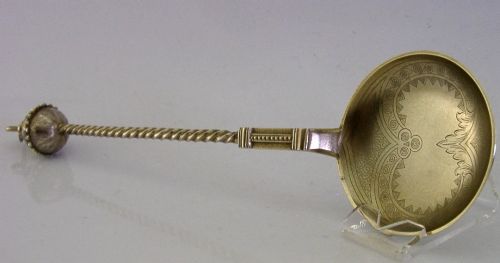
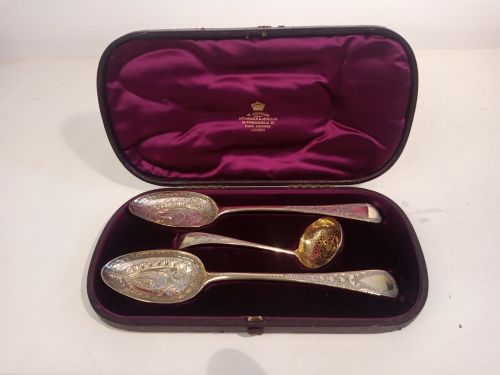
The selections on this page span several key eras, including the Georgian, Victorian, and Edwardian periods, alongside regional styles such as Imperial Russian and Ottoman pieces. You will frequently encounter specialised utensils like berry spoons and christening spoons, often housed in fitted cases lined with velvet or silk.
Makers utilised various traditional techniques to shape these utensils, producing items that balance practical utility with ornate decorative touches. The overall inventory reflects both British silversmithing traditions and continental European craftsmanship from the eighteenth, nineteenth, and early twentieth centuries.
How they were made
Makers started with solid sterling silver or standard silver bases, shaped by hand or cast into specific forms such as naturalistic leaves, figural handles, and shovel bowls. Smiths then applied gold through gilding techniques, imparting a warm tone to the white metal underneath.
Many examples incorporate decorative surface work alongside the base gilding, including niello inlay, cloisonné enamel, and intricate hand-engraved family crests. Specialised items also integrate other mediums, such as cut glass handles paired with silver gilt mounts.
Antique Silver Gilt Flatware Retail Price Guide 2026
Typical asking prices for silver gilt flatware among the pieces listed under this phrase on Sellingantiques today, from the lower quarter to the upper quarter. They describe what is for sale here now, not the wider market.
A solitary cut glass pear handle waits patiently to serve cayenne pepper from its long silver gilt spoon.
What varies in quality
Quality depends heavily on the crispness of the original chasing and the depth of the surviving gold wash over the silver base. Pieces that retain their heavy gauge silver weight and thick gilding show superior endurance through decades of handling and use.
The reputation of the maker and the complexity of the decorative elements also dictate the standing of a piece within the range. Items featuring detailed enamel work, complex figural elements, or complete original presentation cases command greater attention from collectors.
Tiffany and Company·Peter and Anne Bateman·William Chawner II·Dmitrii Nikolaevich Nikolaev·Vasily Agafonov·Sebastian Crespell·George Adams
The Antique Silver Gilt Flatware Glossary
- Silver gilt
- Silver that has been covered with a thin layer of gold. This process protects the underlying metal from tarnishing while offering a rich, golden appearance.
- Berry spoon
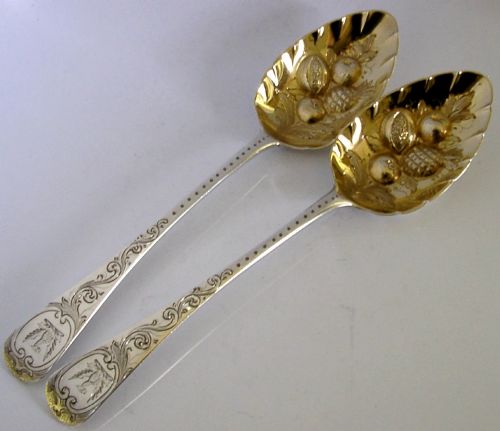
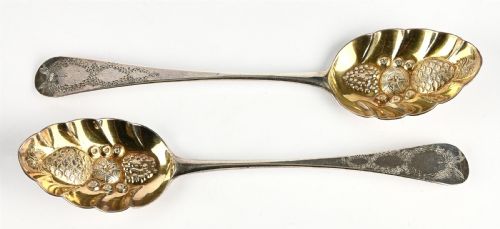
- A large serving spoon, often dating from the Georgian period, featuring fruit chased or embossed into the bowl. These pieces were later adapted for serving berries and soft fruits.
- Sifter spoon
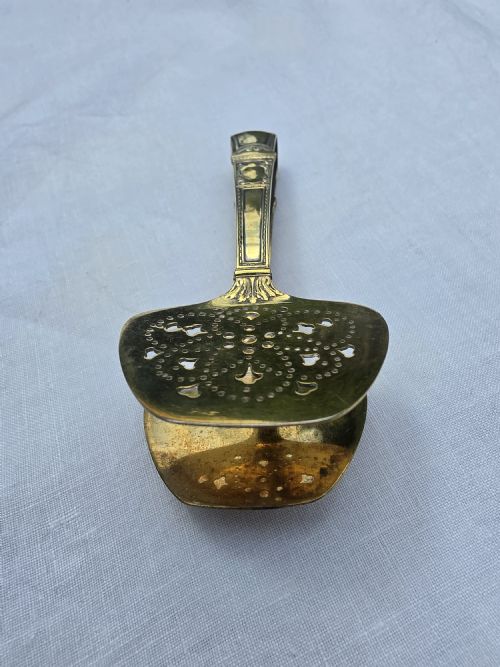
- A specialised spoon with a perforated bowl used for dusting sugar over food. They frequently appear alongside berry spoons in fitted presentation sets.
- Caddy spoon
- A short spoon designed for measuring tea leaves from a caddy. They often feature shovel-shaped bowls and decorative handles.
- Cloisonné
- An enamelling technique where decorative compartments are created by soldering thin metal strips to the metal base. These areas are then filled with coloured glass paste and fired.
- Niello
- A black metallic alloy used as an inlay on engraved silver. It creates sharp contrast against the bright metal background.
Antique Silver Gilt Flatware: Frequently Asked Questions
What is silver gilt flatware?
Silver gilt flatware consists of items made from solid silver that have been coated with a layer of gold. This treatment provides the visual warmth of gold combined with the structural strength of a silver base.
Items treated this way retain their metal form while gaining a distinct, warm surface hue that resists tarnishing.
How do I clean silver gilt pieces?
Silver gilt items require gentle care to avoid wearing away the thin layer of gold over the silver. Traditional aggressive dips or abrasive polishes should be avoided.
Use a soft cloth and mild, neutral soap with warm water if cleaning is necessary, patting the item dry immediately afterwards.
Were these utensils used daily?
Many serving spoons, flatware sets, and caddy spoons were reserved for special dining occasions or formal hospitality. Specialised items like christening spoons and pastry servers had specific ceremonial or social roles.
Complete boxed sets often indicate items kept safely stored for presentation rather than regular everyday use.
How do I identify Georgian pieces?
Georgian flatware typically exhibits specific regional hallmarks stamped into the silver, alongside characteristic forms such as chased fruit bowls on berry spoons. The style reflects the design sensibilities of the eighteenth and early nineteenth centuries.
Examining the weight, construction methods, and maker marks helps confirm the period of manufacture.