



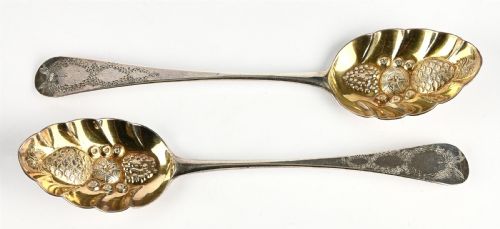


Sterling Silver Gilt Cutlery
Sterling silver gilt cutlery brings rich gilding to the table, offering a warm golden finish over solid silver that catches the eye during dining and service.
Sterling Silver Gilt Cutlery
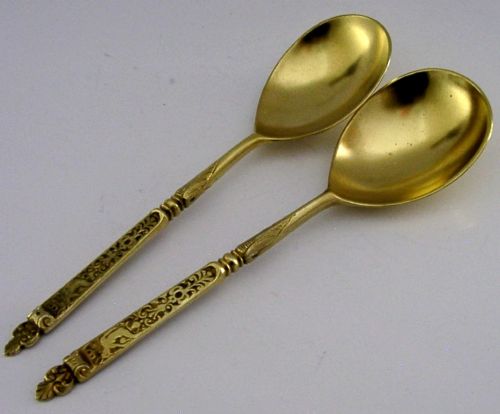
When you search for sterling silver gilt cutlery, you encounter an array of serving spoons, teaspoons, coffee spoons, and cased sets spanning several centuries. The selection ranges from eighteenth-century Georgian designs to mid-century modern pieces, reflecting diverse dining customs over time.
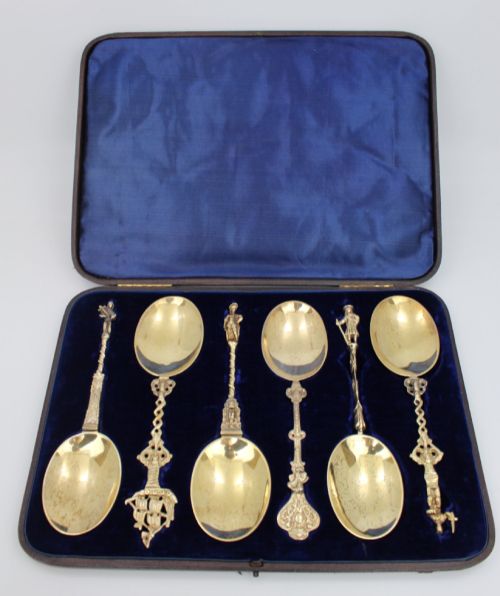
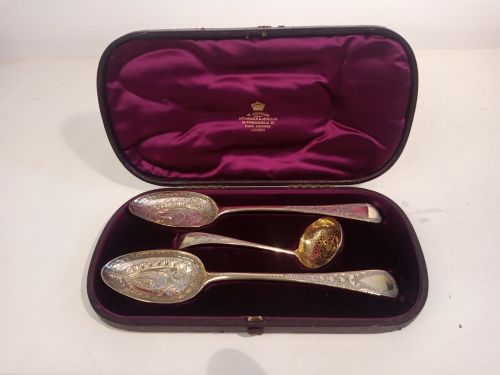
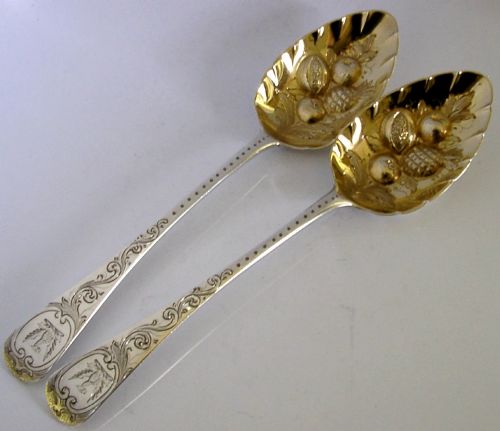
The versions you are most likely to meet on this page include Victorian and George III berry spoons, alongside boxed sets of apostle spoons and matching sugar sifters. These items combine the durability of sterling silver with the luxurious appearance of gold wash.
Makers from London and Birmingham feature prominently alongside continental work such as Danish enamel pieces. Whether plain or crested, these utensils showcase traditional craftsmanship across different eras of domestic silver production.
Materials and methods
The foundation of these items is sterling silver, shaped into flatware and serving pieces before receiving a layer of gold gilt or silver-gilt. This application process imparts a rich golden sheen over the underlying white metal.
Surface decoration relies heavily on hand engraving, fruit-chasing, and enamel work. Cases often utilise velvet and silk linings to protect the delicate gilt surfaces during storage.
Sterling Silver Gilt Cutlery Retail Price Guide 2026
Typical asking prices for sterling silver gilt cutlery among the pieces listed under this phrase on Sellingantiques today, from the lower quarter to the upper quarter. They describe what is for sale here now, not the wider market.
Listings span from the eighteenth century through the Art Deco and Mid-Century Modern periods, utilising materials such as silk, velvet, and silver-gilt.
Assessing quality and craftsmanship
The distinction between standard items and superior examples lies in the crispness of the chased decoration on the bowl and the depth of the engraving along the handle. Intricate crest work and well-preserved gilding indicate higher artisan skill.
The completeness of original fitted cases lined with silk and velvet adds to the integrity of a set. Clear hallmarks confirming the maker and assay office anchor the historical value of each piece.
Deakin & Francis·Peter & Anne Bateman·William Chawner II
The Sterling Silver Gilt Cutlery Glossary
- Silver-gilt
- Sterling silver that has been coated with a thin layer of gold, often referred to as vermeil or gilt. This technique protects the silver underneath while providing a rich golden appearance.
- Berry spoon
- A large serving spoon, typically dating from the Georgian or Victorian era, featuring fruit-chased bowls and decorative engraving added to earlier plain spoons. They were used for serving soft fruits.
- Apostle spoon
- A spoon with a small figure of an apostle forming the terminal of the handle. These traditional pieces frequently appear in fitted presentation cases.
- Sugar sifter
- A perforated spoon designed for dusting sugar onto food. They often accompany berry spoons in matched serving sets.
- Hallmark
- An official stamp applied by an assay office indicating the purity of the metal, the maker, and the year of manufacture. British silver relies on these marks to verify provenance.
Sterling Silver Gilt Cutlery: Frequently Asked Questions
What is silver gilt cutlery?
Silver gilt cutlery consists of solid sterling silver items that have been treated with a gold wash. This process combines the strength of silver with a golden exterior.
The resulting finish provides a decorative appeal while maintaining the underlying metal's structural integrity for everyday or ceremonial use.
How do I clean silver gilt pieces?
Cleaning requires gentle care to preserve the thin layer of gold applied over the silver. Avoid harsh dips and abrasive cloths that can wear away the gilt surface.
Warm water, mild soap, and a soft cloth help maintain the shine without damaging the delicate engraving or chasing on the bowls.
Were berry spoons made for fruit?
Berry spoons were often produced during the Georgian and Victorian periods to serve soft fruits like strawberries and raspberries. Many examples started as plain dining spoons before being retrofitted with chased fruit designs later.
Their large bowls made them practical for serving juicy portions at the dining table during formal meals.
What are apostle spoons?
Apostle spoons feature small sculpted figures of the apostles at the top of the handle. They traditionally appeared in sets representing the twelve figures.
Collectors often find them housed in velvet and silk-lined presentation cases dating from the late nineteenth and early twentieth centuries.