



Engraved Silver Gilt Spoons
These engraved silver gilt spoons combine precious metal with detailed surface work, offering collectors both decorative presence and functional heritage.
Engraved Silver Gilt Spoons
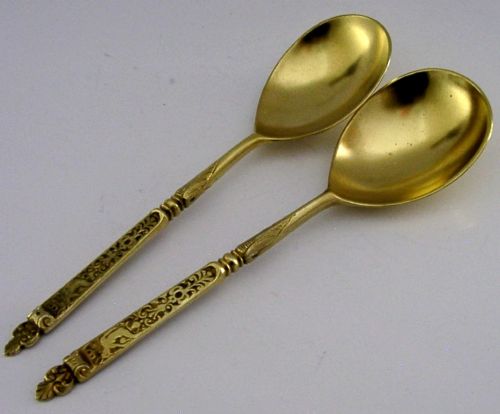
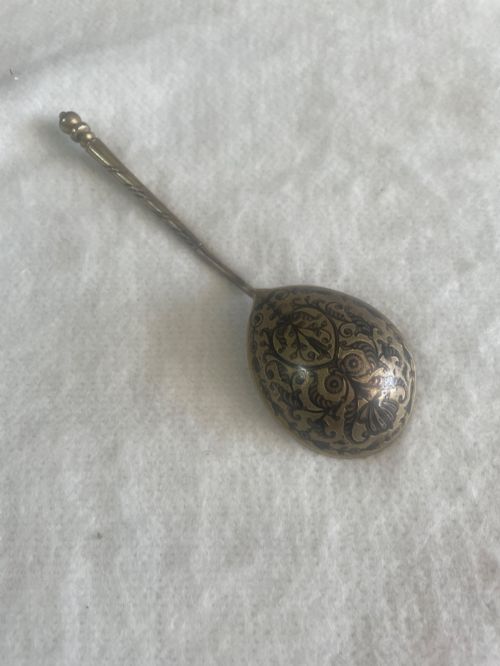
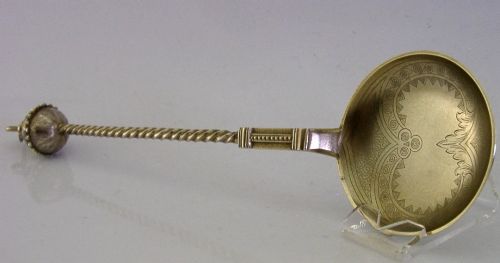
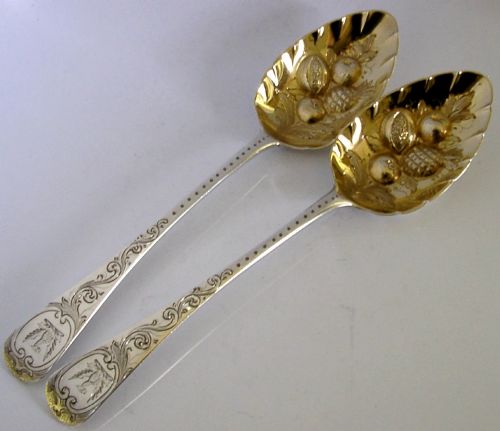
The versions most commonly met on this page include Victorian berry spoons with engraved handles, Georgian crested serving spoons, and ornate sets accompanied by sugar bowls or presentation boxes. Styles range from classical family crests and floral fruit motifs to intricate Imperial Russian niello decoration and sweeping Art Nouveau linework.
Makers and workshops across Britain, Russia, and Denmark produced these objects for formal dining and ceremonial use. The combination of bright silver and warm gilt wash creates a distinct visual contrast that defines the category across multiple decades of manufacture.
Materials and construction
Silversmiths formed the base of these utensils from sterling silver or solid silver, shaping bowls and handles through traditional forging, casting, and hammering techniques. The surface then received a gilt layer, often applied through fire gilding or electroplating, which bonded gold to the silver base to create the characteristic rich yellow sheen.
Engravers worked the metal by hand using gravers and burins to cut intricate foliage, crests, and geometric patterns into the stems and bowls. In Russian pieces, craftsmen utilised niello, fusing a black metallic alloy of silver, copper, lead, and sulphur into engraved channels to produce stark graphic designs against the silver gilt background.
Engraved Silver Gilt Spoons Retail Price Guide 2026
Typical asking prices for engraved silver gilt spoons among the pieces listed under this phrase on Sellingantiques today, from the lower quarter to the upper quarter. They describe what is for sale here now, not the wider market.
Materials recorded across the inventory include sterling silver, gold gilt, niello, velvet, and silk.
Quality factors in engraved silver gilt spoons
The clarity and depth of the hand engraving distinguish finer examples from mass-produced or worn pieces, as crisp lines and well-defined motifs demonstrate superior craftsmanship. The preservation of the original gold gilt layer across high-friction areas like bowl interiors and handle edges also determines the overall integrity of the object.
The weight and gauge of the silver base affect the durability and balance of the spoon in the hand, with heavier serving pieces offering greater structural substance. Additionally, complete sets, original velvet or silk-lined presentation boxes, and legible hallmarks add historical completeness to specific items.
William Chawner II
The Engraved Silver Gilt Spoons Glossary
- Silver Gilt
- Sterling silver or standard silver that has been coated with a thin layer of gold, combining the strength of silver with the appearance of solid gold. This technique protects the underlying metal from tarnishing while introducing a warm colour.
- Niello
- A black metallic alloy used to fill engraved designs on silver surfaces, creating high-contrast patterns. Craftsmen fuse the mixture into incised grooves under heat before polishing the surface flat.
- Berry Spoon
- A serving spoon, often of Georgian or Victorian origin, featuring fruit and foliage embossed or engraved onto the bowl long after initial manufacture. These pieces were primarily utilised for serving soft fruits.
- Hallmark
- A series of official stamps applied to precious metal items indicating the maker, assay office, standard of purity, and year of manufacture. These marks provide definitive historical evidence for dating British and European silver.
- Crest
- An heraldic device engraved onto the handle of a spoon to denote family lineage and ownership. These personalisations connect individual pieces to specific historical households.
Engraved Silver Gilt Spoons: Frequently Asked Questions
What are engraved silver gilt spoons used for?
These spoons served functional and ceremonial roles in dining, specifically for transferring berries, sugar, and fruit during formal meals. Large serving examples handled communal dishes, while smaller pieces formed part of specialised cutlery sets.
Over time, many of these utensils transitioned from active dining service to display and collection. Their decorative surface work made them popular gifts for significant life events such as baptisms and weddings.
How do I care for silver gilt spoons?
Maintenance requires gentle handling to preserve the delicate gold wash layer sitting over the sterling silver base. Aggressive polishing agents or abrasive cloths will wear away the gilt surface permanently.
Store the items in dry conditions, avoiding contact with rubber or certain treated fabrics that accelerate tarnishing. If cleaning is necessary, use a mild, non-abrasive silver cleaner and rinse with warm water.
How can I tell the period of a spoon?
Dating relies primarily on the stamped hallmarks found on the reverse of the stem or bowl, which indicate the exact assay office and year of production. Stylistic indicators, such as the curved handles of the Victorian era or the flowing lines of Art Nouveau, also offer visual clues.
Construction methods further help narrow down the era, as machine-assisted techniques gradually replaced entirely hand-forged methods by the late nineteenth century. Comparing the engraving style to known historical periods confirms the timeline.
What is the difference between silver and silver gilt?
Sterling silver consists of a solid alloy composed mostly of silver with a small proportion of copper for structural strength. It has a bright, reflective white appearance that develops a natural patina over time.
Silver gilt involves taking that same silver base and applying a microscopic layer of gold to the exterior. This process imparts a warm yellow tone and protects the silver from direct exposure to airborne sulphur.