




Gilded Silver Spoons
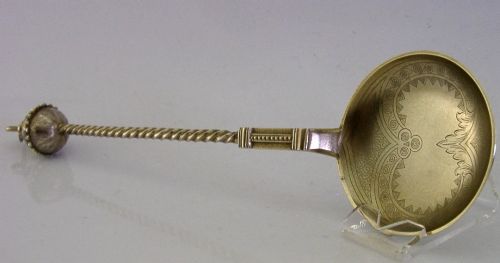
These gilded silver spoons combine the bright lustre of silver with the rich warmth of gold wash, offering a touch of historic opulence for the table.
Gilded Silver Spoons
When you search for gilded silver spoons, you are looking at holloware and flatware finished with a layer of gold over a silver base. These pieces span several centuries of design, appearing across the Georgian, Victorian, and Edwardian periods.
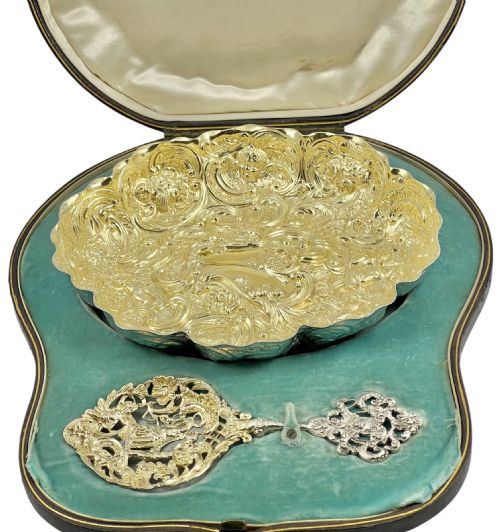
The most common forms you will meet on this page include serving spoons, caddy spoons, and salt spoons, often found individually or in matched pairs. Many examples arrive paired with sugar bowls, cruet sets, or fitted presentation cases.
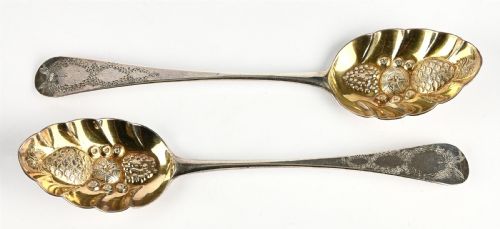
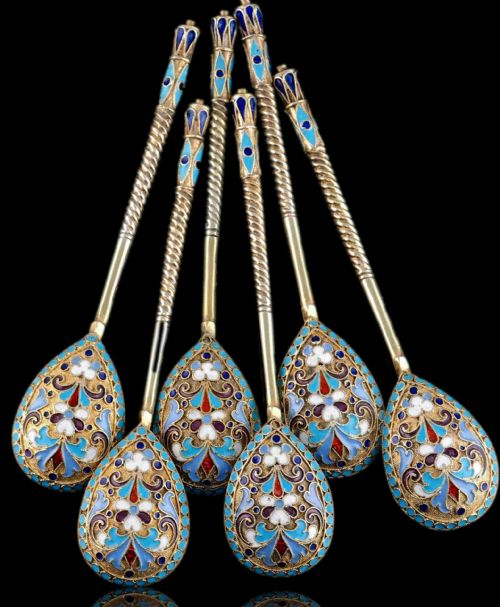
Originating primarily from British workshops alongside continental makers such as Imperial Russian silversmiths, these items served formal dining and tea rituals. They range from naturalistic leaf designs to traditional berry spoons embellished with later fruit repoussé work.
How they were made
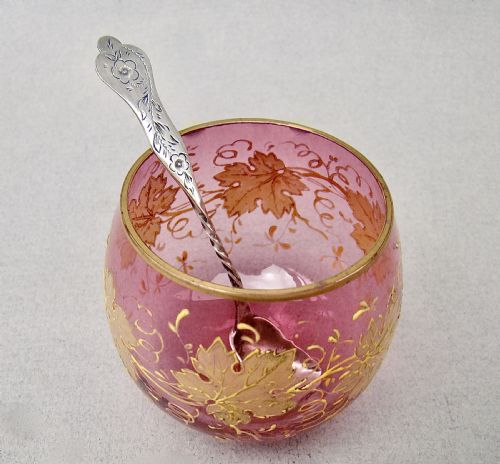
Makers constructed these pieces using sterling silver, solid silver, or silver plate as the foundational metal. Some items incorporate decorative elements such as enamel work, cranberry glass components, or textile linings like silk and velvet inside presentation boxes.
The gilding process involved applying a gold wash over the silver, often through fire gilding or electrogilding methods depending on the period. Silversmiths then shaped handles through casting, hammering, and engraving, adding specialised bowls for sugar sifting, serving, or mustard.
Equestrian novelty cruet sets bring a touch of the hunting field directly to the dining table.
What varies in quality
The distinction between ordinary and exceptional pieces rests upon the crispness of the chased or engraved detail and the intactness of the gold wash. Heavier gauge metal provides a more balanced weight in the hand, indicating superior craftsmanship.
Maker marks, clear town hallmarks, and original fitted cases elevate the standing of a set. Well-preserved parcel gilt surfaces show even coverage without thinning from excessive cleaning over the decades.
peter & Anne Bateman·Dmitrii Nikolaevich Nikolaev·Vasily Agafonov·Sebastian Crespell·Walker & Hall
The Gilded Silver Spoons Glossary
- Silver gilt
- Silver that has been coated with a thin layer of gold, also known as vermeil when applied to sterling silver. This technique protects the underlying silver from tarnishing while providing the rich appearance of solid gold.
- Berry spoon
- A spoon, often Georgian in origin, featuring fruit and foliage repoussé chased onto the bowl. These pieces were frequently embossed at a later date to update older flatware for Victorian dining tables.
- Caddy spoon
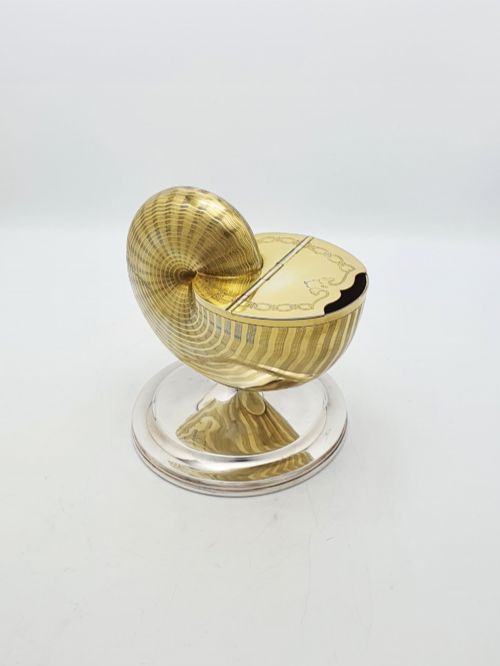
- A short-handled spoon designed specifically for measuring loose tea leaves from a caddy. They often feature shell-shaped bowls and intricate figural handles.
- Sifter spoon
- A spoon with a pierced or perforated bowl used for dusting sugar over desserts or fruit. They frequently appear paired with matching sugar bowls in fitted Victorian cases.
- Repoussé
- A metalworking technique where the artisan hammers the design from the reverse side to form a raised pattern on the front. This method creates the three-dimensional fruit and leaf motifs seen on many serving pieces.
Gilded Silver Spoons: Frequently Asked Questions
How do I clean gilded silver spoons?
Clean these items using warm soapy water and a soft cloth, avoiding abrasive dips or harsh polishes that can strip away the gold wash. Gentle care preserves the delicate gilding on the surface.
Dry them thoroughly immediately after washing to prevent water spots from forming on the silver and gold layers.
Were these spoons used for everyday dining?
Most of these pieces served specialised functions in formal settings, such as tea ceremonies, dessert courses, or condiment service. Their decorative nature meant they were reserved for entertaining rather than daily meals.
Many survived in pristine condition because they spent decades safely stored inside fitted velvet and silk-lined presentation cases.
How can I tell the period of a spoon?
Examine the hallmarks stamped on the reverse of the stem to identify the city assay office, date letter, and maker's mark. These official stamps provide a reliable guide to the exact year of manufacture.
Stylistic clues, such as the naturalistic motifs of the Victorian era or the clean lines of Arts and Crafts design, also point to the period of origin.
Why is silver gilt also called vermeil?
Vermeil is a specific term for gold electroplated or fire-gilded over a sterling silver base, meeting strict thickness standards. The terminology often depends on the geographic origin and age of the item.
Both terms describe the same fundamental decorative technique of uniting silver and gold to create a durable, dual-toned finish.