



Gilded Sevres Vases
Gilded sevres vases bring French decorative grandeur into a room, combining painted porcelain bodies with elaborate gilt mounts.
Gilded Sevres Vases
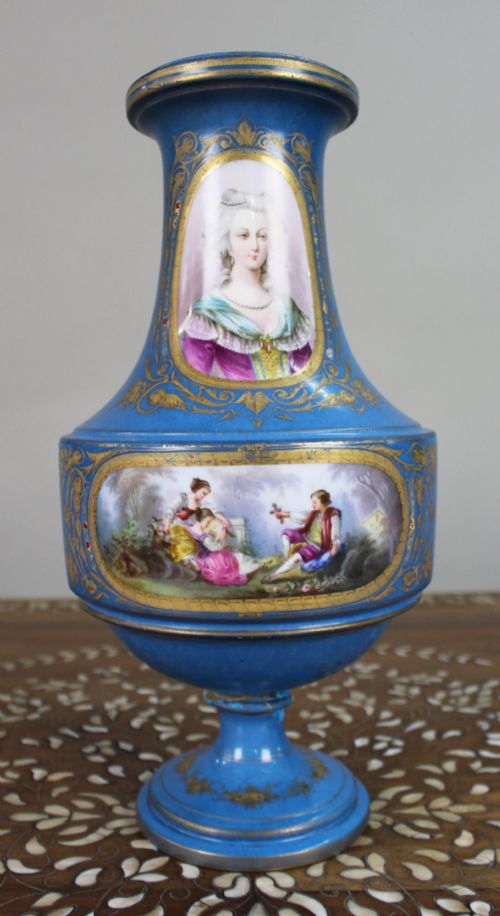
When buyers search for gilded sevres vases, they look at ornamental ceramic vessels made during the nineteenth century or produced in the distinctive French taste of that era. These pieces appear most frequently as lidded urns, decorative vases, and occasional mantel clock combinations carrying nineteenth-century dates such as eighteen-eighty or eighteen-ninety.
The selection here draws heavily on French stylistic revivals, notably French Rococo Revival, Rococo Revival, and French Neoclassical approaches. Many items originate from French workshops or bear the designation of the Sèvres style, alongside related nineteenth-century European factories producing porcelain in the same aesthetic.
How they were made
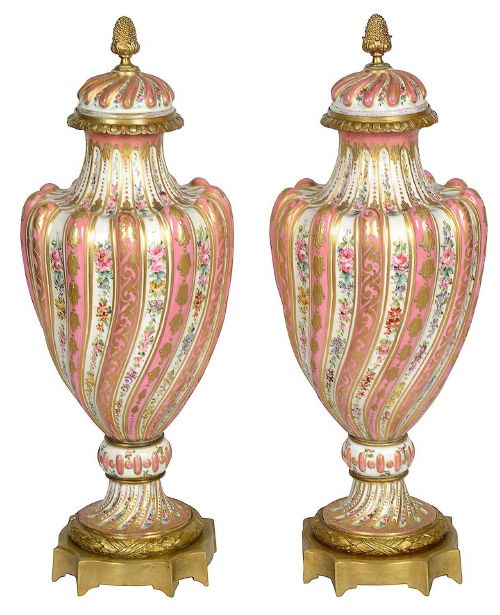
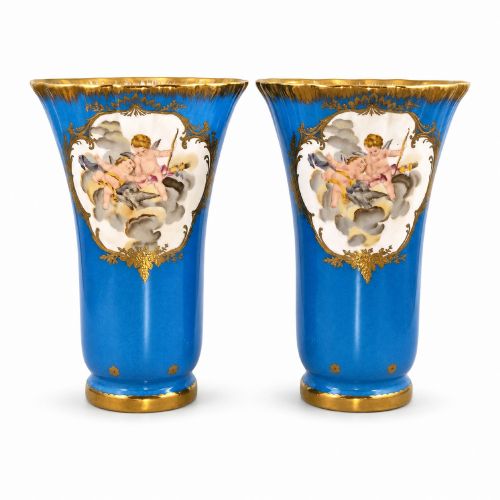
The construction relies on fired white porcelain bodies, frequently coated in coloured glazes such as bleu céleste or pink, and enriched with hand-painted details. Makers mounted these ceramic vessels in cast or chased ormolu, gilt bronze, and gilt metal mounts, securing handles, bases, and finials.
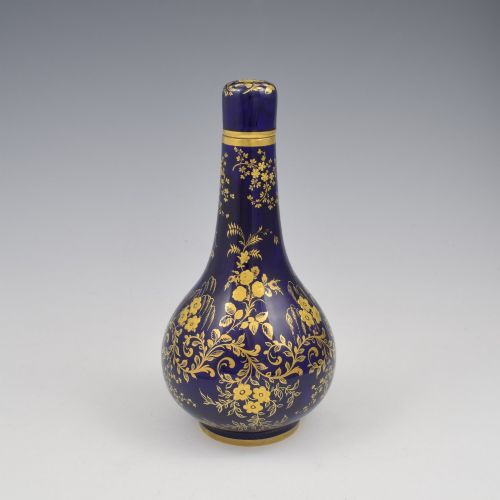
Gilding is applied using gold leaf and gilt finishes to accent the porcelain panels and cast metal mounts. The combination of ceramic firing and metal founding required distinct artisan workshops collaborating to complete a single lidded urn or vase.
Gilded Sevres Vases Retail Price Guide 2026
Typical asking prices for gilded sevres vases among the pieces listed under this phrase on Sellingantiques today, from the lower quarter to the upper quarter. They describe what is for sale here now, not the wider market.
One nineteenth-century porcelain vessel doubles as a mantel clock, keeping time while wearing heavy gilt bronze mounts.
What varies in quality
The distinction between standard production and the finest examples rests on the crispness of the gilt bronze or ormolu mounts and the skill of the hand-painted porcelain panels. Stronger pieces display finely detailed chasing on the metalwork and carefully controlled firing in the coloured glazes.
Proportion and scale also separate the items, with monumental pairs requiring greater technical mastery in both the porcelain kiln and the metal foundry. The integration between the ceramic body and the metal mounts indicates the standard of the workshop.
Samson Paris·Derby Porcelain
The Gilded Sevres Vases Glossary
- Ormolu
- A gilded bronze technique used for decorative mounts on nineteenth-century French porcelain. This process creates a rich golden surface that frames the ceramic body.
- Bleu céleste
- A bright sky-blue glaze frequently utilised on nineteenth-century decorative vases. This colour serves as a vibrant background for painted scenes and gilt detailing.
- Lidded urn
- A tall decorative vessel fitted with a removable cover. These forms often stand on elaborate gilt bases within nineteenth-century interior displays.
- Gilt metal
- A base metal treated with a gold-coloured finish or gold leaf. It provides structural support and decorative framing for ceramic bodies.
Gilded Sevres Vases: Frequently Asked Questions
What periods do these vases date from?
The pieces span the nineteenth century, with specific dates clustering around eighteen-eighty, eighteen-ninety, and nineteen-twenty. Production reflects Victorian and nineteenth-century French taste.
Most items align with nineteenth-century revival movements, capturing the decorative aesthetics of earlier French royal factories.
Are these vases genuine eighteenth-century pieces?
The listings consist largely of nineteenth-century interpretations, Samson Paris productions, and pieces created in the Sèvres style rather than original eighteenth-century royal outputs.
These later items celebrate the established French aesthetic using nineteenth-century manufacturing techniques and mount designs.
How are the metal mounts attached?
Metal mounts in ormolu, gilt bronze, and gilt metal are secured around the porcelain bodies to form handles, bases, and collars. These elements integrate the ceramic vessel with structural hardware.
Foundry work allows the metal components to fit the contours of the lidded urns and decorative vases precisely.
Where should I display a lidded urn?
These decorative vessels suit prominent placement on mantelpieces, pedestals, or large sideboards where their gilt surfaces catch the light. Several listings combine the vase form with a functional mantel clock.
Ensure the chosen surface provides stable support for the combined weight of porcelain and metal mounts.