
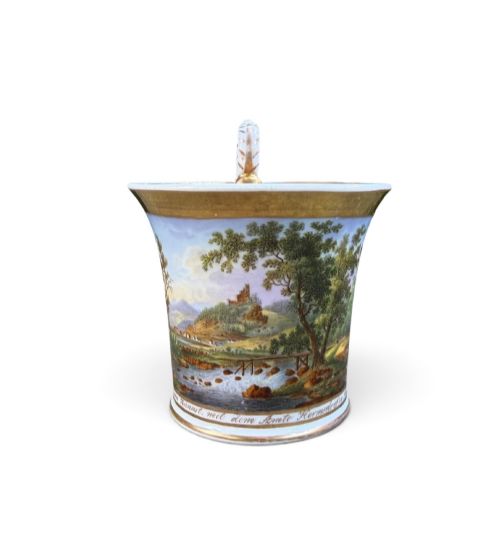


Gilded Porcelain Cabinet Cup
A gilded porcelain cabinet cup brings cabinet display and fine handpainted ceramic work together into a single focused decorative form.
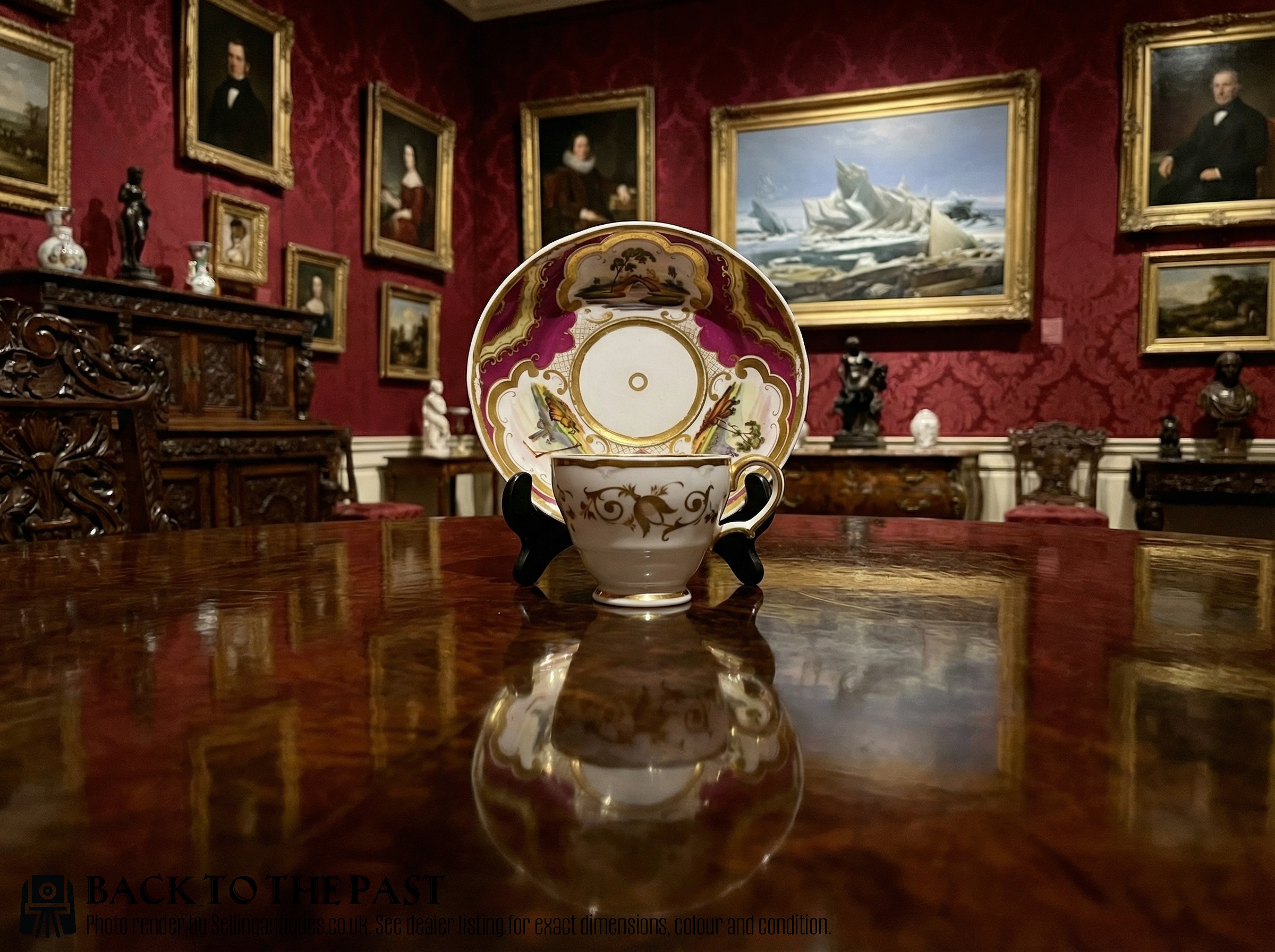
Gilded Porcelain Cabinet Cup
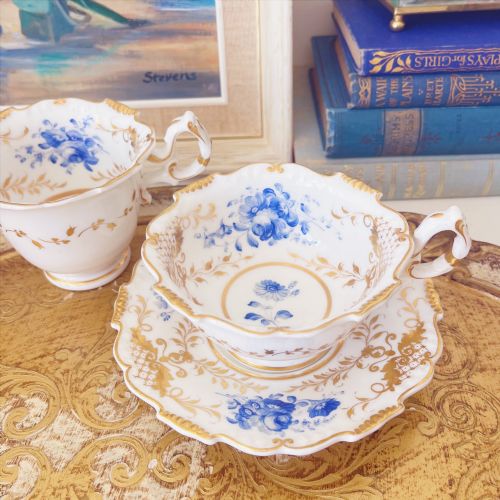
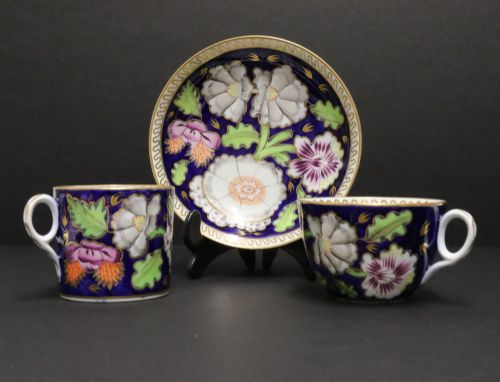
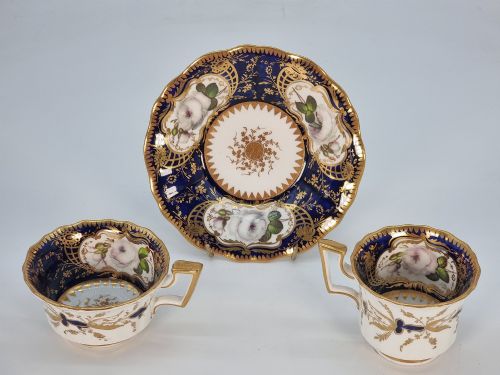
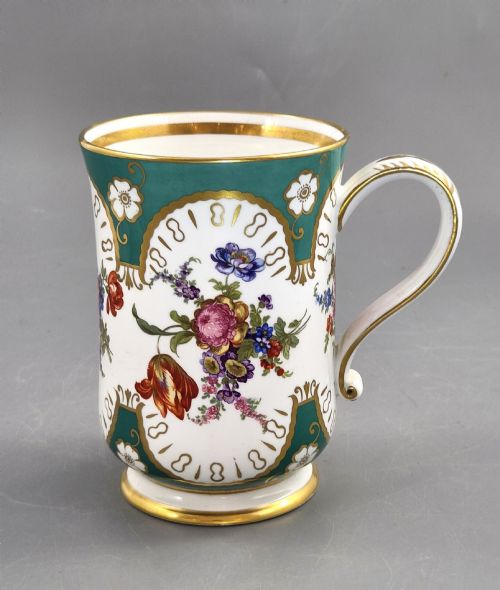
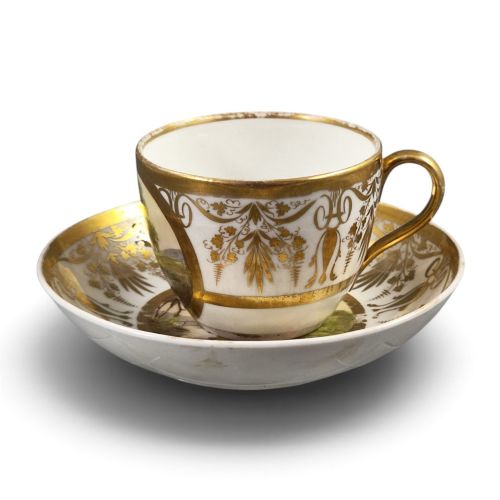
A gilded porcelain cabinet cup is a decorative vessel made for display rather than everyday tea service, often formed as a cabinet cup, demitasse, or small beaker paired with a matching saucer. These items appear across periods including the Georgian, Regency, and Victorian eras, alongside later pieces from 1900 to 1930.
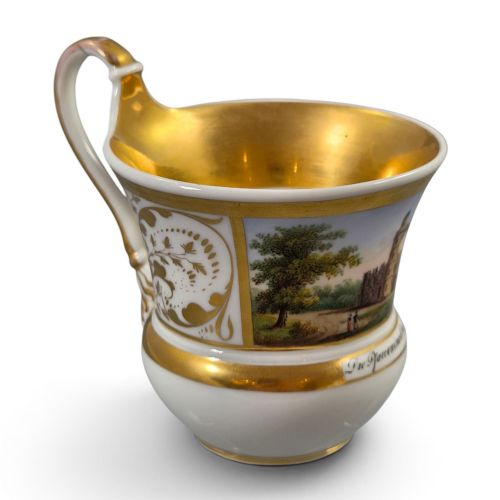
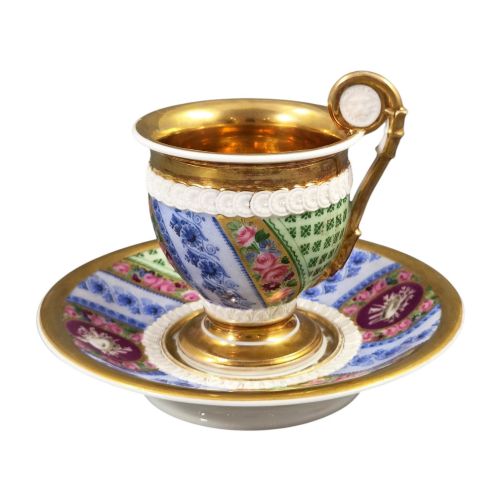
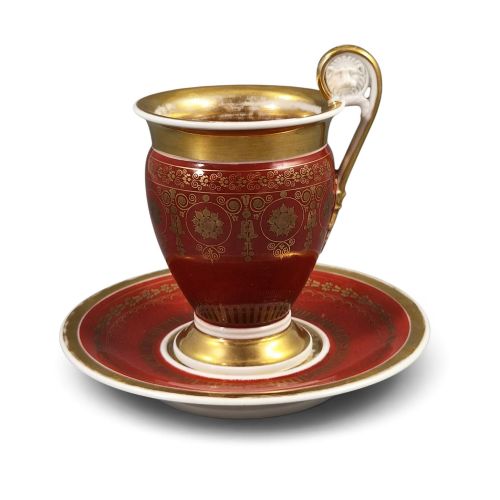
The objects recorded here include English manufactories like Spode, Coalport, Newhall, and Worcester, alongside continental porcelain from French Old Paris, KPM Berlin, Meissen, and Royal Vienna. Forms range from simple cabinet trios and pedestal cups to elaborate pieces featuring lion mask handles and handpainted topographical scenes.
How they were made
Makers shaped these items using hard-paste porcelain, bone china, and standard porcelain bodies, frequently applying gold leaf and heavy gilding alongside enamel colours. The surfaces often received handpainted decoration, ranging from woodland scenes and landscapes to detailed floral motifs.
Kiln firing set the ceramic body and fixed the enamel colours, after which artisans applied gold leaf by hand to highlight rims, handles, and borders. Many pieces combine structural elements like lion mask handles with delicate miniature painting executed within coloured ground panels.
Listings feature porcelain, hard-paste porcelain, bone china, gold leaf, gilding, and enamel across periods from the Georgian era to the 1930s.
What varies in quality
The standard of painting defines the upper tier of these pieces, where miniature landscapes and allegorical scenes show precise brushwork and careful detail. Factory origins also influence distinction, with named makers such as KPM Berlin, Meissen, and Barr Flight Barr Worcester commanding strong interest.
The application of gold gilding determines much of the visual weight, with burnished gold leaf displaying superior depth compared to flat metallic paint. Preservation of the painted surfaces and the crispness of moulded details like pedestal bases and lion masks separate standard items from finer examples.
H R Daniel Shrewsbury·Newhall·Coalport John Rose·Sèvres·KPM Berlin·Spode·Royal Worcester·Hutschenreuther·Hirsch Dresden·Royal Vienna·Meissen·Davenport·Ridgeway·Barr flight Barr Worcester·Wedgwood
The Gilded Porcelain Cabinet Cup Glossary
- Cabinet cup
- A decorative ceramic cup made for display in a cabinet rather than everyday use. These pieces often feature elaborate gilding and handpainted views.
- Demitasse
- A small cup used for serving strong black coffee or espresso. They frequently appear in porcelain with matching saucers from the nineteenth and early twentieth centuries.
- Hard-paste porcelain
- A durable ceramic paste composed of kaolin and petuntse fired at high temperatures. It forms the robust body for many continental and English cabinet cups.
- Gilding
- The application of gold leaf or gold powder to ceramic surfaces. This technique highlights rims, handles, and decorative borders on display pieces.
- Topographical
- A style of ceramic decoration featuring specific landscapes, buildings, or identifiable views. Examples include painted scenes of Peacock Island and regional European settings.
Gilded Porcelain Cabinet Cup: Frequently Asked Questions
What is a gilded porcelain cabinet cup?
A gilded porcelain cabinet cup is an ornamental ceramic vessel designed for display in a cabinet rather than functional dining use. These pieces typically combine fine porcelain bodies with detailed handpainted scenes and rich gold leaf decoration.
They represent the decorative output of major European and English porcelain manufactories across the nineteenth and early twentieth centuries. Collectors prize them for their miniature artistry and varied form, including pedestal cups, demitasse sets, and cabinet trios.
How were cabinet cups used?
Cabinet cups were primarily created for visual display inside glass-fronted cabinets and vitrines rather than for drinking tea or coffee. Wealthy households collected them to showcase fine craftsmanship, artistic painting, and expensive gilding materials.
While some forms originated as part of tea or coffee services, cabinet-specific pieces prioritized aesthetic presentation over utility. They allowed owners to display fine porcelain art within domestic living spaces.
How do I live with antique porcelain?
Living with antique porcelain involves placing pieces in secure display locations away from heavy vibrations and direct sunlight. Because many items feature delicate enamel painting and gold leaf, stable indoor environments help preserve the fragile surfaces.
Displaying them in closed cabinets protects the glaze from dust while allowing the painted topographical scenes and gilded details to remain visible. Gentle cleaning with a soft dry cloth is usually sufficient for maintenance.
How can I tell periods apart?
Distinguishing periods relies on observing stylistic markers, ceramic bodies, and painted subject matter characteristic of different eras. Georgian and Regency pieces often exhibit Neoclassical or early floral motifs, while Victorian examples frequently embrace revival styles like Rococo Revival.
Later pieces from the twentieth century show shifts towards Edwardian refinement or simplified forms. Comparing the handle shapes, colour palettes, and base profiles helps anchor a piece within its manufacturing period.