

Gilded Marble Hall Table
A gilded marble hall table brings grand proportions and reflective surface to an entrance, anchored by stone and metallic leaf.
Gilded Marble Hall Table
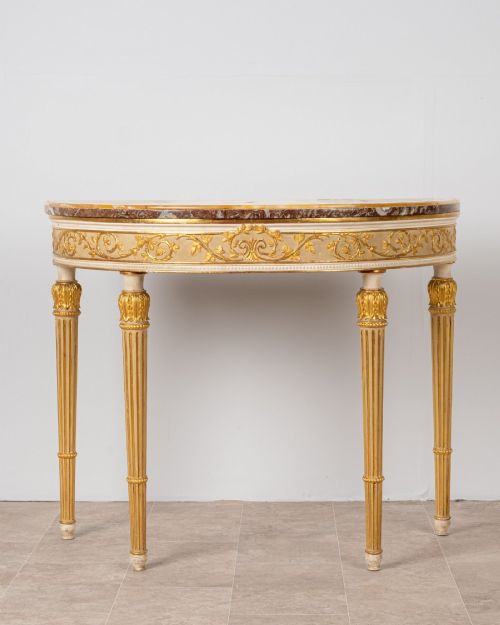
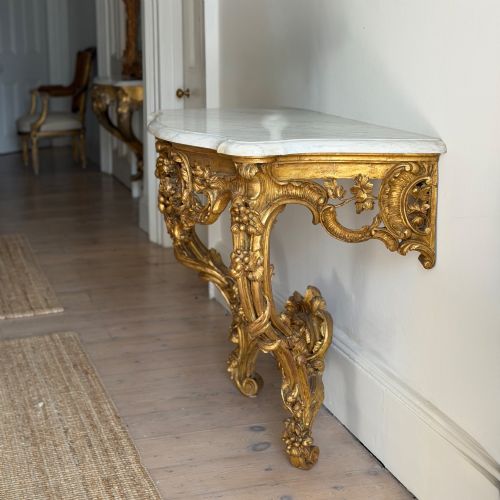
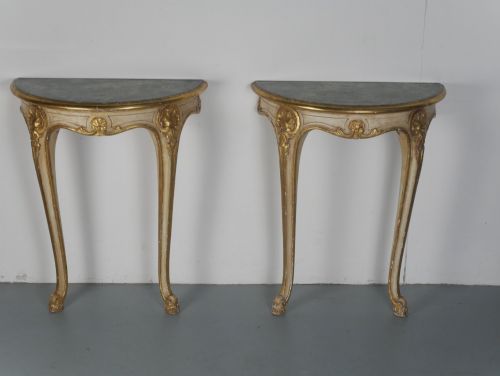
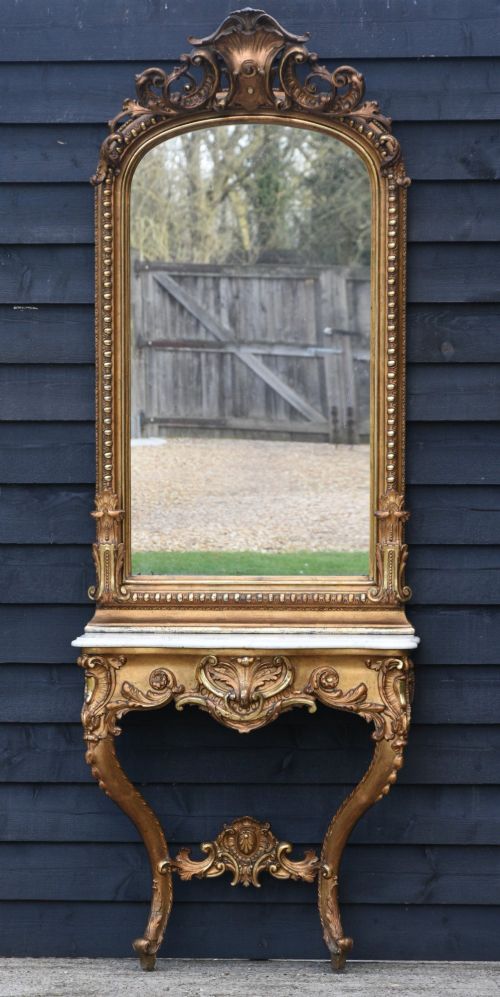
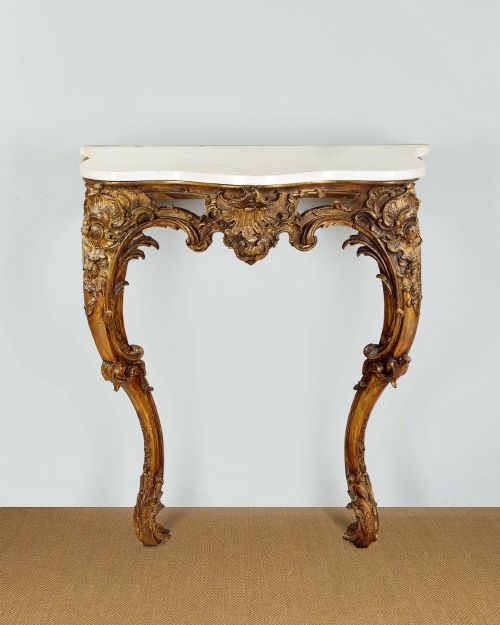
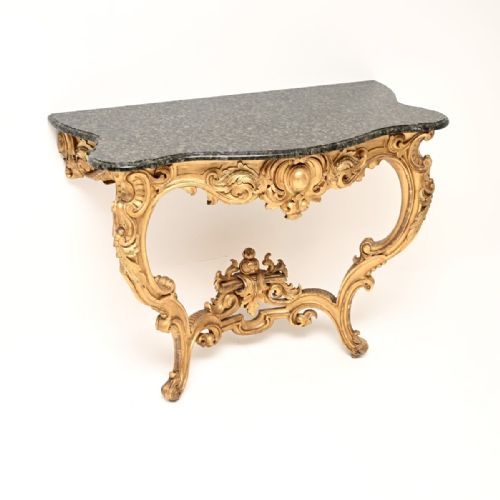
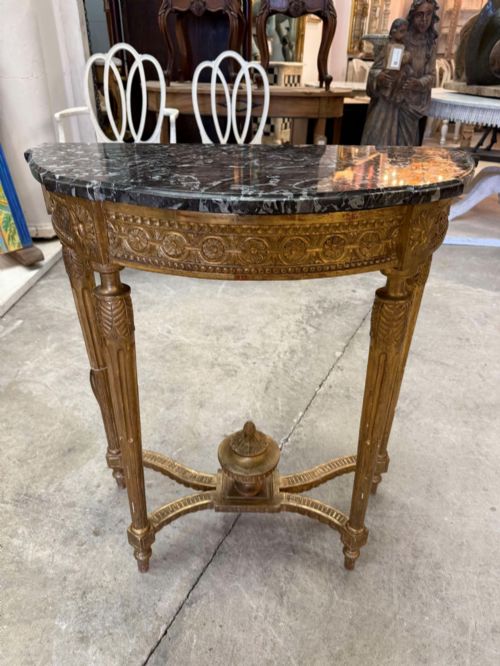
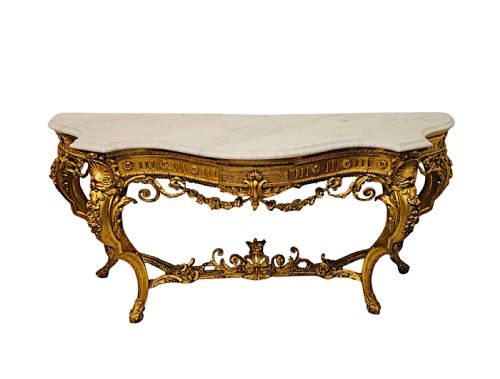
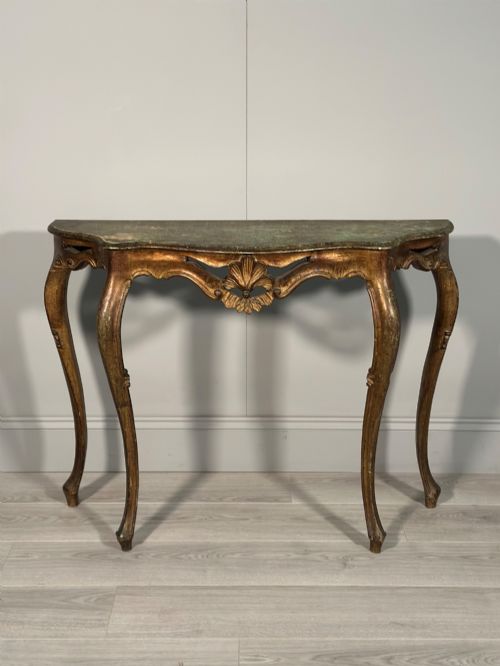
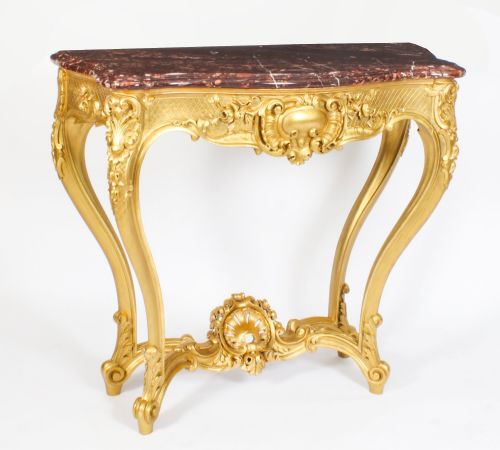
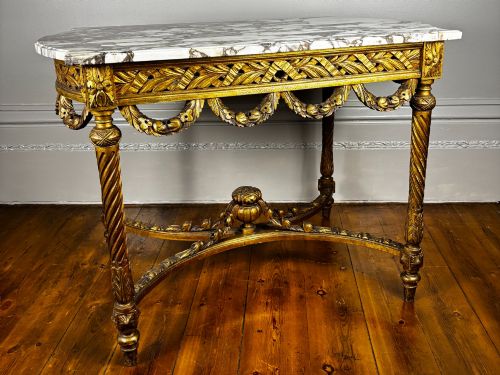
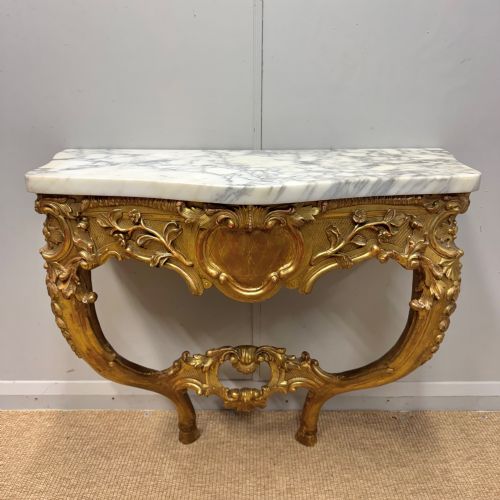
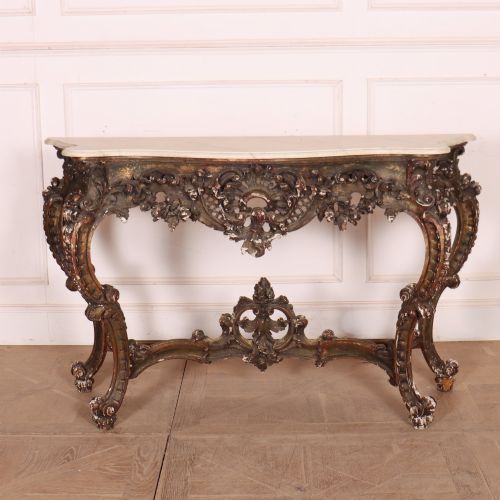
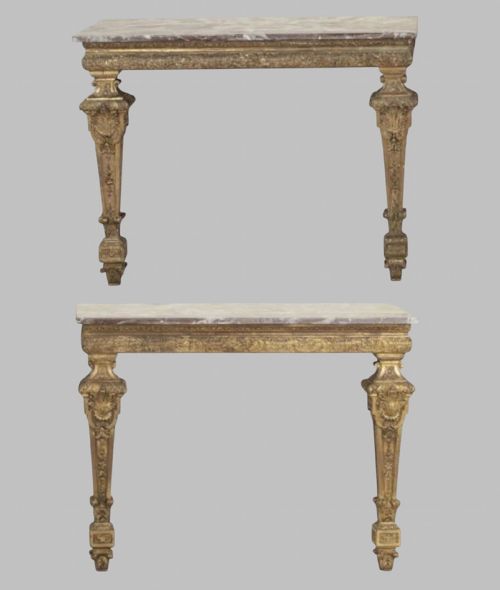
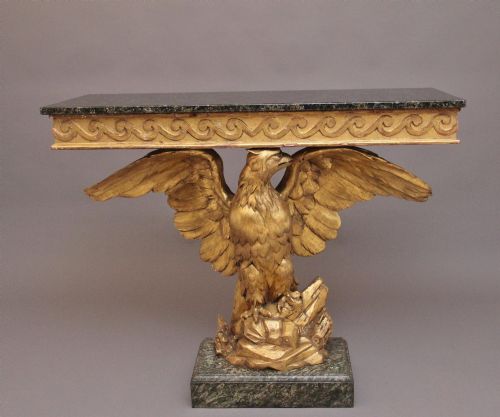
A gilded marble hall table combines a solid stone slab surface with an ornate wooden frame finished in metallic leaf or paint, designed specifically for entranceways and reception rooms. These pieces appear primarily as console tables, side tables, and occasional centre tables spanning the eighteenth, nineteenth, and early twentieth centuries.
The most common examples encountered on this page date from the nineteenth century, often following French and Italian revival styles such as Rococo and Neoclassical. Makers of these periods favoured serpentine outlines, carved supports, and dramatic marble tops including rouge and breccia varieties.
Originating largely from continental workshops, these items served to impress visitors upon entry, reflecting light from adjacent mirrors and windows. The heavy stone top rests securely upon a carved wooden base, frequently shaped to fit against a wall or stand freely in a spacious hall.
How they were made
Craftsmen shaped the structural frames from timber such as wood, applying layers of gesso to smooth the surface before laying down gold or silver leaf, or alternatively applying polychrome paint. This preparation allowed intricate carvings of foliage, scrolls, and animal motifs to hold the metallic finish sharply.
The heavy stone tops, consisting of marble or onyx, were slabbed and polished by hand to reveal natural veining and colour variations. These stone surfaces were then fitted precisely to the supporting wooden rails beneath, relying on their own substantial weight to remain stable.
Gilded Marble Hall Table Retail Price Guide 2026
Typical asking prices for gilded marble hall table among the pieces listed under this phrase on Sellingantiques today, from the lower quarter to the upper quarter. They describe what is for sale here now, not the wider market.
Several tables feature carved lion's paw supports, ready to hold up grand marble tops with feline dignity.
What varies in quality
Depth and crispness of the carved ornamentation separate standard production from superior examples, with finer pieces displaying undercut foliage and confident, fluent scrollwork rather than shallow moulding. The handling of the gesso and the finesse of the gilding further distinguish master workshops from routine provincial output.
The selection and thickness of the marble top indicate the grade of the piece, with richly figured stones like breccia or rouge showing superior mineral depth compared to plain white slabs. Structural integrity in the joints and the original matching of the stone to the frame determine the enduring standard of the table.
Amleto Bertoni
The Gilded Marble Hall Table Glossary
- Console table
- A table supported by brackets or console legs against a wall, frequently paired with a matching wall mirror. This form dominates the grander examples found in entrance halls.
- Giltwood
- Timber that has been coated with gold leaf or powder over a prepared gesso ground. It provides the characteristic reflective warmth seen on historical frames.
- Gesso
- A plaster mix applied to wood to create a smooth surface for gilding or painting. It holds fine detail during the carving process.
- Serpentine
- A furniture outline characterised by a curving front with alternating convex and concave sections. It adds fluid motion to rigid interior spaces.
- Breccia marble
- A multicoloured stone composed of angular fragments embedded in a fine-grained matrix. It creates a dramatic, variegated surface on high-status tables.
Gilded Marble Hall Table: Frequently Asked Questions
How do I style a gilded marble hall table?
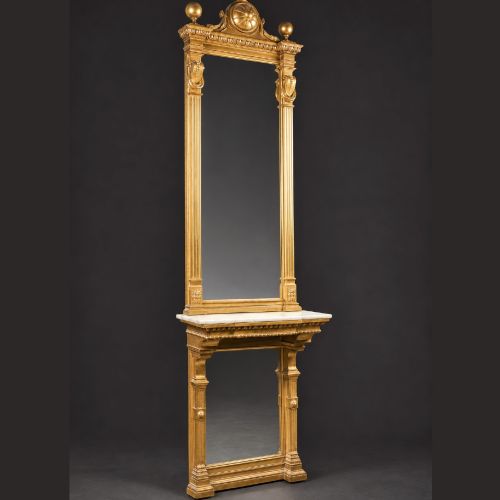
Place the table against a prominent wall in an entrance hall, often beneath a matching gilt mirror to balance the vertical space. Keep the surface uncluttered to let the veining of the marble and the metallic finish catch the light.
Ensure the scale matches the room, allowing enough clearance for movement around the piece. Heavier bases require solid flooring to support their considerable weight.
Were these tables made for hallways originally?
Historical examples served primarily in grand reception rooms, salons, and entrance galleries where visitors arrived. Their slim profiles allowed them to line corridors without obstructing passage.
The inclusion of a stone top made them practical for placing visiting cards, heavy candlesticks, and decorative bowls upon entry.
How do I care for the marble and gilt surfaces?
Dust the gilded wooden frame gently with a dry, soft cloth, avoiding commercial polishes that can lift the delicate metallic leaf. Protect the carved details from moisture and heavy impacts.
Clean the marble top using a damp cloth with mild soap, avoiding acidic substances like vinegar or citrus that etch polished stone. Wipe dry immediately to preserve the natural gloss.
How do I distinguish nineteenth-century revival styles?
Nineteenth-century pieces often revive earlier eighteenth-century French and Italian aesthetics, such as Louis XV, Louis XVI, and Rococo designs. Look at the crispness of the carving and the construction methods to date the timber framework accurately.
Revival pieces frequently incorporate bolder proportions and heavier marble slabs than their earlier counterparts while retaining classical motifs like acanthus leaves and scrolling legs.