
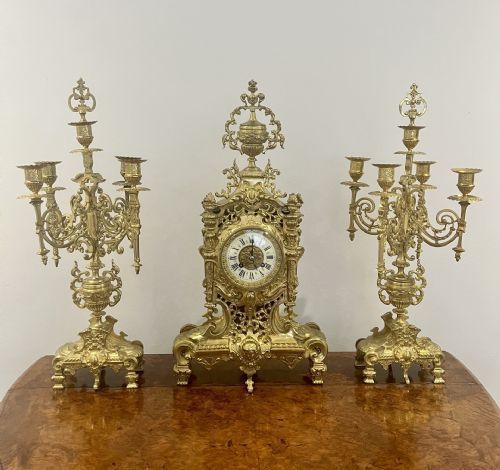
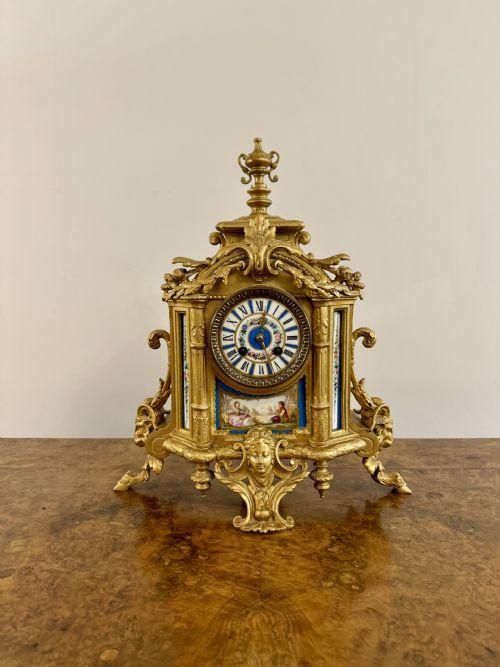


Gilded Mantelpiece Clock
A gilded mantelpiece clock brings nineteenth-century drawing rooms to life with gleaming ormolu, porcelain panels and steady mechanical striking.
Gilded Mantelpiece Clock
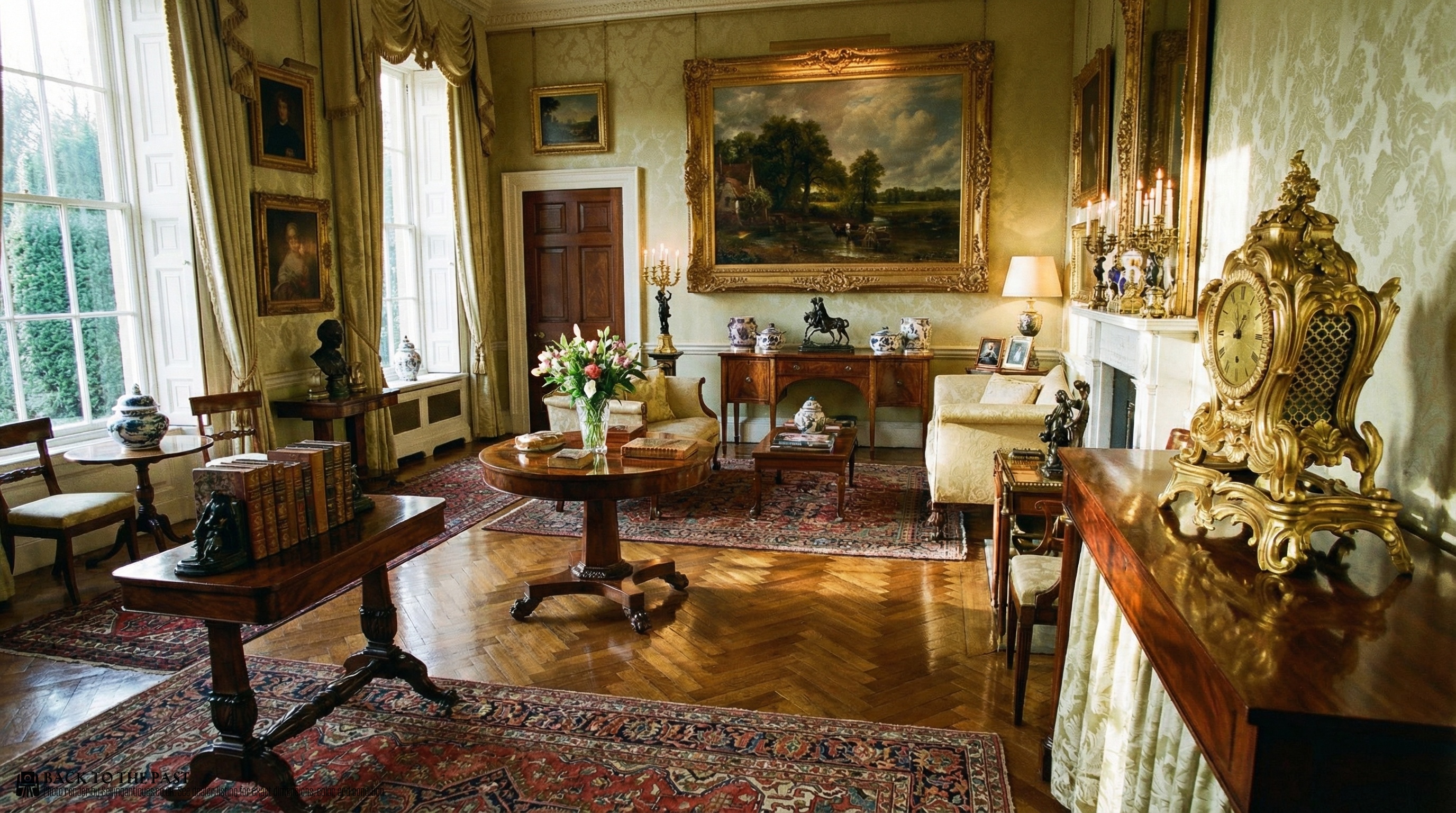
A gilded mantelpiece clock sits upon a fireplace shelf or side cabinet, designed to display wealth and keep time through the nineteenth century. These objects combine heavy cast metal cases with intricate decorative styles that draw heavily on French Rococo Revival, Louis XVI and Victorian tastes.
The pieces on this page are predominantly French in origin, spanning from the early nineteenth century through to the Edwardian period. Buyers meet single clock cases alongside full garniture sets that include matching side urns or vases.
Forms range from compact four-glass mantel clocks and boudoir timepieces to large architectural marble structures and elaborate figural bronzes. Many incorporate painted porcelain panels or enamel dials featuring Roman numerals.
Materials and construction
Foundries shaped the heavy cases from brass, bronze and white metal before applying rich gilt layers through mercury gilding or electroplating. Ormolu surfaces required meticulous hand-chasing after casting to sharpen the scrolling acanthus leaves, cherubs and architectural details.
Clockmakers fitted mechanical movements driven by springs and fuses, often featuring eight-day striking trains that sounded the hours and half-hours on bells or gongs. Cabinets combined these metallic mounts with contrasting materials such as red or black marble, glass panels and fired porcelain.
Gilded Mantelpiece Clock Retail Price Guide 2026
Typical asking prices for gilded mantelpiece clock among the pieces listed under this phrase on Sellingantiques today, from the lower quarter to the upper quarter. They describe what is for sale here now, not the wider market.
The spectrum of quality
Quality rests in the crispness of the metal chasing and the depth of the gilding rather than sheer weight alone. Superior examples display sharply defined cast ornamentation where human hands have cleaned every hollow and ridge after the foundry work.
The standard of the interior clock movement marks the distinction between ordinary production and high-end horology. Signed backplates from recognised workshops paired with hand-painted porcelain panels elevate a piece far above standard commercial factory output.
Leroy & Fils·Japy Fils·J.B. Delettrez·Howell, James & Co.·Hay London
The Gilded Mantelpiece Clock Glossary
- Ormolu
- Gilded bronze produced through a mercury amalgamation process or later electroplating. This finish gives nineteenth-century French clock cases their warm, enduring metallic sheen.
- Garniture
- A matched set consisting of a central clock flanked by two matching side pieces such as vases or urns. These arrangements provided symmetrical decoration for large Victorian mantelpieces.
- Fusee
- A conical pulley used within clock movements to maintain an even pull on the gear train as the mainspring unwinds. It represents a higher standard of mechanical precision.
- Four-Glass Clock
- A mantel clock housed in a brass or gilt frame with glass panels on all four sides. This design allows light to pass through and exposes the pendulum and movement.
- Dial
- The face of the clock where the hours are marked. Nineteenth-century versions frequently employ white enamel chapter rings or individual porcelain cartouches.
Gilded Mantelpiece Clock: Frequently Asked Questions
How do these clocks work?
Most pieces rely on a spring-driven mechanical movement housed within the metal or marble case. A key winds the mainspring, and a pendulum regulates the speed of the gear train.
Many examples include a striking mechanism that rings bells or gongs on the hour and half-hour. Regular professional servicing keeps these nineteenth-century gear trains running accurately.
What is a clock garniture?
A clock garniture is a matching three-piece set designed to sit together on a mantelpiece. The central clock is accompanied by two identical side ornaments, usually shaped as urns or vases.
These sets were popular in Victorian drawing rooms to create a balanced, symmetrical display across a fireplace.
How do I date a mantel clock?
Dating relies on stylistic clues, case materials and signatures stamped onto the brass clock movements. French pieces often feature maker marks and serial numbers on the backplate.
Revival styles, such as Rococo and Louis XVI, gained popularity during specific decades of the nineteenth century, helping narrow down the period of manufacture.
Are these clocks difficult to maintain?
Mechanical clocks require careful handling, stable placement on a level surface and occasional professional cleaning. Moving the pendulum incorrectly can stop the beat.
Keeping the clock away from direct sunlight and damp environments preserves both the delicate enamel dials and the gilded bronze surfaces.