
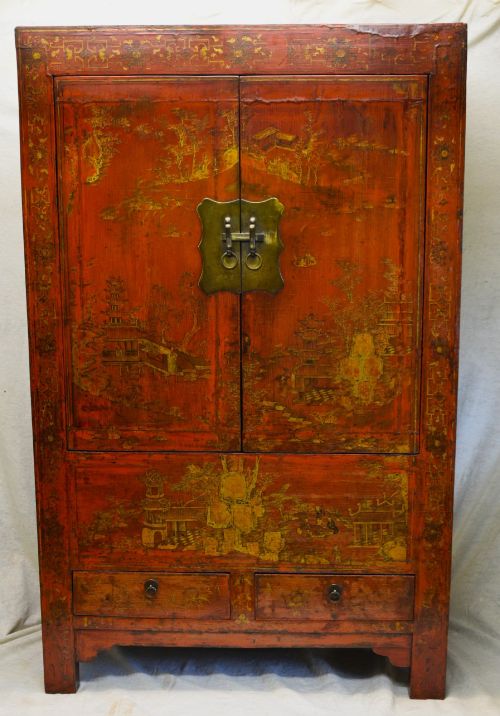
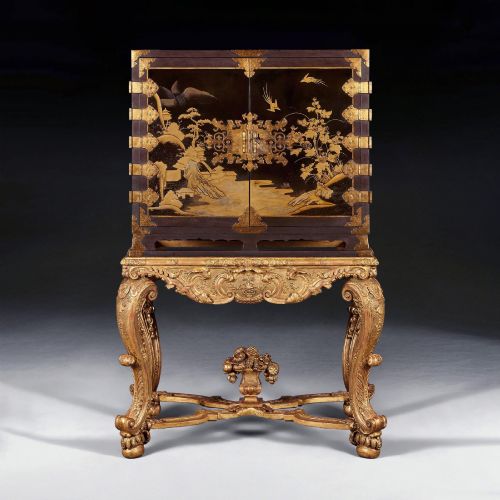
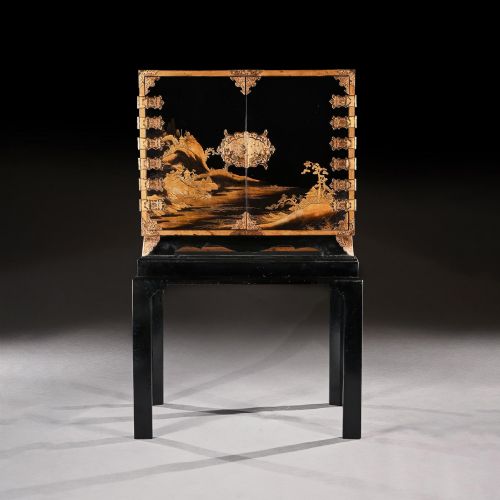
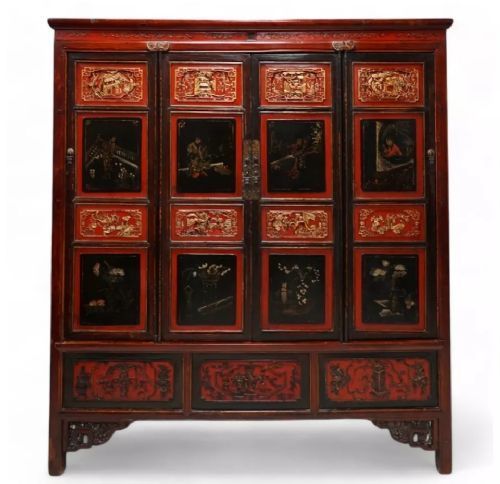




Gilded Lacquer Cupboard
A gilded lacquer cupboard brings rich Eastern motifs and shimmering surface decoration into a room, offering both striking visual depth and practical storage.
Gilded Lacquer Cupboard
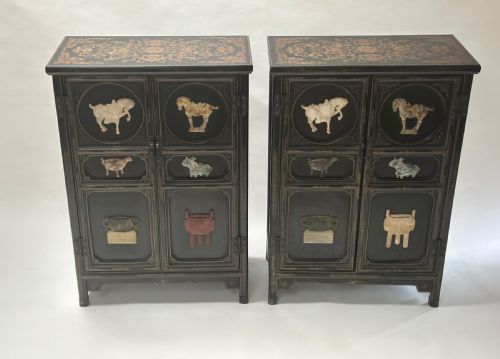
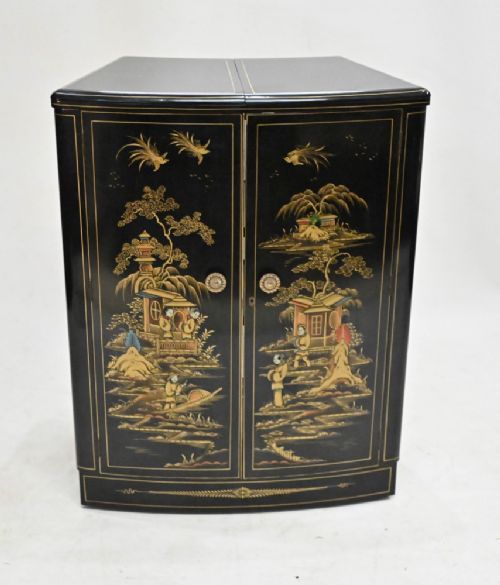
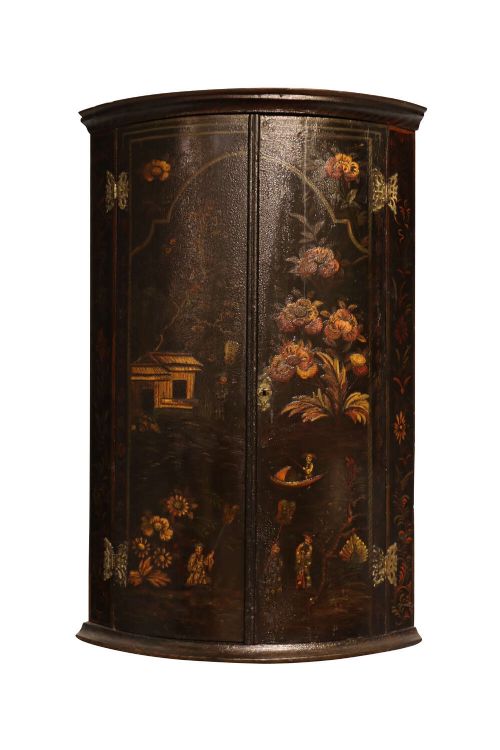
A gilded lacquer cupboard combines oriental or European japanned decoration with substantial cabinet-making, spanning forms from corner cupboards and marriage cabinets to compact table cabinets and stands. These pieces emerge across the seventeenth, eighteenth, and nineteenth centuries, alongside later twentieth-century interpretations.
The most frequently encountered examples on this page are Chinese export and domestic marriage cabinets finished in red or black lacquer, accompanied by European Chinoiserie corner cupboards and Japanese pieces mounted on elaborate stands. Each style demonstrates distinct regional aesthetics, from Qing Dynasty red finishes to Georgian Chinoiserie decoration.
Buyers select these cabinets to anchor a room with intense colour and metallic highlight, utilising them as cocktail bars, display units, or statement storage. The form adapts readily to domestic interiors, shifting between tall standing armoires and low table cabinets.
Materials and construction
Carroty softwood, elm, and diverse timber carcases provide the foundation for layers of applied lacquer, which is built up and polished before receiving detailed hand-painting and gold leaf decoration. Artisans apply gold leaf and metallic pigments directly onto the lacquered surface to delineate intricate landscapes, figures, and floral motifs.
Brass mounts, hinges, and escutcheons frequently secure the doors and drawers, offering functional contrast to the dark or vibrant red lacquer grounds. Giltwood stands, particularly on seventeenth-century Japanese cabinets, employ carved timber frames finished with gold leaf to elevate the primary storage vessel.
Some marriage cabinets hide secret internal compartments designed for stashing love letters and family silver.
Judging quality and execution
Quality rests primarily in the depth and preservation of the lacquer surface, the precision of the gilding, and the integrity of the underlying woodwork. Superior pieces display crisp, hand-painted details and stable lacquer layers that have aged with minimal cracking or loss.
The sophistication of the stand or base heavily influences the overall stature of the piece, particularly where European giltwood or carved stands support imported Japanese and Chinese cabinets. Original hardware, harmonious proportions, and untouched surface patination elevate an example above later adaptations.
The Gilded Lacquer Cupboard Glossary
- Chinoiserie
- European decorative style reflecting Chinese artistic influences, popular in furniture design and interior decoration during the seventeenth and eighteenth centuries. It often incorporates whimsical landscapes and gilded figures.
- Japanned
- European imitation of East Asian lacquerwork, created by applying layers of varnish and metallic dust to furniture. This technique flourished during the seventeenth and eighteenth centuries.
- Giltwood
- Timber carved and coated with gold leaf or powder, commonly found on stands supporting imported lacquer cabinets. It provides a rich architectural base.
- Marriage cabinet
- Large Chinese storage furniture traditionally given to newlywed couples, finished in vibrant red or black lacquer. These pieces offer deep internal shelving.
- Regence
- French artistic style bridging the baroque and rococo periods, characterised by lighter, more curved forms often seen in decorative stands.
Gilded Lacquer Cupboard: Frequently Asked Questions
How do I care for a lacquer surface?
Keep these cupboards away from direct sunlight and extreme humidity fluctuations to prevent the lacquer from drying and cracking.
Dust gently with a dry, soft cloth and avoid chemical polishes or water on the decorated surfaces.
Are these cabinets purely decorative?
While visually striking, these pieces serve as highly functional storage units with internal shelving, drawers, or hanging space depending on the specific form.
Many examples function effectively as drinks cabinets or general storage cupboards in modern living spaces.
What is the difference between Chinese and European Chinoiserie?
Chinese pieces originate from domestic or export workshops, utilising traditional Asian lacquer techniques and regional timber carcases like elm.
European Chinoiserie items employ local japanning methods to imitate Eastern aesthetics on domestic furniture carcases.
How do stands affect these cabinets?
Many imported East Asian table cabinets were paired with European stands, such as gilded Regence frames, to elevate them to standard furniture height.
Original matching stands significantly enhance the historical context and visual balance of the cabinet.