



Gilded Hall Chair
A gilded hall chair brings striking presence to an entrance, combining decorative presence with period craftsmanship.
Gilded Hall Chair
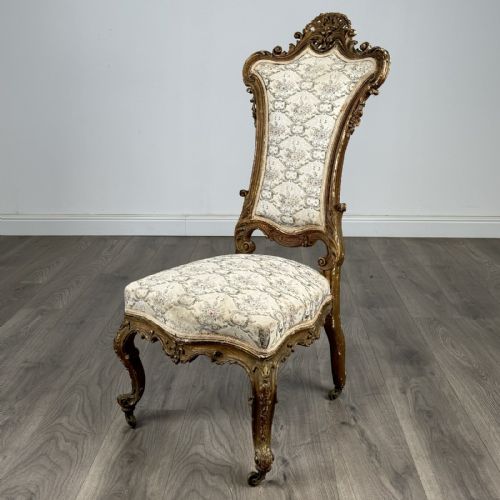
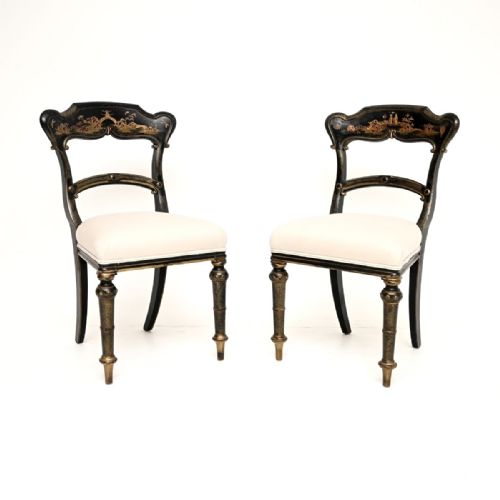
A gilded hall chair offers an impressive seating option for entryways and reception spaces, drawing on designs from the eighteenth century through to the twentieth century. These seating pieces appear across various aesthetics, including Regency, Louis XVI, and Victorian Chinoiserie styles, reflecting diverse European influences.
The selection on this page leans heavily toward pairs, often taking the form of side chairs, salon chairs, and occasional hall seating rather than singular pieces. Buyers encounter frames shaped by continental and British traditions, utilising materials from beechwood and walnut to ebonised and lacquered wood.
How they were made
Maker workshops utilised solid hardwoods such as beech and walnut, frequently applying ebonising or decorative lacquer to the underlying structure. Gilding techniques involved applying thin gold leaf over prepared surfaces to achieve a luminous metallic finish.
Detailing often incorporated hand-carved elements, simulated bamboo turning, or applied fabric and cane panels. Construction methods relied on traditional joinery to ensure stability across both formal salon seating and robust hall furniture.
Gilded Hall Chair Retail Price Guide 2026
Typical asking prices for gilded hall chair among the pieces listed under this phrase on Sellingantiques today, from the lower quarter to the upper quarter. They describe what is for sale here now, not the wider market.
Materials recorded across the inventory include giltwood, ebonised wood, cane, brass, and lacquered surfaces.
What varies in quality
Quality separates pieces through the crispness of the carved details and the survival of the original surface finishes, such as giltwood and lacquer. Better examples retain their historic decorative schemes without heavy intervention or later repainting.
Structural integrity in the joints and the finesse of stylistic execution - whether in a Pugin design or a French Rococo revival - distinguish standard production from superior craftsmanship.
Bruce J. Talbert
The Gilded Hall Chair Glossary
- Giltwood
- Wood that has been coated with gold leaf or powder. This finish appears frequently across continental and Regency seating forms.
- Cabriole legs
- S-shaped furniture legs curving outward and then inward, typical of eighteenth-century and revival styles. They provide both grace and structural support.
- Chinoiserie
- European interpretation of Chinese and East Asian artistic traditions, often expressed through lacquer and gilt motifs on Victorian furniture.
- Savonarola chair
- A folding armchair constructed from multiple intersecting wooden slats, named after the famous Florentine friar. Examples survive from the nineteenth century.
Gilded Hall Chair: Frequently Asked Questions
Where should I place a gilded hall chair?
These chairs suit entrance halls, landings, or reception rooms where their decorative framing can be fully appreciated.
Because they were designed primarily for formal display rather than prolonged lounging, they function best as accent seating.
Are these chairs sold as pairs?
Many listings feature matching pairs, which suits symmetrical interior layouts in hallways or salons.
Single examples also appear, offering a strong focal point for smaller corners.
How do I identify the period of a gilded chair?
Period identification relies on the stylistic vocabulary, such as Regency lines, Louis XVI detailing, or Aesthetic Movement forms.
Materials like ebonised wood or simulated bamboo further narrow down the decade of production.
Did people actually sit on hall chairs?
Hall chairs provided brief seating while waiting in an entranceway, rather than comfort for long conversations.
Their upright backs and wooden seats encouraged correct posture for visitors entering a home.