

Gilded Gesso Overmantel
A gilded gesso overmantel brings a commanding presence to a fireplace through heavy gold leaf and deep relief framing.
Gilded Gesso Overmantel
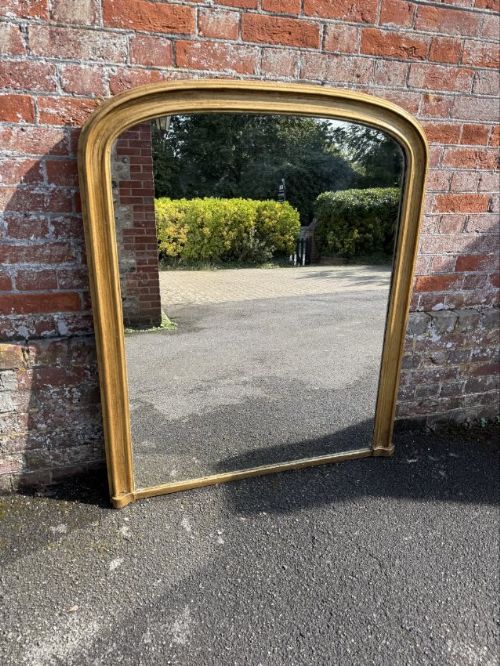
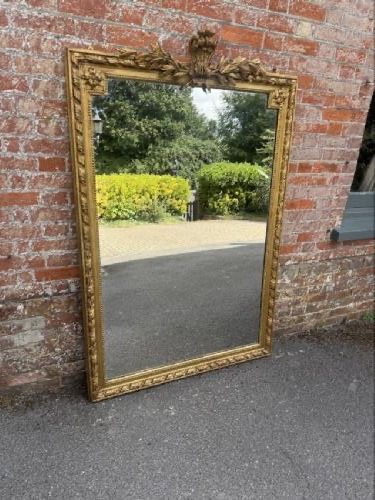
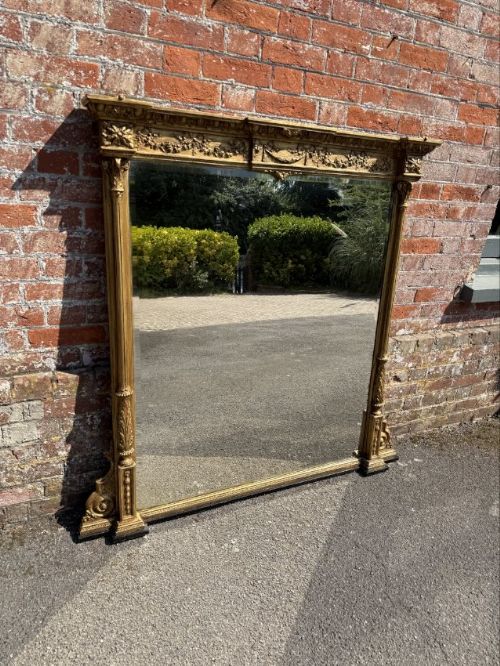
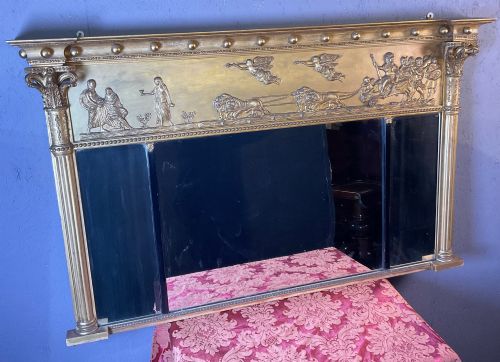
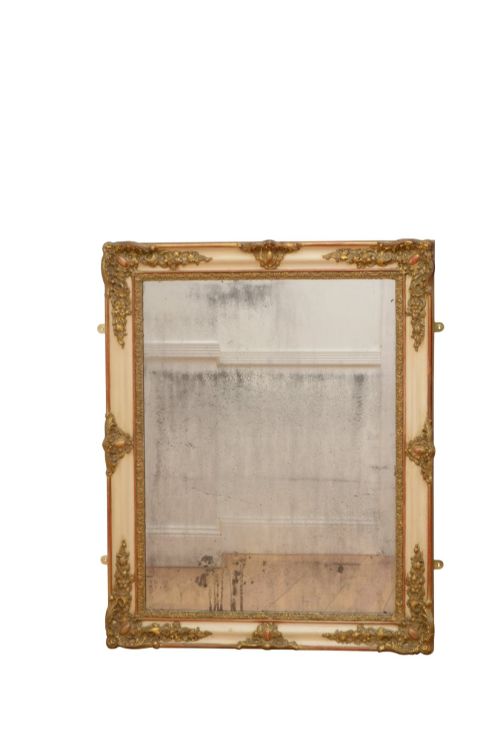
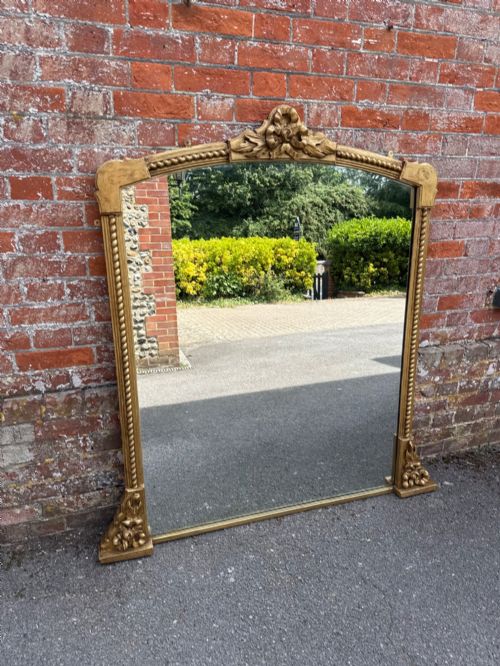
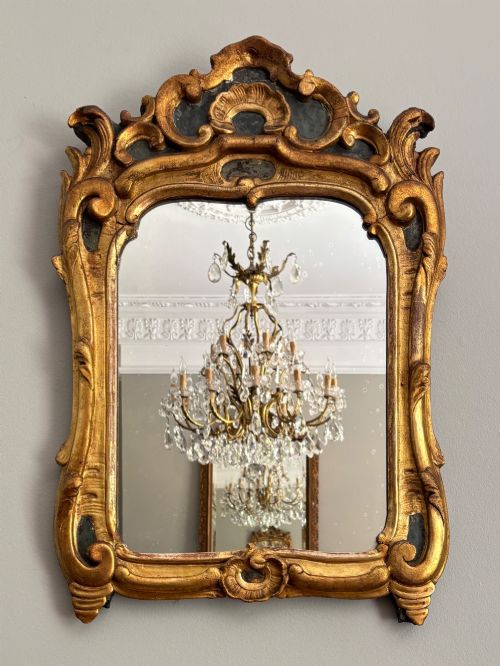
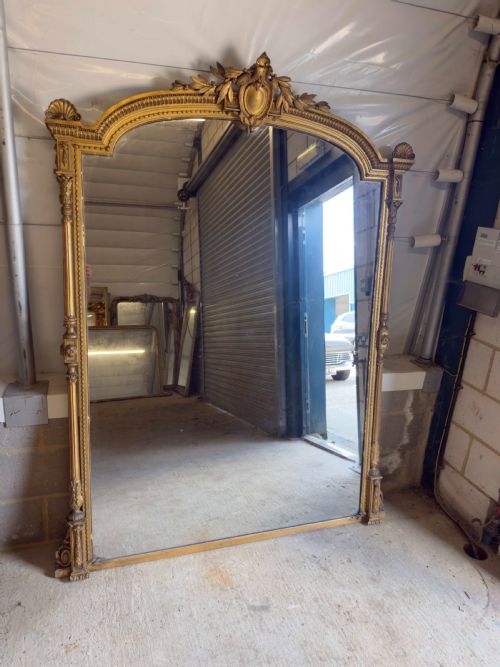
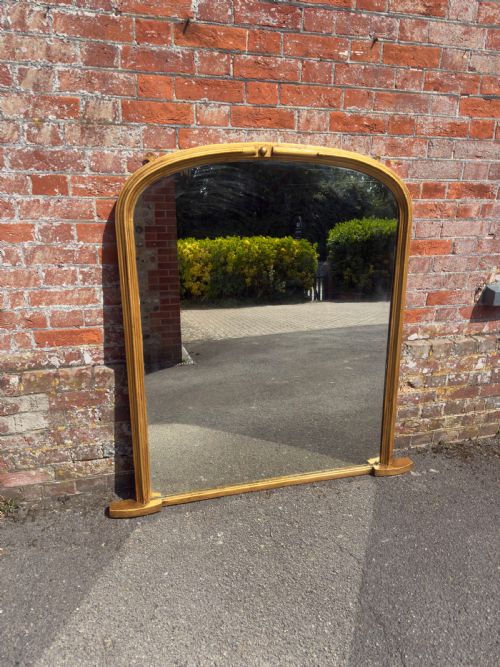
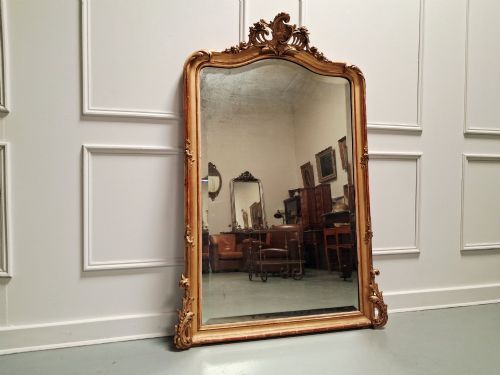
A gilded gesso overmantel is a large decorative mirror designed specifically to sit upon the mantelpiece above a fireplace. The pieces encountered most frequently on this page originate from the nineteenth century, manifesting primarily through Victorian English workshops and French regional designs.
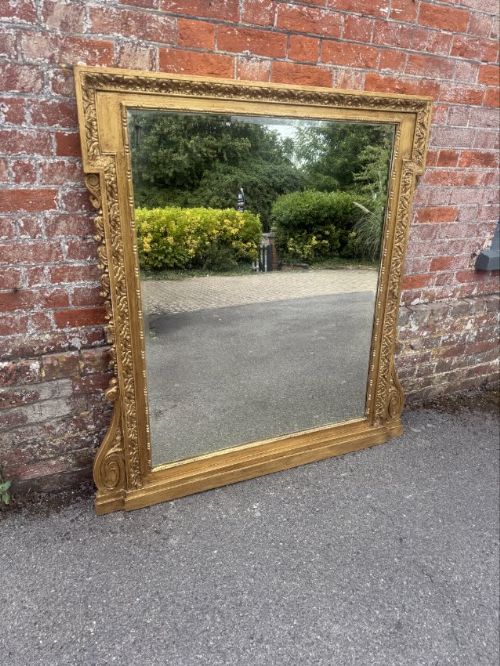
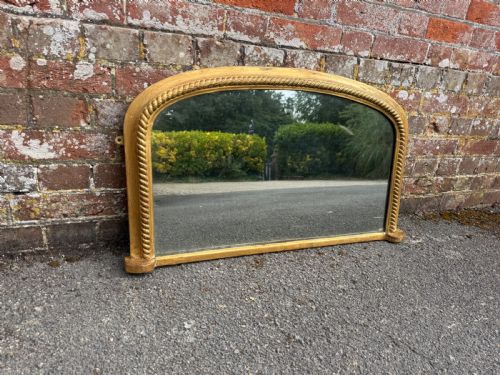
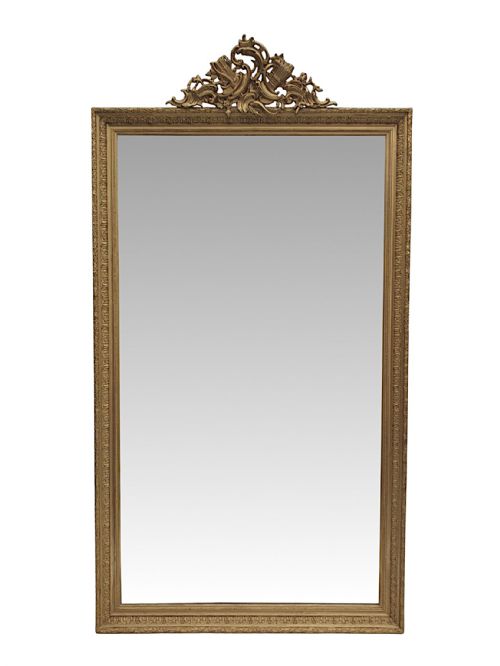
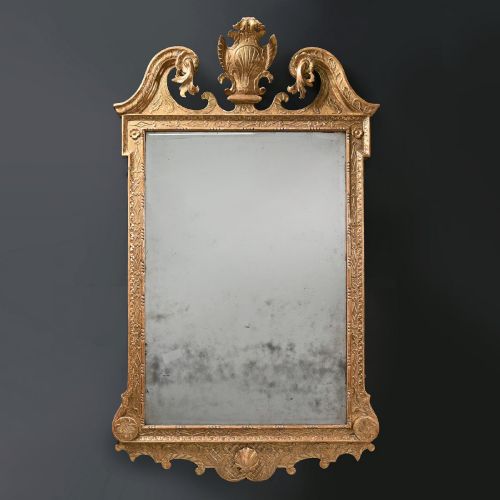
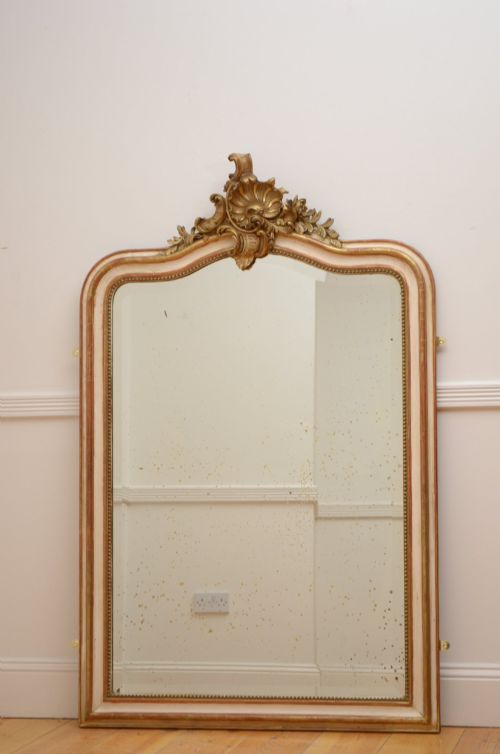
The dominant forms span arched tops, shaped frames, and rectangular formats often accompanied by decorative elements like rope twists, columns, or ornate rococo detailing. Beyond standard overmantel mirrors, the selection includes related wall and pier mirrors sharing identical construction methods.
Origins stretch from eighteenth-century George II pieces through to late Victorian and 1900 examples, capturing shifts in aesthetic preference from restrained neoclassical symmetry to exuberant revivalist curves.
How they were made
Makers built the structural core from carved wood, providing a sturdy foundation capable of supporting heavy glass panels and substantial dimensions. Craftsmen then applied multiple layers of gesso - a mixture of chalk and binder - directly onto the wooden substrate to build up decorative relief details and mouldings.
Finishing involved applying gold leaf or liquid gilding over the prepared gesso surface, sometimes combined with painted highlights to accentuate the carved depth. Mirror glass was then fitted into the rebate, secured behind the heavy ornamental framing.
Materials recorded across the inventory combine traditional carved wood, gesso, gold leaf, and original mirror glass.
What varies in quality
Quality reveals itself in the crispness and depth of the carved wood and gesso ornamentation, where sharper botanical or scroll motifs indicate superior artisan skill during manufacture. The handling of the gold leaf application also separates standard production from finer examples, influencing how light reflects across the moulded surfaces.
Proportion and scale play significant roles in distinguishing the upper tier, particularly in how harmoniously the arched or shaped top relates to the overall mirror body. Original glass retention and the integrity of the underlying wooden frame further define the standing of individual pieces.
The Gilded Gesso Overmantel Glossary
- Gesso
- A plaster-like preparation mixture consisting of a binder mixed with chalk, gypsum, or pigment. It is applied to carved wood to create a smooth surface for gilding and relief moulding.
- Giltwood
- Timber that has been coated with gold leaf or gilt paint. This material forms the primary visual and structural shell of the mirror frames.
- Overmantel
- A large mirror or painting specifically scaled to hang or rest on the mantel shelf above a fireplace. These objects anchor the hearth within period room schemes.
- Rococo
- An ornate artistic style characterised by asymmetry, scrollwork, and organic plant motifs. It appears frequently in nineteenth-century French and Victorian revival frames.
- Pier mirror
- A tall mirror designed to hang on the wall between two windows, or over a narrow pier table. Their construction closely mirrors that of larger overmantels.
Gilded Gesso Overmantel: Frequently Asked Questions
How do I hang a heavy overmantel safely?
Heavy mirrors require secure wall fixings anchored directly into structural masonry or substantial wall studs rather than relying solely on plasterboard.
Professional mirror installers use heavy-duty mirror plates or French cleats distributed across the weight-bearing points of the wooden frame.
Were these mirrors always meant for fireplaces?
While the overmantel designation specifically ties them to the space above a mantelpiece, many shared forms functioned interchangeably as large wall or leaner mirrors.
Their substantial scale allowed them to command empty wall spaces in grand reception rooms just as effectively as domestic hearths.
How do I clean gilded gesso safely?
Dusting should be performed gently using a soft, dry brush to avoid catching or lifting delicate areas of raised gesso and gold leaf.
Moisture and commercial cleaning chemicals must be kept away from the gilded surfaces entirely to prevent permanent damage to the historic finish.
How do I tell Victorian pieces from eighteenth-century ones?
Eighteenth-century examples often exhibit deeper hand-carved nuances and distinct construction joinery specific to periods like George II or Louis XV. Victorian pieces typically utilise heavier machine-assisted preparation with distinct revivalist stylistic cues.