
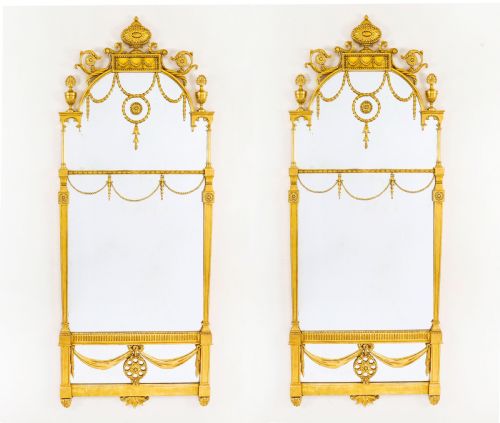


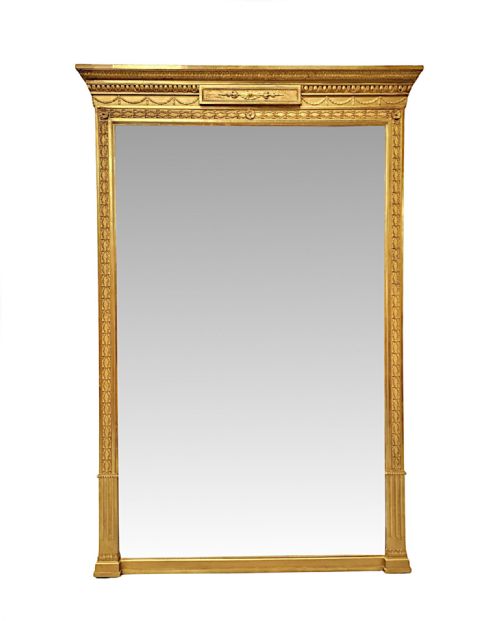
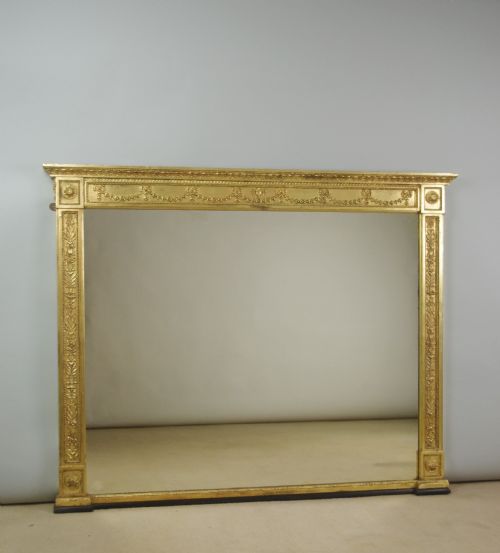


Adam Style Overmantel
These adam style overmantel mirrors bring neoclassical elegance to a room, offering classical symmetry and bright reflection above a fireplace.
Adam Style Overmantel
An adam style overmantel is a decorative mirror designed to sit directly above a mantelpiece, drawing on neoclassical design principles. These pieces appear frequently in Victorian, Edwardian, and Regency iterations, as well as nineteenth-century revivals.
The objects take various forms including large rectangular wall mirrors, tall hall mirrors, pier glasses, and oval overmantel mirrors. Most examples on this page date from the nineteenth century, including specific years such as 1870, 1880, 1890, and 1900.
Buyers seek these mirrors to anchor a chimney breast with period character. The revival pieces capture the restraint and balance of earlier neoclassical design while serving a practical domestic function.
How they were made
Maker's workshops relied heavily on giltwood and wood frames enriched with gesso and composition ornaments to create crisp neoclassical motifs. These moulded details were applied to wooden substrates before receiving layers of gilding and paint.
Mirrors utilised mirror glass and mirror plate for the reflective surface, often divided into panels. The combination of carved or moulded gesso and reflective plate defined the classic aesthetic of the style.
Listings feature periods ranging from Regency and Victorian through Edwardian, alongside nineteenth-century revival dates.
What varies in quality
Quality depends on the crispness of the gesso moulding and the depth of the gilding on the wood frame. Finer examples display sharp, well-defined neoclassical ornament rather than soft or blurred details.
The integrity of the mirror glass and the preservation of the original surface finish separate standard production from superior pieces. Original parcel gilt and paint surfaces maintain greater historical character.
The Adam Style Overmantel Glossary
- Giltwood
- Wood that has been coated with gold leaf or a gold-coloured metallic finish. This material provides the bright, reflective surface characteristic of formal period mirrors.
- Gesso
- A plaster-like mixture applied to wood frames to create a smooth surface for carving or moulding. It holds fine neoclassical relief details before gilding.
- Composition
- A moulded putty material used for repeating decorative ornaments on frames. It allowed makers to produce intricate classical motifs efficiently.
- Overmantel
- A large mirror or painting made specifically to hang above a fireplace mantel. These pieces relate directly in scale and proportion to the hearth below.
- Neoclassical
- A style reviving classical Roman and Greek forms, symmetry, and restraint. This aesthetic informs the urns, swags, and medallions seen on these frames.
Adam Style Overmantel: Frequently Asked Questions
Where should an overmantel hang?
These mirrors hang centrally above a fireplace mantelpiece to reflect light and balance the proportions of the hearth.
They also function effectively as tall wall mirrors or hall mirrors in principal rooms.
How do I date an adam style mirror?
Dating relies on construction materials, the formulation of the gesso, and the silvering technique of the mirror plate. Nineteenth-century revival pieces often combine Victorian or Edwardian framing methods with neoclassical decorative vocabulary.
Evidence from past listings shows dates spanning from the Regency period through the late nineteenth and early twentieth centuries.
Are oval and rectangular mirrors different?
Oval overmantels offer a softer, curved profile that breaks up straight architectural lines above a fireplace. Rectangular paneled mirrors emphasise verticality and formal neoclassical symmetry.
Both shapes appear frequently across Victorian and revival production.
What is the difference between giltwood and painted finishes?
Giltwood finishes use gold leaf over gesso to create a brilliant, light-reflecting frame suited to formal entertaining rooms. Parcel gilt and painted variations introduce contrasting tones to highlight specific architectural details.
Both finishes align with the classical decorative schemes of the period.