
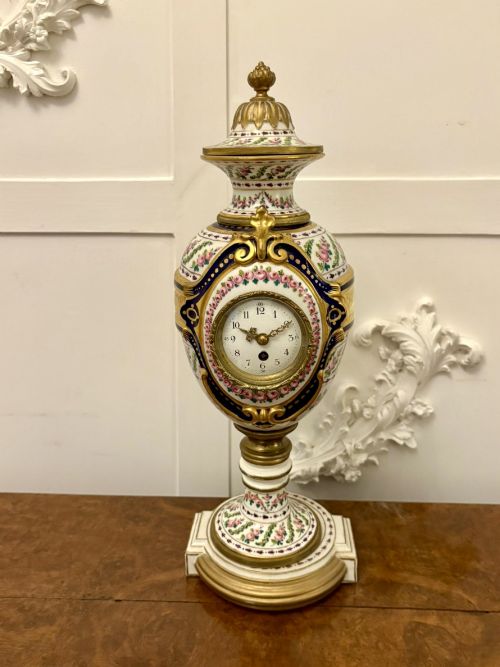
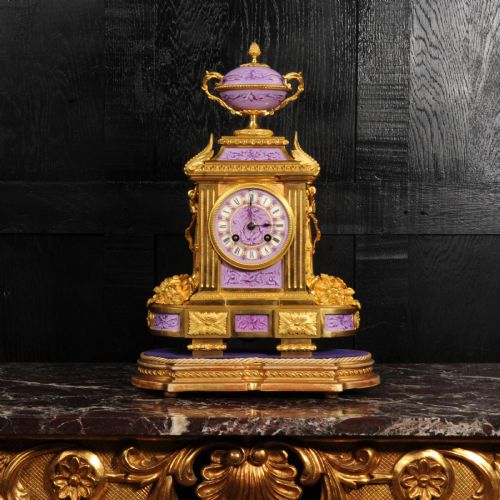
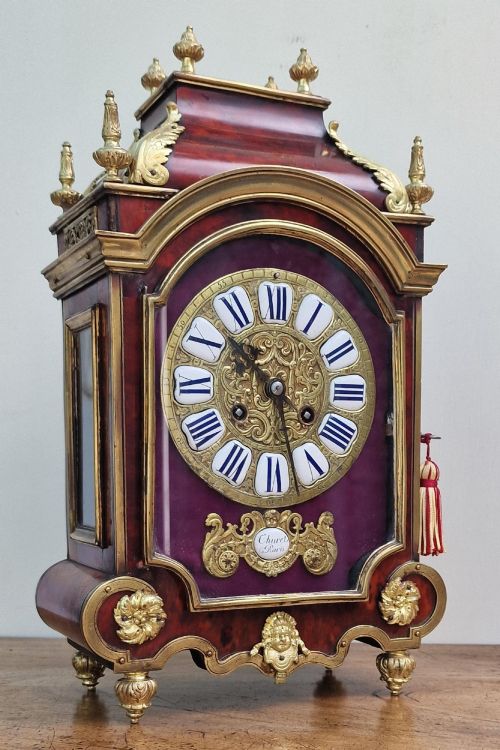
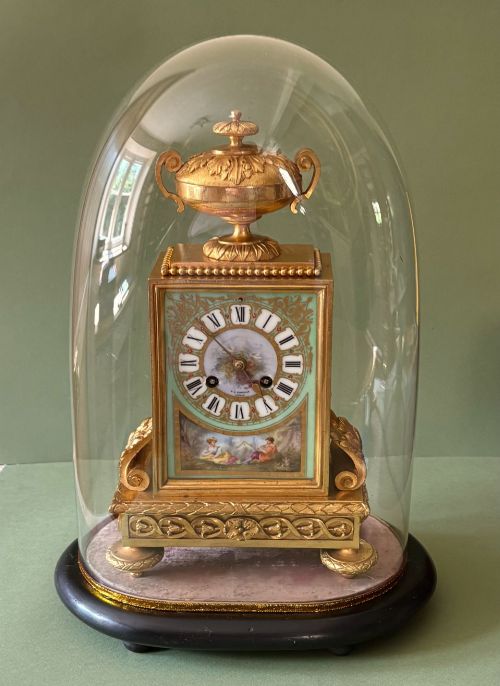
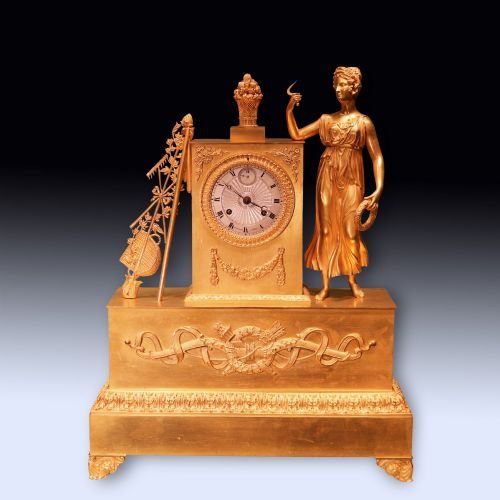

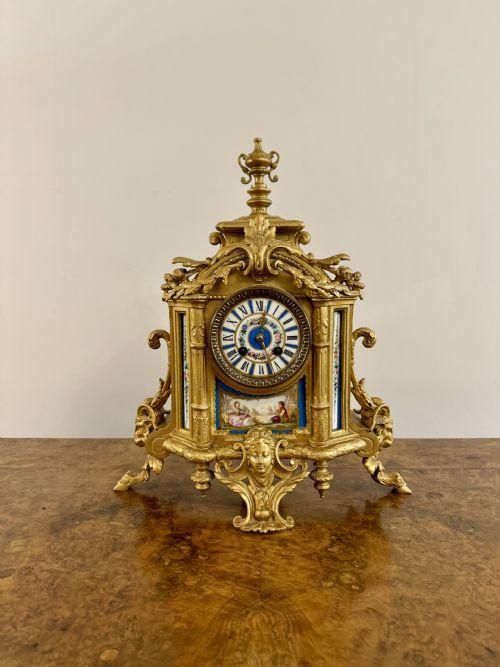

Gilded French Table Clock
A gilded french table clock brings nineteenth-century salon grandeur to a mantelpiece through heavy cast metal and intricate enamel dials.

Gilded French Table Clock
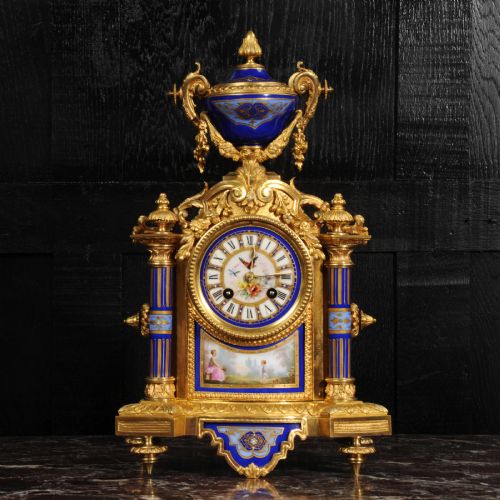
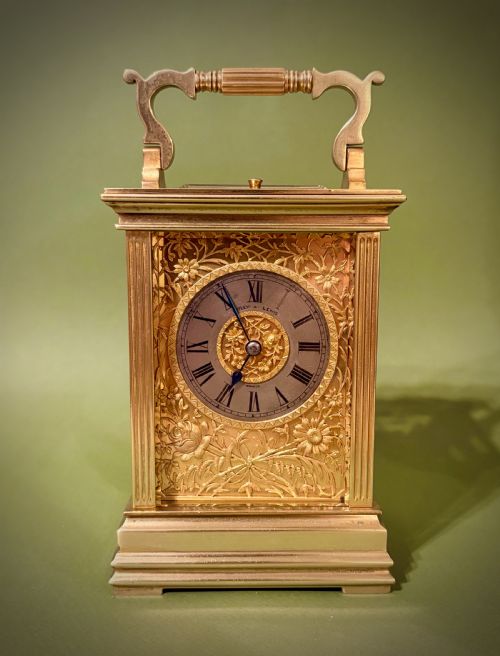
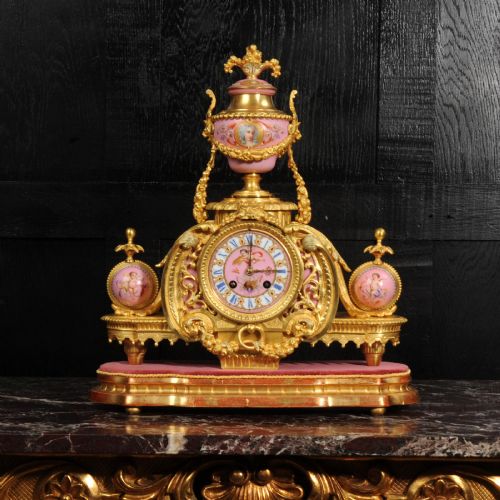
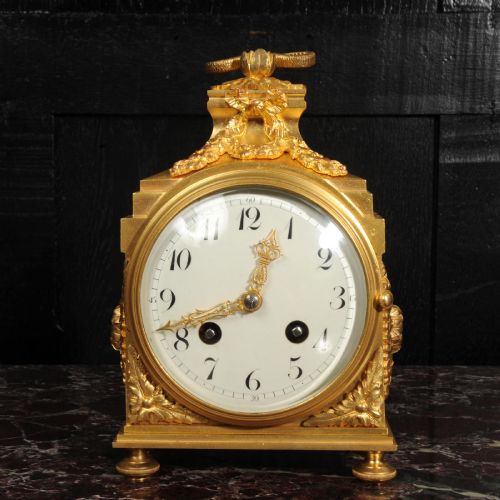
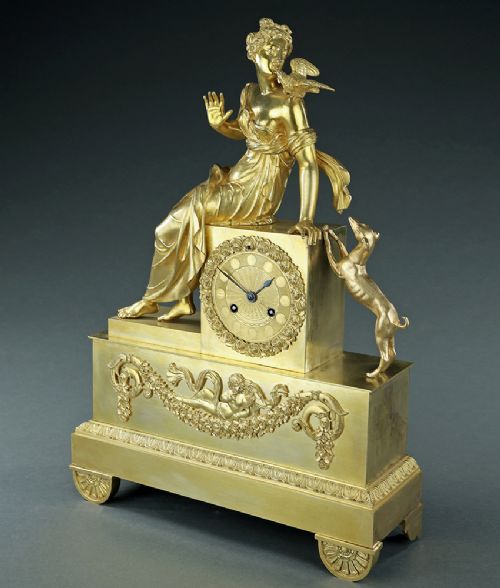
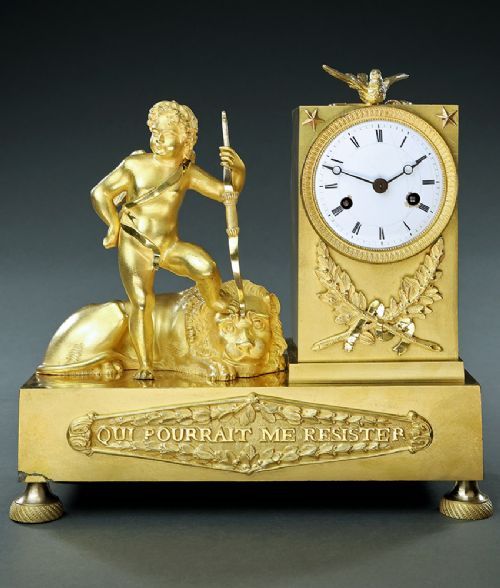
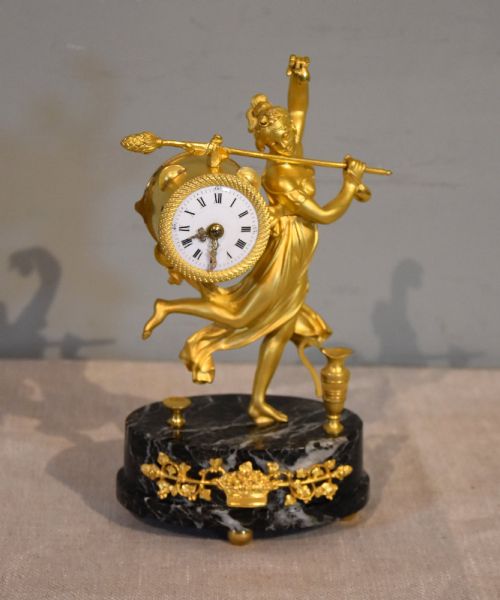
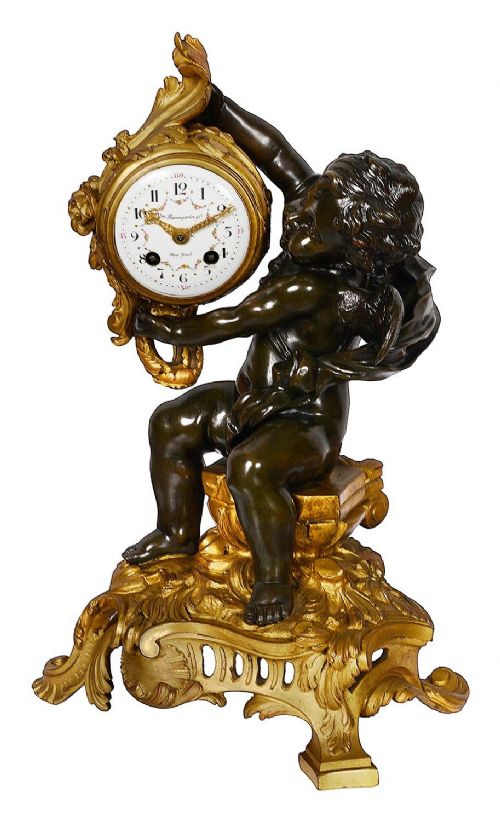
A gilded french table clock combines heavy metallic cases with intricate dial work, taking forms such as classical porticos, architectural mantel clocks, and portable carriage designs. These pieces originate primarily from nineteenth-century workshops, spanning periods from the Charles X era through to the late Victorian decades.
Buyers meet mantel clocks and four-glass bracket models most frequently on this page. They employ architectural or figurative bronze and marble housings to command attention in a room.
How They Were Made
Craftsmen built these housings utilising fire-gilded ormolu, solid bronze, and brass, often combining them with white marble, cut crystal, and tortoiseshell. The decorative elements frequently integrated hand-painted Sèvres porcelain panels and champlevé enamel work.
Mechanical movements inside utilised precision brass gears, escapements, and strike-repeat mechanisms housed securely within heavy cast metal chassis.
Listings feature nineteenth-century carriage clocks alongside large marble and ormolu mantel clocks.
What Varies in Quality
The standard of a gilded french table clock rests on the crispness of the bronze chasing and the depth of the fire-gilding. Finer examples display sharp relief work on figurative mounts rather than soft, mass-produced casting.
Movement sophistication also separates standard pieces from exceptional ones, marked by signed maker plates on the backplate and functional strike-repeat or eight-day gear trains.
Achille Brocot·Thuret·Canaillor of Paris·Le Roy·Japy Freres·Philippes Paris·Berger·Leroy Paris·Tiffany·PH Mourey
The Gilded French Table Clock Glossary
- Ormolu
- Finely ground gold-mercury amalgam applied to a bronze base. This technique produces a rich, durable golden surface seen on nineteenth-century French clock cases.
- Champlevé
- Enamelling technique where troughs are hollowed out of a metal surface and filled with vitreous paste before firing. It decorates the bezels and pillars of nineteenth-century table clocks.
- Portico clock
- Architectural clock style featuring a dial suspended between four supporting columns. These French pieces often utilise cut crystal or marble elements.
- Carriage clock
- Small, portable spring-driven timepiece designed for travel. They frequently feature glass panels and repeating strike mechanisms.
- Pendule d'Officier
- Military-style French table clock equipped with a carrying handle on top. They typically date from the nineteenth century.
Gilded French Table Clock: Frequently Asked Questions
How do I wind a french table clock?
Most nineteenth-century models utilise a small winding key inserted into arbors on the enamel dial. Turn the key gently until resistance signals the mainspring is fully wound.
Take care not to over-wind the movement, as this can strain the internal brass springs and disrupt the escapement balance.
What is an eight day movement?
An eight day movement requires winding approximately once a week to maintain continuous timekeeping. This mechanical system uses coiled mainsprings housed within brass barrels.
Such movements appear frequently in larger nineteenth-century mantel clocks and architectural marble cases.
How do I care for gilt bronze?
Gilt bronze surfaces require only gentle dusting with a soft, dry cloth to prevent dust accumulation. Avoid liquid cleaning solutions, as harsh chemicals can strip the historic ormolu finish.
Protect the metal from direct sunlight and excessive humidity to preserve the original gilding.