



Gold Ormolu Mantle Clock
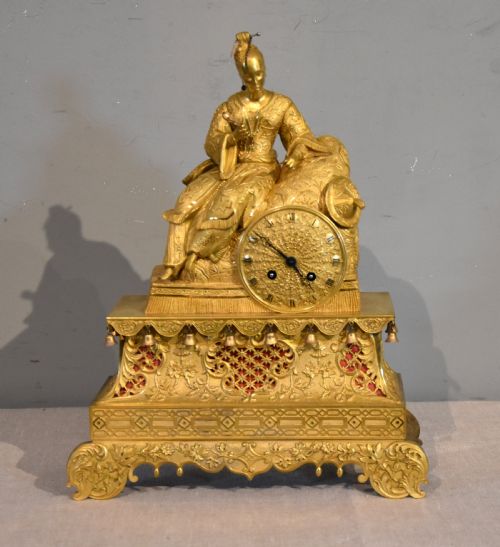
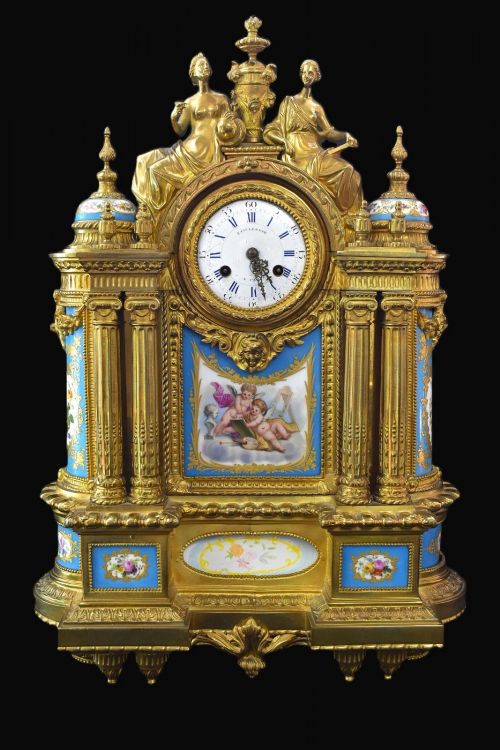
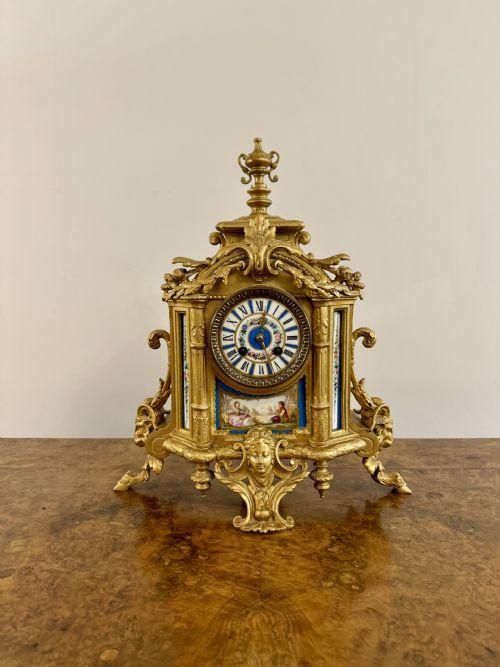
These gold ormolu mantle clock examples combine bright gilding and intricate cast metalwork to anchor a room.

Gold Ormolu Mantle Clock
A gold ormolu mantle clock brings ornamental French design into domestic spaces, appearing mostly in nineteenth-century Victorian forms. These objects range from standard mantel clocks to elaborate clock garnitures complete with matching candelabras.
Buyers encounter architectural portico clocks alongside figural designs featuring lions, cherubs, and doves. Styles draw heavily on French Rococo Revival, Louis XVI Revival, and Empire aesthetics.
How they were made
Makers cast the primary bodies in bronze, brass, or gilt metal before applying surface gilding known as ormolu. Artisans then integrated enamel dials, marble bases, and porcelain panels into the metal framework.
Many examples incorporate glass side panels, cut crystal elements, and intricate champleve enamel decoration. Movement construction relies on standard mechanical brass gear trains housed within drum heads or architectural cases.
Several clocks feature watchful bronze lions, sleepy cherubs, and metallic doves permanently perched above the dial.
What varies in quality
The crispness of the cast ornamentation separates superior models from simpler castings, particularly in figural details like cherubs and foliage. Deep, even mercury gilding retains its warmth better than worn or re-plated metal surfaces.
Signed movements by known makers and integrated porcelain plaques, such as Sevres inserts, elevate the standing of a piece. The presence of matching garniture sets or undamaged glass components also distinguishes higher-grade examples.
Etienne Lenoir·Japy Freres·Breguet·Leroy and Fils·Phillipe H Mourey
The Gold Ormolu Mantle Clock Glossary
- Ormolu
- Gilded bronze or metal created by applying a gold amalgam to a base metal. This technique produces a bright, durable golden finish characteristic of French decorative objects.
- Garniture
- A set of matching ornamental objects consisting of a central clock flanked by matching items like candelabras or urns. These sets coordinate decorative themes across a mantelpiece.
- Portico clock
- A clock featuring an architectural frame supported by four columns, often housing a suspended pendulum. This style gained popularity during the Empire and Charles X periods.
- Champleve
- An enamelling technique where troughs are dug into a metal surface and filled with vitreous enamel before firing. It creates colourful decorative patterns across the clock body.
- Cartel clock
- A wall-mounted clock enclosed in an ornate metal or bronze case. These pieces display elaborate scrolling designs typical of Rococo styling.
Gold Ormolu Mantle Clock: Frequently Asked Questions
How do I wind the clock?
Most mechanical movements require a specialised key inserted into small winding arbors on the enamel dial face. Turning the key tensions the internal springs that drive the time and strike trains.
Care must be taken not to overwind the springs, as this can damage the internal mechanism. Many Victorian models operate on an eight-day cycle requiring weekly attention.
What is a clock garniture?
A clock garniture consists of a central mantle clock accompanied by matching decorative pieces designed to sit together on a surface. These companion pieces frequently take the form of candelabras or urns utilising the same metalwork and porcelain.
Displaying the complete set creates a balanced decorative arrangement popular in nineteenth-century interiors. Individual components share identical stylistic motifs like cherubs or scrolling foliage.
How do I clean ormolu metal?
Ormolu surfaces require gentle dusting with a soft dry cloth to prevent the accumulation of dirt within recessed details. Liquid cleaners and abrasive polishes strip away the thin layer of historic gilding.
Professional restoration is recommended if tarnish obscures the underlying bronze or brass. Maintaining a stable indoor environment protects the delicate finish from moisture damage.
Where did these clocks originate?
The vast majority of these decorative timepieces originate from French workshops and Parisian clockmakers working during the nineteenth century. These items reflect broader European design revivals including Rococo, Empire, and Louis XVI styles.
Export markets in Britain eagerly acquired these imported French goods for domestic Victorian parlours. Consequently, many survive today within British collections.