



Gilded Frame Sporting Painting
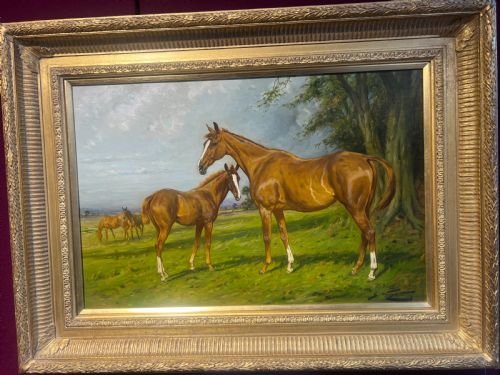
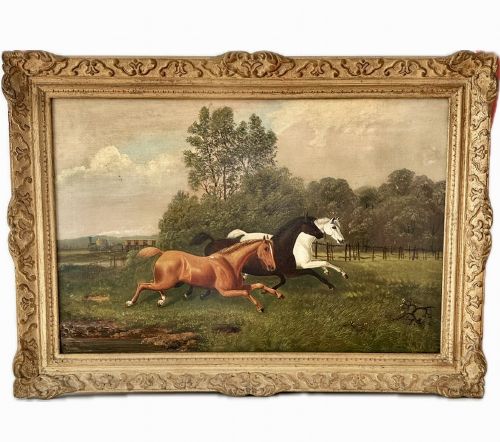
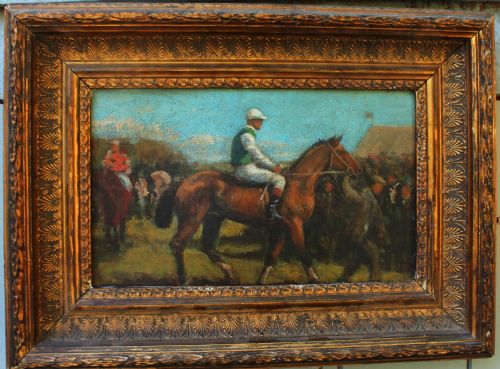
A gilded frame sporting painting captures the vigour of equestrian life, hounds on the scent and coaching scenes within brilliant moulded wood.
Gilded Frame Sporting Painting
A gilded frame sporting painting focuses predominantly on horses, hounds and rural pursuits rendered in oil paint or watercolour. Buyers encounter works stretching from the eighteenth century through the Victorian and Edwardian eras, capturing subjects like racehorses, hunting parties and coaching scenes.
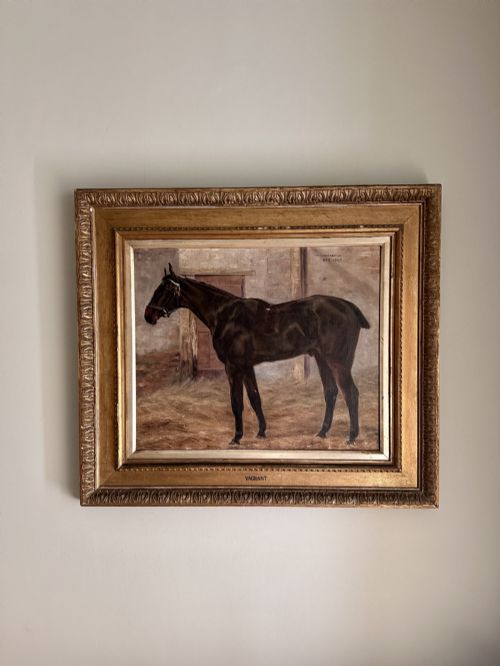
Most examples originate from the nineteenth century, executed in oil on canvas or board and housed in heavy gilded wood frames. The selection includes specific portraits of named horses such as Vagrant or Neil Gow, alongside broader studies of terriers, spaniels and rural landscapes.
Makers and artists range from established figures like George Wright and James Barenger to unsigned works created in the manner of Alfred Munnings. These pieces reflect a sustained British fascination with equestrianism, field sports and canine companionship.
Judging Quality
Quality rests upon the precision of anatomical rendering in horses and hounds, where superior pieces capture muscle tension, movement and individual character accurately. The handling of light, distance in the background landscape and the artist's ability to convey narrative action separate accomplished works from routine studio production.
The condition and craftsmanship of the gilded frame contribute significantly to the overall merit of the piece. Frames with original gilding, deep moulding and minimal restoration complement the artwork far better than flat or later replacement frames.
Several canvases capture loyal terriers standing guard over caged rats, proving that Victorian pets took their pest control duties very seriously indeed.
George Wright·Fred Fitzpatrick·Edward Priestley·Abraham Cooper·George E Sharpe·Francis Wheatley·Edwin Frederic Holt·Samuel Henry Alken·Isaac Cullin·Robert Cleminson·Charles Bilger Spalding·James Russell·James Barenger·John Charles Maggs·Godfrey Douglas Giles·Frank Dadd·Thomas Blinks
The Gilded Frame Sporting Painting Glossary
- Giltwood
- Wood that has been coated with thin gold leaf or gold paint. This technique provides the bright metallic finish characteristic of traditional picture frames.
- Oil on Canvas
- Pigment mixed with drying oils applied to a woven fabric stretched across a wooden support. It remains the most common medium for substantial nineteenth century works.
- Watercolour
- A paint consisting of spherical pigment suspended in a water-based solution applied to paper. It offers a lighter, more translucent finish often found in sporting sketches and studies.
- Eglomise
- A process of applying a design and gilding to the rear face of glass. This technique appears in specialised reproductions and decorative panels.
- Provenance
- The chronological record of ownership of a work of art. Documented history links a painting to specific estates, galleries or exhibitions.
Gilded Frame Sporting Painting: Frequently Asked Questions
What subjects appear in these paintings?
These works depict horses, racehorses, hunting dogs such as terriers and spaniels, coaching scenes and rural landscapes. Many capture specific animals or sporting events from the eighteenth to the early twentieth century.
Subjects often reflect the interests of country estates and rural sporting culture during the Victorian and Edwardian periods.
How do I identify the period of a frame?
Period frames usually feature hand-carved wooden construction with gesso moulding and genuine gold leaf rather than modern metallic paint. The weight of the timber and the style of the corner ornaments typically align with the era of the painting inside.
Original pairings where the frame and artwork share the same age are particularly sought after by collectors.
Are all pieces signed by the artist?
Many works bear signatures or initials from known painters, while others remain completely unsigned or are attributed to a particular circle or manner. Unsigned pieces often emerge from the same artistic traditions and periods as documented works.
Attributions are usually determined through stylistic comparison, brushwork technique and subject matter.
How should I care for an oil painting?
Keep paintings away from direct sunlight and dramatic shifts in temperature or humidity to protect both the canvas and the wooden frame. Dust the surface gently with a soft, dry brush without applying moisture or cleaning solutions.
Professional conservation should be sought if the canvas requires cleaning or if the giltwood frame shows signs of flaking.