





Antique Jockey Painting
An antique jockey painting captures the grit of the turf through oil on canvas, offering a direct window into historical racing.
Antique Jockey Painting
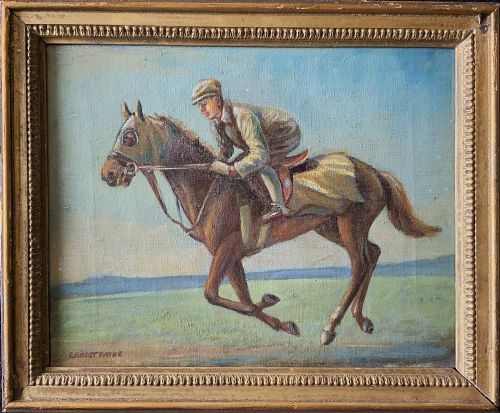
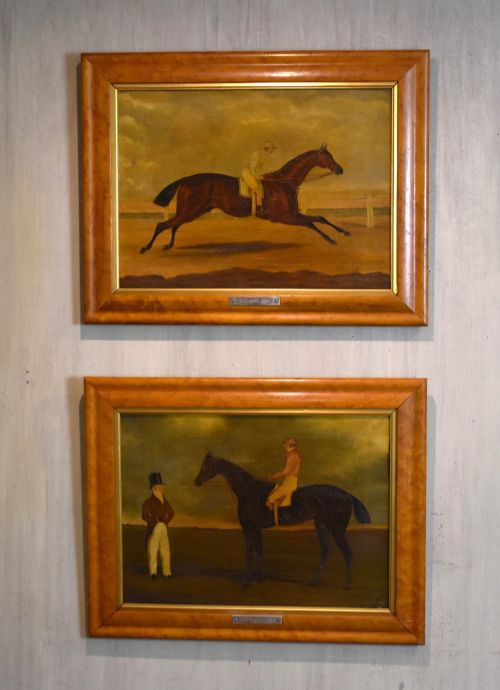
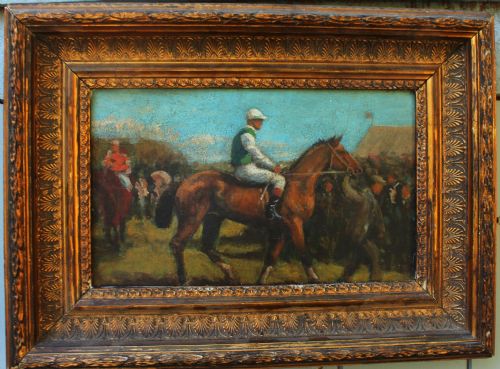
An antique jockey painting focuses on thoroughbred horses, riders, and racecourse scenes from the nineteenth and early twentieth centuries. These works frequently depict named champions, famous jockeys, and specific historic race meetings rendered in oil paint.
Most examples found here date from the Victorian period through the nineteen-thirties, spanning styles such as Victorian sporting art and British impressionism. Canvas and paper serve as the primary supports, often housed within original gilded wood frames.
Materials and methods
Painters applied oil paint to stretched canvas or paper to build these sporting scenes, working with layered pigments to capture the sheen of horse coats and the specific colours of racing silks. The handling ranges from tight academic realism to looser impressionistic brushwork.
Framing forms an integral part of the physical object, with period pieces generally set into moulded wood frames finished with surface gilding under glass for works on paper.
Antique Jockey Painting Retail Price Guide 2026
Typical asking prices for jockey painting among the pieces listed under this phrase on Sellingantiques today, from the lower quarter to the upper quarter. They describe what is for sale here now, not the wider market.
Several canvases immortalise champion horses with surprisingly intense facial expressions that rival the determination of their human jockeys.
Judging the work
Quality rests upon the artist's ability to render equine anatomy correctly and convey genuine movement rather than a stiff likeness. The best pieces capture the tension before the off or the stretch for the finish line with convincing perspective and accurate handling of light.
Provenance and subject matter elevate certain works, particularly those identifying specific winning horses, prominent jockeys, or named tracks like Newmarket and Kempton Park by recorded painters.
Ernest Payne·John Frederick Herring Snr·Alfred Munnings·Alfred Wheeler·John Atkinson·Isaac Cullin·John Parker Davis·Frank Giggs
The Antique Jockey Painting Glossary
- Oil paint
- A slow-drying medium consisting of pigments suspended in a drying oil, typically linseed, allowing for rich colour depth and subtle blending. It remains the standard pigment choice across nineteenth-century sporting canvases.
- Canvas
- A heavy woven fabric stretched across a wooden frame to serve as a sturdy support for oil paintings. It provides the standard textured ground for equestrian portraiture.
- Gilt
- A thin layer of gold leaf or gold paint applied to the surface of picture frames to provide a decorative metallic finish. This treatment enhances the visual weight of nineteenth-century presentations.
- Framed prints
- Reproductions of original artworks placed behind glass within a protective border and frame. These offer an accessible alternative to unique painted studies.
Antique Jockey Painting: Frequently Asked Questions
What subjects do these paintings show?
These works record thoroughbred racehorses, named jockeys, paddock scenes, and historic race meetings from the nineteenth and early twentieth centuries. They often document specific historical winners and notable events across British tracks.
Subjects range from intimate oil studies of single horses to wider depictions of fields at the starting post.
How do I date a sporting painting?
Dating relies on stylistic clues, framing materials, inscriptions, and artist signatures recorded on the canvas or reverse. Depictions of specific named horses or jockeys tied to historical race years provide a firm anchor.
Victorian and Edwardian works often display distinct framing profiles and pigment handling characteristic of their decade of production.
Are these works always oil on canvas?
While oil paint on canvas is the predominant medium for these sporting works, examples also appear on paper or within painted print formats. The support material generally reflects the intended finish of the artist.
Framing protection varies depending on whether the primary support is stretched canvas or delicate paper.
How should I display an antique painting?
Keep paintings away from direct sunlight and fluctuating heat sources to protect the oil pigments and wooden frames from cracking or warping. Stable indoor environments preserve the integrity of both the canvas and the original gilding.
Ensure wall fixings match the weight of the heavy timber frames typical of this period.