



Gilded Frame Marine Art
Gilded frame marine art brings the motion of nineteenth-century coastal life and towering sailing ships directly into a room.
Gilded Frame Marine Art
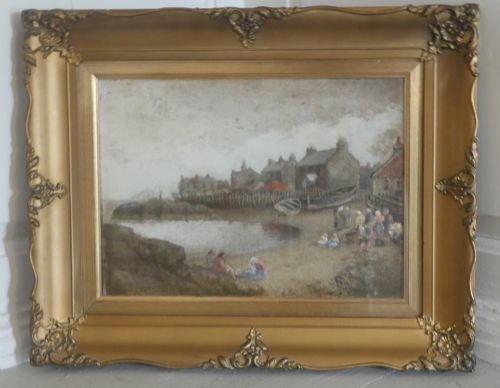
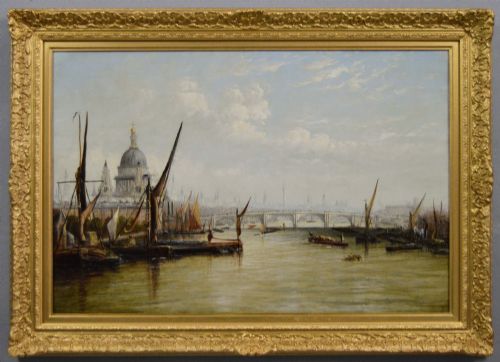
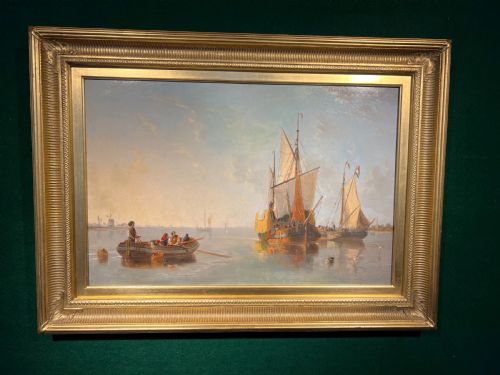
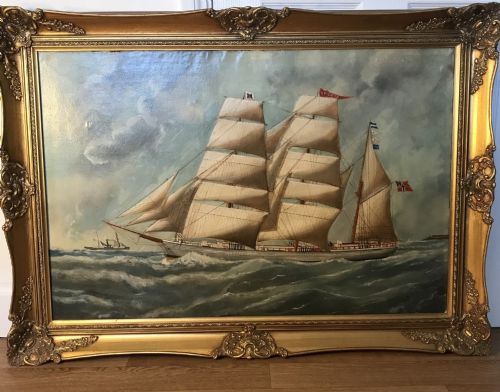
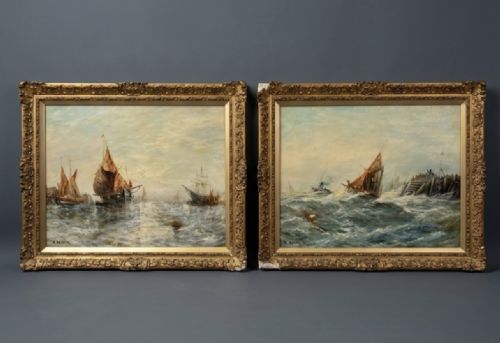
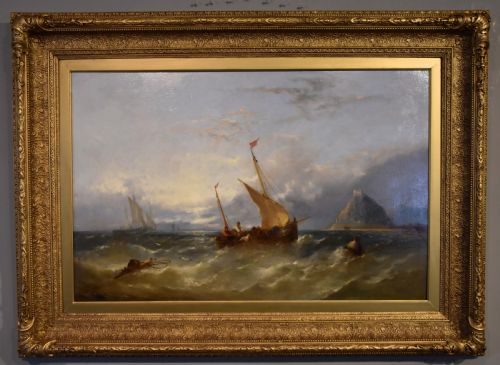
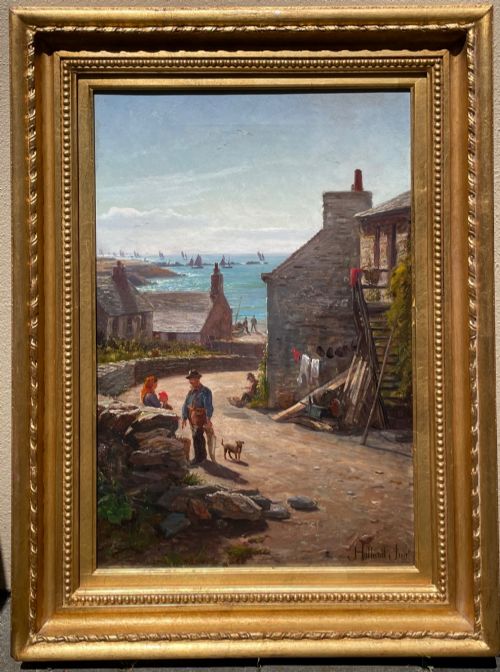
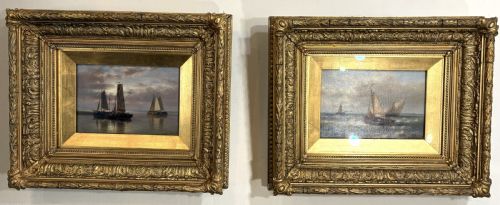
Gilded frame marine art captures maritime scenes, coastal villages, and heavy seas through nineteenth-century oil paintings and watercolours. These works portray sailing ships, harbour views, and coastal landscapes set within ornate wooden frames.
Buyers will encounter Victorian oil paintings on canvas and board alongside watercolours depicting British, Dutch, and Italian waters. The framing utilises traditional giltwood and gesso to complement the maritime subject matter.
How They Were Made
Artists painted primarily with oil on canvas or wood panels, though some works utilise watercolour on paper. Canvas supports received preparatory priming before oil paint was applied to render detailed rigging and water.
The decorative surrounds consist of wood frames finished with gesso and gilded surfaces. Guilders carved or moulded intricate details into the wood before applying gold leaf.
Several canvases manage to make a furious five-masted ship look remarkably polite about crashing through heavy seas.
What Varies in Quality
The skill of the brushwork defines the hierarchy of these paintings, particularly in the handling of turbulent water, atmospheric light, and rigging detail. Superior hands capture the movement of waves and the weight of canvas sails with notable precision.
The craftsmanship of the accompanying frame contributes significantly to the overall integrity of the piece. Hand-carved gesso ornament and intact original gilding elevate the presentation far beyond replacement mouldings.
John Wilson Carmichael·Abraham Hulk·Thomas Bush Hardy·James Webb·Daniel Sherrin
The Gilded Frame Marine Art Glossary
- Gesso
- A plaster mixture applied to wooden frames as a smooth base before gilding. This material allows artisans to carve intricate decorative patterns.
- Giltwood
- Timber coated with gold leaf or gold paint. It provides a reflective, ornate border that enhances the colours within the painting.
- Marine Art
- Paintings depicting ships, harbours, coastal views, and naval engagements. This genre flourished throughout the nineteenth century.
- Pierhead Painting
- A specific record of a named vessel entering or leaving a port, often commissioned by sea captains or shipowners. These works prioritise accurate nautical detail.
Gilded Frame Marine Art: Frequently Asked Questions
How do I identify a Victorian marine painting?
Victorian marine works typically display nineteenth-century sailing vessels, steamships, or coastal towns rendered in oil on canvas. The clothing of figures and the specific riggers of the ships often point directly to this era.
Examining the reverse of the canvas can reveal period framing techniques, artist signatures, or nineteenth-century labels that help confirm the date.
What is the difference between oil and watercolour marine art?
Oil paintings utilise heavy pigments on canvas or wood boards, allowing for rich textures and deep tones in stormy seas. Watercolours employ translucent washes on paper, offering a lighter and more luminous finish.
Watercolours require protective glass within their frames, whereas oil paintings remain exposed to the air.
How should I display gilded frame marine art at home?
These pieces require wall space away from direct sunlight and damp conditions to protect both the canvas and the delicate gold leaf. Proper hanging ensures the weight of the frame is supported securely by appropriate wall fixings.
Pairing the artwork with traditional lighting helps highlight the reflective qualities of the gilded woodwork.
Are the frames original to the paintings?
Many nineteenth-century paintings retain their contemporary giltwood frames, though some have been reframed over the generations. Original frames often show matching signs of age and wear consistent with the canvas.
Inspecting the rebate where the painting sits reveals whether the artwork has occupied that frame for a prolonged period.