

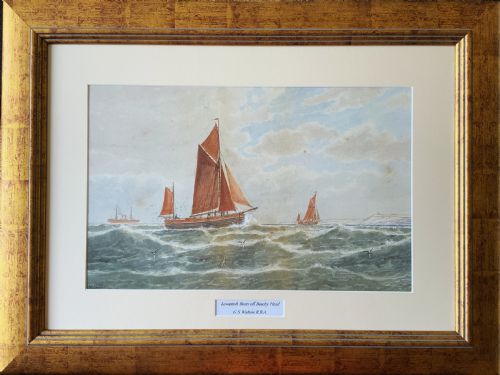
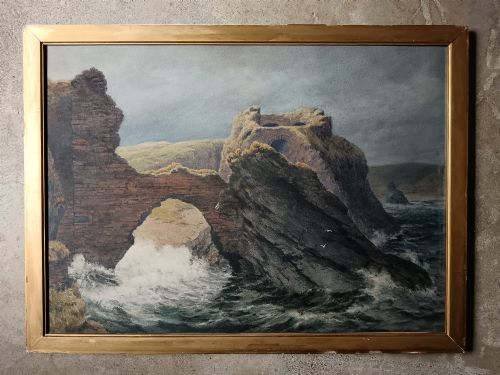

Gold Framed Ocean Painting
A gold framed ocean painting brings the movement of coastal tides and maritime history directly into a room.
Gold Framed Ocean Painting
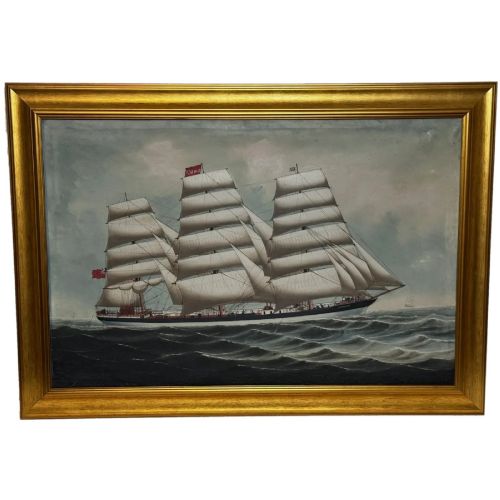
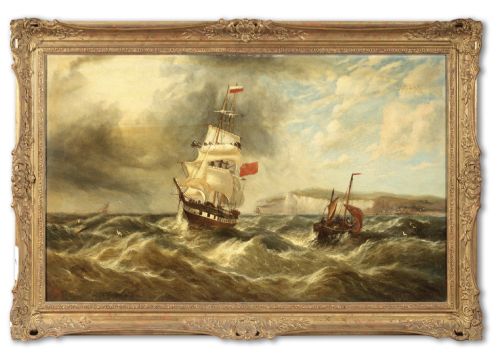
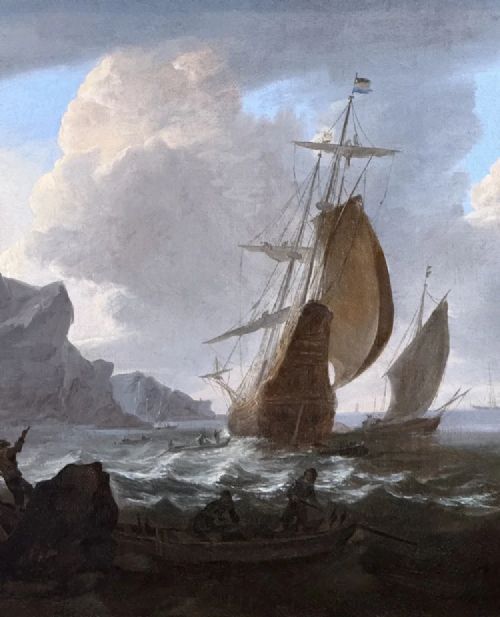
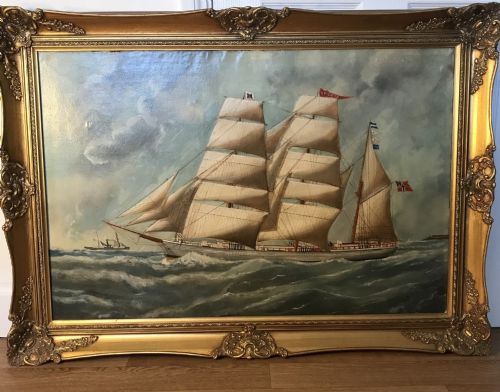
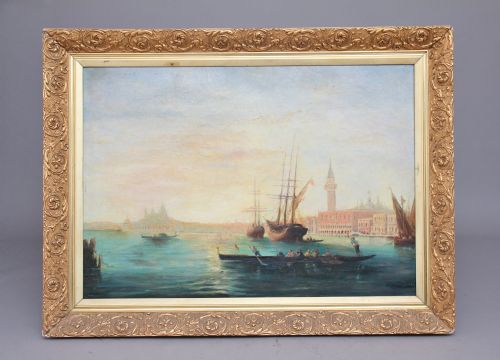
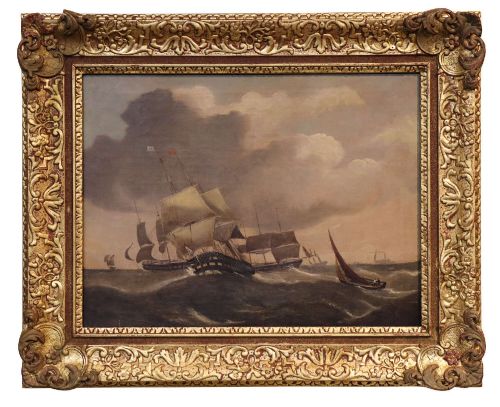
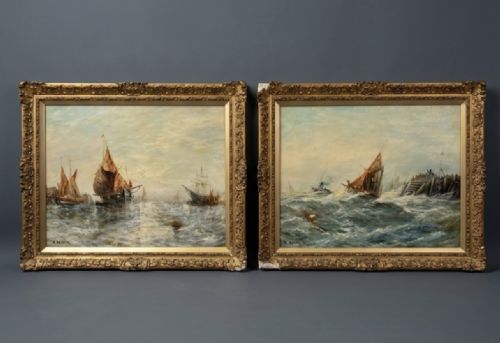
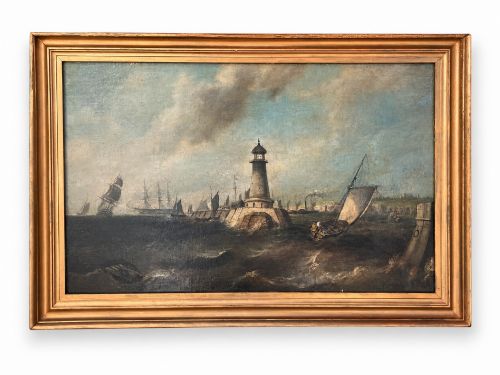
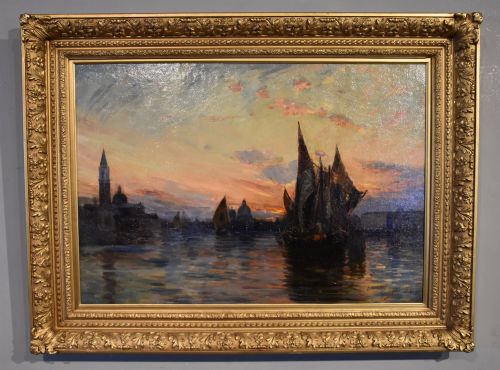
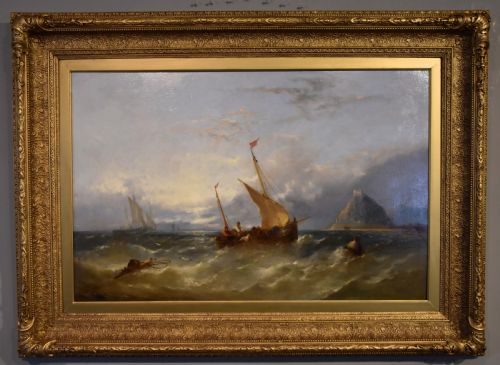
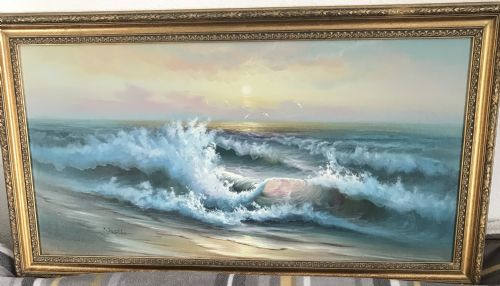
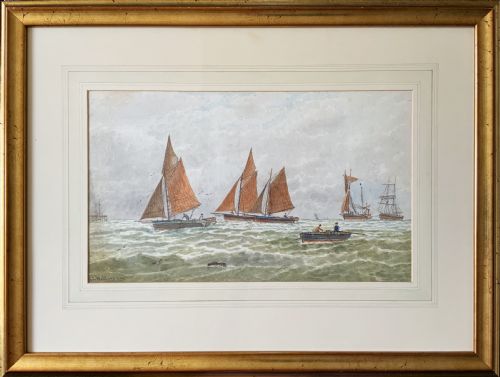
A gold framed ocean painting captures maritime subjects, coastal scenes, and shipping in heavy seas through traditional mediums. Buyers searching this phrase look for historic depictions of vessels, harbours, and shorelines enclosed in ornate or moulded surrounds.
The pieces on this page span the nineteenth century, the Edwardian era, and mid-twentieth century periods. Works range from detailed Victorian marine art and British impressionism to watercolour paintings and oil on canvas formats.
Common motifs include merchant ships, fishing boats off the coast, lighthouses, and dramatic shipwrecks. Most examples present traditional British, European, or Australian coastal views framed in gilt wood or gesso.
Materials and construction
Painters applied oil on canvas, oil on board, or watercolours onto paper to build these coastal compositions. Brushwork captures the texture of waves, wind, and sky, utilising pigment layers that convey natural light.
The enclosing frames combine wood foundations with gesso moulding and gold leaf applications. Artisans carved or cast surface ornamentation to complement the maritime subject matter within.
Several Victorian captains of canvas evidently possessed an unshakeable optimism regarding the weather encountered by small wooden boats.
Distinctions in quality
Execution of maritime detail separates works, particularly in how accurately rigging, hull construction, and water movement are rendered. Skilled hands balance atmospheric lighting with topographical or nautical precision.
Frame craftsmanship influences overall integrity, where crisp moulding detail and well-preserved gold leaf retain their original character. The harmony between the painting and its gilt surround reflects the consideration given by contemporary makers.
Reginald Arthur Borstel·William Banks Fortescue·John Rose Miles·Bonaventura Peeters·Thomas Hodgson Liddell·William Henry Williamson·George Stanfield Walters·John Moxon·Charles Napier Hemy·Gustave De Bréanski·Daniel Sherrin·Abraham Hulk Snr·Charles Sim Mottram·Stephen J. Renard·Hendrik Willebrord Jansen·John Bell·Roger de la Corbiere·Claude Thomas Stanfield Moore·George Henry Knight·Sir David Murray
The Gold Framed Ocean Painting Glossary
- Gilt wood
- Wood coated with gold leaf or metallic paint to create a luminous finish. This material forms the primary structure of many traditional picture frames.
- Gesso
- A plaster-like mixture applied to wooden frames before gilding. It provides a smooth surface for intricate mouldings and decorative details.
- Marine art
- Artistic representation of the sea, ships, and coastal environments. This genre encompasses historical shipping scenes, naval engagements, and coastal landscapes.
- Oil on canvas
- Pigment suspended in drying oil applied to a stretched fabric support. It allows for rich colour blending and textured brushwork suitable for turbulent seas.
Gold Framed Ocean Painting: Frequently Asked Questions
How do I date a maritime oil painting?
Dating relies on stylistic evidence, artist signatures, and the construction methods of both the canvas and the frame. Maritime scenes often depict specific vessel types or naval architecture characteristic of particular decades.
Examination of the stretcher bars, canvas weave, and pigments provides further chronological context. Framing styles contemporary to the artwork also help narrow down the period of creation.
What is the difference between oils and watercolours here?
Oil paintings utilise pigment bound in drying oil on canvas or board, allowing for deep colour saturation and visible brush texture. Watercolours use water-soluble pigments on paper, producing lighter, translucent effects well suited to coastal light.
Oils generally require a protective frame with glass depending on the era, whereas watercolours must be glazed to prevent environmental damage to the paper. Both mediums capture the movement of waves and skies through distinct technical approaches.
Where should I hang a coastal artwork?
These works suit spaces with stable temperature and humidity away from direct sunlight to protect pigments and paper supports. Wall placement benefits from eye-level positioning where the detail of the waves and rigging can be observed.
Matching the scale of the painting to the surrounding wall space ensures proper visual balance. Consideration of the gilt frame finish helps coordinate the piece with existing room decor.
How do I care for antique gilt frames?
Maintenance involves gentle dusting with a soft, dry brush to prevent particulate buildup on the gesso and gold leaf. Moisture and chemical cleaners should be avoided to protect the delicate metallic surfaces.
Handling the frame requires holding the outer edges rather than decorative protrusions to prevent structural stress. Environmental stability protects both the wooden substrate and the gesso ornamentation over time.