




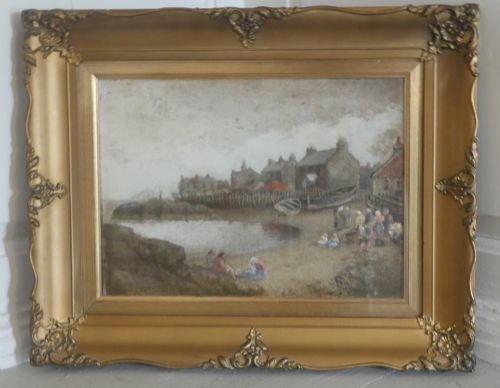

Framed Marine Art Painting
When you search for framed marine art painting, you are looking at centuries of maritime history captured on canvas, paper, and panel.
Framed Marine Art Painting
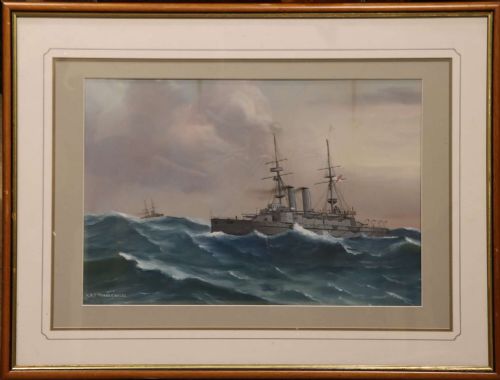
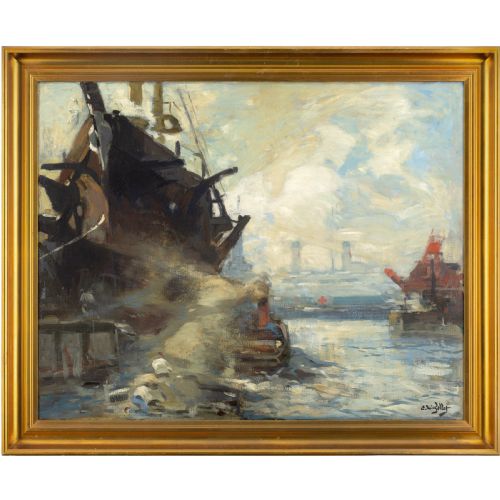
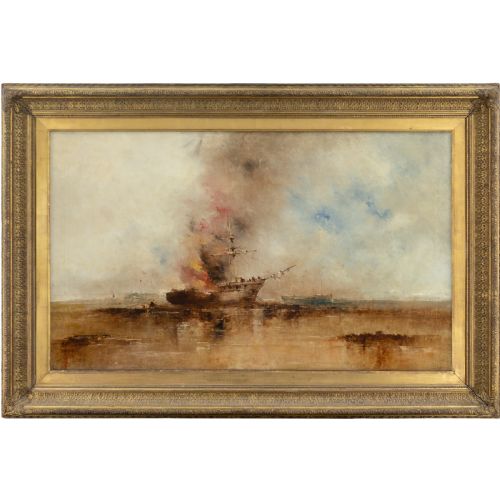
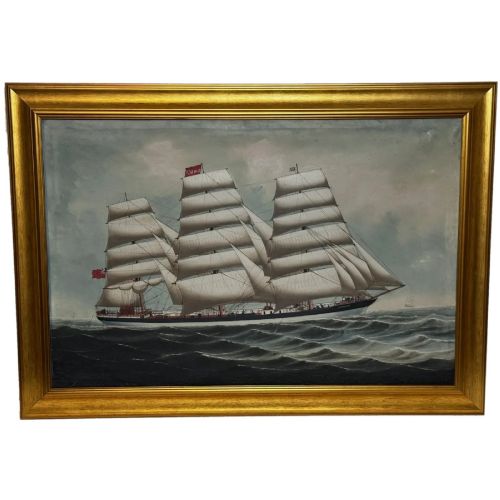
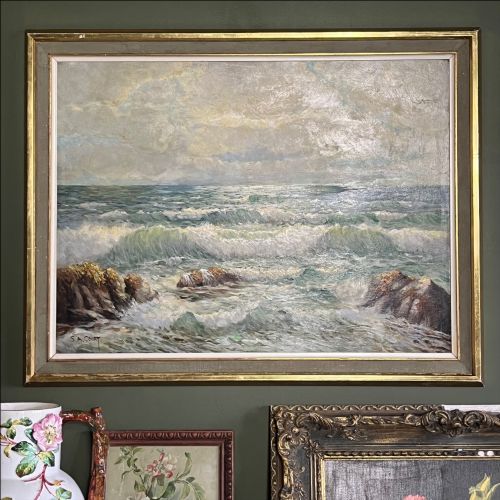
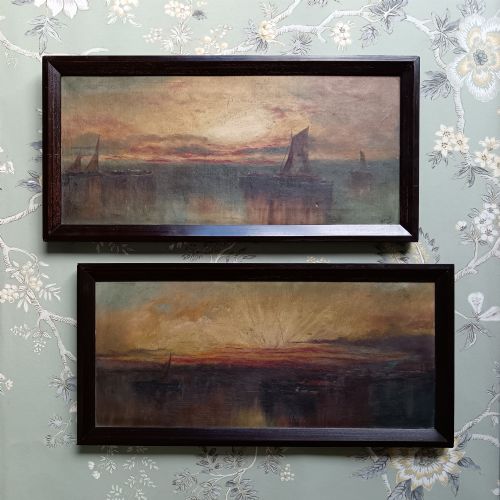
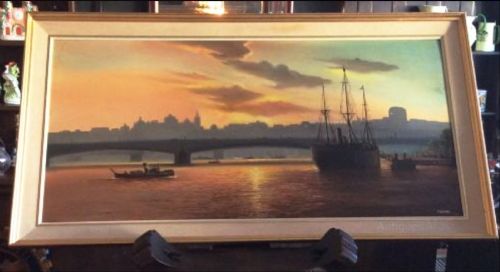
A framed marine art painting captures vessels, coastal harbours, and open waters across the nineteenth and twentieth centuries. These works range from calm river scenes on the Thames to dramatic depictions of naval battles and ships in rough gales.
You will most commonly encounter Victorian and Edwardian examples on this page, alongside mid-twentieth-century interpretations. They appear as oil paintings on canvas or board, alongside delicate watercolours on paper.
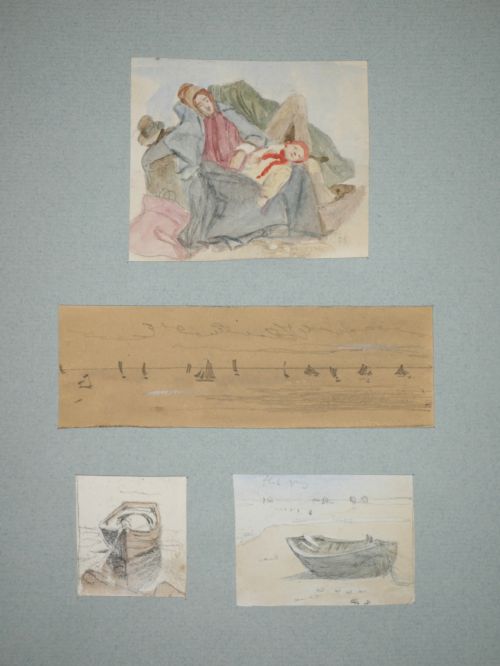
The subjects extend from local fishing boats resting on British beaches to international port views and specific historical vessels. Each piece places the viewer directly onto the deck or shoreline of a bygone maritime era.
How they were made
Artists typically applied oil paint to stretched canvas, wooden panels, or heavy paper, building depth through layered brushwork and subtle tonal shifts. Watercolour works on paper relied on transparent washes to capture the changing light of coastal skies and restless seas.
Protective wooden frames, frequently finished with gilt moulding and glass where appropriate, completed the presentation of these maritime works. The craftsmanship of the period ensured the paintings survived decades of changing domestic environments.
Several artists clearly braved rough gales just to capture the exact shade of grey a North Sea wave turns.
What varies in quality
The skill in rendering water movement and atmospheric light separates standard topographical records from masterful maritime compositions. A superior painting conveys the weight of a vessel and the specific turbulence of a coastal storm with absolute conviction.
The handling of maritime architecture, such as rigging and hull construction, reveals the artist's firsthand familiarity with ships at sea. Original period framing also contributes significantly to the integrity of the piece.
Eugène-Louis Gillot·William McAlpine·Charles Edward Dixon·Frank Watson Wood·Bernard Gribble·Bonaventura Peeters
The Framed Marine Art Painting Glossary
- Gouache
- An opaque watercolour medium that allows artists to build rich highlights and solid areas of colour against paper or board. It is frequently seen in detailed maritime sketches.
- Panel
- A rigid wooden support used by artists instead of canvas, often yielding a smooth surface that preserves fine brushwork in nineteenth-century marine portraits.
- Seascape
- A work of fine art that depicts the sea, coastal views, or ships navigating open waters. This term forms the core genre of the works listed here.
- En plein air
- The practice of painting outdoors to capture direct natural light and atmospheric conditions on the coast. Painters utilised this method to record immediate visual truths.
Framed Marine Art Painting: Frequently Asked Questions
How do I identify the period of a marine painting?
Examine the riggings and types of vessels depicted, as steamships, galleons, and merchant vessels each belong to distinct maritime eras. Pigment analysis and framing styles further help anchor the work to specific decades.
Look closely at the artist's signature and any inscriptions on the reverse of the canvas or panel. Historical records often match these details to active exhibition dates.
Where should I hang a framed marine painting?
Choose a wall with stable ambient light, avoiding direct, harsh sunlight that can fade watercolours and oil pigments over time. Rooms with moderate humidity levels help preserve both the wooden frames and the canvas supports.
Allow the scale of the painting to dictate its placement, giving larger canvases room to breathe in open living spaces. Smaller watercolours benefit from intimate eye-level positioning.
Did artists paint these scenes from life?
Many marine artists worked from preliminary sketches made directly on the shoreline or aboard ships during voyages. They completed the final canvases in their studios using these observational studies for accurate detail.
Some painters specialised in historical naval engagements, relying on written accounts and official records to reconstruct past battles with precision.
What is the difference between an oil and a watercolour marine painting?
Oil paintings utilise slow-drying pigments suspended in medium, allowing for rich textures, thick impasto waves, and deep atmospheric skies. They are typically stretched on canvas or mounted on wooden boards.
Watercolours employ water-soluble pigments on paper, offering a luminous, transparent quality that excels at capturing fleeting coastal light. These works require protective glass framing.