


Gilded Frame Landscape Pair
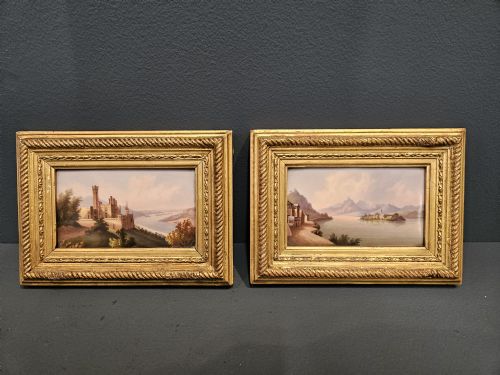
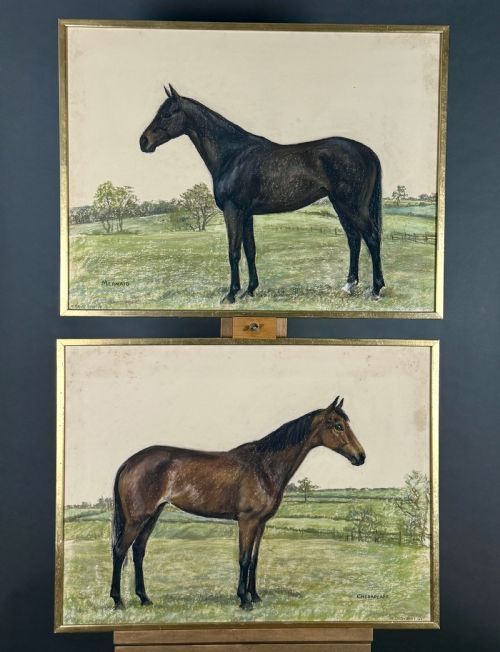
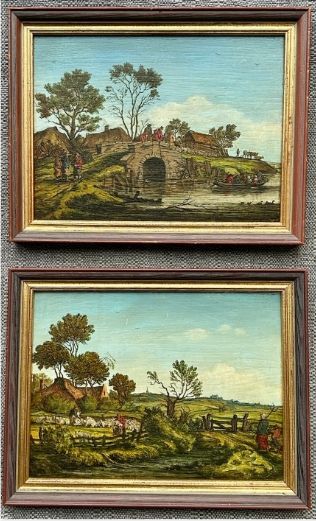
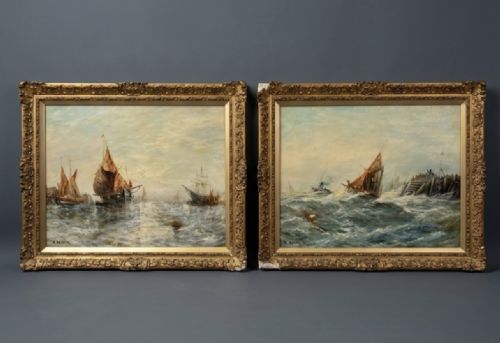
When you search for a gilded frame landscape pair, you are looking at matched sets of painted scenery enclosed in ornate metallic surrounds.
Gilded Frame Landscape Pair
A gilded frame landscape pair consists of two complementary pictures depicting natural scenery, balanced for symmetry and display. These works capture rivers, mountains, coastal views, and rural scenes within matching protective surrounds.
The pieces appearing on this page originate predominantly from the nineteenth century, alongside eighteenth-century compositions and later Edwardian examples. They employ media such as oil paint on canvas, wood panels, and board, as well as watercolour on paper.
Makers and artists range from named academic painters to regional watercolourists, often producing companion pieces designed to hang together. The subjects stretch from domestic river valleys to continental ruins and alpine castles.
Materials and Construction
Painters worked primarily with oil or watercolour pigments applied to prepared canvas, seasoned wood panels, stout board, or heavy paper sheets. Oil paint allowed for rich impasto and deep tonal blending, whereas watercolour required rapid, translucent washes on paper.
The supporting frames are constructed from carved wood, frequently layered with gesso and coated in gold leaf or metallic gilt finish. These surrounds protected the edges of the picture substrate while providing the visual weight necessary for formal interior display.
Geographical subjects range widely from local British rivers and Yorkshire towns to Bavarian castles and the Bay of Naples.
Evaluating Quality and Execution
Quality rests upon the confidence of the brushwork, the accuracy of perspective, and the handling of atmospheric light within the scene. Master practitioners demonstrate precise control over fine details such as foliage, water reflections, and architectural elements.
The preservation of both the artwork and its original gilded housing dictates overall desirability. Surviving frames retain their crisp moulding and original surface gilding without excessive over-painting or structural loss.
John Frederick Herring Jnr·Thomas Bush Hardy·Giovanni Paolo Panini·Franz van Severdonck·George Dodgson Callow
The Gilded Frame Landscape Pair Glossary
- Gilt wood
- Carved timber treated with gold leaf or metallic powder to create a bright, reflective golden surface. This technique provides durable ornamentation for picture surrounds.
- Oil paint
- Pigment suspended in a drying oil, usually linseed, allowing for slow blending and rich colour saturation. It remains the dominant medium for nineteenth-century canvas and panel works.
- Watercolour
- Paint consisting of water-soluble pigments applied in translucent washes to paper. It creates luminous, light-reflecting landscape imagery.
- Diptych
- A pair of painted panels or sheets designed to be viewed together as a single conceptual unit. The format ensures thematic and stylistic continuity.
- Board
- A rigid flat substrate, often wood or compressed paper pulp, used as a sturdy base for direct painting. It provides a stable alternative to stretched canvas.
Gilded Frame Landscape Pair: Frequently Asked Questions
How should I hang a landscape pair?
Companion pictures look best hung at eye level with a narrow, even gap between them to maintain their visual unity as a set. Aligning the top edges ensures the paired compositions read harmoniously on the wall.
Keep them away from direct sunlight and sudden temperature shifts to protect both the delicate pigments and the fragile gilded wood surrounds.
What subjects do these pairs show?
The subjects range widely across rural countryside, mountain streams, maritime harbours, and architectural ruins. Many capture specific British rivers, coastal shipping, or continental scenes from the nineteenth century.
Artists frequently paired morning and evening views, or contrasting summer and winter weather, to create a balanced narrative across the two canvases.
Are watercolours framed differently from oils?
Watercolour paintings on paper require glass protection and acid-free mounts to prevent atmospheric moisture and dust from damaging the pigments. Oil paintings on canvas or wood panels remain unglazed to let the textured surface catch the light directly.
Both mediums, however, share the heavy gilded wooden surrounds characteristic of nineteenth-century presentation.
How do I identify the period?
Dating relies on stylistic clues in the brushwork, the subjects depicted, and the construction methods of the supporting frame. Nineteenth-century works often display romantic or realist tendencies, while earlier pieces favour classical ruins and formal composition.
Backboards, old labels, and handwritten inscriptions on the reverse frequently provide additional clues regarding the artist and creation date.