
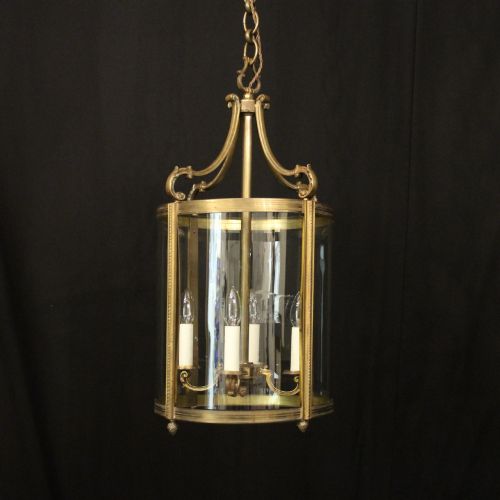
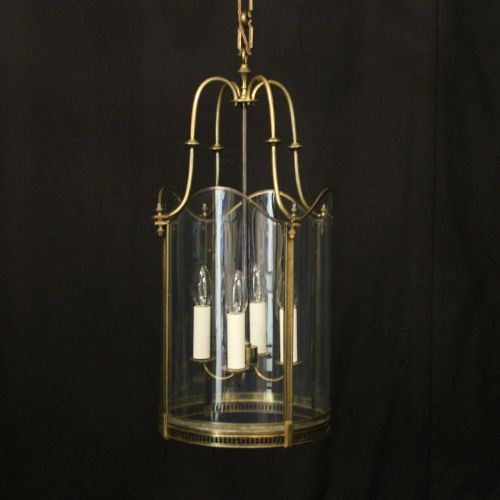
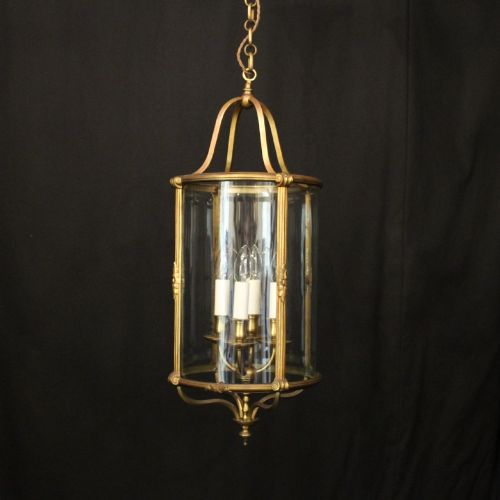
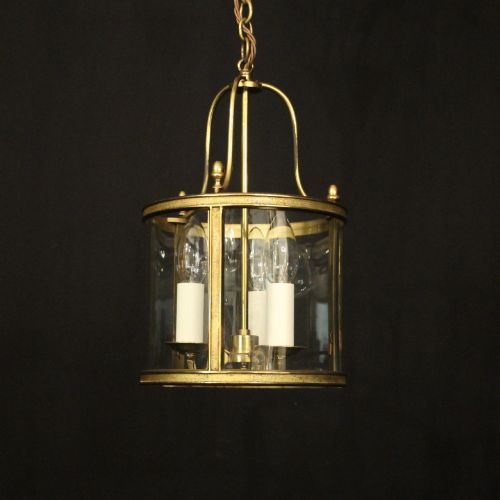
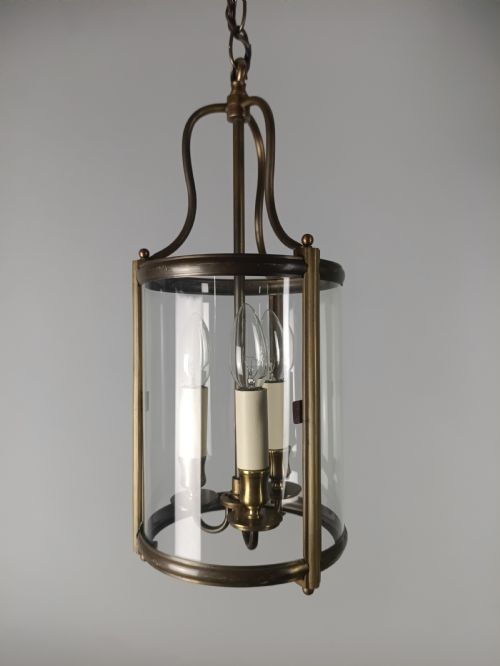
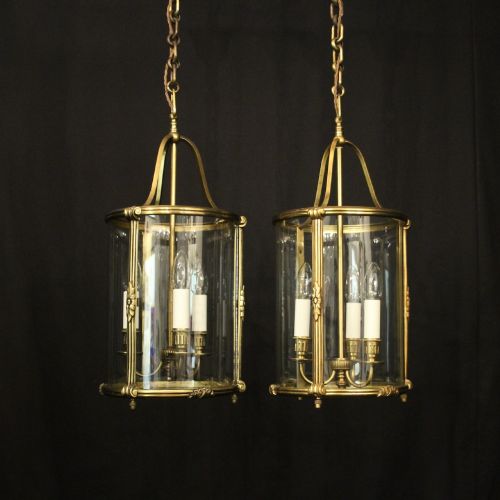
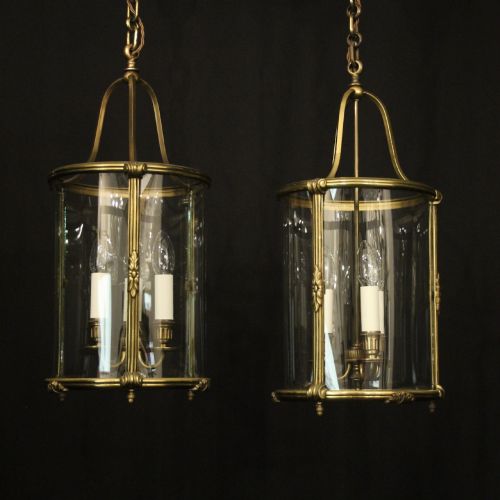
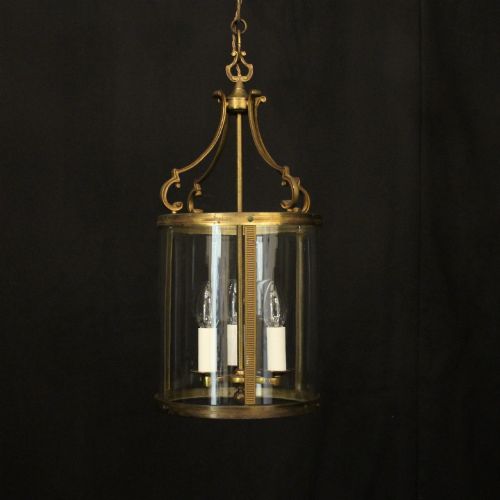
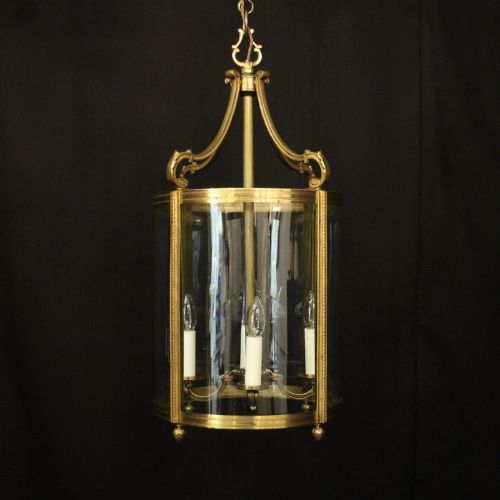


Gilded Foyer Lantern
A gilded foyer lantern brings immediate grandeur to an entrance hall, offering warmth and historic character through polished metal and glass.
Gilded Foyer Lantern
When you search for a gilded foyer lantern, you are looking at overhead hanging lighting designed specifically for entrance spaces, corridors, and stairwells. These pieces serve as primary illumination while establishing an ornate visual statement the moment guests step inside.
The versions you are most likely to meet on this page originate predominantly from French workshops spanning the nineteenth and early twentieth centuries. They appear in forms such as hall lanterns, pendant lights, and ceiling lights, often drawing upon classical and revival design vocabularies.
Makers drew inspiration from French Neoclassical, Louis XV, Louis XVI, and Rococo styles, alongside occasional English interpretations. These designs incorporate decorative cast frames, curved glazing, and multiple internal candle-style light fittings.
How they were made
The construction of these lanterns relies heavily on cast bronze or brass frameworks that receive a rich application of surface gilding. Metalworkers shaped the structural mounts and decorative elements through casting and chasing before applying gold leaf or gilt finishes.
Panels of glass, including convex and bevelled panes, were cut and fitted precisely into the metal armature to enclose the light source. Skilled artisans secured these glass elements within rebated frames to protect the internal candles or electrical fittings.
Period origins span from the mid-nineteenth century through the art deco era of the 1930s.
What varies in quality
Quality in these lanterns is determined by the crispness of the cast metal ornamentation and the weight of the bronze or brass used in the frame. Finer examples display deeply chased foliage, scrolls, and neoclassical motifs that retain their sharpness beneath the gilt.
The type and condition of the glazing also distinguish finer pieces, particularly where heavy convex or bevelled glass panels are custom-fit to curved metal frames. Original gilding patination and the presence of matched pairs further elevate the stature of a lantern.
The Gilded Foyer Lantern Glossary
- Convex glass
- Curved glass panels that project outward to soften and diffuse light while adding volume to the lantern profile.
- Bevelled glass
- Glass panes with edges cut and polished at an angle, catching light to create subtle prismatic refractions.
- Gilt bronze
- Bronze metal treated with a thin layer of gold or gold leaf to achieve a lustrous, durable metallic finish.
- Hall lantern
- An overhead lighting fixture specifically proportioned for narrow circulation spaces, vestibules, and entrance halls.
- Rococo revival
- A nineteenth-century design movement favouring asymmetrical scrollwork, naturalistic motifs, and exuberant ornamentation.
Gilded Foyer Lantern: Frequently Asked Questions
How high should I hang my lantern?
Hang the fixture to ensure adequate clearance beneath for doors to open fully and people to pass comfortably.
In standard hallways, the bottom of the lantern typically sits at least seven feet above the finished floor level.
Were these originally wired for electricity?
Most pieces from the nineteenth and early twentieth centuries originally burned candles or used oil before being converted.
Modern internal wiring is commonly fitted inside the historic frames to accommodate standard electrical bulbs safely.
How do I clean gilded bronze safely?
Dust the metal gently using a soft, dry brush or microfibre cloth to prevent accumulation of grime.
Avoid abrasive cleaners, chemical solvents, or excessive moisture that can wear away the historic gilt surface.
How do I identify French versus English lanterns?
French lanterns frequently display exuberant cast bronze mounts influenced by Louis styles and Neoclassical ornamentation.
English pieces often present slightly more restrained proportions and distinct regional casting characteristics.