


Gilded Entry Hall Table
A gilded entry hall table brings immediate architectural presence and surface utility to an interior.
Gilded Entry Hall Table
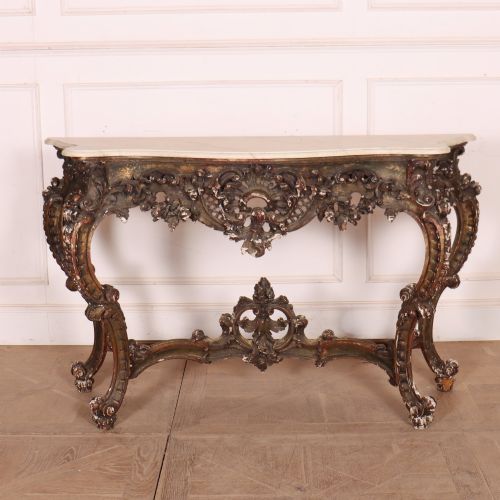
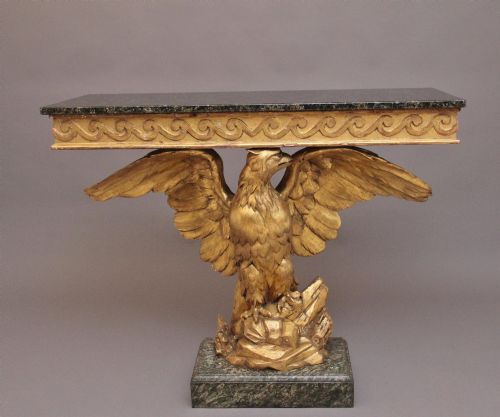
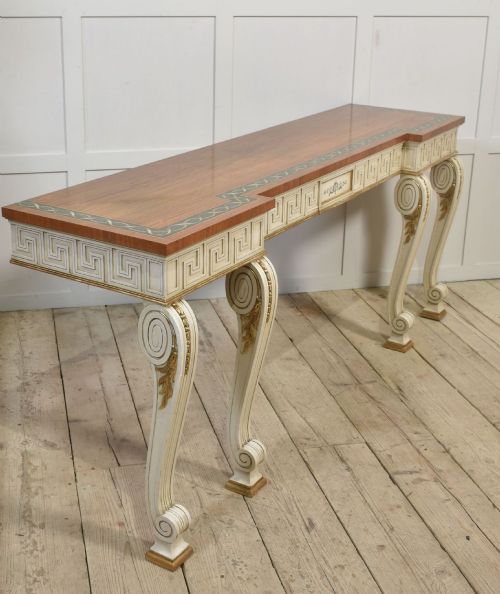
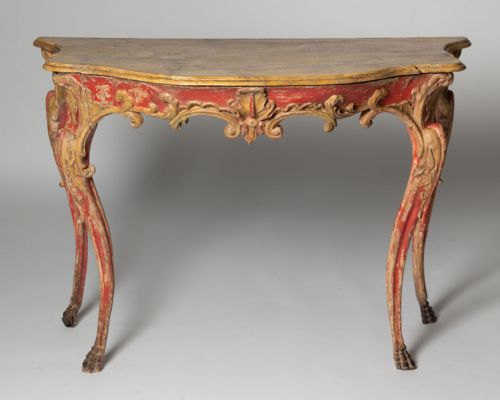
A gilded entry hall table serves as a striking focal point in a corridor or reception space, frequently taking the form of a console designed to stand flush against a wall. The examples found here span the eighteenth, nineteenth, and early twentieth centuries, reflecting diverse European traditions.
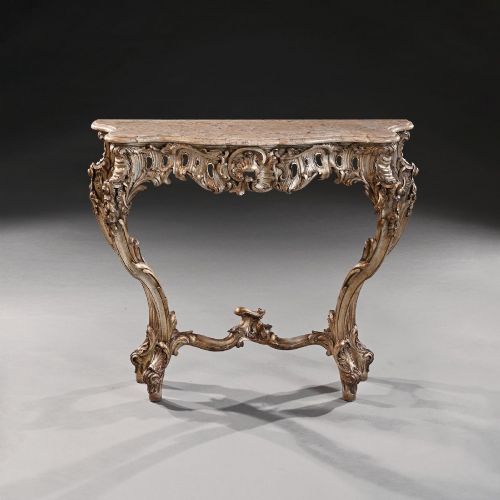
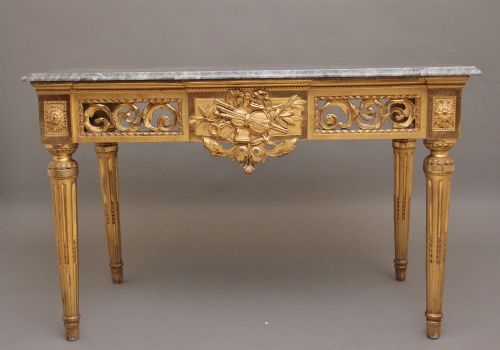
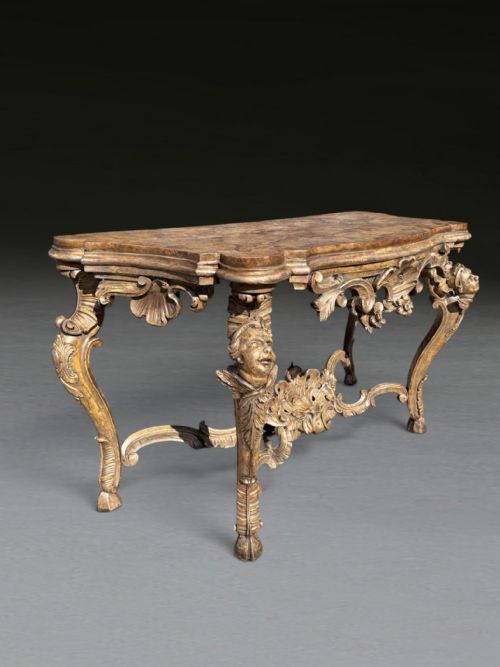
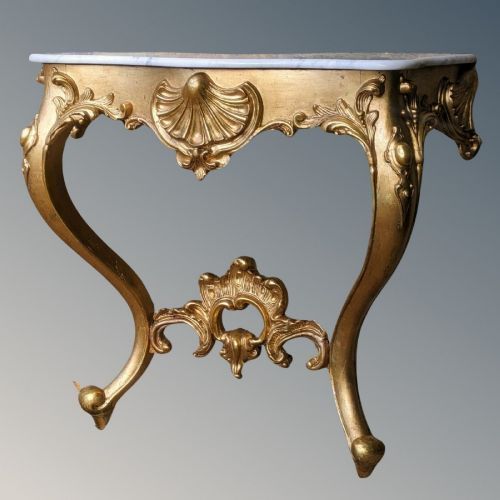
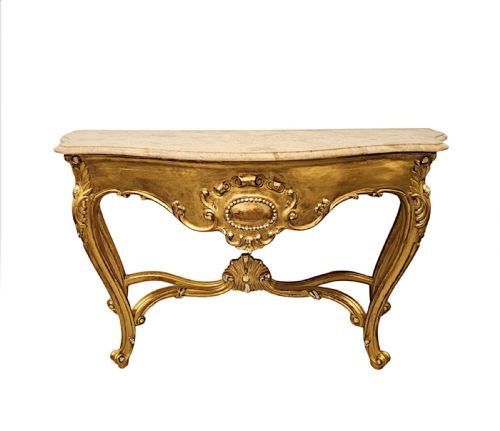
The most common form encountered on this page is the console table, often paired with a shaped marble top and carved wooden frame. These pieces emerge from French and Italian workshops, displaying styles ranging from robust Rococo curves to restrained Neoclassical lines.
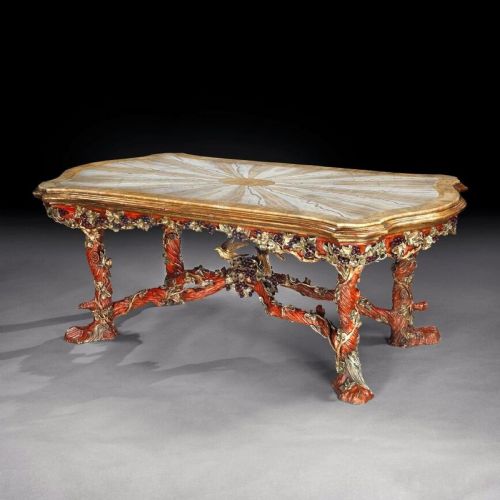
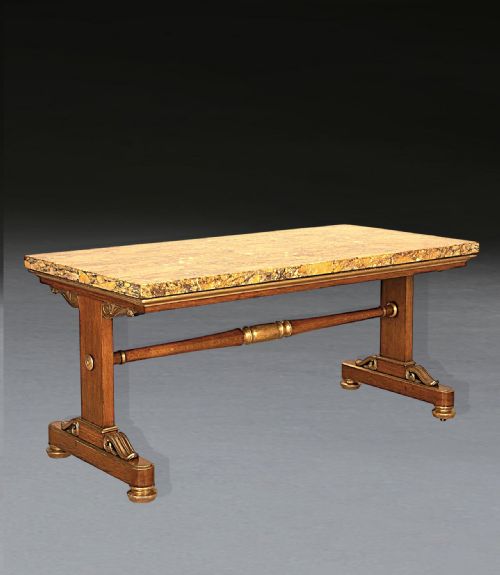
Makers produced both wall-mounted console tables and freestanding centre tables finished with gilt surfaces. Surviving examples encompass console and mirror sets alongside smaller demi-lune formats tailored for narrower passages.
How they were made
Craftsmen shaped these tables primarily from carved wood, applying layers of gesso to smooth the surface before laying down fine gold or silver leaf. This traditional water-gilding technique created a brilliant reflective finish that caught the dim light of historic hallways.
Heavy stone slabs, including marble and onyx, form the upper surfaces of many tables to provide a durable and cool counterpoint to the ornate wooden bases. Artisans also utilised paint and polychrome highlights alongside gilding to define intricate sculptural details.
Listings incorporate nineteenth-century French and Italian pieces alongside eighteenth-century formats featuring carved wood, gesso, and marble.
What varies in quality
The depth and crispness of the hand-carving dictate the visual success of the wooden base, separating fluid, deeply undercut foliage from flat, mechanical moulding. Master carvers achieved naturalistic motion in figures and scrolls that lesser workshops simply sketched out.
The quality of the gilding and the selection of the stone top mark the upper tier of production. Thick marble or onyx slabs with striking natural veining, combined with intact gold leaf showing gentle burnishing, distinguish premier pieces from simpler painted or restored substitutes.
Amleto Bertoni
The Gilded Entry Hall Table Glossary
- Console table
- A table designed to stand against a wall, frequently supported by two front legs and secured by brackets at the back. These pieces often feature shaped tops to fit architectural recesses.
- Giltwood
- Timber that has been coated with thin leaves of gold or metal alloys over a prepared gesso ground. It provides the characteristic metallic brilliance seen on historical furniture frames.
- Gesso
- A plaster-like mixture applied to wood to create a smooth surface for gilding or painting. It allows carvers to build up fine relief details before applying gold leaf.
- Demi-lune
- A half-moon shape characteristic of tables built with a flat back to sit against a wall and a curved front. This format economises on floor space in narrow hallways.
- Marble top
- A polished stone surface fitted to the top of a table frame. It offers a cool, heat-resistant counterpoint to decorative wooden bases.
Gilded Entry Hall Table: Frequently Asked Questions
How do I place a console table in a narrow hall?
Select a table with a shallow depth or a demi-lune shape to maintain clear walkways while providing a surface for small items.
Position the piece beneath a mirror or artwork to anchor the visual weight of the entryway.
Are these tables designed to stand without wall support?
Many historical console tables rely on wall brackets or fastenings for absolute stability because they were originally built to anchor against interior architecture.
Check the listing details to determine whether a specific piece functions as an independent centre table or requires wall attachment.
How do I clean a gilded wooden frame?
Dust the carved surfaces gently with a soft, dry brush to prevent accumulation without disturbing fragile gold leaf.
Avoid liquid cleaners and polishes entirely, as moisture and chemicals can strip the historic gesso and metal leaf.
How can I distinguish French styles from Italian styles?
French designs from this category often emphasise refined Louis XVI symmetry or flowing Rococo curves with restrained gilding. Italian pieces frequently display bolder, heavier carving, polychrome highlights, and more theatrical sculptural motifs.