




Baroque Pier Table
A baroque pier table brings grand Italian and French design into a room, offering a striking marble top supported by carved and gilded timber.
Baroque Pier Table
When you search for a baroque pier table, you are looking at console and side tables designed to stand against a wall, frequently beneath a mirror. These pieces emerge predominantly from Italian and French traditions, spanning the eighteenth and nineteenth centuries.
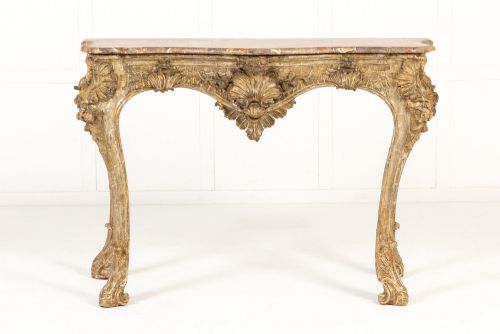
The versions you are most likely to meet on this page include eighteenth-century Italian console tables in giltwood, walnut, and silver gilt, alongside nineteenth-century revivals. They frequently feature heavy carved decoration, timber structures, and heavy stone surfaces.
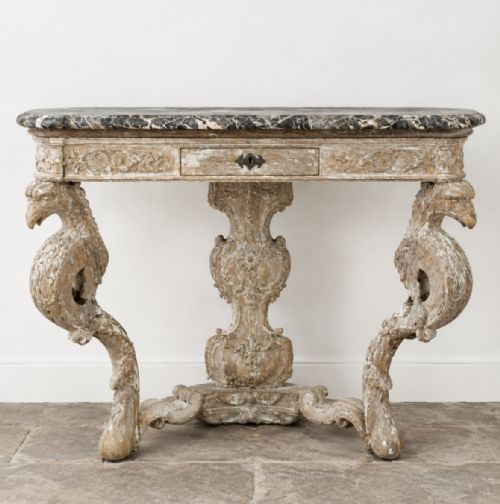
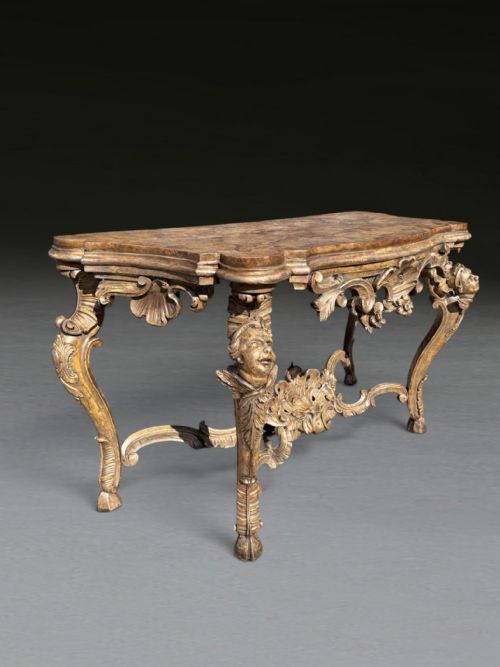
Makers and craftsmen built these forms to command attention in grand reception rooms and hallways. Their silhouettes range from simple rectangular walnut supports to monumental giltwood creations boasting lion's paw feet and putto figures.
How they were made
Makers constructed the structural frames of these tables using carved wood, including walnut and softwood, which provided a stable base for heavy ornamentation. Artisans then applied gesso layers to smooth the timber before finishing the surfaces with gold leaf or paint.
Surface decoration relied heavily on manual skill, with craftsmen carving intricate details such as rams, maiden heads, and putto figures directly into the timber. Gilding methods involved applying thin sheets of gold leaf to the prepared gesso and wood grounds.
The heavy stone surfaces set upon these frames typically consist of marble, including breccia varieties, cut and polished to fit the console tops precisely. Brass elements occasionally appear as structural or decorative fixings within the assemblies.
Rams, maiden heads, and cheeky putti gaze out from beneath heavy marble tops, ensuring your hallway furniture watches you right back.
What varies in quality
The standard of carving defines the distinction between ordinary production and superior work. Crisp, deep relief work on the wooden foliage and figural elements demonstrates a higher level of artisan skill than shallow or softened detailing.
Materials dictate much of the inherent value, particularly the choice of dense hardwoods like walnut and the application of genuine gold leaf over traditional gesso. Heavy, richly veined marble tops add greater substance compared to simpler stone slabs.
The stylistic lineage and period execution also separate examples, with seventeenth and eighteenth-century pieces holding distinct characteristics from later nineteenth-century revivals and copies. Original surfaces that retain their historic gilding and patination rank above heavily restored or later painted finishes.
The Baroque Pier Table Glossary
- Giltwood
- Wood that has been coated with gold leaf or gold paint. This finish was extensively applied to ornate frames and console tables.
- Gesso
- A plaster mix applied to wood surfaces as a preparation for gilding or painting. It provides a smooth ground for detailed carving work.
- Console table
- A table supported by wall brackets or console legs, designed to stand flat against a wall. These forms often feature heavy decorative stonops.
- Breccia marble
- A composite stone made of angular rock fragments embedded in a fine-grained matrix. It provides a highly patterned, multicoloured surface for table tops.
- Putto
- A figure of a small chubby male child, often winged, used in classical and baroque art. These figures frequently appear carved into the supports of grand tables.
Baroque Pier Table: Frequently Asked Questions
Where should I place a baroque pier table?
These tables are traditionally designed to sit flat against a wall, frequently positioned beneath a large mirror or painting in an entrance hall or drawing room. Because their backs are often left unfinished or plain, they rely on wall placement for proper display.
Their substantial depth and heavy marble tops require a secure wall fixing or a stable floor surface to ensure they remain balanced and safe during daily use.
How do I care for a giltwood surface?
Giltwood requires gentle maintenance because the thin layer of gold leaf applied over gesso can be easily damaged by moisture or abrasive cleaning products. Dust the carved wooden details regularly using a soft, dry brush rather than a cloth that might snag on delicate protrusions.
Keep these tables away from direct sunlight and heat sources to prevent the underlying wood and gesso from shrinking, which can cause the gold leafing to crack and flake over time.
How can I tell an eighteenth-century table from a nineteenth-century revival?
Examining the construction methods, tool marks, and timber ageing helps distinguish eighteenth-century originals from later nineteenth-century revival pieces. Earlier pieces often show hand-cut joinery and natural wear patterns specific to centuries of use.
Revival pieces, such as those from the Victorian era or later, frequently display standardised machine-cut elements and different interpretations of baroque motifs that reflect nineteenth-century aesthetic preferences.
Are the marble tops original to the tables?
Many tables retain their original stone tops, though centuries of use mean that some marble surfaces have been replaced or repaired. Inspecting the underside of the stone and the seating rebate on the wooden frame can reveal whether the components were made for each other.
Heavily figured stones like breccia marble were favored for grand Italian commissions, and the fit should align neatly with the proportions of the carved apron beneath.